05. MA Fabrics Innovation Design
“Cosa rende “La Terra” così speciale? Tutto sembra riunirsi per creare le condizioni perfette per la vita. Ci sono voluti 4,6 miliardi di anni per trasformare il mondo da roccia sterile nel mondo che conosciamo oggi. È stato un incredibile viaggio di catastrofe e rinnovamento. Ma questo raro e straordinario pianeta sta affrontando la sua più grande sfida; umanità. La domanda è; ‘Sopravviverà?’”
(dottor Iain Simpson Stewart)
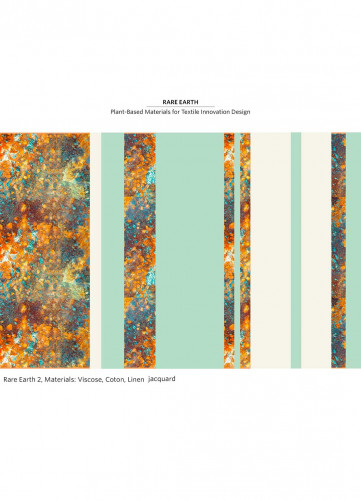
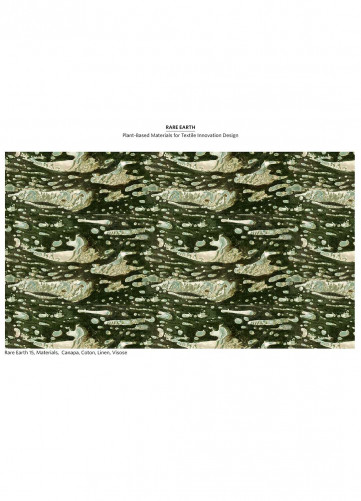
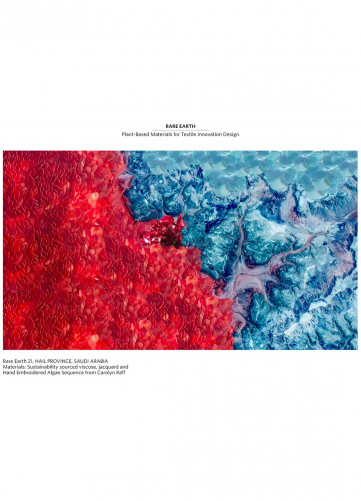
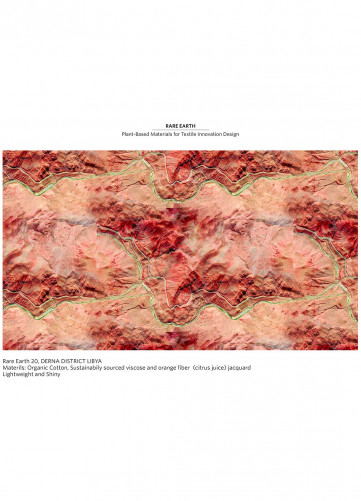
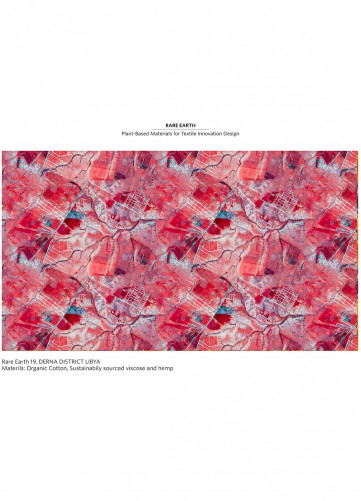
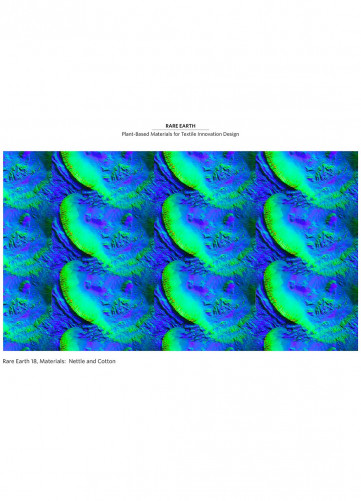
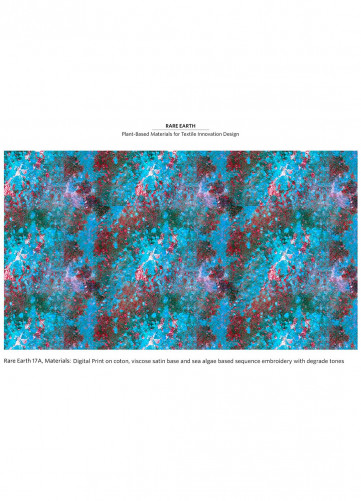
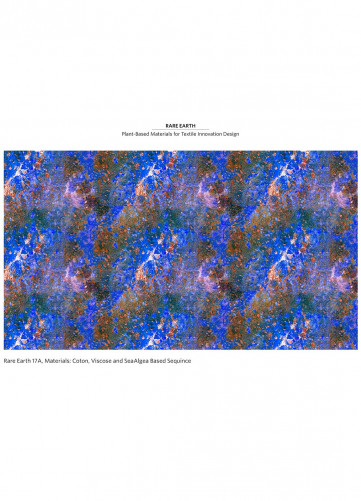
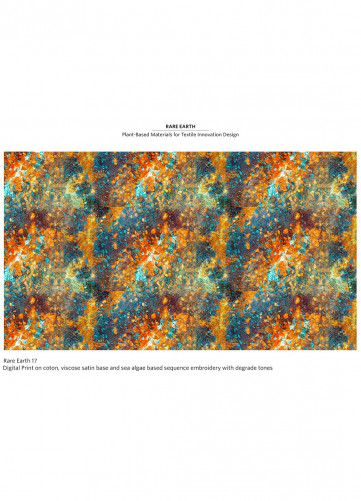
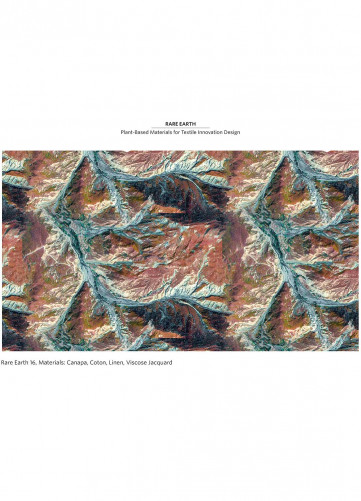
Con il Rare Earth Textile Project, vorrei apprezzare la vita su un pianeta raro e straordinario pieno di meraviglie naturali. La collezione è progettata principalmente con motivi jacquard, stampati e ricamati che vengono creati con diverse interpretazioni e tassellazioni di foto di paesaggi surreali di Earth View.
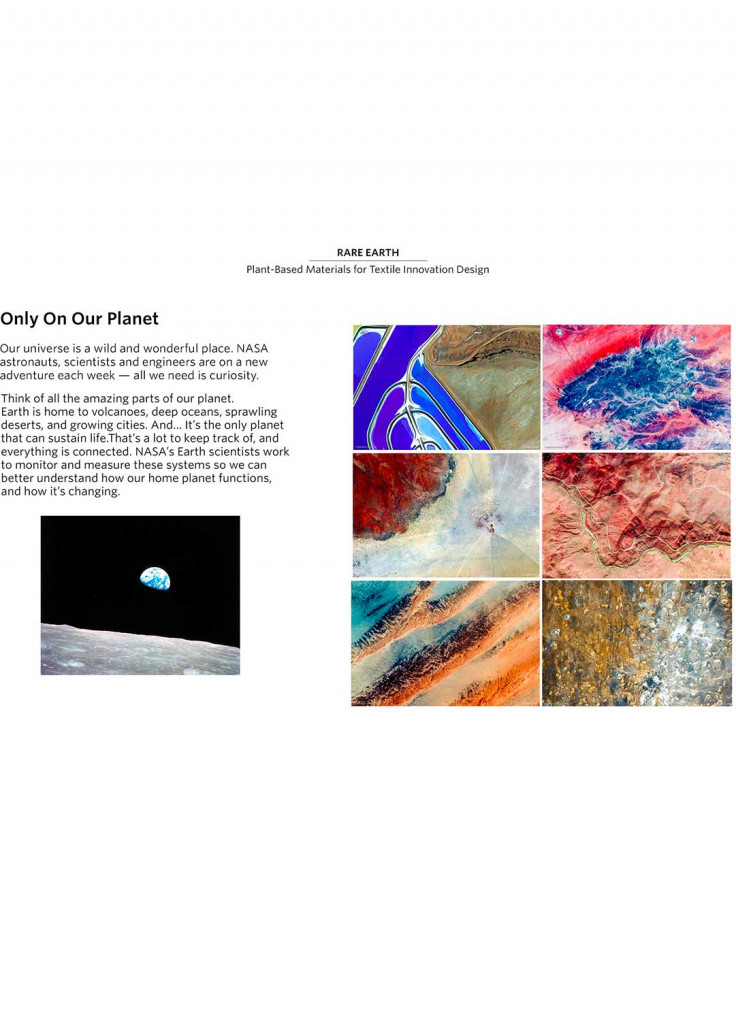
Earth View è una raccolta dei paesaggi più suggestivi trovati in Google Earth. Gli umani sono stati in grado di vedere il pianeta dallo spazio solo negli ultimi 50 anni. Eppure qualcosa codificato in noi molto tempo fa reagisce quando vediamo il mondo a questa scala senza precedenti. I paesaggi incantati e talvolta surreali di Earth View hanno la capacità di elevare le nostre menti dai nostri piccoli schermi allo spazio esterno. Speriamo che questo possa anche spingerci a preoccuparci più profondamente del nostro fragile pianeta. Quando guardi la terra dallo spazio e vedi questi schemi ripetuti e queste interessanti immagini astratte, è qualcosa che ti colpisce di quanto sia bello il pianeta su ogni scala. La natura è l’artista.
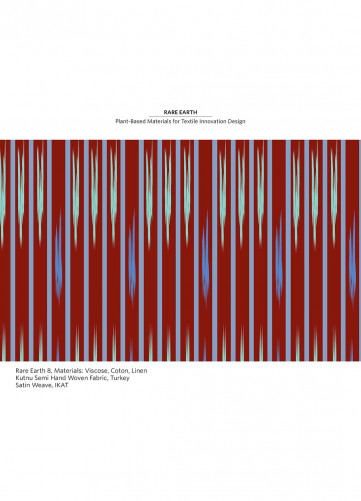
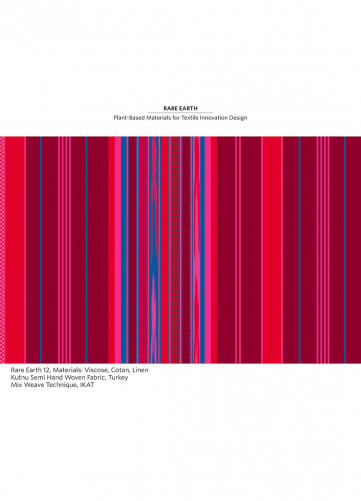
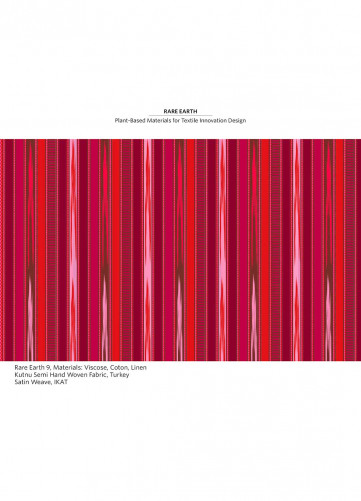
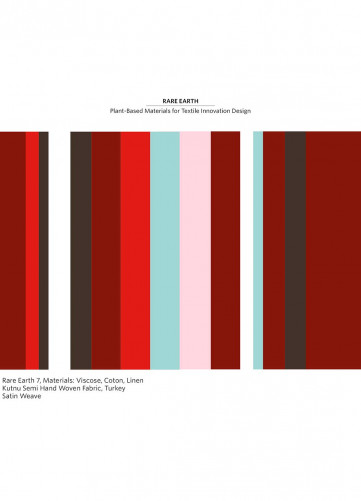
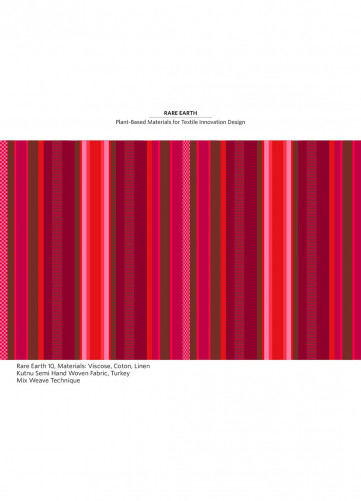
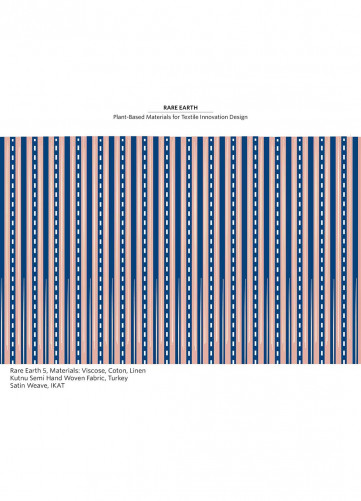
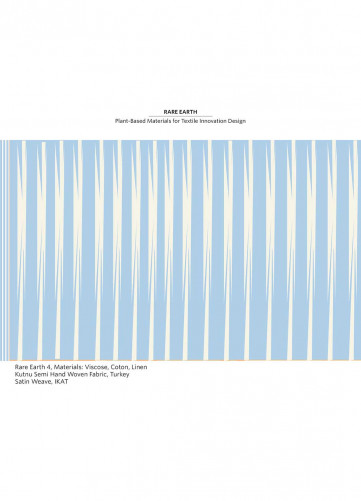
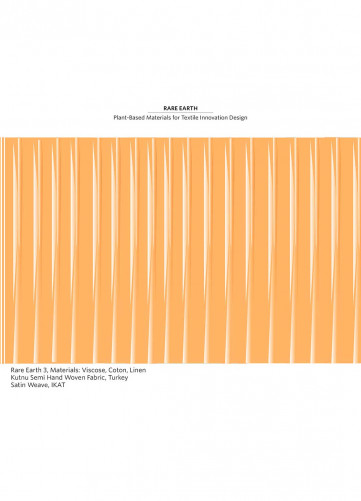
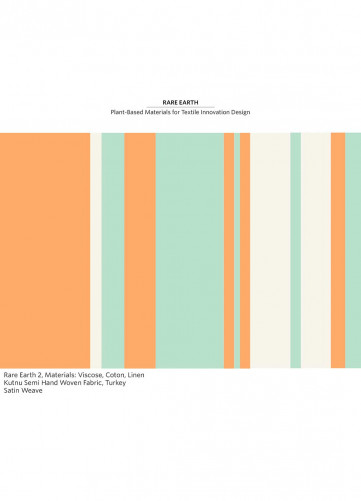
Il progetto Rare Earth Textile comprende anche un tessuto tradizionale della Turchia, tessuto semi-a mano, Kutnu. Con i tessuti Kutnu accanto ai motivi Earth View, voglio creare un mix eclettico di nuovo e vecchio, moderno e tradizionale. Ho disegnato tessuti Kutnu con righe e tecniche ikat con la cartella colori che può abbinarsi ai toni dei motivi paesaggistici. Shallow Seas, Rivers and Valleys, Reds, Deserts and Volcanos sono i quattro gruppi di colori della collezione.
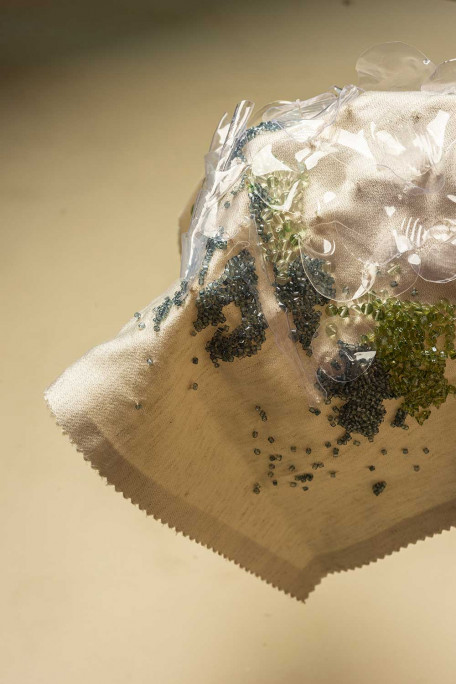
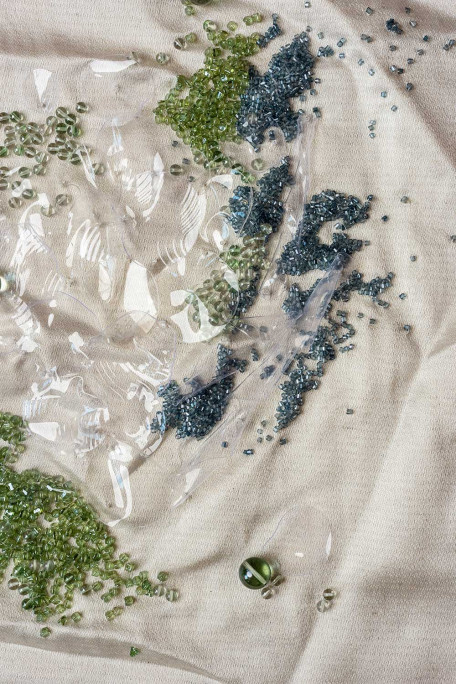
La collezione è composta da diverse caratteristiche e tecniche da abbinare. Earth View Tessellation Patterns, Hand Woven Striped e tessuti Ikat Kutnu e alcuni dei miei percorsi astratti su telaio a mano e il ricamo di Rilievi con plastica biodegradabile e riciclata.
Riguardo ai materiali, ho ricercato ed esplorato le possibilità di progettare una collezione tessile incentrata sulle fibre vegetali attraverso l’espressione creativa. Ispirare il design innovativo e la ricerca della sostenibilità delle fibre vegetali è il focus principale del Rare Earth Project. Le caratteristiche delle fibre vegetali convenzionali e non convenzionali sono ricercate nel contesto dell’innovazione, dell’uso, dell’aspetto estetico, delle possibilità di produzione e della sostenibilità.La collezione tessile comprende principalmente tessuti per una collezione di abbigliamento senza genere e senza tempo con diverse strutture di tessitura, qualità di filato e pesi considerando gli articoli come camicie, pantaloni, giacche, capispalla e accessori.
Credo che la ricerca di materiali vegetali ecologici alternativi e la collaborazione con i fornitori per risorse naturali più sostenibili sarà una parte importante della mia ricerca per il futuro.
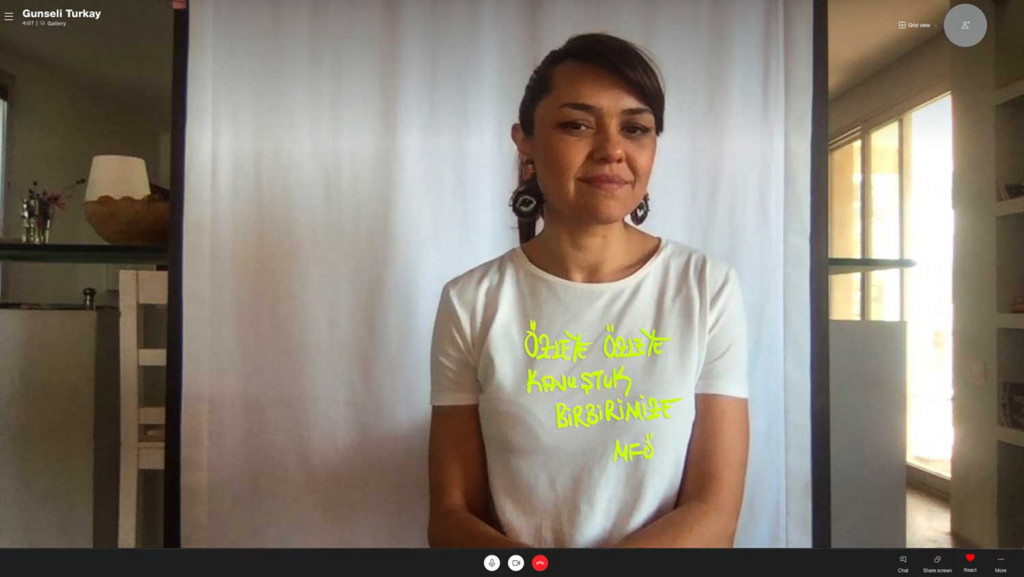
Rare Earth by Gunseli Turkay
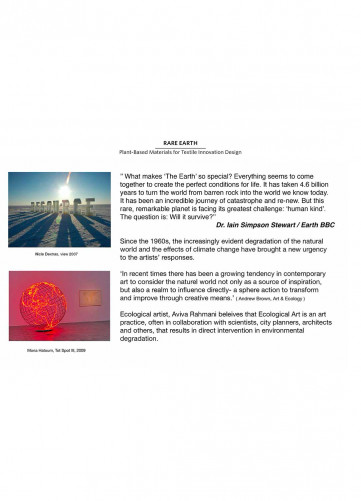
“What makes ‘The Earth’ so special? Everything seems to come together to create the perfect conditions for life. It has taken 4.6 billion years to turn the world from barren rock into the world we know today. It has been an incredible journey of catastrophe and re-new. But this rare, remarkable planet is facing its greatest challenge; humankind. The question is; ‘Will it survive?’”
Dr. Iain Simpson Stewart
With the Rare Erath Textile Project, I would like to appreciate living on a rare and remarkable planet full of natural wonders. The collection is designed mainly with jacquard, printed and embroidered patterns that are created with different interpretations and tessellations of surreal landscape photos of Earth View.
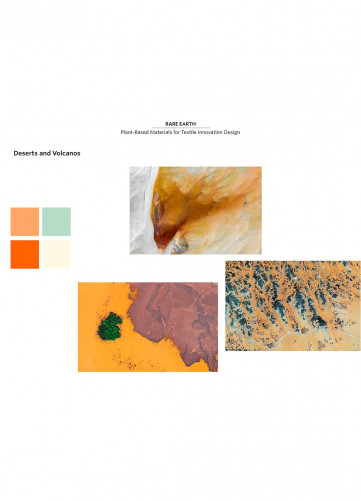
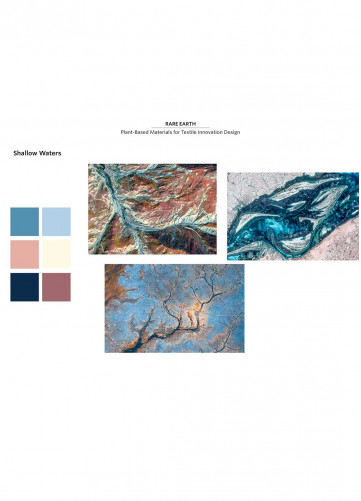
Earth View is a collection of the most striking landscapes found in Google Earth. Humans have only been able to see the planet from space for the last 50 years. Yet something encoded in us long ago reacts when we see the world at this unprecedented scale. The enchanted and sometimes surreal landscapes of Earth View have the ability to elevate our minds from our tiny screens to outer space. Hopefully, this can also move us to care more deeply about our fragile planet. When you look at the earth from space and you see these repeating patterns and these interesting abstract images, it something that just kind of strikes you about just how beautiful the planet is at every scale. Nature is the artist.
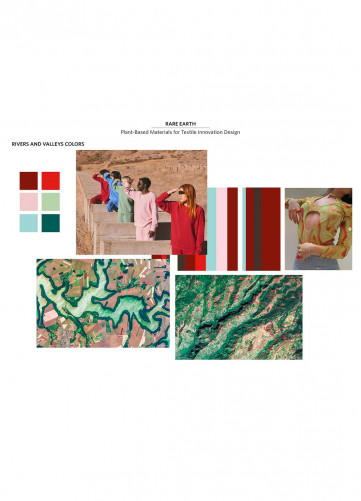
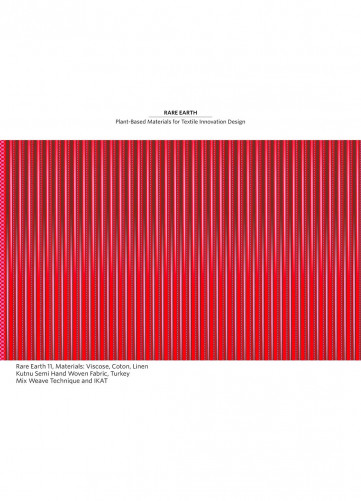
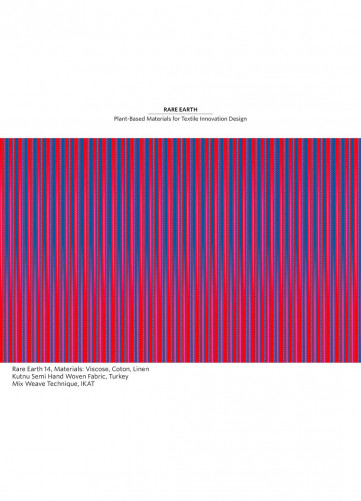
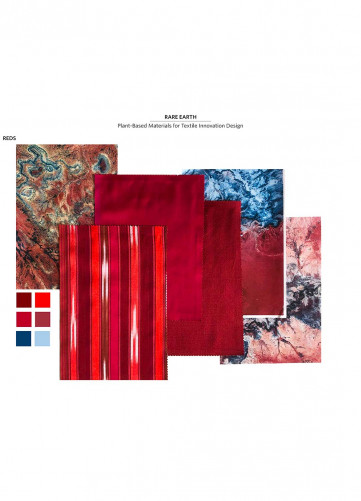
The Rare Earth Textile project also includes a semi-hand weaved traditional fabric from Turkey, Kutnu. With Kutnu fabrics next to the Earth View patterns, I want to create an eclectic mix of new and old, modern and traditional. I designed Kutnu fabrics with stripes and ikat techniques with the color card that can match the tones of the landscape patterns.
Shallow Seas, Rivers and Valleys, Reds, Deserts and Volcanos are the four color groups in the collection.
The collection consists of different characteristics and techniques to be styled together. Earth View Tessellation Patterns, Hand Woven Striped, and Ikat Kutnu fabrics and some of my abstract trails on handloom and the embroidery of Rilievi with biodegradable and recycled plastics.
About materials, I researched and explore the possibilities of designing a textile collection focusing on plant-based fibers through creative expression. Inspiring innovative design and the research of vegetable fiber sustainability is the main focus of the Rare Earth Project. Characteristics of conventional and non-conventional plant-based fibers are researched in the context of innovation, usage, aesthetic look, production possibilities, and sustainability are explored.
The textile collection includes mostly woven fabrics for a genderless and timeless apparel collection with different weaving structures, yarn qualities and weights considering the items as shirts, pants, jackets, outerwear and accessories.
I believe the search for alternative ecological plant-based materials and collaboration with suppliers for more sustainable natural resources will be an important part of my research for the future.
What are plant fibres & textiles?
There are 3 main types of plant fibres: bast (mainly from stems – e.g. flax and hemp), leaf (e.g. pineapple and sisal) and seed (e.g. cotton and kapok); but also wood (from trees, naturally), grass (e.g. bamboo) and fruit (e.g. coconut). The fibres are elongated, supportive strands composed of individual cellulose cells that are held together with gums and pectins. Plant fibres have a long history of use in textiles, cordage and paper, and more recently in technical applications – e.g. composite materials.
Fibre-yielding plants are found wherever vegetation exists around the globe. Indigenous communities have used these plants for both cordage and textiles. Archaeological studies have identified the use of cellulosic fibres from at least the Neolithic period, and some long traditions of processing and using plant fibres continue to this day. On a larger scale, the commercialisation of plant fibres such as sisal, jute and coir have made them important to some countries’ economies.
Most people are familiar with flax and hemp, which have lent themselves to wide cultivation in many parts of the world. However, there are also useful fibres to be found in UK wild plants, including nettle, hops, mallow and honeysuckle (which was used to make ropes to help construct the Bronze Age Seahenge). The use of the Common Nettle (Urtica dioica) is better known, and regularly resurges as a source of fibre for textiles, particularly during times of crisis, and more recently as a sustainable replacement for problematic cotton and synthetic fibres.
Trials are being carried out to test the feasibility of banana, pineapple and coconut fibre, amongst others. There’s already been a high level of success with bamboo fibre and wood pulp (Tencel). If these materials are to be produced on a commercial scale, then the issues of plant cultivation, processing, resource use, potential contamination and transportation need to be taken into consideration. However, major companies and organisations are now taking on board the need to develop more sustainable textile fibres.
The nettle has long been cultivated for fibre production and other end products. In order to maximise output, several high-fibre varieties were bred in Germany between the World Wars, and in recent years these have been resurrected as a potentia
What are the benefits of plant fibres & textiles?
Our perception of ‘cloth’ has changed a lot over time. We currently have a textile industry that’s laden with problems. Cheap, synthetic clothes are mass-produced in countries where people (including children), desperate to make a living, are forced to work in dangerous and unhealthy conditions to produce clothing for a fickle and ever-changing market. Clothes are quickly discarded, wasting resources and creating a huge disposal problem. In the past, cloth was highly valued and precious. Until the 19th century, all clothing was made from natural fibres, including hemp and flax, either at home, or by a tailor or seamstress if that could be afforded. People had a limited wardrobe (sometimes only one set of clothes!), which was looked after, mended and even handed on after their death. Finally, until the invention of synthetic fibres, all cloth that completed its lifecycle could be composted or burnt. We need to renew our perception of cloth. We need to learn to value it again. When it’s no longer serviceable, we need to be able to return it to the soil.
Plant fibres, plus animal fibres such as wool and silk, are biodegradable, and the cloth produced from them is generally of high quality. We’re all familiar with cotton, which is strong, flexible, comfortable and absorbent and at the moment is the most common plant fibre used around the world. But cotton has a tragic history, linked to the slave trade, and in the UK to the horrific working conditions in the 19th century cotton mills. Today the production of cotton requires the use of dangerous pesticides and vast quantities of water for irrigation. Even the production of organic cotton requires huge amounts of water.
Wild fibre plants, like nettles, grow easily, provide food for butterflies, and don’t need pesticides, chemical fertilisers or irrigation.
One important but underestimated outcome of producing a piece of cloth from raw materials, through extracting and preparing the fibre to crafting the final product, is the sense of accomplishment that goes with it. It can’t be calculated on a monetary basis, but must be measured in terms of the time, effort, commitment and even love that has been invested in it. Only then can we once again understand the true value of cloth.
What can I do?
There’s growing interest in creating cloth from plant fibres on an artisanal scale, using whatever fibre plants are locally available. In the UK, flax and hemp are easily cultivated and so raw material is generally available for spinning and weaving. People are also experimenting with other plants such as Stinging Nettle (Urtica dioica) that can be collected from the wild.
What can I do?
There’s growing interest in creating cloth from plant fibres on an artisanal scale, using whatever fibre plants are locally available. In the UK, flax and hemp are easily cultivated and so raw material is generally available for spinning and weaving. People are also experimenting with other plants such as Stinging Nettle (Urtica dioica) that can be collected from the wild.
In collaboration with: Rilievi