02. MA Alta Moda, Fashion Design
“La luce pensa di viaggiare più velocemente di qualsiasi altra cosa, ma è sbagliata. Non importa quanto velocemente la luce viaggia, scopre che l’oscurità è sempre arrivata per prima e la sta aspettando. ”
– Terry Pratchett, Reaper Man
“Stelle, nascondete i vostri fuochi; Non lasciare che la luce veda i miei desideri neri e profondi. ”
– William Shakespeare, Macbeth
Un uomo immerso nell’oscurità, incompreso ma alla fine affascinante. Era un uomo temuto da molti, un’ombra in agguato in mezzo alla caduta della famiglia imperiale russa, un contadino che divenne il consigliere della stessa Alexandra Feodorovna, era conosciuto come Rasputin.
Il suo nome e la leggenda ad esso collegata gli sono sopravvissuti, forse perché è nella natura umana temere ciò che non possiamo capire e ciò che non possiamo vedere. La paura può essere paralizzante, ma per alcuni ha un’attrazione perché quando abbiamo la capacità di superare l’incerto, possiamo scoprire ciò che desideriamo.
In Russia all’inizio del XIX secolo, le persone parlavano in tono sommesso di coloro che avrebbero compiuto atti empi in segreto, i sussurri raccontavano storie di cerimonie notturne in cui i partecipanti giravano senza sosta per ottenere un effetto, per culminare, si esibivano orge tra di loro. C’erano quelli che credevano che Rasputin fosse uno di loro, dicevano che credeva che l’unica via per la salvezza fosse il pentimento, e per pentirsi bisogna prima peccare.
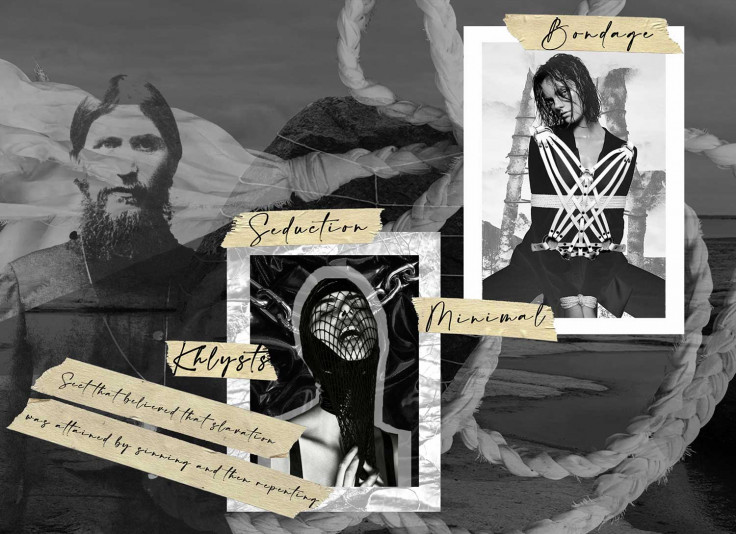
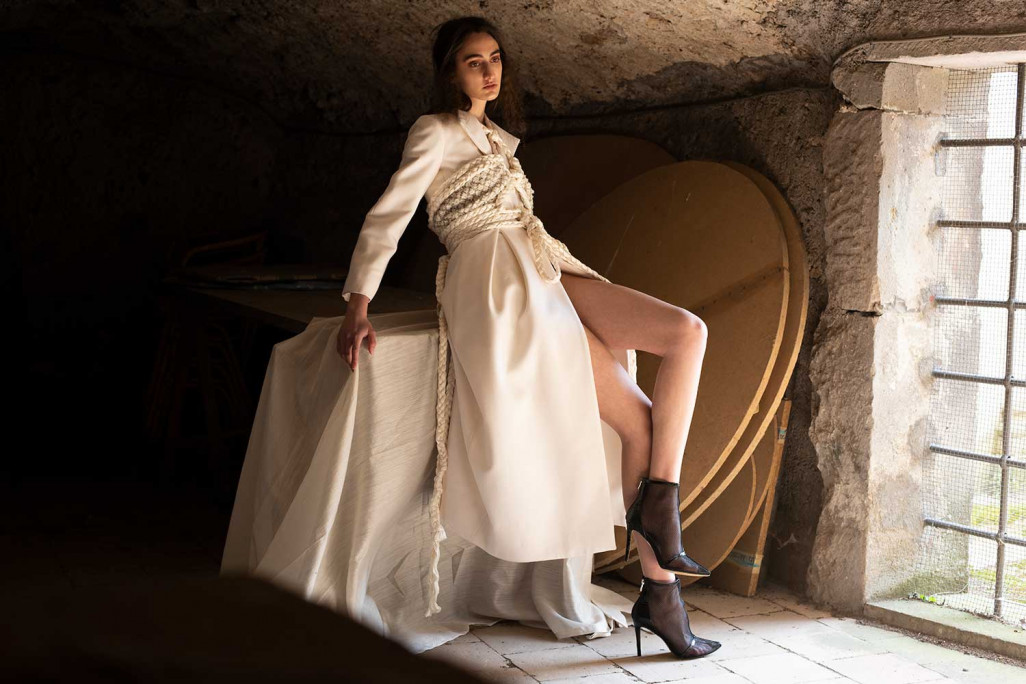
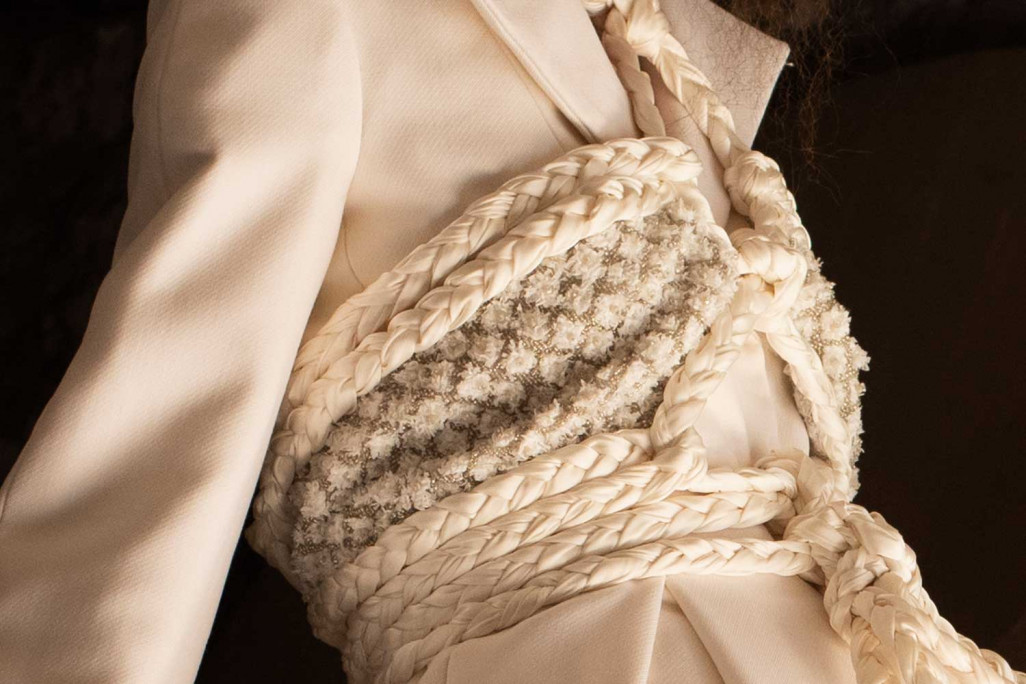
L’ispirazione per questa collezione deriva dallo sforzo di rappresentare visivamente il controllo che Rasputin aveva sullo zar e sua moglie, oltre a incarnare il legame oscuro e misterioso con i Khylst. Attraverso l’uso della schiavitù sul corpo espone la più grande paura riguardo a Rasputin, che era in grado di manipolare e piegare le persone alla sua volontà.
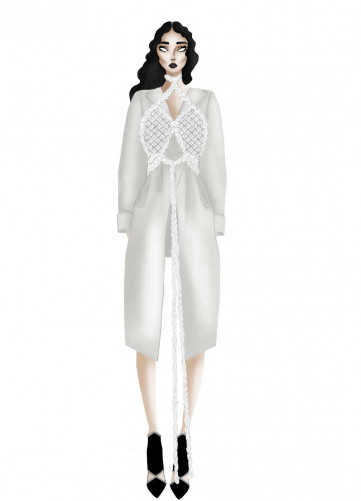
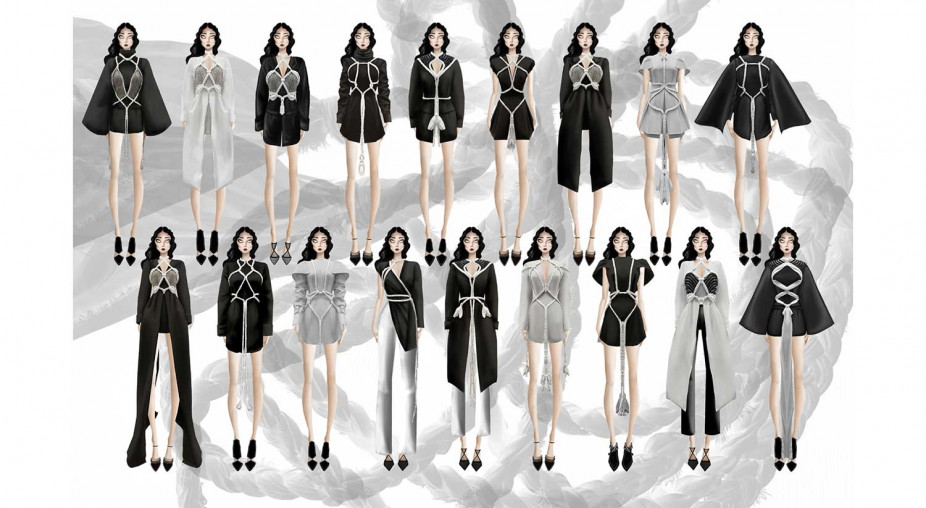
Le sagome sono un adattamento delle vesti clericali usate da Rasputin, mentre parlava dell’importanza di condurre una vita umile poiché era un uomo di Dio, ma proprio come le sue convinzioni erano contrastate dal suo rapporto con la famiglia più ricca del mondo ; i capi, minimali e modesti, sono ornati da ricami ricchi e dettagliati.
Questa discrepanza tra la sua filosofia di vita e il modo in cui l’ha vissuta, è la spina dorsale di ogni pezzo, ispira le linee e gli strati, crea un percorso sul corpo che si adatta ad esso ma lo restringe allo stesso tempo.
Anche i colori e i materiali descrivono la divergenza del suo carattere. La scelta dei colori rappresenta questo, in quanto il bianco e nero simboleggiano il minimal e la semplicità, mentre l’oro e l’argento incarnano il lusso e l’opulenza. Anche i materiali contrastano in peso e luminosità.
È mia intenzione, attraverso la costruzione di questi pezzi, trasportare tutti coloro che lo osservano in un momento chiave della storia; un momento in cui regnava l’incertezza, dove l’ignoto diventava familiare, dove la paura aleggiava nell’aria, un luogo perfetto per far apparire il più selvaggio e oscuro dei pensieri.
“Light thinks it travels faster than anything but it is wrong. No matter how fast light travels, it finds the darkness has always got there first, and is waiting for it.”
― Terry Pratchett, Reaper Man
“Stars, hide your fires; Let not light see my black and deep desires.”
― William Shakespeare, Macbeth
A man drenched in darkness, misunderstood but ultimately fascinating. He was a man who was feared by many, a lurking shadow amidst the fall of the Russian imperial family, a peasant who became the advisor of Alexandra Feodorovna herself, he was known as Rasputin.
His name and the legend attached to it has outlived him, perhaps because it’s in human nature to fear what we can’t understand and what we cannot see. Fear can be paralysing but to a certain few it has a pull because when we have the capability to push through the uncertain, we may discover that which we desire.
In Russia at the beginning of the XIX century, people would speak in hushed tones about those who would perform unholy acts in secret, the whispers told stories of ceremonies at night where participants would spin relentlessly to get a high, to culminate, they would perform orgies amongst themselves. There were those who believed Rasputin to be one of them, they said that he believed that the only path to salvation was through repent, and to repent one first had to sin.
The inspiration for this collection stems from the effort to represent visually the control Rasputin had on the Tzar and his wife, as well as embodying the dark and mysterious connection to the Khylsts. Through the use of bondage on the body it exposes the biggest fear regarding Rasputin, that he was able to manipulate and bend people to his will.
The silhouettes are an adaptation of the clerical robes used by Rasputin, as he spoke of the importance of leading a humble life as he was a man of God, but much like his own beliefs were contrasted by his relationship with the richest family in the world; the garments, which are minimal and modest, are ornamented with rich and detailed embroidery.
This discrepancy of his life philosophy and how he actually lived it, is the backbone of each piece, it inspires the lines and layers, it creates a path on body that adapts to it but constricts it at the same time.
The colors and materials too, depict the divergence of his character. The choice of colors represent this, as the black and white symbolize the minimal and the simplicity, while the gold and silver embody the luxury and opulence. The materials likewise contrast in weight and luminosity.
It is my intention through the construction of these pieces to transport all those who observe it into a key moment in history; a moment where uncertainty ruled, where the unknown became familiar, where fear lingered in the air, a perfect place for the wildest and darkest of thoughts to appear.
Fabrics by: Isa Seta