02. MA Alta Moda, Fashion Design
Cos’è la bellezza esiste un’ideale di bello?
Io credo che non esistano parametri universali della bellezza e il modo più facile per definirli è al negativo. In altre parole, credo che chiunque avesse gli occhi in posizione diversa, rispetto a dove solitamente sono collocati gli occhi, non potrebbe essere definito bello, qualunque sia la sua nazione o etnia di appartenenza. L’identità è biopsichica, corpo e mente convivono, nonostante possano essere un fardello l’uno per l’altro. ORLAN tende a creare e ricreare se stessa, ‘per avvicinarsi all’idea che ha di sè Almodovar, con quella sorta di fantasia di autocreazione (Miglietti, 2008, p. 115) che vuole separare il corpo dall’idea di ‘natura’. E’ proprio questo aspetto che appare interessante da indagare in questo momento di pandemia e ridiscussione del posto dell’umano nel mondo.
Il fenomeno della società in cui viviamo ci induce a ricrearci un mondo parallelo,un mondo dove l’ estetica non è altro che un mezzo per poter essere accettato all’interno di un sistema prevalentemente superficiale,vi sono pareri discordanti riguardo all’etica e alla chirurgia estetica, poiché molti individui hanno superato il limite dell’accettazione di se stessi sfociando nell’ossessione per seguire un canone estetico socialmente condiviso con conseguente standardizzazione.
E il dolore mi sembra molto anacronistico.
A differenza della body-art, il mio scopo è quello di raggiungere i miei limiti fisici o psicologici.
La mia ricerca è focalizzata sul concetto di Gender-Fluid Il mio è stato ed è ancora oggi un lungo viaggio alla scoperta di cose nuove, fresche e diverse, che mi fanno immaginare un mondo migliore e tollerante; un mon- do dove un ragazzo che viola il fantomatico binarismo di genere, vestendosi o atteggiandosi seguendo la la propria natura.
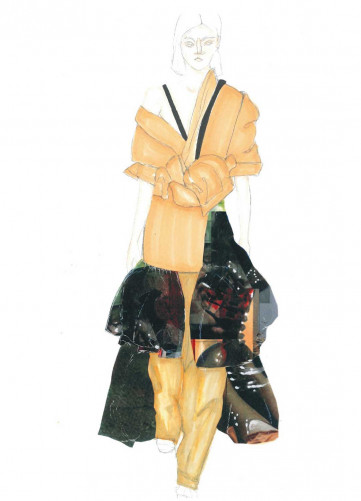
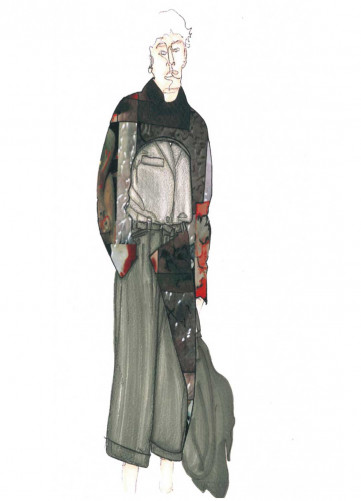
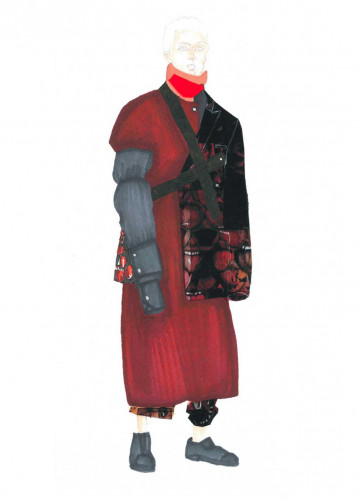
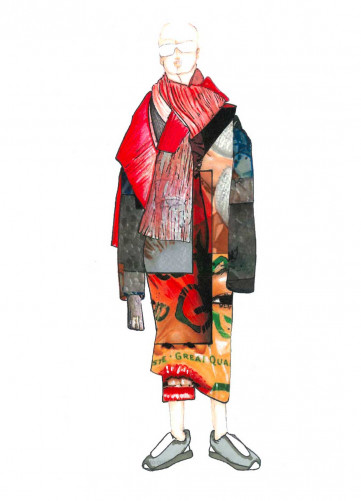
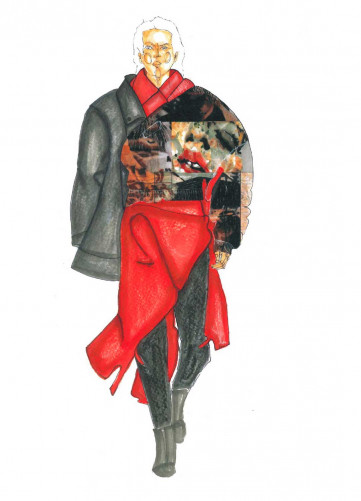
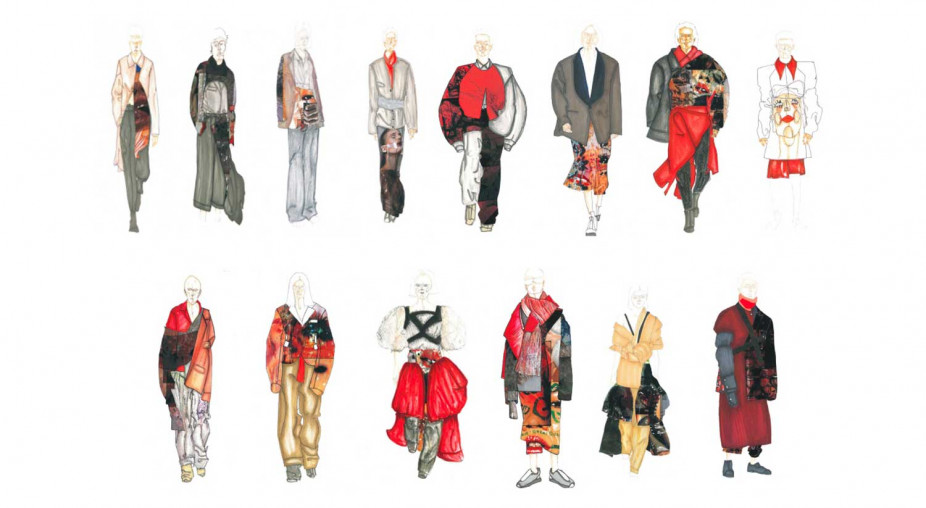
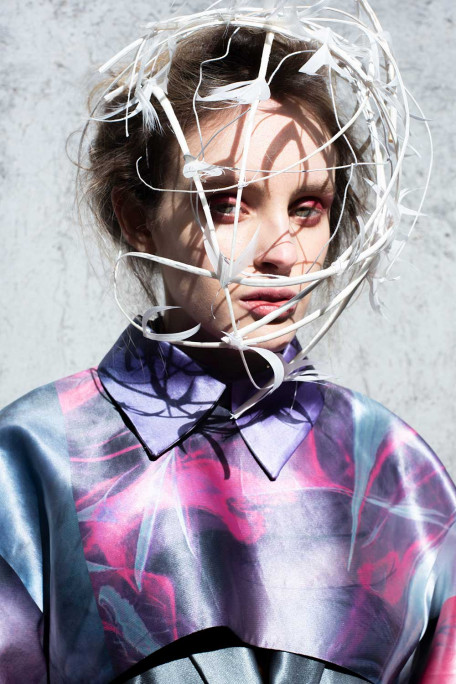
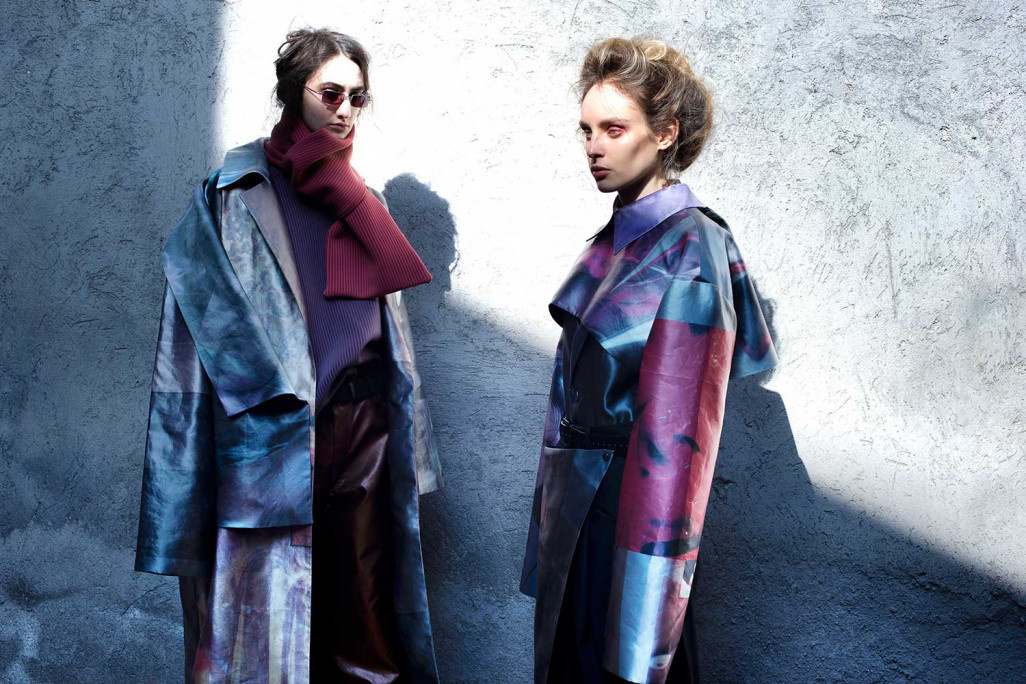
Questa ricerca ha lo scopo di valorizzare l’identità contemporanea di tutti quegli individui pronti a scardinare i preconcetti legati al genere di appartenenza, per mezzo di varie tecniche tra cui l’utilizzo della stampa che diventa l’elemento principale dell’intera collezione. Ogni una di esse è differente, per concetto e per tematica, il tutto racchiuso in una chiave di lettura schematica poiché inscritte in riquadri.
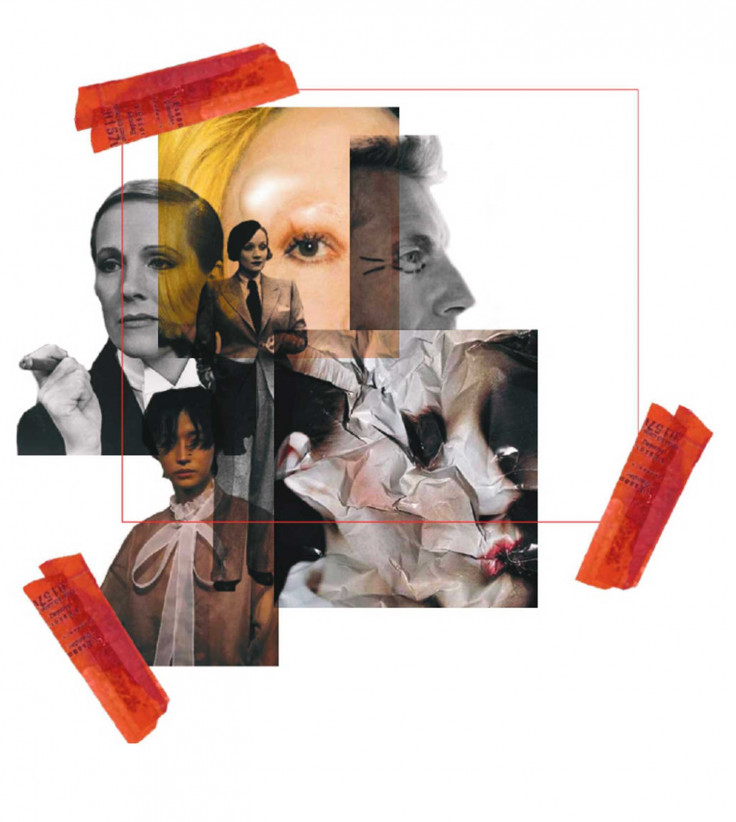
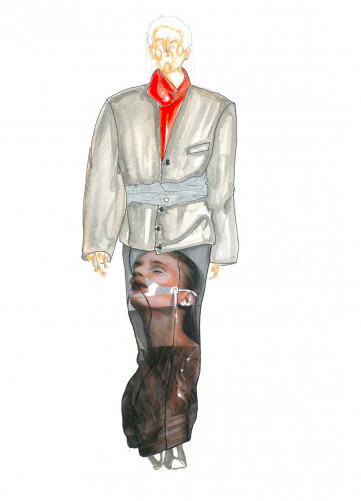
Le immagini rappresentate all’interno della stampe sono state estrapolate da molteplici contesti, uno di que- sti è costituto dall’universo della chirurgia estetica, cercando di raccontare la fase post operatoria.
Gli elementi emergenti sono volti deturpati bendati e ricuciti, la sovrapposizione delle immagini evoca un sentimento di incompiuto e indefinito.
Utili ad esprimere il concetto di omologazione sono gli scatti realizzati da Nobuyoshi Araki, che ritrae i viag- giatori ignari nella metropolitana di Tokyo ammassati, e quelli di Verzogenes Gesicht il cui lavoro consiste nell’immortalare i volti di celebri top model e sovrapporli attraverso dei collage a fisionomie più disarmoniche. Anche negli editoriali di Neigel Tomm è presente la medesima tematica con la differenza che i volti subiscono una deformazione tramite la destrutturazione dei tratti attraverso l’applicazione di ulteriori icone accartoc- ciate.
Questo mette in luce un nuovo tentativo di distorsione in cui la bellezza dovrebbe apparire e cercando di di- struggere quell’immagine che tutti si aspettino che debba incarnare.
In conclusione questa collezione è un manifesto di estrema libertà nella ricerca della propria identità, al di là del genere di appartenenza, è un desiderio che anche la couture possa considerare la prospettiva del gender fluid come una valida alternativa aprendosi così alla contemporaneità.
What is beauty is there an ideal of beauty?
I believe that there are no universal parameters of beauty and the easiest way to define them is in the nega- tive.
In other words, I believe that anyone who had their eyes in a different position, compared to where their eyes are usually placed, could not be called beautiful, whatever their nation or ethnicity.
Identity is biopsychic, body and mind coexist, although they can be a burden for each other.
ORLAN tends to create and recreate itself, ‘to get closer to the idea that Almodovar has of himself, with that sort of self-creation fantasy (Miglietti, 2008, p. 115) that wants to separate the body from the idea of’ nature ‘. It is precisely this aspect that appears interesting to investigate in this moment of pandemic and re-discus- sion of the human place in the world.
The phenomenon of the society in which we live leads us to recreate a parallel world, a world where aesthetics is nothing more than a means to be accepted within a predominantly superficial system, there are conflicting opinions regarding ethics and cosmetic surgery, as many individuals have exceeded the limit of self-accep- tance resulting in the obsession to follow a socially shared aesthetic canon with consequent standardization.
And the pain seems very anachronistic to me.
Unlike body art, my aim is to reach my physical or psychological limits.
My research is focused on the concept of Gender-Fluid Mine has been and still is a long journey to discover new, fresh and different things, which make me imagine a better and tolerant world; a world where a boy who violates the elusive gender binary, dressing or posing according to his own nature.
This research aims to enhance the contemporary identity of all those individuals ready to undermine the preconceptions related to their gender, by means of various techniques including the use of printing which becomes the main element of the entire collection.
Each one of them is different, in terms of concept and theme, all enclosed in a schematic interpretation be- cause they are inscribed in boxes.
The images represented within the prints have been extrapolated from multiple contexts, one of which is the universe of cosmetic surgery, trying to tell the post-operative phase.
The emerging elements are disfigured faces blindfolded and stitched up, the superimposition of the images evokes a feeling of unfinished and undefined.
Useful to express the concept of homologation are the shots taken by Nobuyoshi Araki, who portrays the unsuspecting travelers crowded together in the Tokyo subway, and those of Verzogenes Gesicht whose work consists in immortalizing the faces of famous supermodels and superimposing them through collages to more disharmonious physiognomies.
The same theme is also present in the editorials of Neigel Tomm with the difference that the faces undergo a deformation through the deconstruction of the features through the application of additional crumpled icons. This highlights a new attempt at distortion in which beauty should appear and trying to destroy that image that everyone expects it to embody.
In conclusion, this collection is a manifesto of extreme freedom in the search for one’s own identity, beyond the gender to which it belongs, it is a desire that couture too can consider the gender fluid perspective as a valid alternative, thus opening up to the contemporary.
Fabrics by: Gentili Mosconi, Isa Seta