05. MA Fabrics Innovation Design
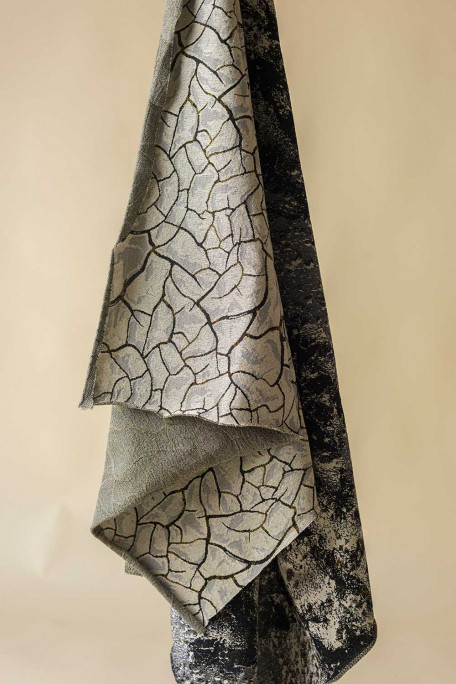
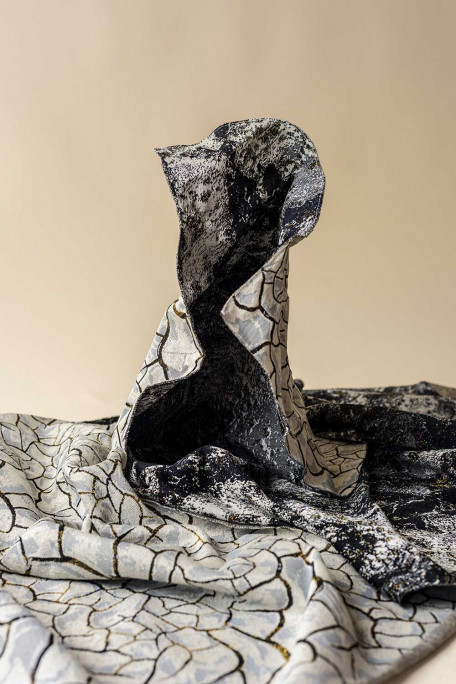
Il brief del progetto riporta la citazione “Form follows Function” di Louis Sullivan, sottolineando come il concetto di “forma che segue la funzione” sia l’essenza stessa del design, ovvero la necessità di creare una forma o una superficie che risponda a un’esigenza, andando oltre la pura decorazione. Ragionando su questa frase ho posto l’attenzione su quale sia il confine tra tessuto e oggetto e se il tessuto possa elevarsi da parte costituente l’oggetto a oggetto stesso.
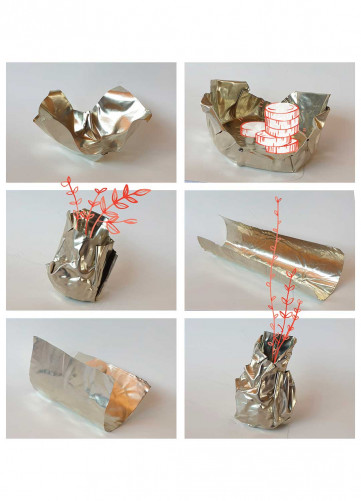
Ho sperimentato diverse soluzioni che mi permettessero di rendere il tessuto modellabile e adatto a creare e mantenere delle forme, arrivando a risultati soddisfacenti con l’accoppiatura di jersey e lamina in stagno. La lamina di stagno, in particolare, rende il tessuto modellabile infinite volte, introducendosi anche nell’ottica di personalizzazione del prodotto finale. Il cliente, infatti, può acquistare un rettangolo di tessuto delle dimensioni volute e modellarlo liberamente, più e più volte, in base all’uso che ne vuole fare. Si tratta di un concetto oltre che moderno anche sostenibile e, soprattutto, divertente.
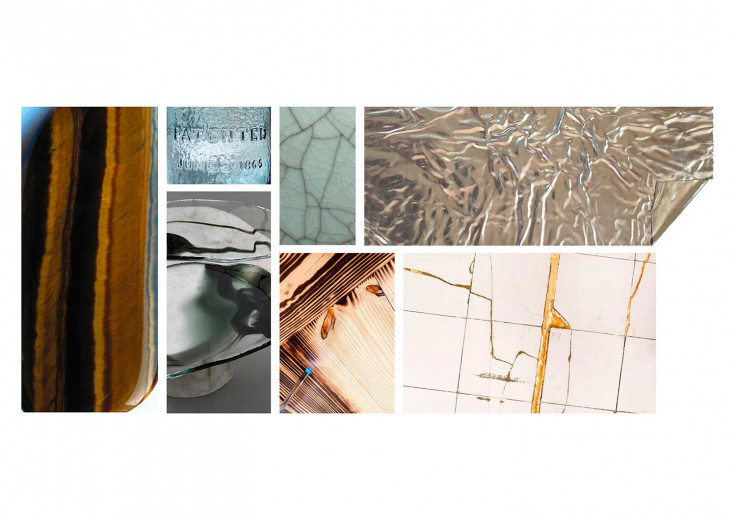
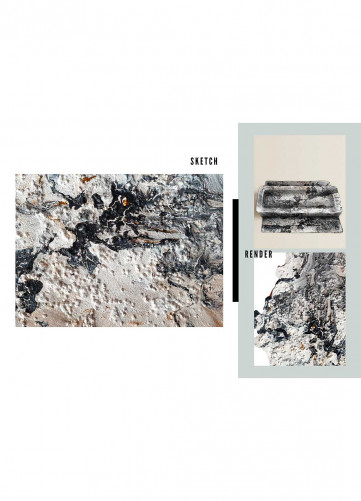
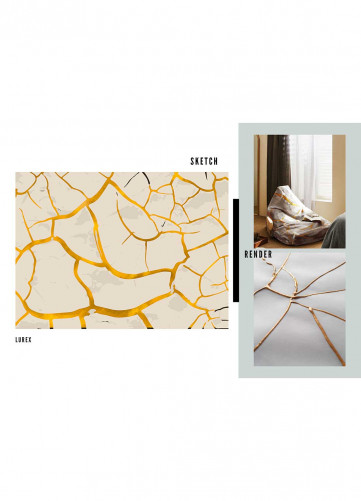
Volendo destinare la collezione di tessuti che ho progettato all’interior design, ho indagato come imitare e riprodurre una serie di materiali e superfici tipici dell’ambiente domestico tramite il jersey. Ho scelto due diverse tipologie di ceramica, il vetro, il metallo, il legno fiammato e la pietra, ricavandone le texture e una palette colori delicata e tendenzialmente fredda.
The project brief quotes Louis Sullivan, saying “Form follows function”, to underline how design itself works. Design is the answer to specific needs, far from being a simple decoration, which means that function is the beating heart of the whole design process. Starting form that quote, I focused on the boundaries between fabrics and objects, asking myself if the fabric could be elevated from part of the object to object itself, for example for furniture.
I did a lot of tests, looking for the best solution in order to make jersey mouldable and able to maintain different shapes. The best solution I developed consists in joining two layers of fabric with a single tin foil.
The tin foil allows jersey to be mouldable in a very particular way, making the fabric completely customizable in his intended use. In fact, the customer can buy any size of fabric and shape it freely, over and over again, based on the use he wants to make of it. It is a concept that is not only modern but also sustainable and, above all, fun.
Wanting to allocate my collection of fabrics to interior design, I investigated how to imitate and reproduce with jersey a series of materials and surfaces typical of the domestic environment. I chose two different types of ceramics, glass, metal, flamed wood and stone, obtaining textures and a delicate and basically cold color palette, illuminated by touches of golden lurex.
Industry Project: Gruppo Dondi Jersey