

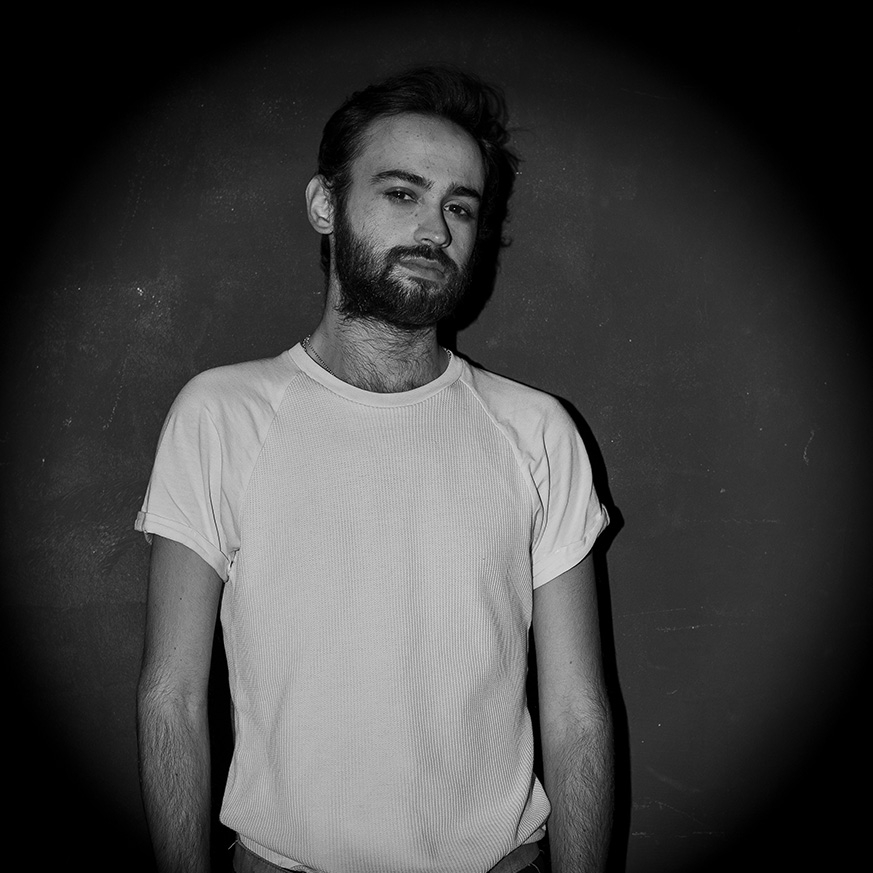
MAURO MAGGIORE
“Possiamo dire che il jazz è un virus, un virus di libertà, che si è diffuso sulla terra, “infettando” tutto ciò che ha trovato sulla sua strada: il cinema, la poesia, la pittura, la vita stessa.” [Steve Lacy]
Un ritmo aggressivo, accattivante, protagonista e mediatore di un evento socio/culturale, ancora contemporaneo, che rappresenta la grande dottrina afroamericana. Attraverso i film “Bird” (1988, Clint Eastwood) e “Cotton Club” (1984, Francis Ford Coppola), è stato possibile creare un excursus storico figurativo in cui è emersa a tutto tondo, soprattutto in modo grafico, la potenza storica del Jazz. Un genere libero, ricco di improvvisazione, di rabbia, perfetto manifesto di una minoranza che aveva bisogno di una voce che, attraverso i movimenti proibizionisti, iniziava ad avere un eco non indifferente. In risposta nel 1925 si affermava l’“Harlem Renaissance”, un movimento artistico culturale che si opponeva agli atteggiamenti razzisti dei bianchi, rinnegando tutto ciò che fosse imitazione di un’altra cultura, mettendo in evidenza la “creatività nera” in modo da rivendicare una loro unica identità.
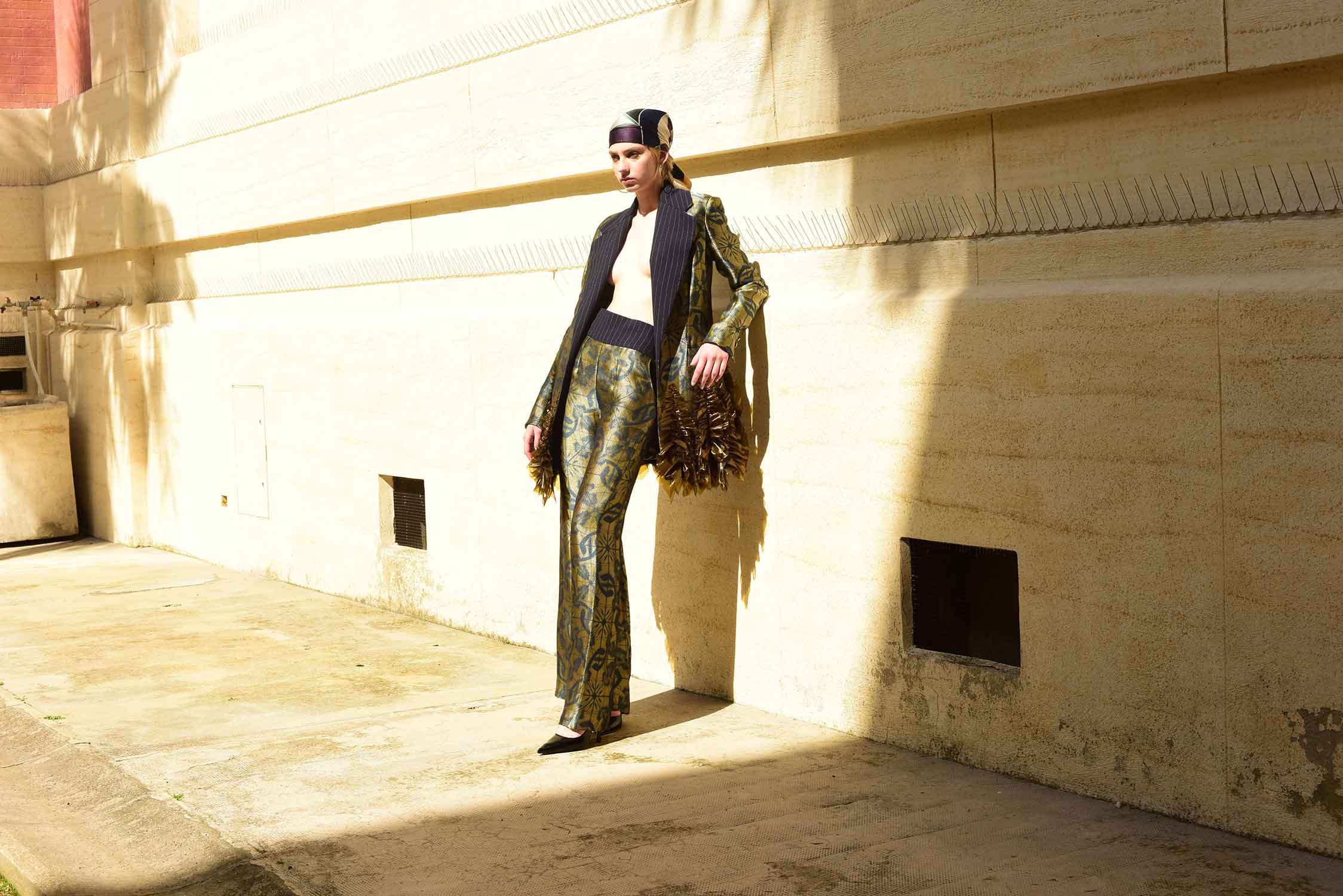
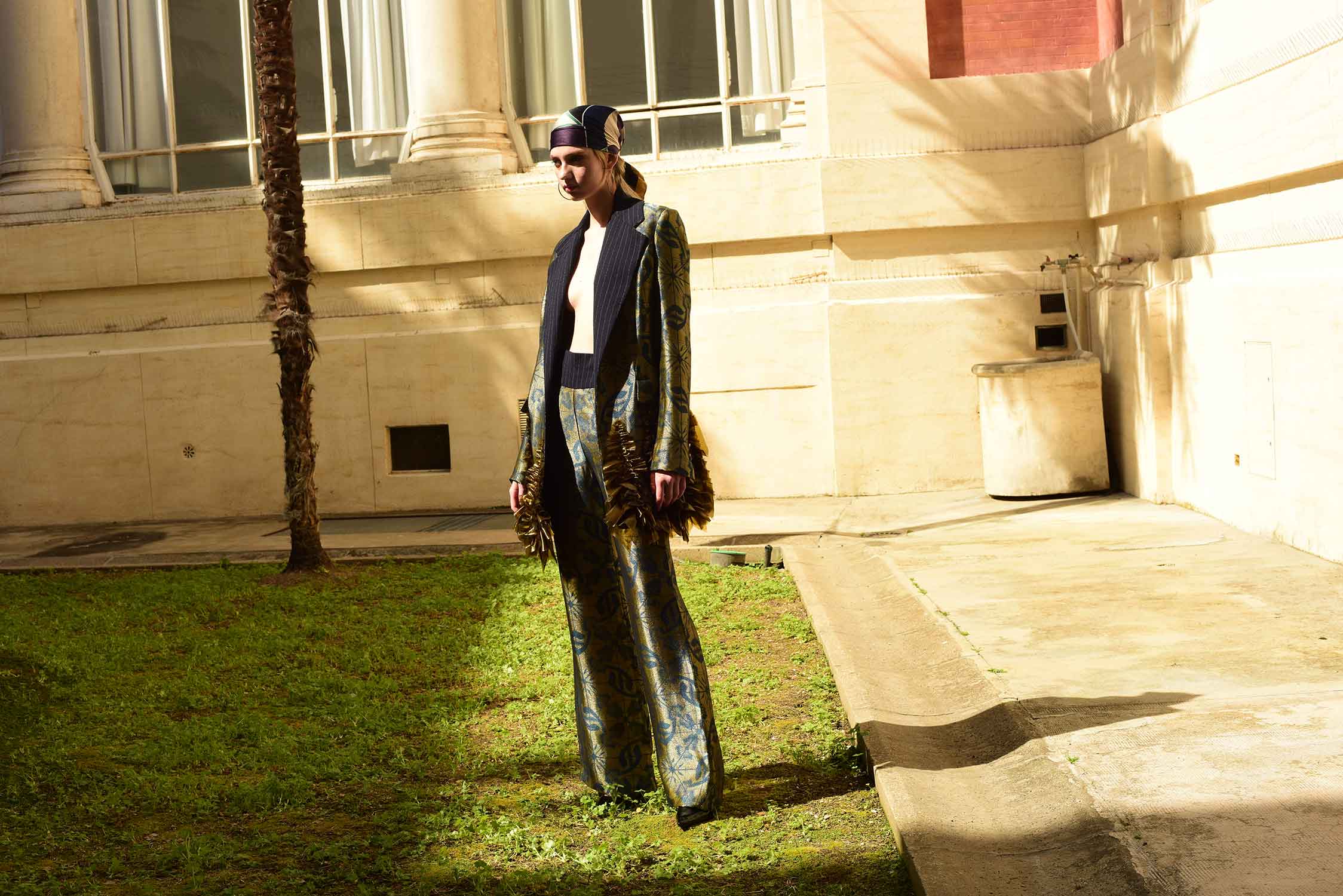
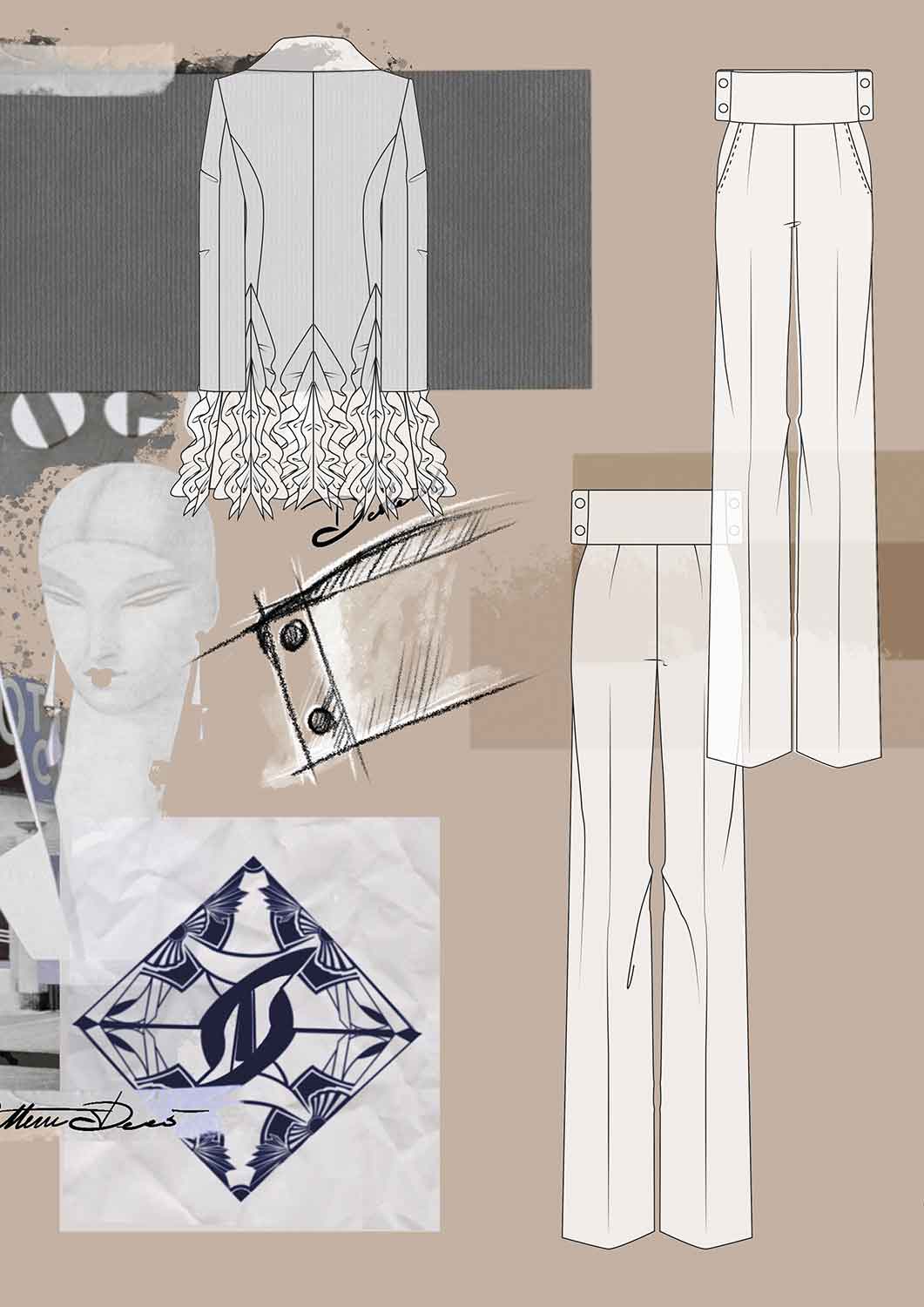
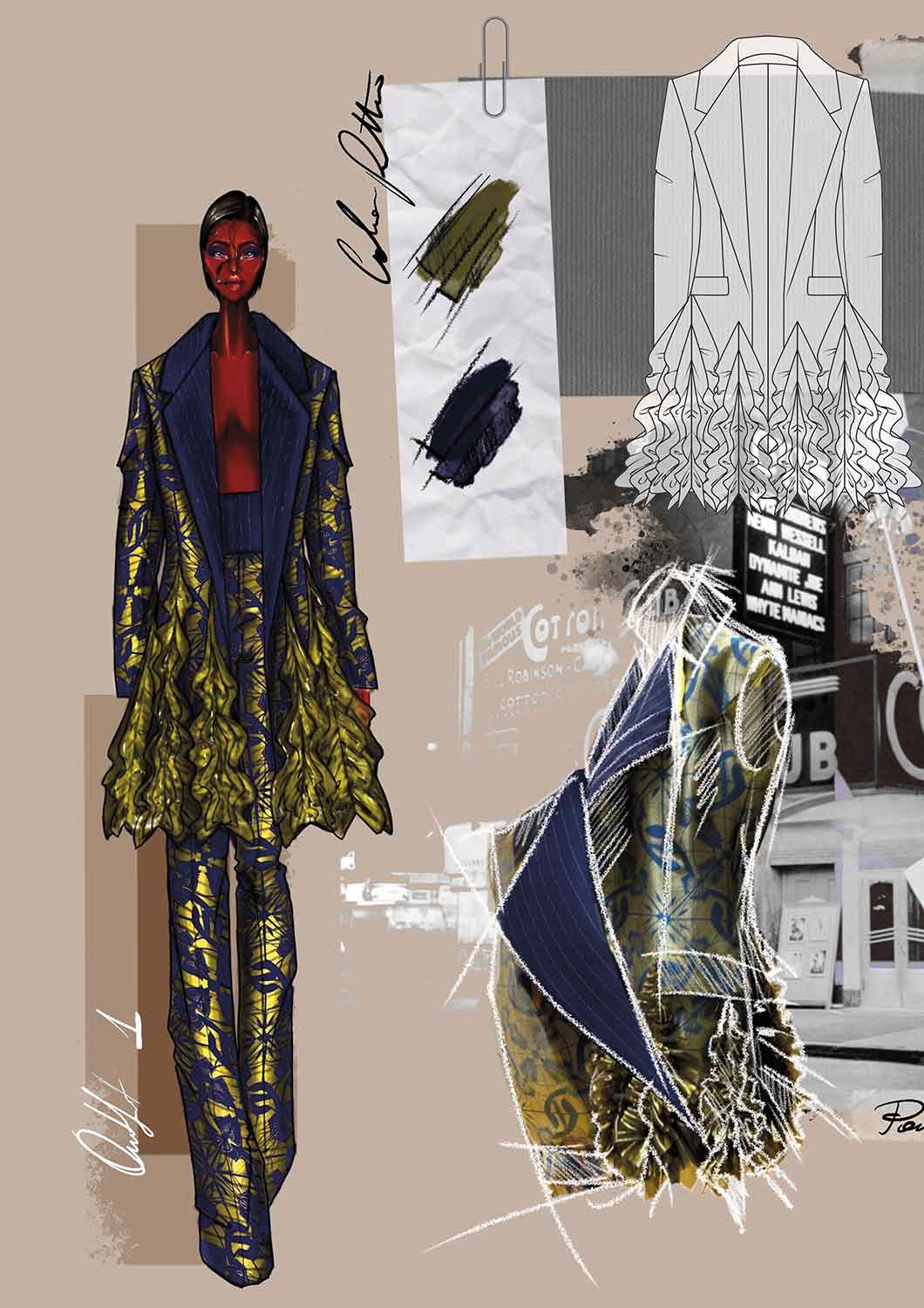
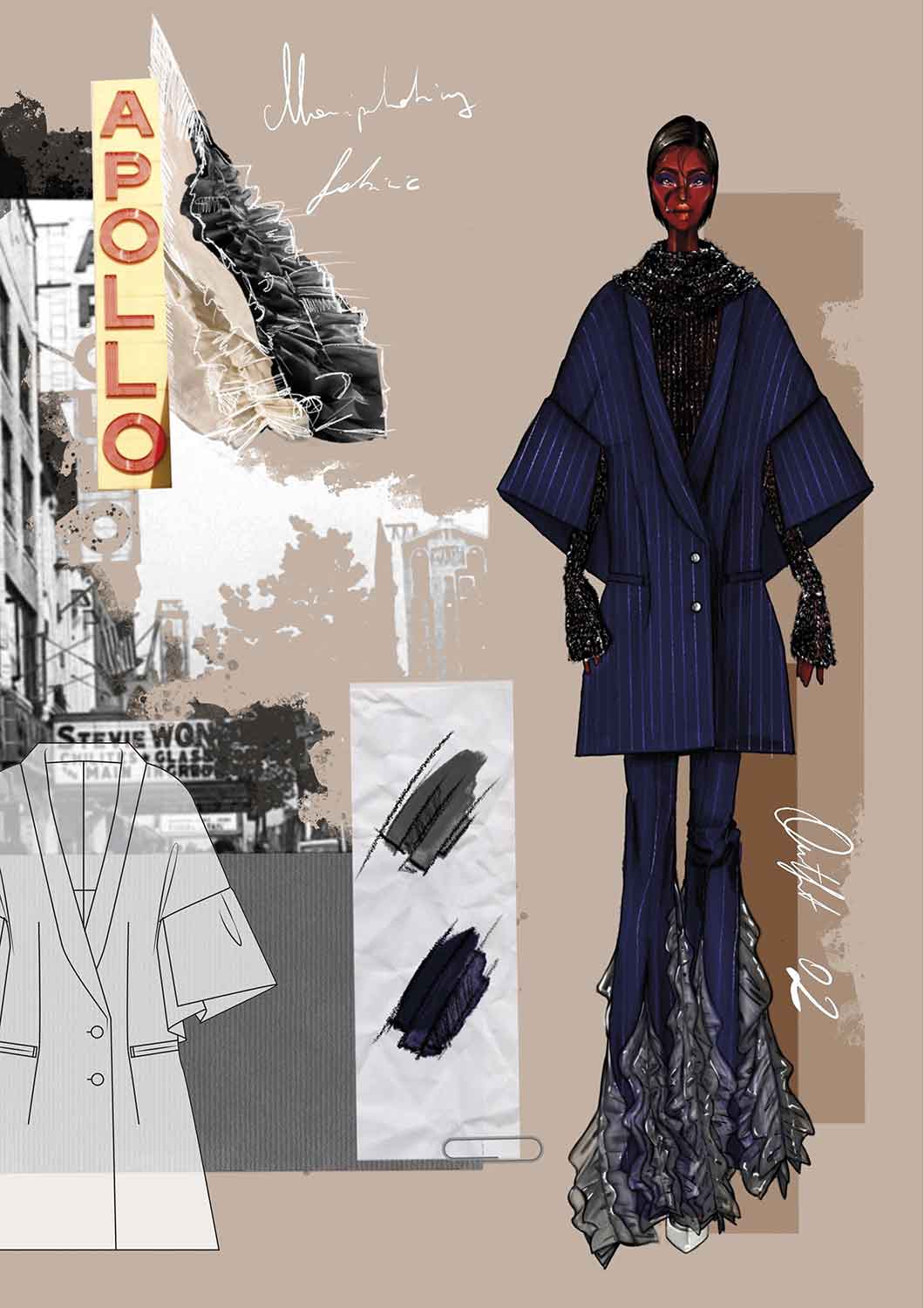
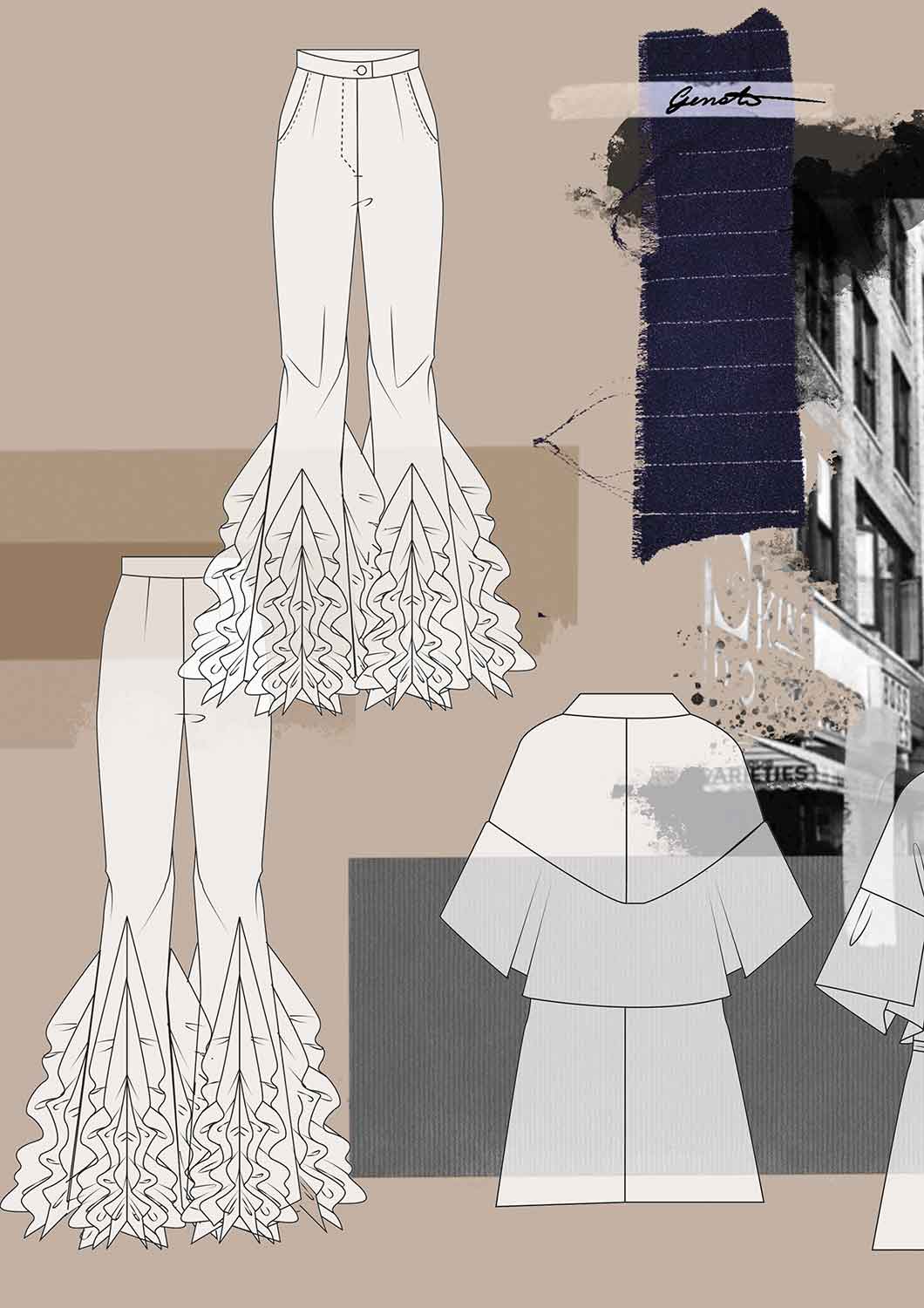
Apollo è il nome della collezione, ripreso dall’omonimo “Apollo Theater”, un luogo di culto, di espressione che riesce ancora oggi a racchiudere la forza simbolica di tutto il movimento di emancipazione nera. Questo è sempre stato il luogo chiave, un racconto biografico composto da spalti e palco, le cui parole venivano suonate dai maggiori esponenti della musica jazz come Charlie Parker e Duke Ellington. Questi protagonisti hanno permesso di capire ed analizzare l’evoluzione stilistica, estrapolando le loro power suits e il tessuto gessato, divenuti manifesto figurativo del movimento stesso.
La musicalità del Jazz negli anni ’20 era caratterizzata da un ritmo sfarzoso, accattivante che nella superficie veniva accostato alla bellezza della ricchezza e dell’opulenza: era congruente con il movimento artistico dell’art déco. Un gusto decorativo/architettonico dove la semplicità geometrica è mera superficie di un fondo più complesso che accompagnava perfettamente il periodo proibizionista americano. Attraverso le documentazioni dell’“Esposizione internazionale di arti decorative e industriali moderne” (1925) ed i libri presenti nella biblioteca dell’Accademia di Costume e Moda è stato possibile capire il processo logico delle texture e le regole del movimento stesso, creando qualcosa di nuovo che fosse affine al progetto artistico. Uno dei massimi esponenti era il costumista/illustratore Romain de Tirtoff, conosciuto anche come Ertè. Egli era capace di giocare con la figura femminile e di rappresentare una tale bellezza volumetrica, sfruttando le dicotomie del gusto del art déco. Quest’ultimo simboleggia il punto chiave, la congiunzione perfetta per amalgamare la mera bellezza superficiale del ritmo al profondo significato che in realtà rappresenta: una sinfonia di improvvisazioni di sfarzosità femminile, di autorità maschile, di opulenza e di forza interiore.
Apollo è il Jazz.
We can say that jazz is a virus, a virus of fredoom, which is spread around the world, “contaminating” everything on its way: cinema, poetry, painting, and life itself.” [Steve Lacy]
A captivating and aggressive rhythm which is the main character and mediator of a social and cultural event, that is still contemporary today, rappresenting the big Afro-American doctrine. Through the films “Bird” (1988, Clint Eastwood) and “Cotton Club” (1984, Francis Ford Coppola), it was possible to create a figurative historical excursus in which the historical power of Jazz emerged all-round, especially in a graphic way. A free genre, full of improvisation, of anger, the perfect ethnic minority manifesto that needed a voice that, witch the prohibitionist movements, began to have a not indifferent echo. In response, in 1925 the “Harlem Renaissance” was born. It was a cultural artistic movement against the racist attitudes of whites, denying everything that was imitation of another culture, highlighting “black creativity” in order to claim their unique identity.
Apollo is the name of the collection, taken from the homonymous “Apollo Theater”, a worship place full of expression that is able to embody the symbolic strength of the entire black emancipation movement. This has always been the key place, a biographical story composed of stands and a stage, whose words were played by the greatest exponents of jazz music such as Charlie Parker and Duke Ellington. With these people I’m able to understand and analyze the stylistic evolution, extrapolating their power suits and the pinstripe fabric, which can be considered as the figurative manifesto of the movement itself.
The musicality of Jazz in the 20s was characterized by a sumptuous, captivating rhythm that in the surface was combined with the beauty of wealth and opulence: it was congruent with the artistic movement of art deco. A decorative/architectural taste where geometric simplicity is a mere surface of a more complex background perfectly similar to the American prohibitionist period. Through the documentation of the “International Exhibition of Modern Decorative and Industrial Arts” (1925) and the books in the library of Accademia Costume e Moda, it was possible to understand the logical process of textures and the rules of the movement itself, creating something new that was right for the artistic project. One of the greatest exponents was the costume designer/illustrator Romain de Tirtoff, also known as Ertè. He was able to play with the female figure and to represent such a volumetric beauty, exploiting the dichotomies of art deco taste. This movement rappresent the key, the perfect connection to bond the first mere rhythm beauty with his deep real meaning: a symphony of improvisations of feminine richness, masculine authority, opulence and inner strength.
Apollo is Jazz.
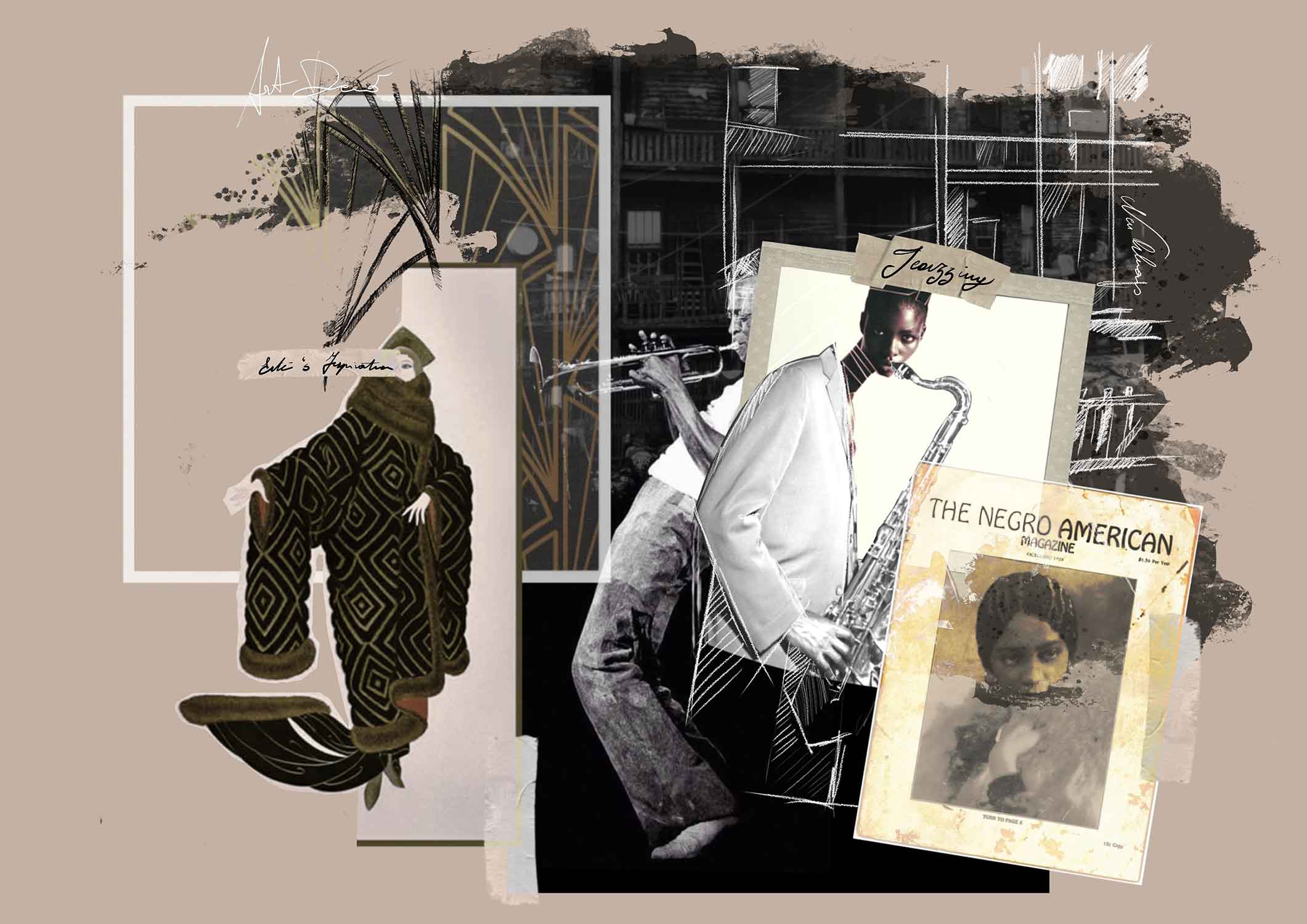
Moodboard
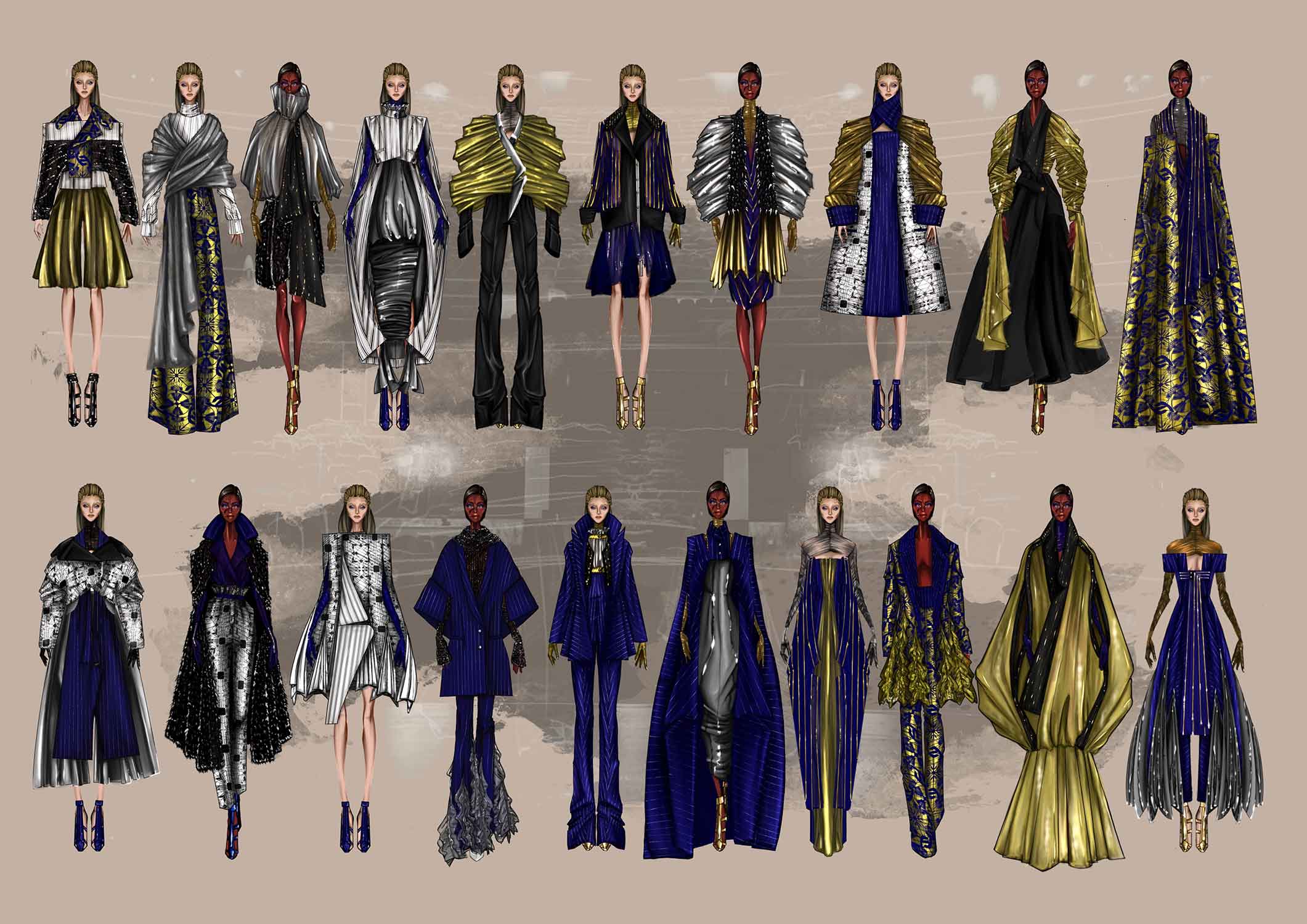
line up
Share the project:


