

OPHELIA

MATTEO FORTINI
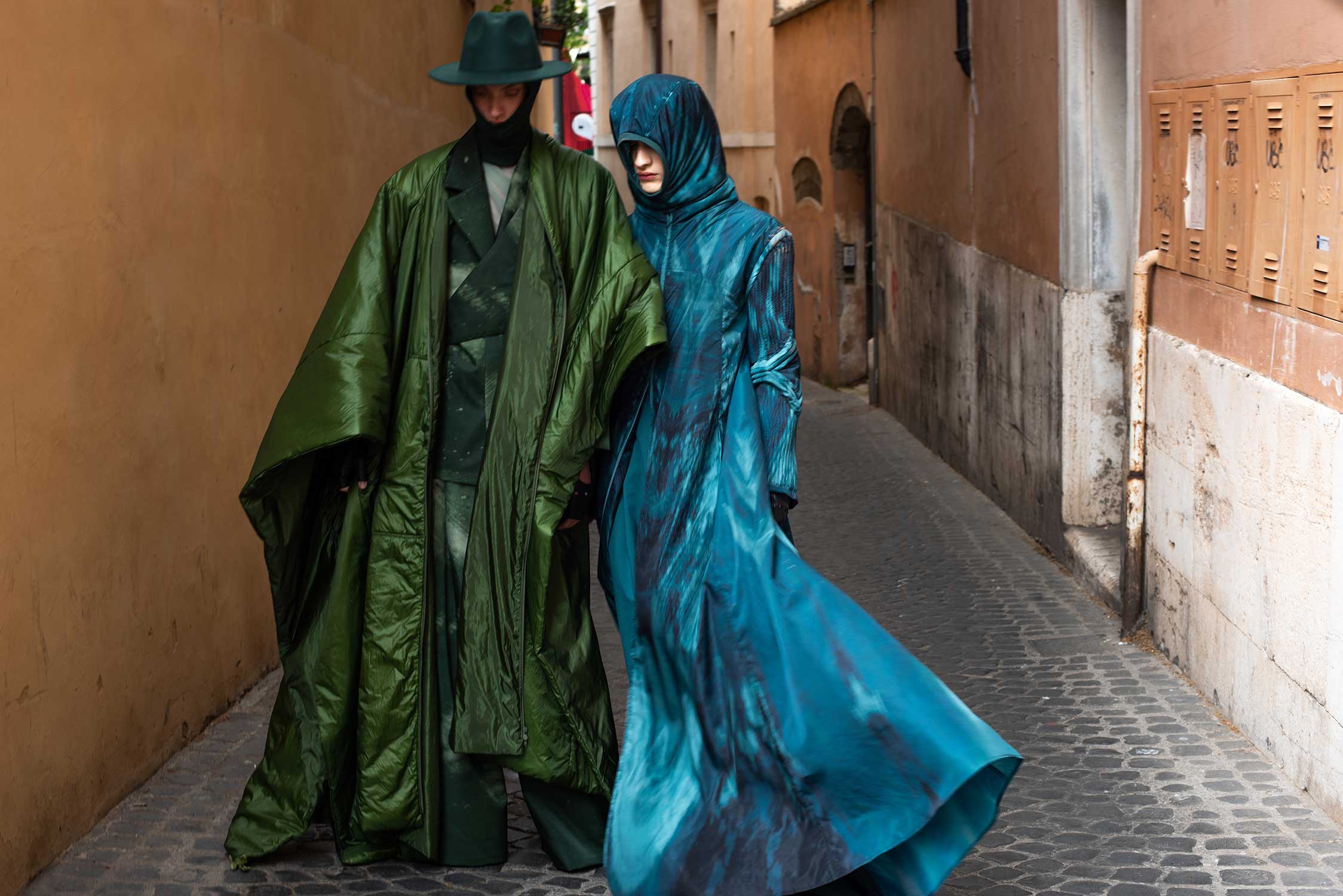
La figura di Ophelia è entrata a far parte della tradizione letteraria mondiale grazie al ruolo che riveste nella tragedia shakespeariana di Amleto.
Analizzandone gli aspetti fondamentali, di questo personaggio, si possono suddividere in tre fasi:
La prima fase, composta da “Life&Mind”, rispecchia l’inconscio che nella tragedia viene analizzato attraverso la descrizione della follia generata dalla delusione amorosa. Shakespeare si sofferma su quest’aspetto in particolare nel dialogo di Amleto e Ophelia che può essere approfondito attraverso le opere fotografiche di Siermond. Nelle sue fotografie egli rappresenta situazioni e soggetti immersi in atmosfere mistiche e istinti freudiani di vita e di morte, Eròs e Thanatos. Analizzando alcune delle sue fotografie, è stato possibile associare ad ognuna di esse una parola che ha permesso la collocazione del progetto in un dna preciso.
Nella seconda fase, “Nature”,ci si sofferma sull’elemento dell’acqua, che rispecchia il rapporto che quest’ultima ha con Ophelia, dal momento in cui lei si lascia morire in essa; e sullo studio estetico di Ophelia ripreso dai dipinti degli artisti preraffaelliti J. Waterhouse e J. Millais. La natura viene rappresentata spesso dagli artisti preraffaelliti nella seconda metà dell’800 e contribuiscono a istituzionalizzare la figura di Ophelia nell’immaginario collettivo. Altro elemento caratteristico illustrato in questo periodo, sono le armature dei soldati rinascimentali.
La terza ed ultima fase, nominata “Body”, proietta l’armatura rinascimentale ad una proiezione dell’architettura anatomica tipica dei ballerini della danza contemporanea la quale si pone come obiettivo l’allontanarsi dalla formalità e rigidità dei canoni della danza classica ed una comunicazione espressiva attraverso una danza “libera”, spiegata attraverso scatti fotografici presenti nel magazine “The Wonderful World of Dance” di Savannah Saunders.
Ophelia is part of the worldwide literary tradition through her role in the Shakespearian tragedy of Hamlet.
Analyzing the fundamental aspects of this character, can be divided into three phases:
The first phase, composed of “Life&Mind”, reflects the unconscious that in tragedy is analysed through the description of the insanity generated by the disappointment of love. Shakespeare dwells on this aspect in particular in the dialogue of Hamlet and Ophelia, which can be deepened through the photographic works of Siermond. In his photographs he represents situations and subjects immersed in mystical atmospheres and Freudian instincts of life and death, Eros and Thanatos. Analyzing some of his photographs, it was possible to associate to each of them a word that allowed the placement of the project in a precise DNA.
In the second phase, “Nature”, we focus on the element of water, which reflects the relationship that the latter has with Ophelia, from the moment she lets herself die in it; and the aesthetic study of Ophelia taken from the paintings of the pre-Raphaelite artists J. Waterhouse and J. Millais. Nature is often represented by pre-raphaelite artists in the second half of the 19th century and contributes to institutionalizing the figure of Ophelia in the collective imagination. Another characteristic element illustrated in this period are the armor of the Renaissance soldiers.
The third and final phase, named “Body”project the Renaissance armour to a projection of the anatomical architecture typical of contemporary dancers, which aims to move away from the formality and rigidity of the canons of classical dance and an expressive communication through a dance “free”, explained through photographic shots in the magazine “The Wonderful World of Dance” by Savannah Saunders.

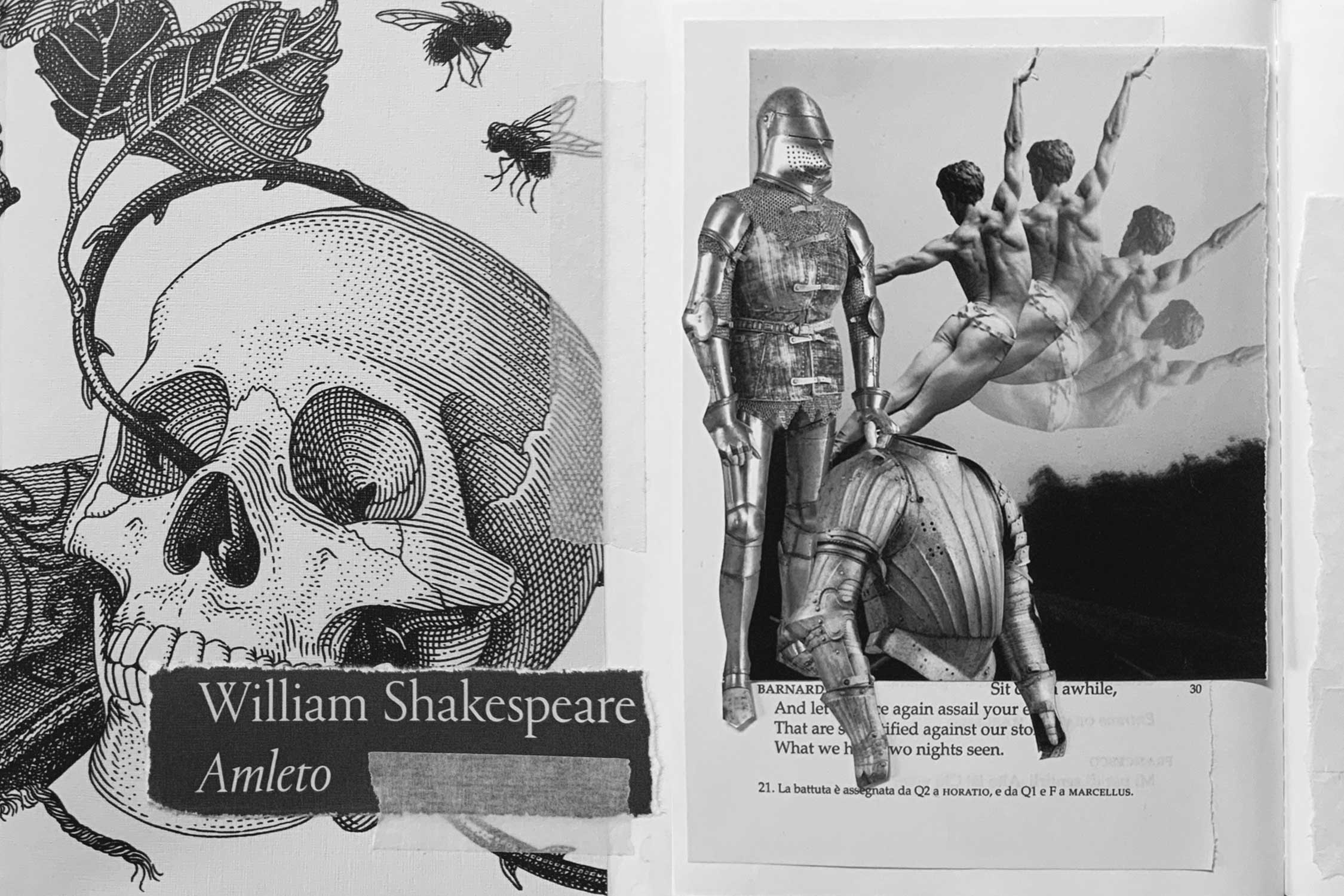
Moodboard
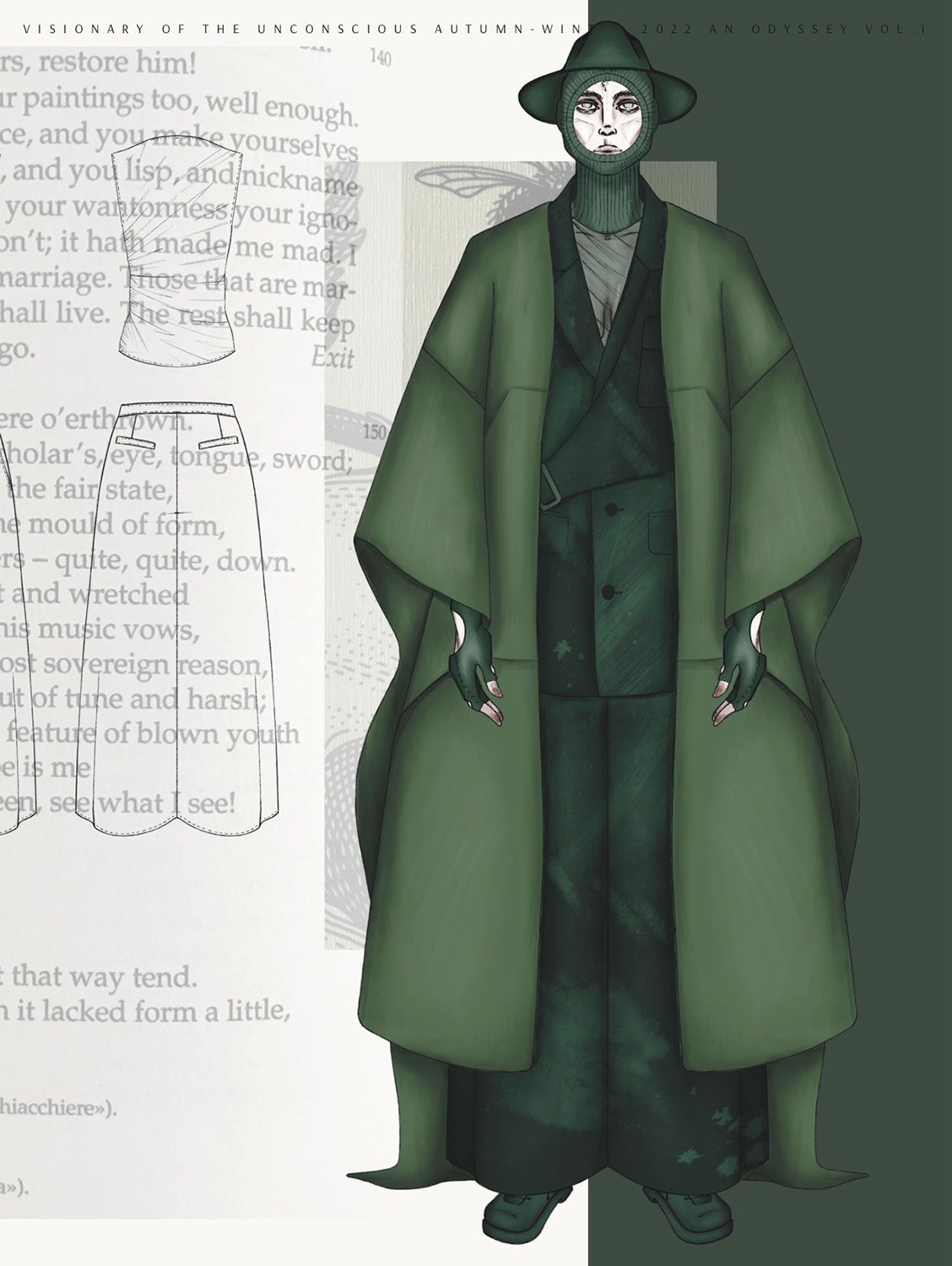
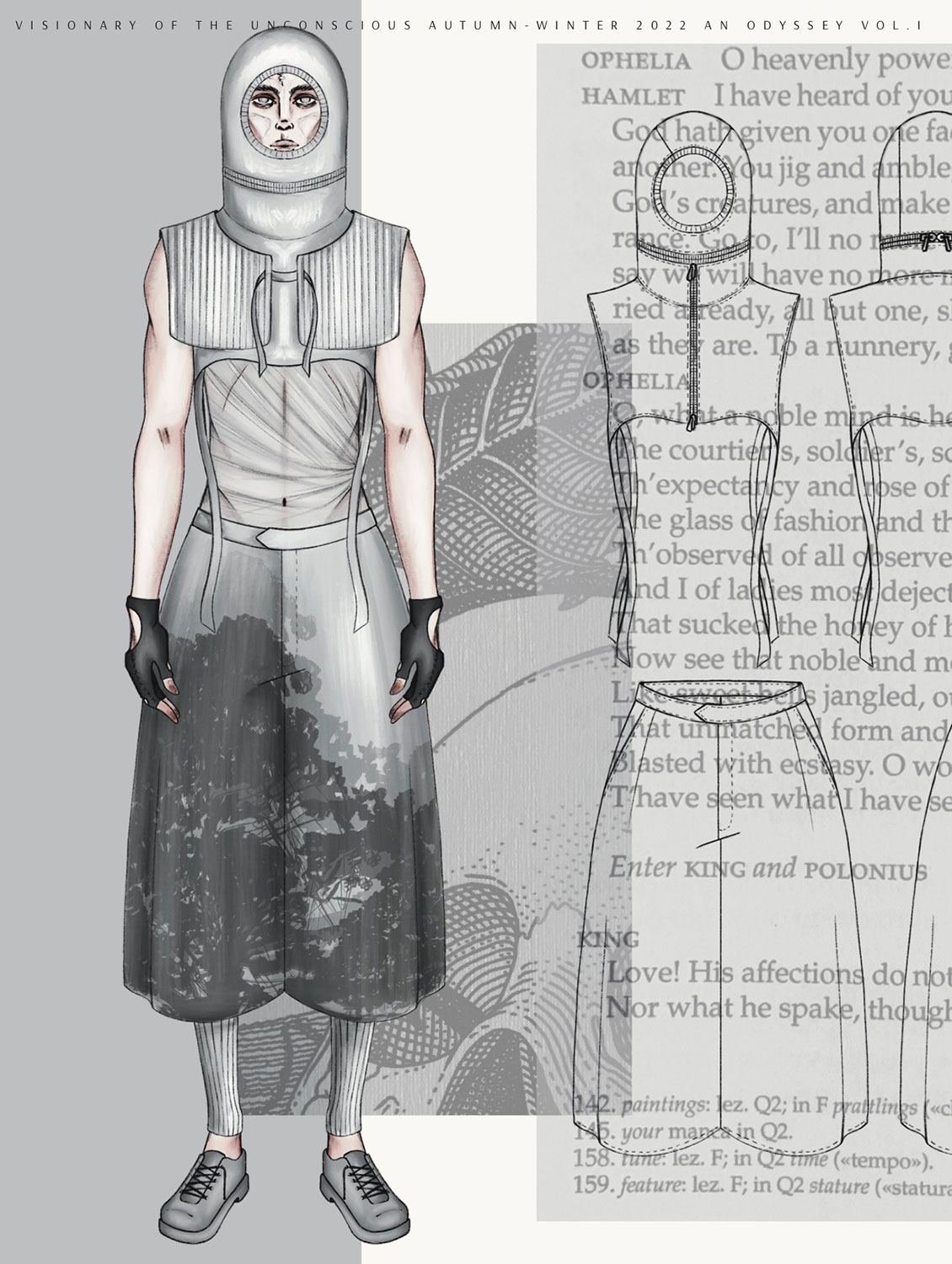
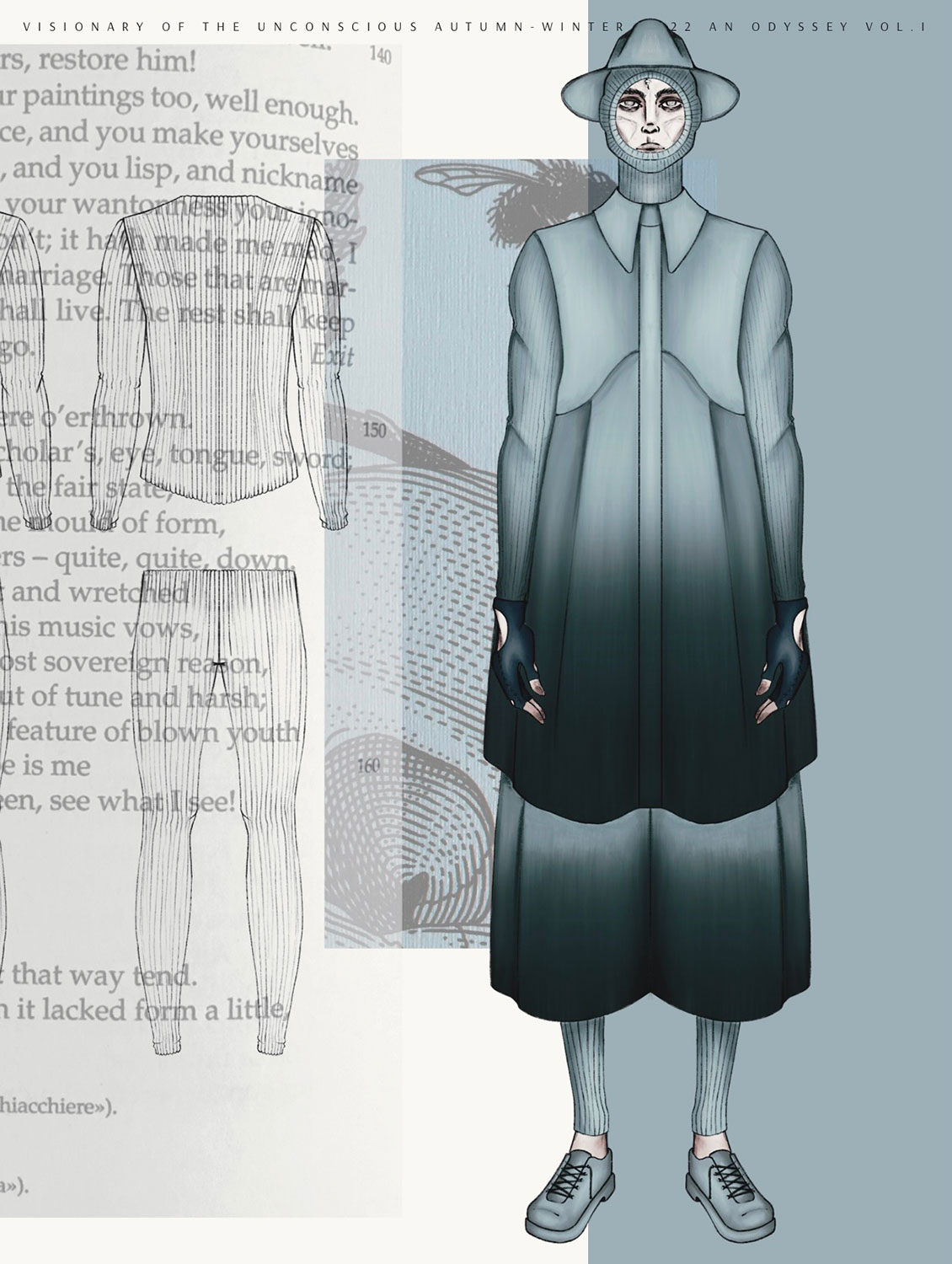
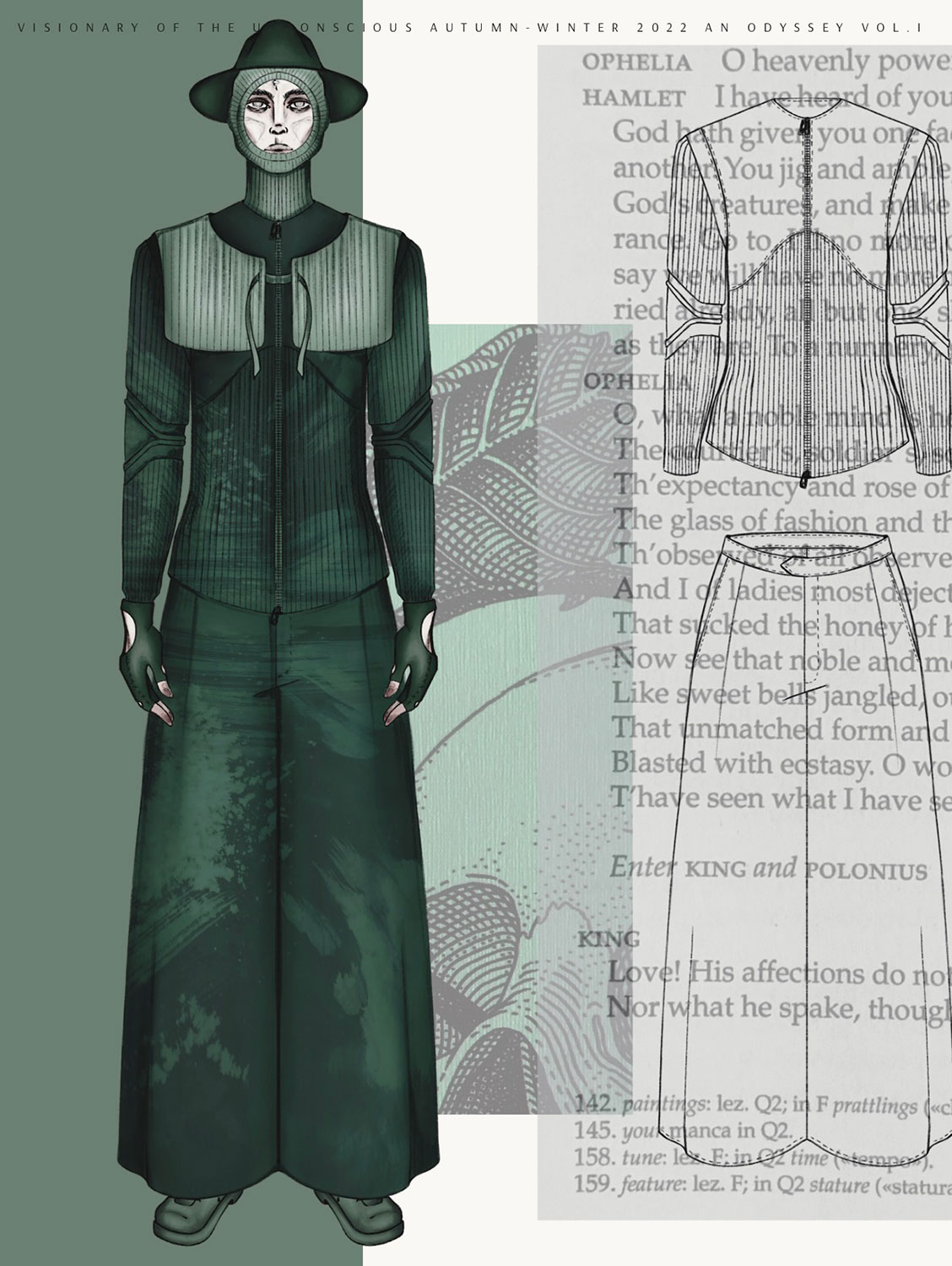
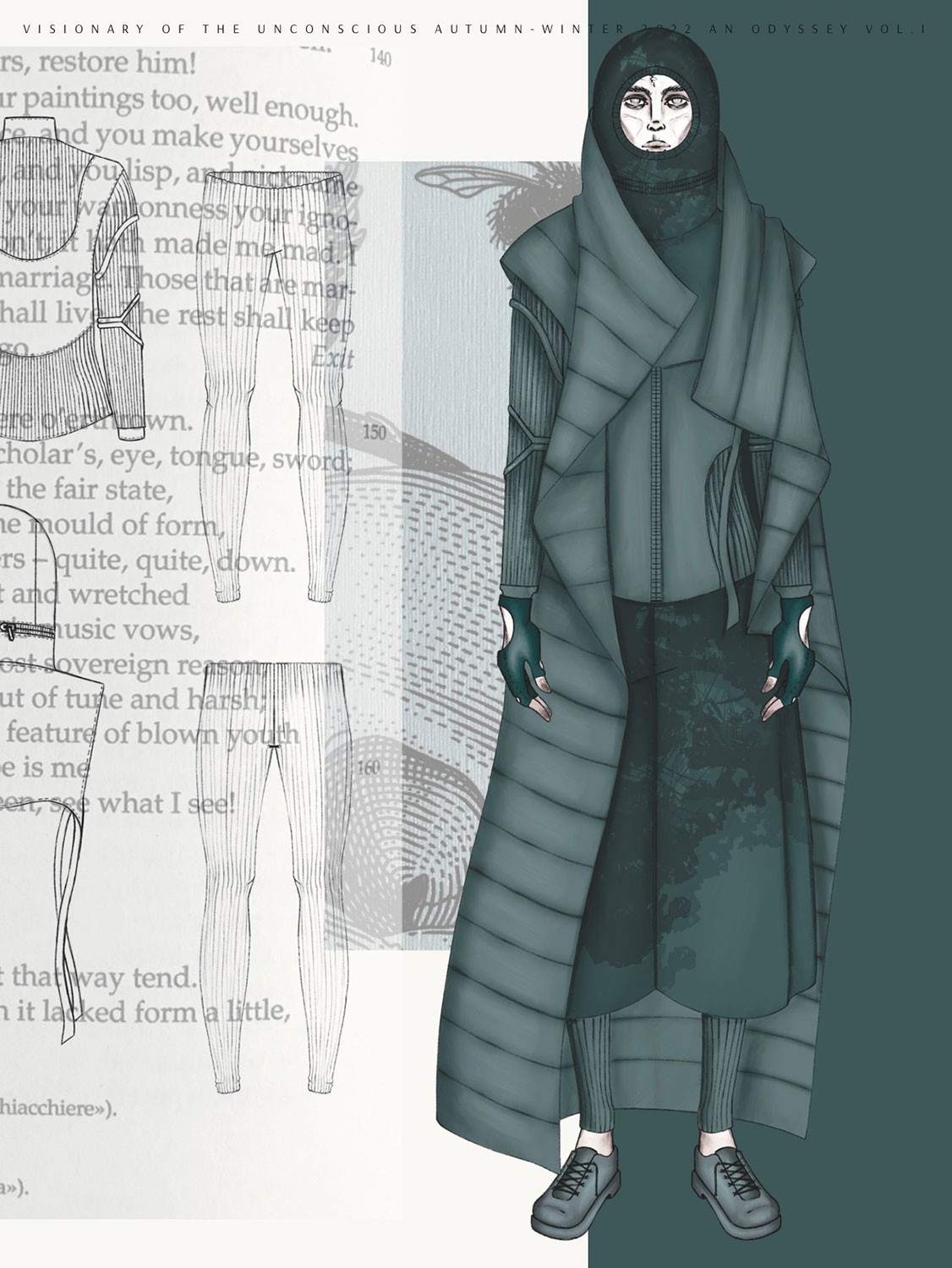
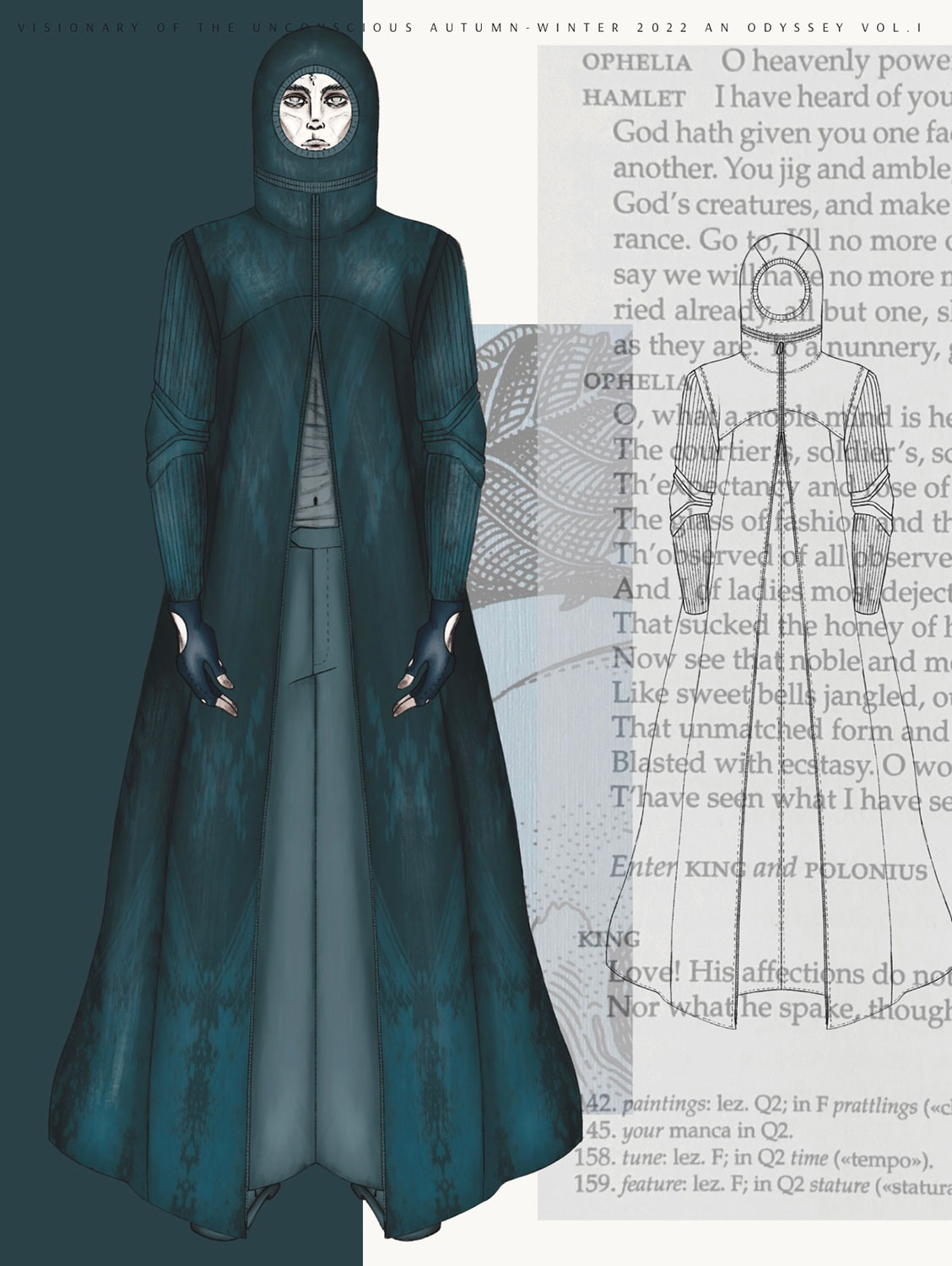
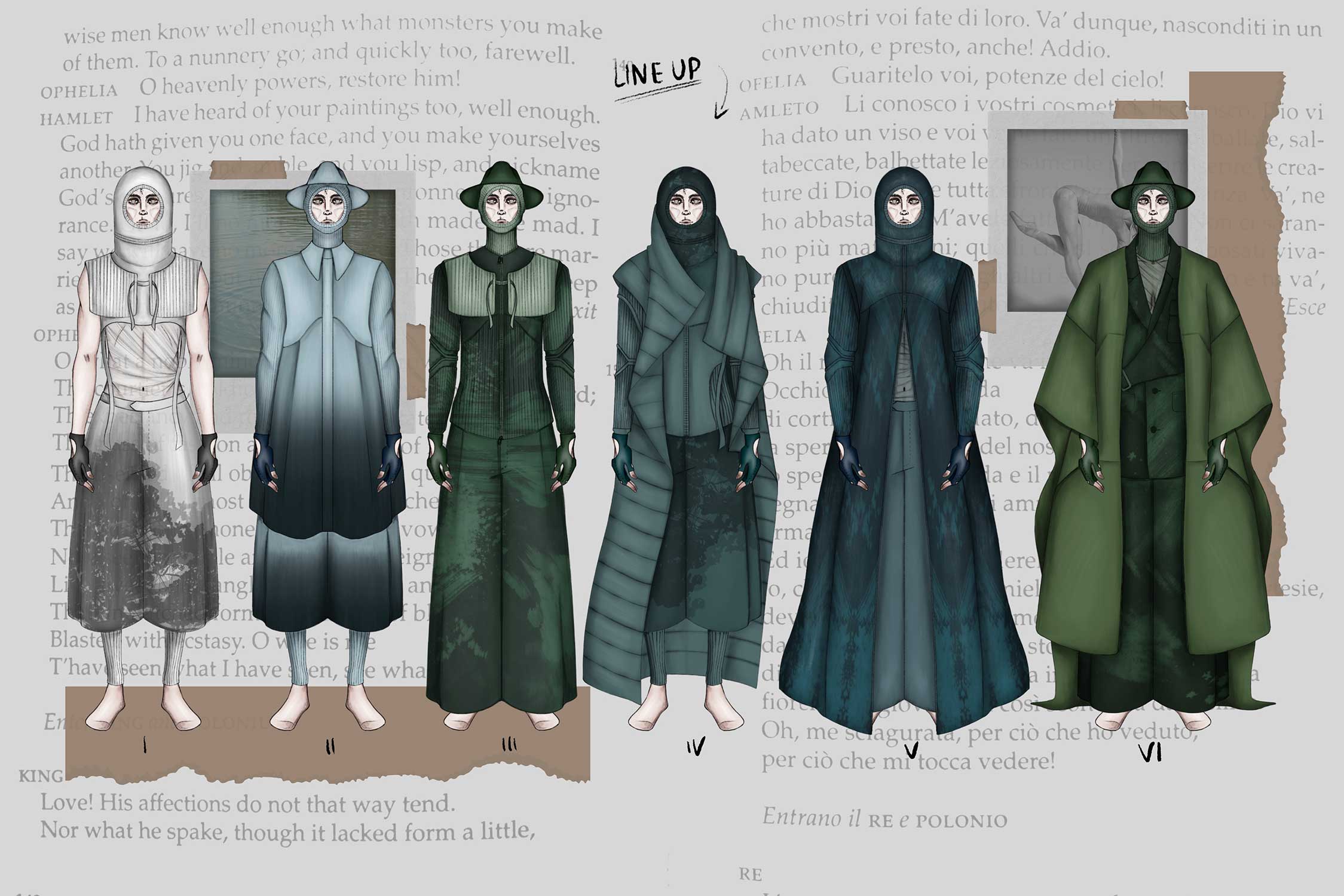
line up
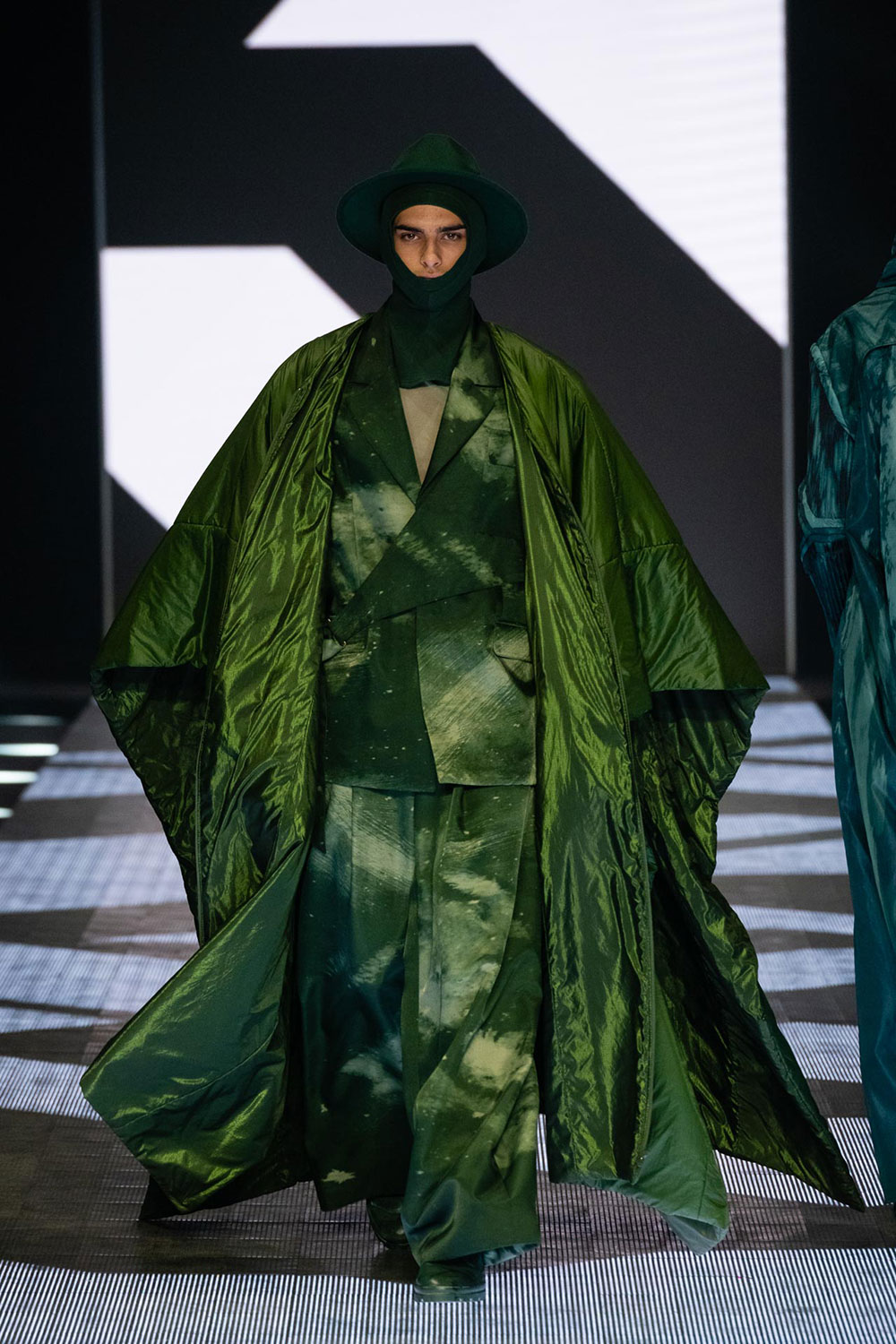
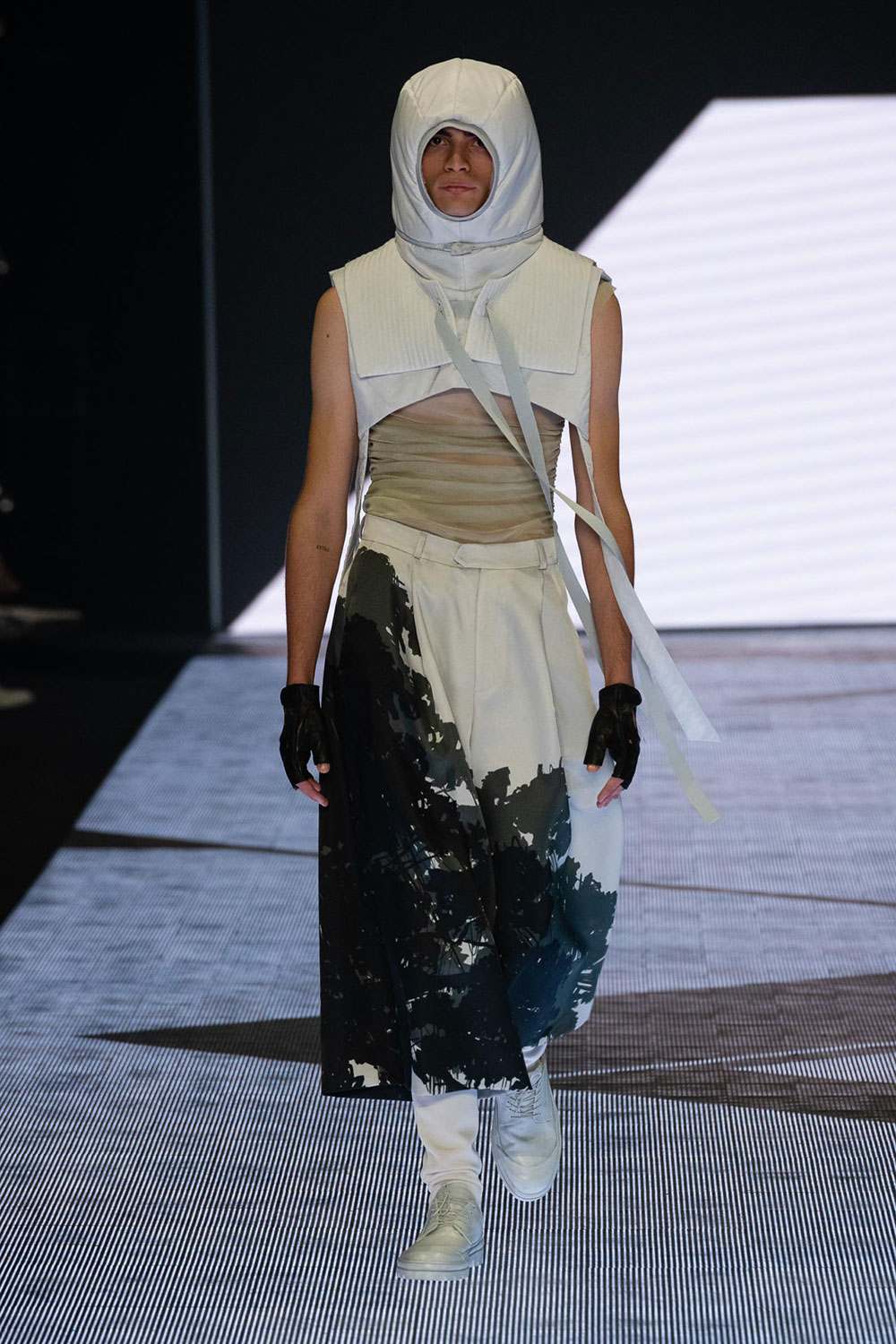

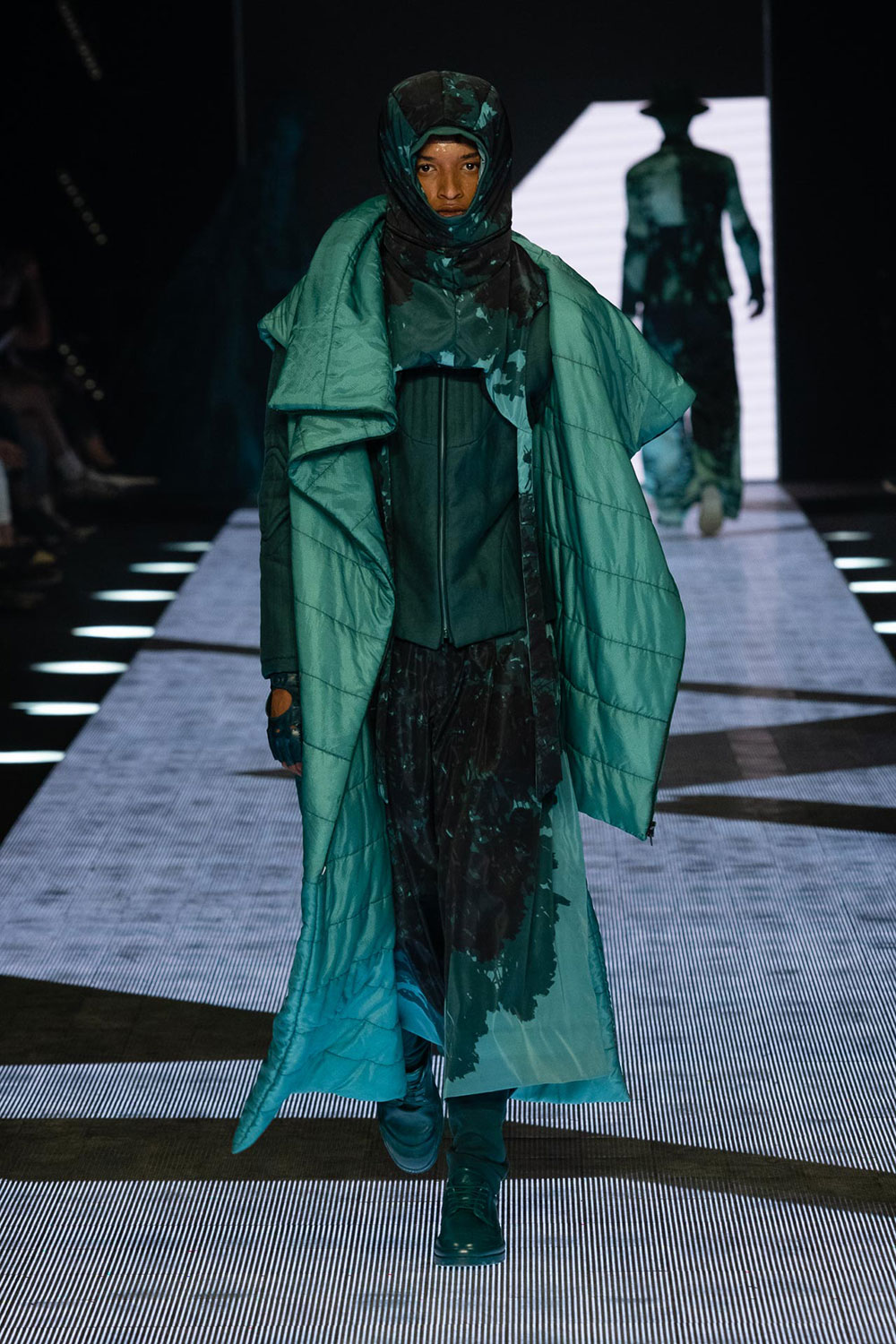
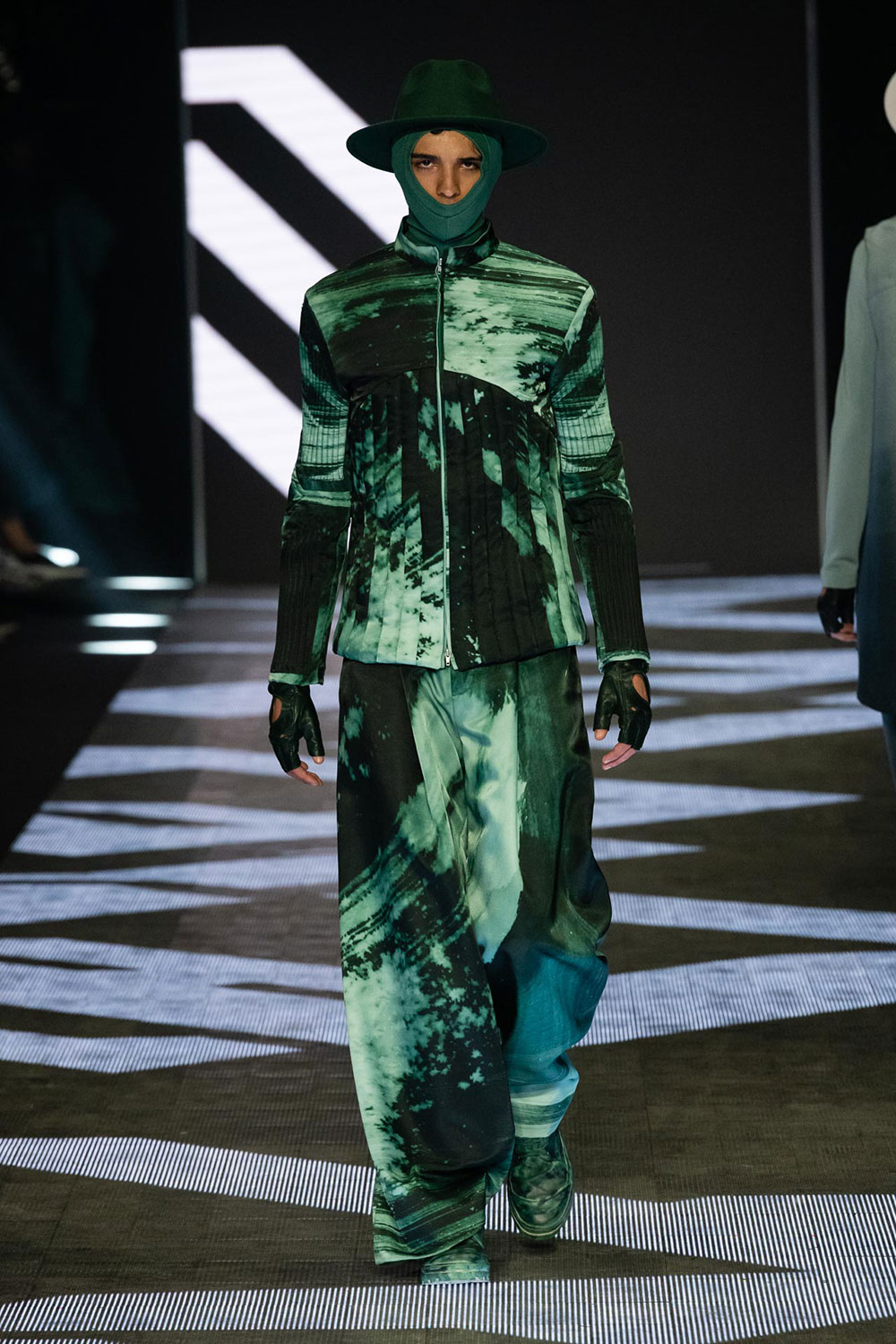
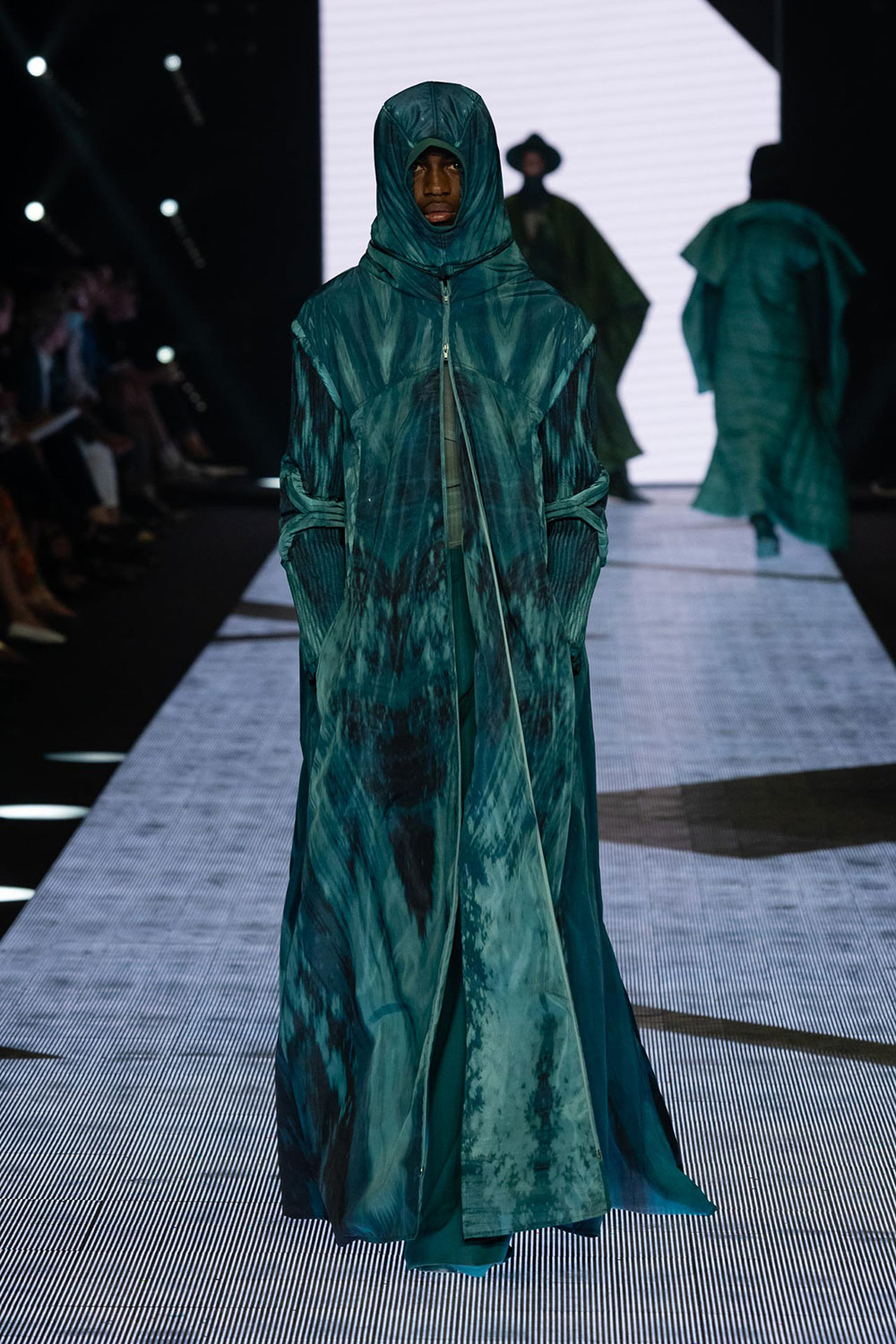
Catwalk
Catwalk
Share the project:


