

La belle dame sans merci
NOEMI CASTELLI
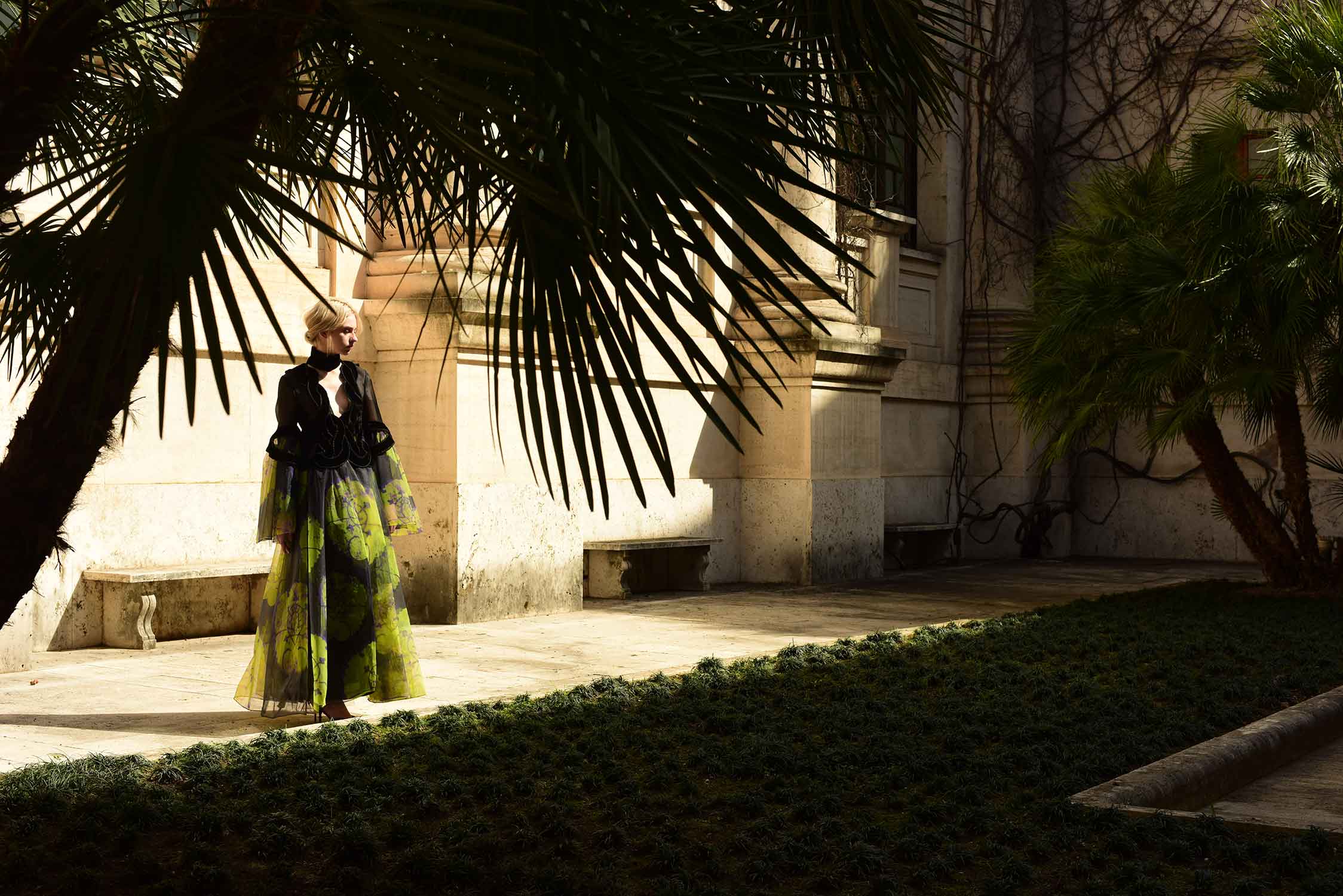
“La belle dame sans merci” è una collezione che nasce dall’interpretazione dell’omonima ballata di John Keats del 1819 e dalla traduzione pittorica di quest’ultima di Frank Cadogan Cowper del 1924.
La ballata parla dell’incontro tra un cavaliere sperduto in un paesaggio sterile e desolato, e il poeta stesso. Il cavaliere racconta del giorno in cui si è imbattuto in una donna, misteriosa e bellissima, dagli occhi selvaggi. La bella dama afferma di essere “figlia di una fata” e di amarlo. Egli, completamente ammaliato, si fa condurre da lei alla “Grotta degli elfi”, dove si addormenta. Durante il sonno, il cavaliere sogna ed ha una visione di principi e re, che lo ammoniscono: “la bella dama senza pietà” ormai lo ha preso nella sua rete, come ha fatto con loro, ed egli è ormai in suo potere. Quando il cavaliere si sveglia, si accorge di essere stato abbandonato dalla bella dama, che non tornerà più, mentre lui dovrà rimanere ad attenderla, vagando sconsolato in balia del suo sogno.
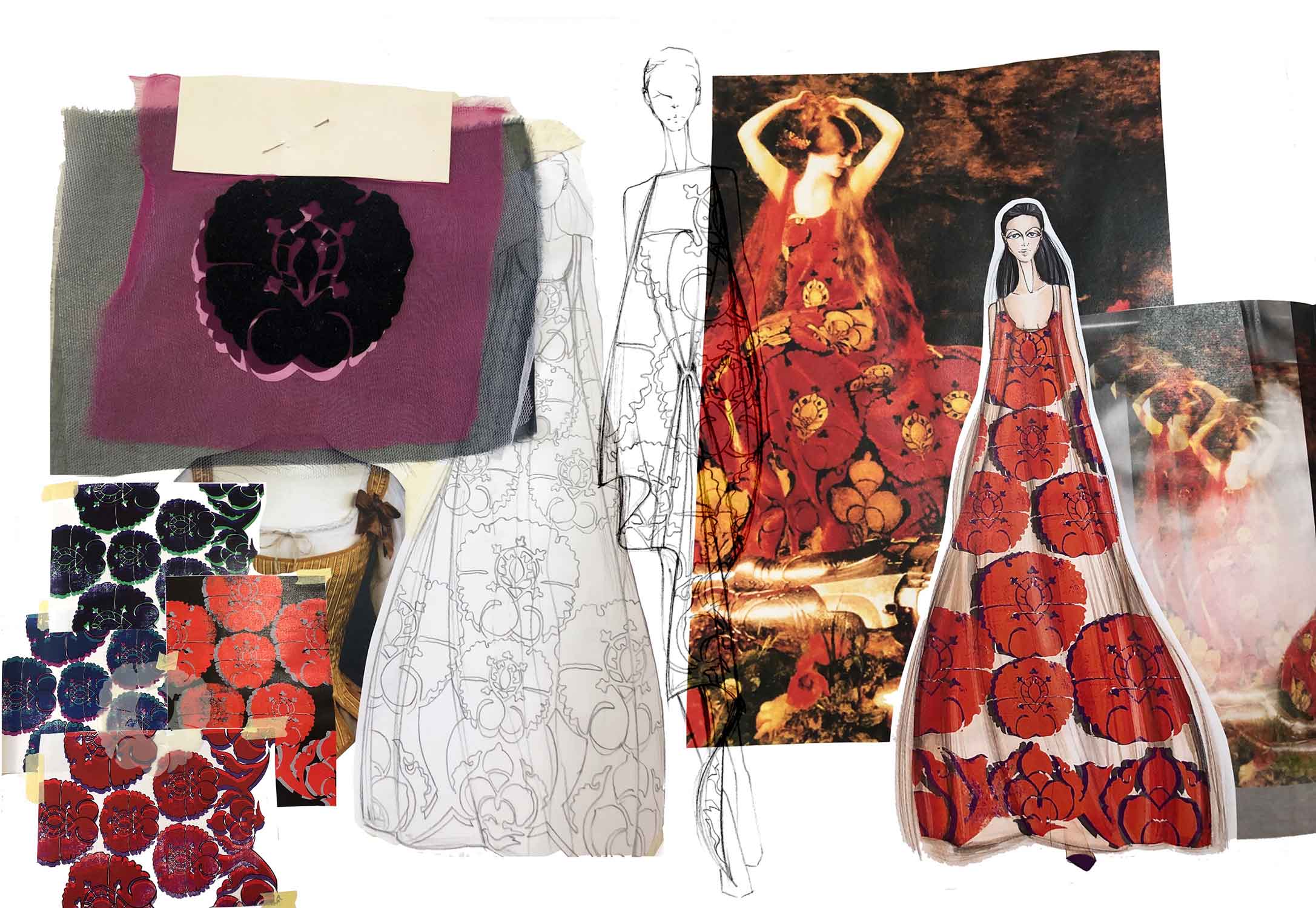
Dal dipinto di C.Cowper, invece, emerge il cavaliere definitivamente sconfitto dalla dama che risorge con guance rosate pronta a trovare una nuova vittima da ammaliare. Mentre il cavaliere giace morto nell’erba, essa è raffigurata come una splendida e terribile femme fatale. Il suo abito in velluto decorato da papaveri stilizzati, ricorda le decorazioni klimtiane, di moda durante il periodo di esecuzione del quadro.
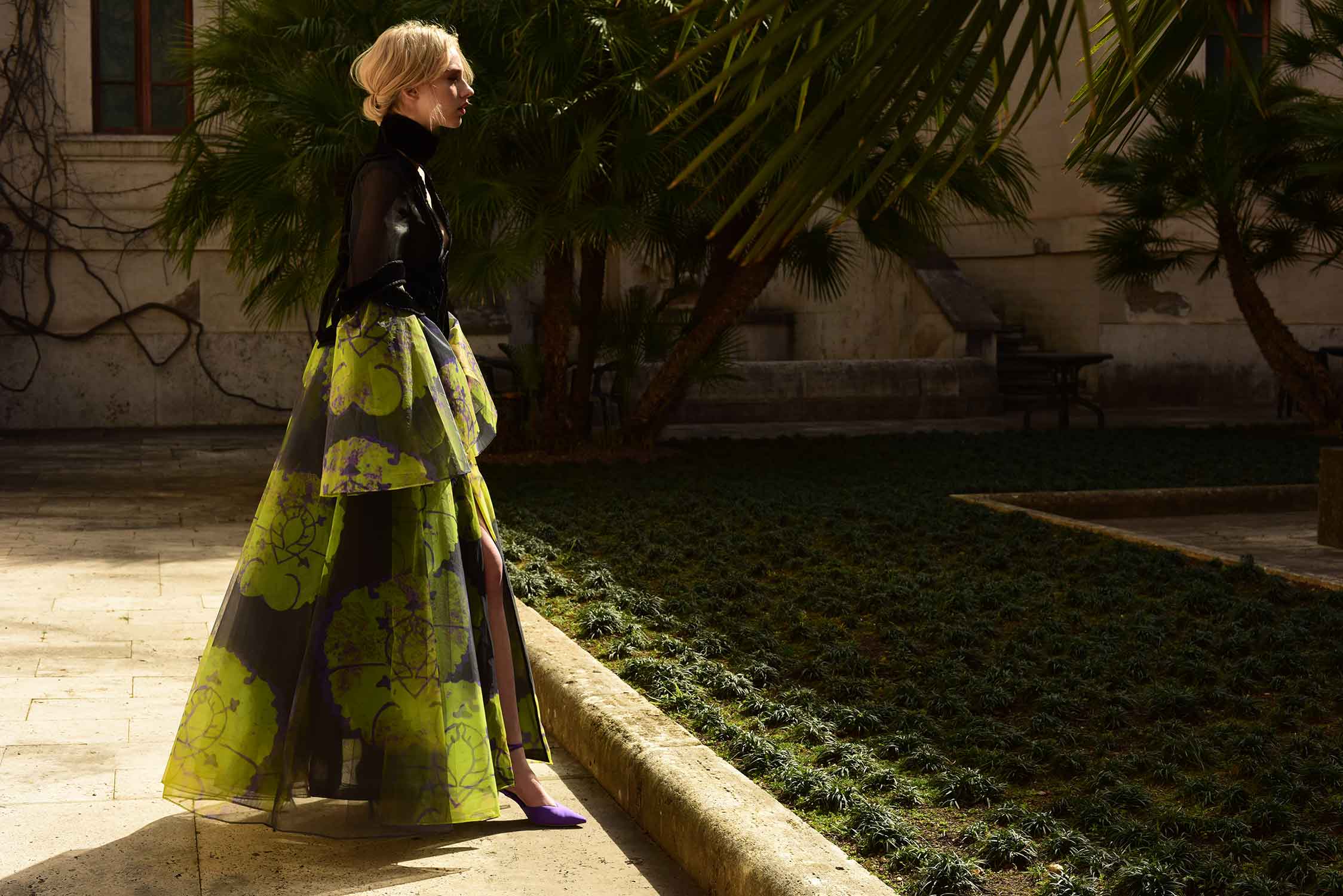
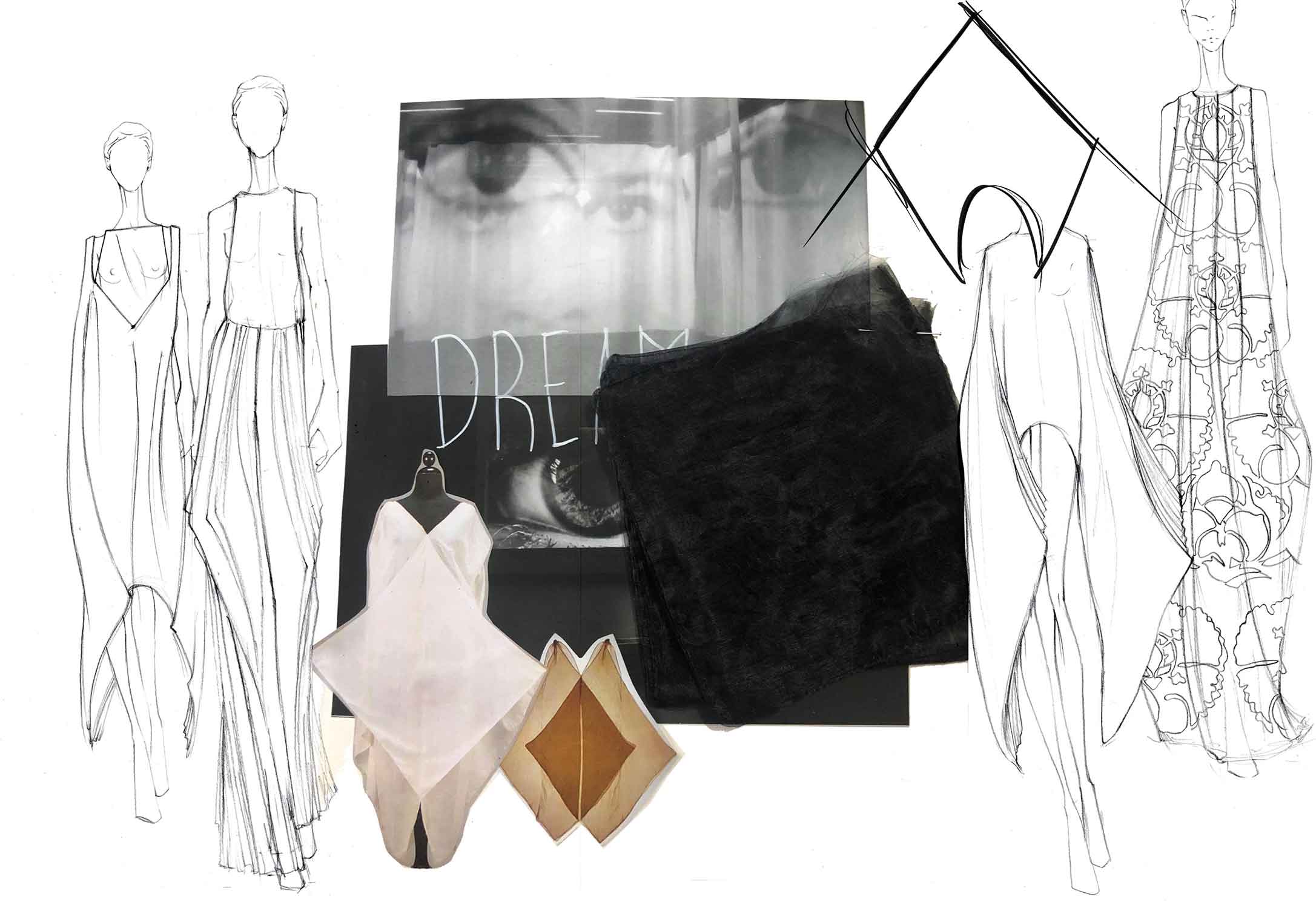
Attraverso lo studio e il ridisegno dei papaveri raffigurati sull’abito, e ripetuti poi in molteplici opere di C.Cowper, sono arrivata alla realizzazione di stampe floreali raffiguranti gli stessi, a cui ho aggiunto un effetto 3D dato dalla sovrapposizione di fiori, in vari strati. Questa è la traduzione concettuale del sogno. Cosa è il sogno? Il sogno è la “proiezione” del nostro inconscio, dunque del nostro io. Questa visione viene interpretata nelle istallazioni di arte contemporanea che rappresentano proiezioni su vari layers, e da me interpretata sovrapponendo fiori di diversi colori.
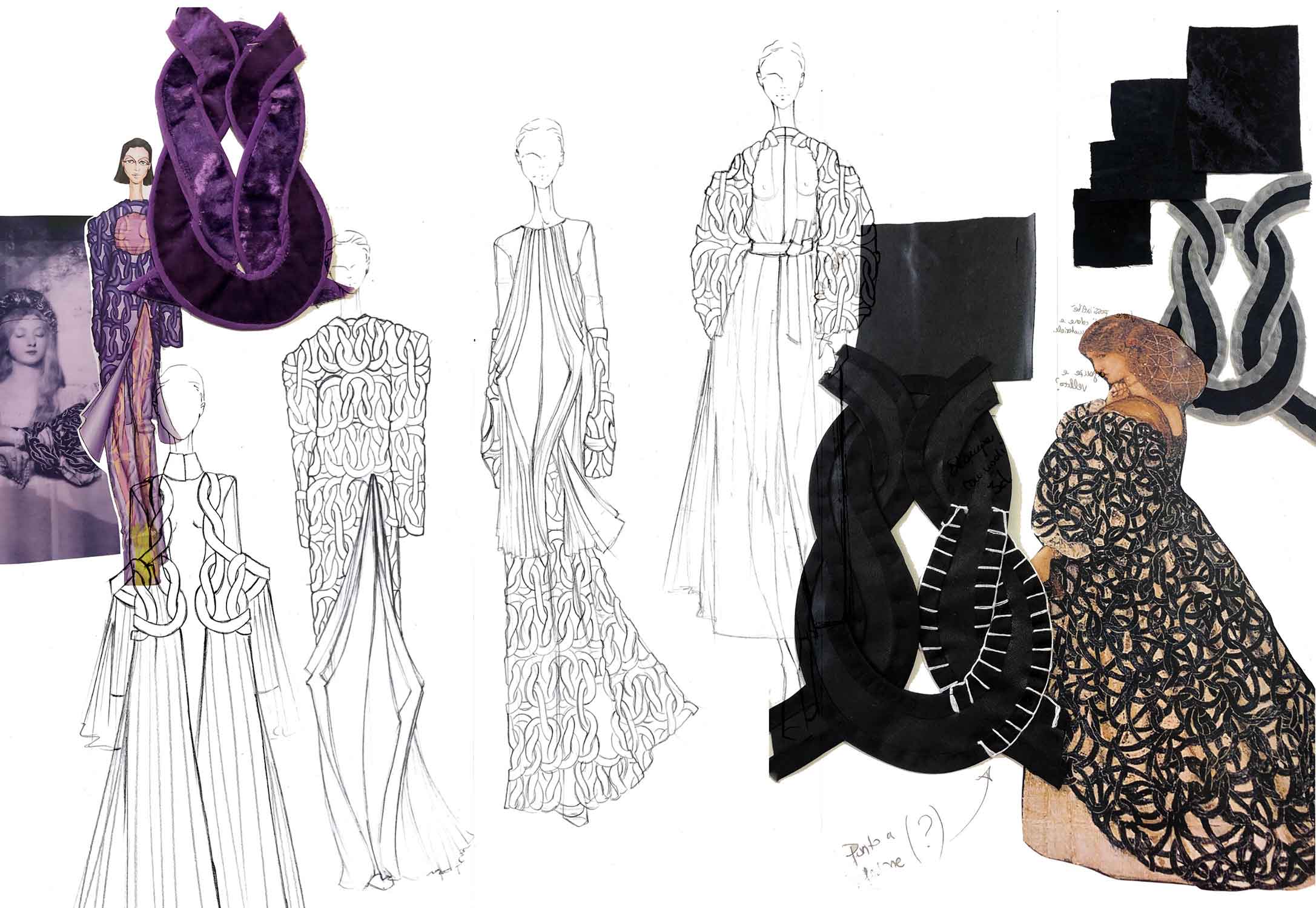
Mentre dall’analisi di altre opere di Frank Cadogan Cowper che raffigura donne del rinascimento italiano e non, come il ritratto di Lucrezia Borgia, ho estrapolato dettagli come l’intreccio di nodi dipinto sulle maniche dell’abito. Ho studiato, ridisegnato e riadattato questo particolare, rendendolo una delle principali lavorazioni della collezione, in velluto e organza di seta, insieme alle stampe sviluppate dai dettagli dei damascati dipinti nelle opere. Alcune forme nascono dallo studio del costume rinascimentale femminile, soprattutto le maniche, rilette però in chiave contemporanea e couture.
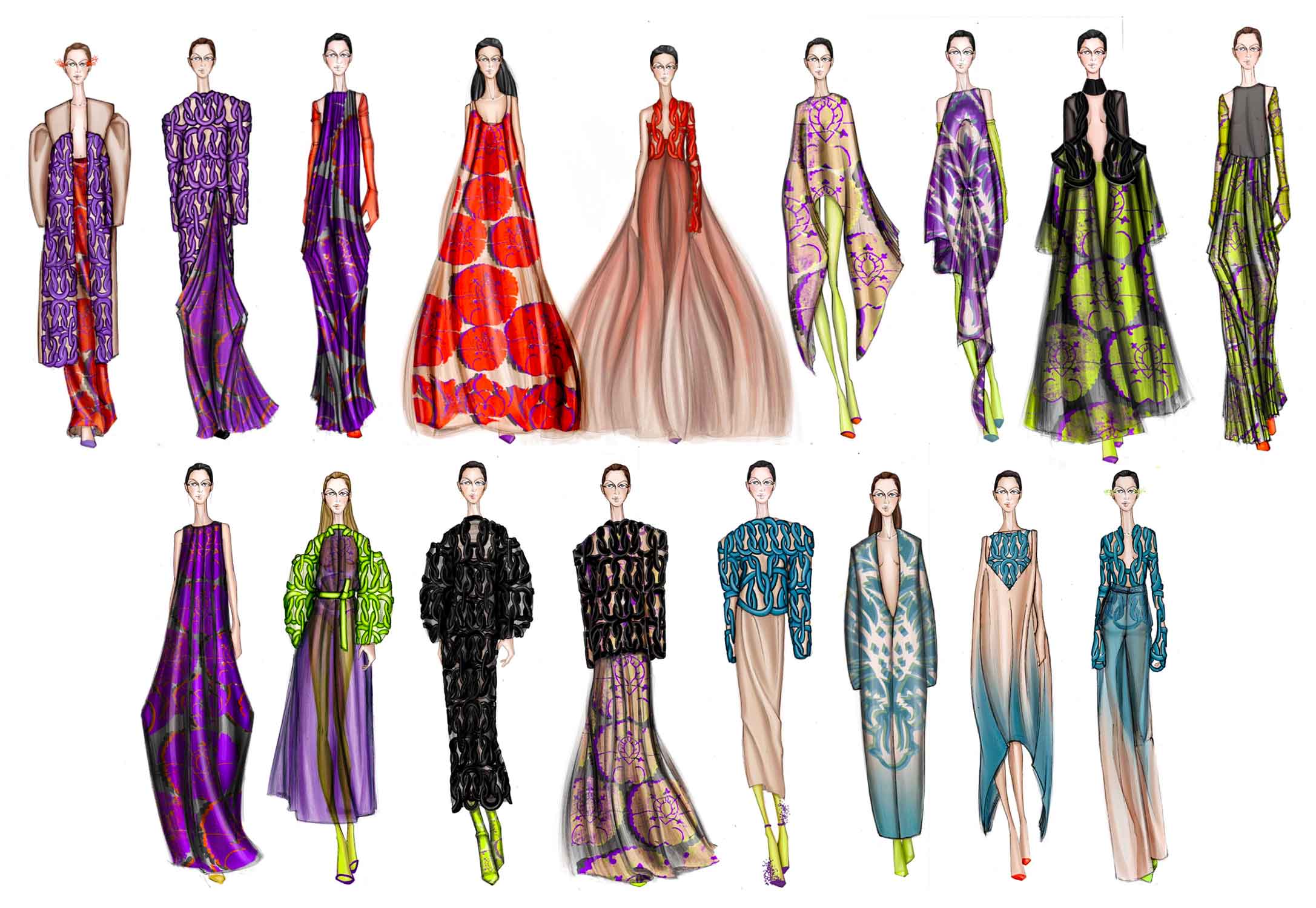
Insieme a questi dettagli, l’interpretazione contemporanea è data dall’accostamento di colori pop a colori neutri come il nero ed il nude.
Il risultato è una femme fatale diversa, leggera, nuova, scollegata dallo stereotipo primitivo del significato della parola stessa.
“La belle dame sans merci” is a collection that comes from the interpretation of the ballad of the same name by John Keats from 1819 and from the pictorial translation of the latter by Frank Cadogan Cowper from 1924.
The ballad is about the encounter between a knight lost in a barren and desolate landscape, and the poet himself. The knight tells of the day he came across a woman, mysterious and beautiful, with wild eyes. The beautiful lady claims to be “daughter of a fairy” and to love him. He, completely fascinated, is led by her to the “Cave of the elves”, where he falls asleep. During his sleep, the knight dreams and has a vision of princes and kings, who admonish him: “the beautiful lady without mercy” has now taken him into her net, as she did with them, and he is now in her power. When the knight wakes up, he realizes that he has been abandoned by the beautiful lady, while he will have to stay when waiting for her, wandering disconsolately at the mercy of his dream.
From the painting by C. Cowper, however, the knight is definitively defeated by the lady who stands up with rosy cheeks ready to find a new victim to bewitch. As the knight lies dead in the grass, she is depicted as a splendid and terrible femme fatale. Her velvet dress decorated with stylized poppies is reminiscent of the Klimtian decorations, in vogue during the painting’s execution period.Through the study and redesign of the poppies depicted on the dress, and then repeated in many works by C. Cowper, I came to the creation of floral prints depicting the same, to which I added a 3D effect given by the overlapping of flowers, in various layers. This is the conceptual translation of the dream. What is the dream? The dream is the “projection” of our unconscious, therefore of our ego. This vision is interpreted in contemporary art installations that represent projections on various layers, and interpreted by me by superimposing flowers of different colors.
While from the analysis of other works by Frank Cadogan Cowper which depicts women of the Italian and non-Italian Renaissance, such as the portrait of Lucrezia Borgia, I have extrapolated details such as the intertwining of knots painted on the sleeves of the dress. I studied, redesigned and adapted this detail, making it one of the main works of the collection, in velvet and silk organza, together with the prints developed from the details of the damask painted in the works. Some shapes are born from the study of the female Renaissance costume, especially the sleeves, however, reinterpreted in a contemporary and couture key.
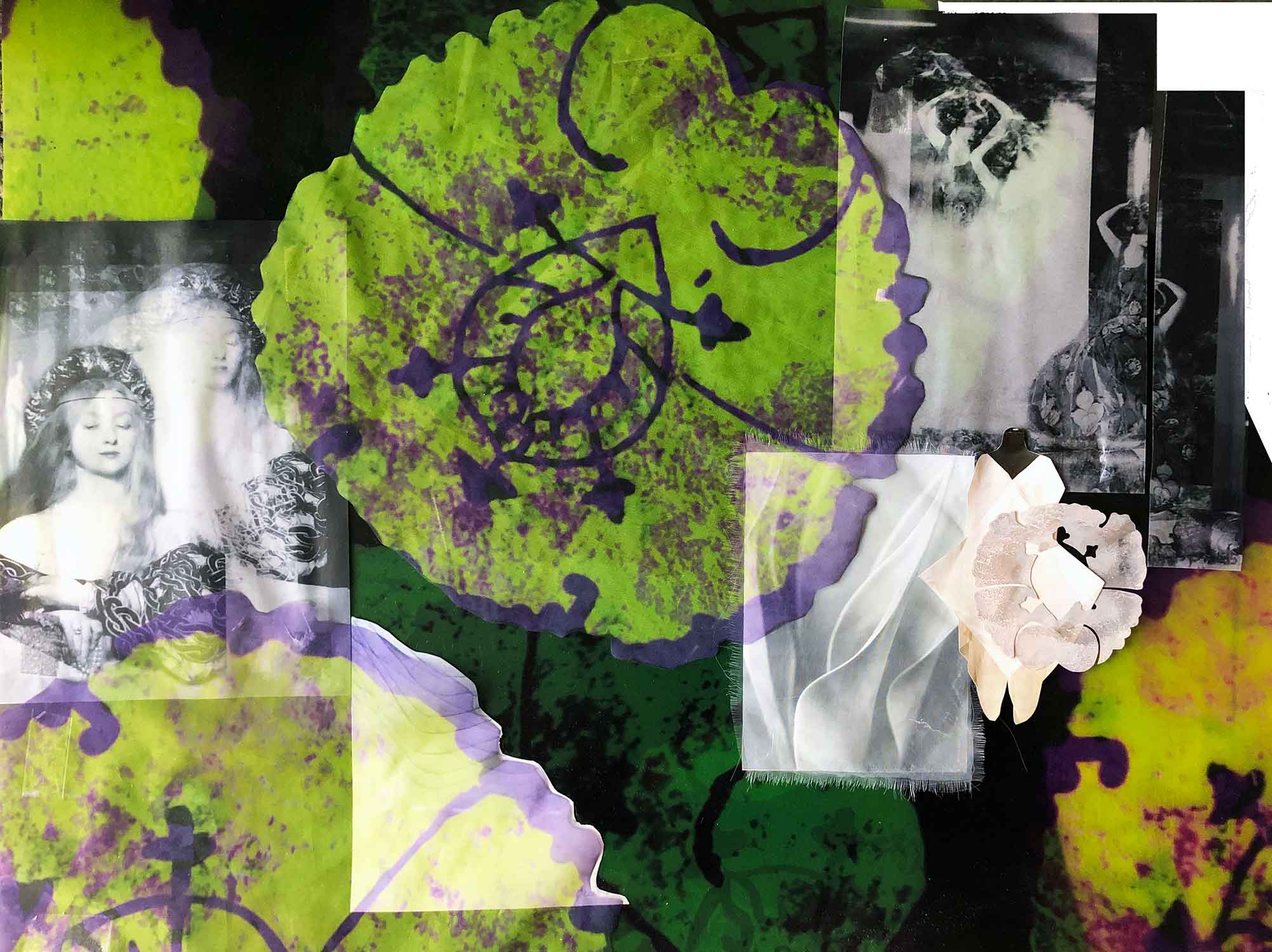
Moodboard
line up
Share the project:


