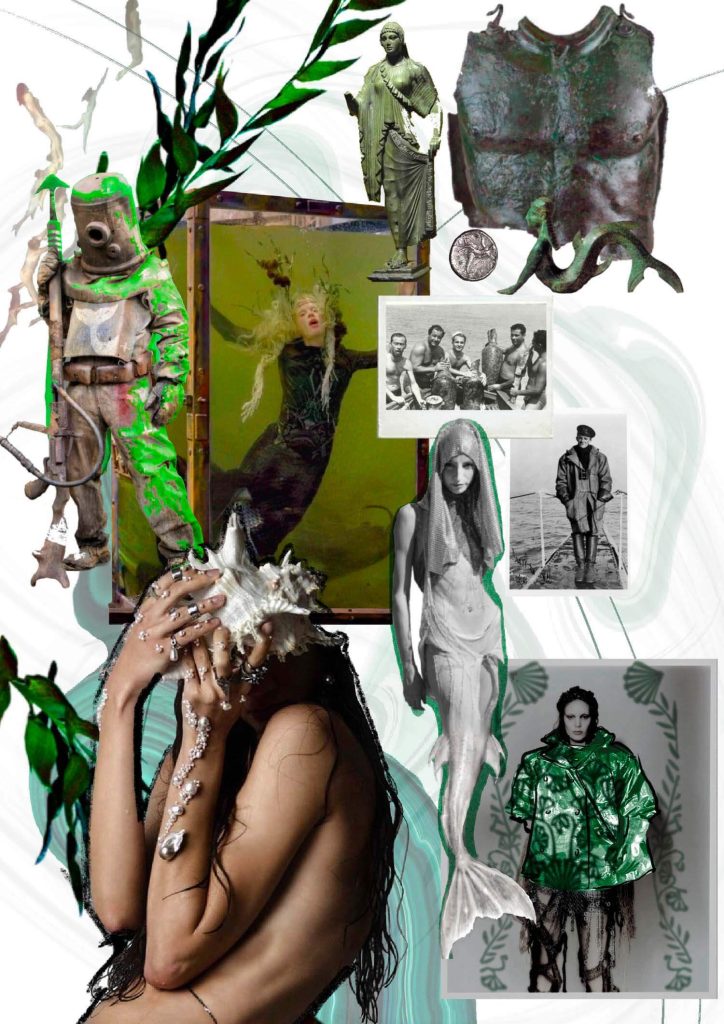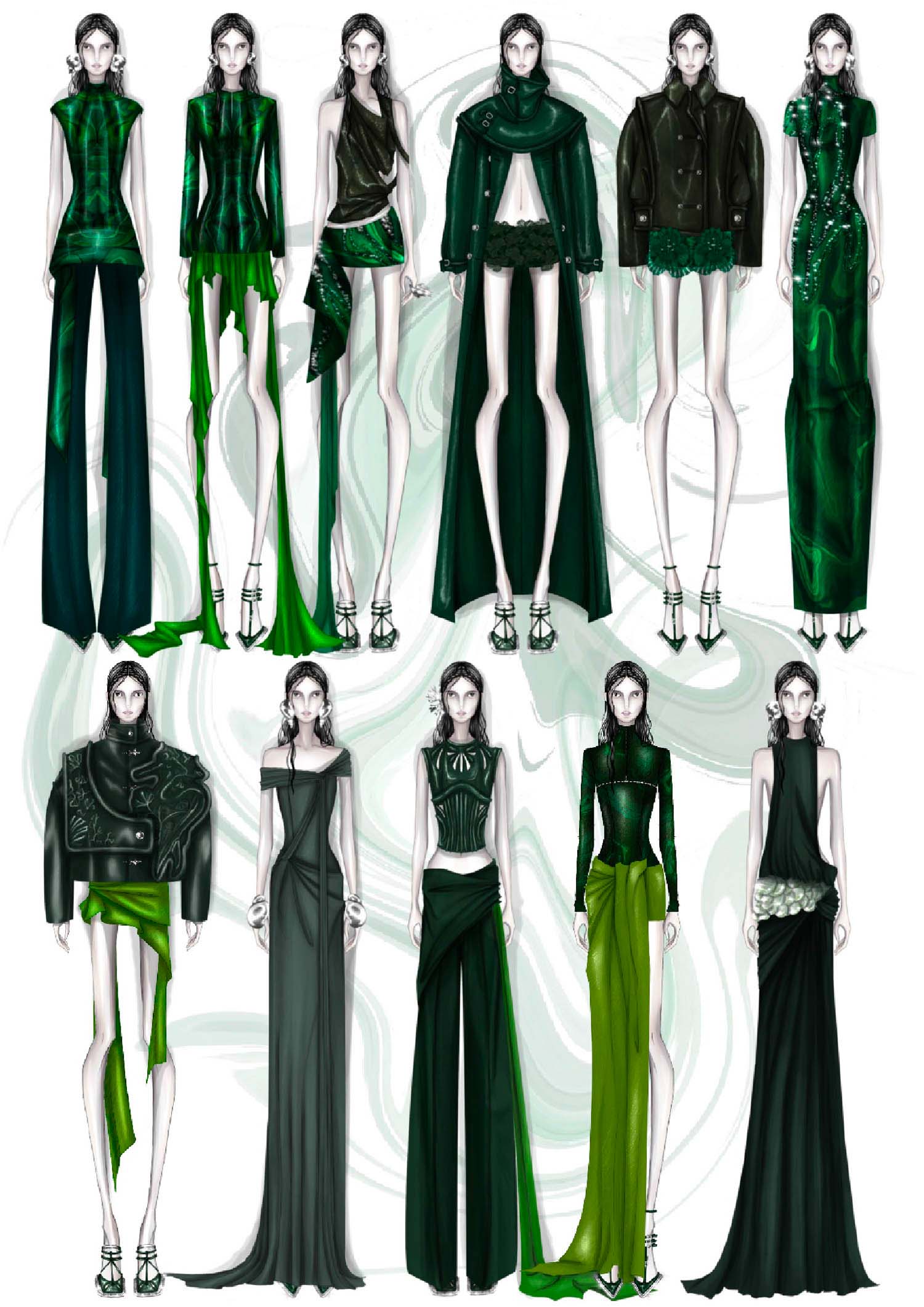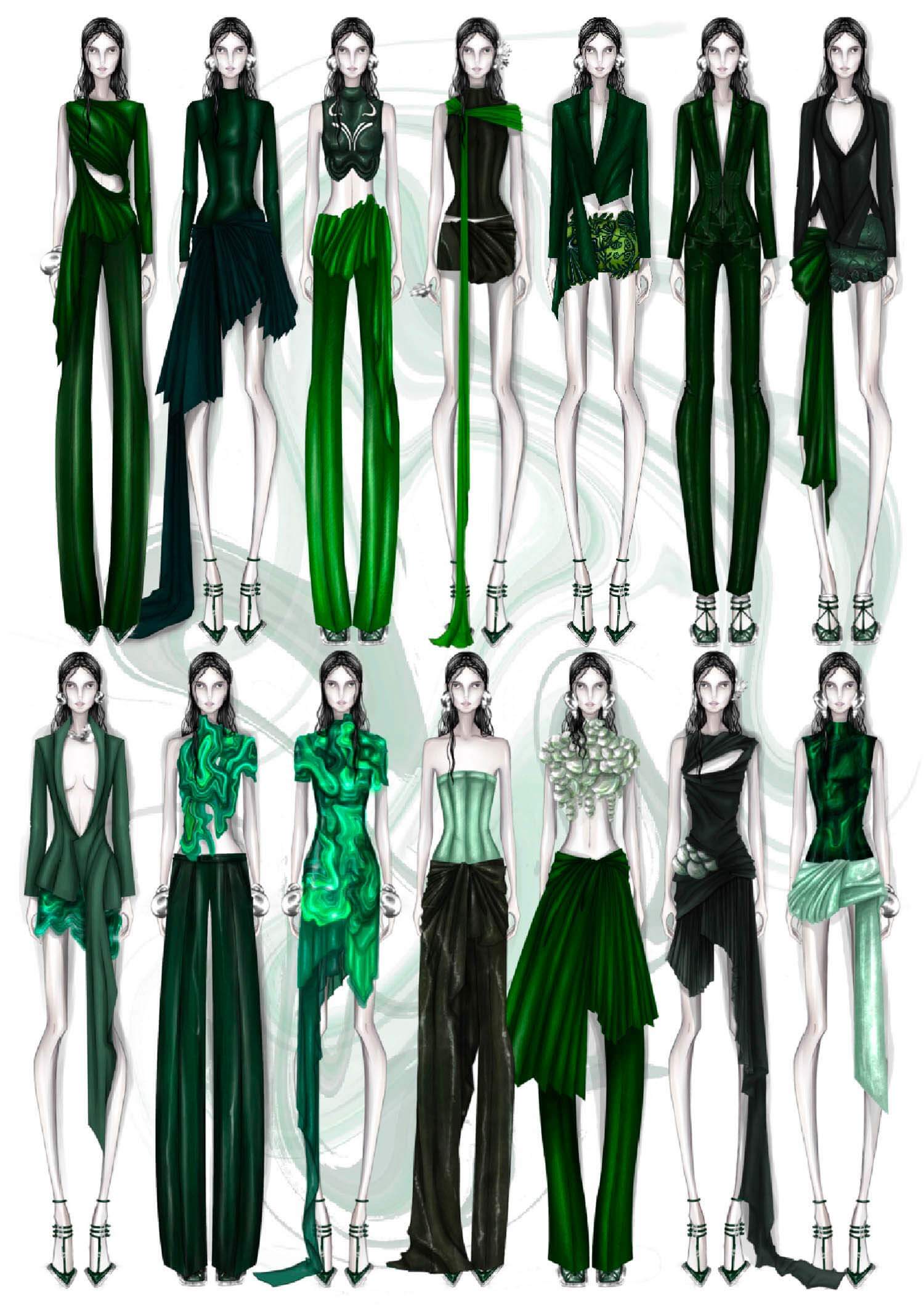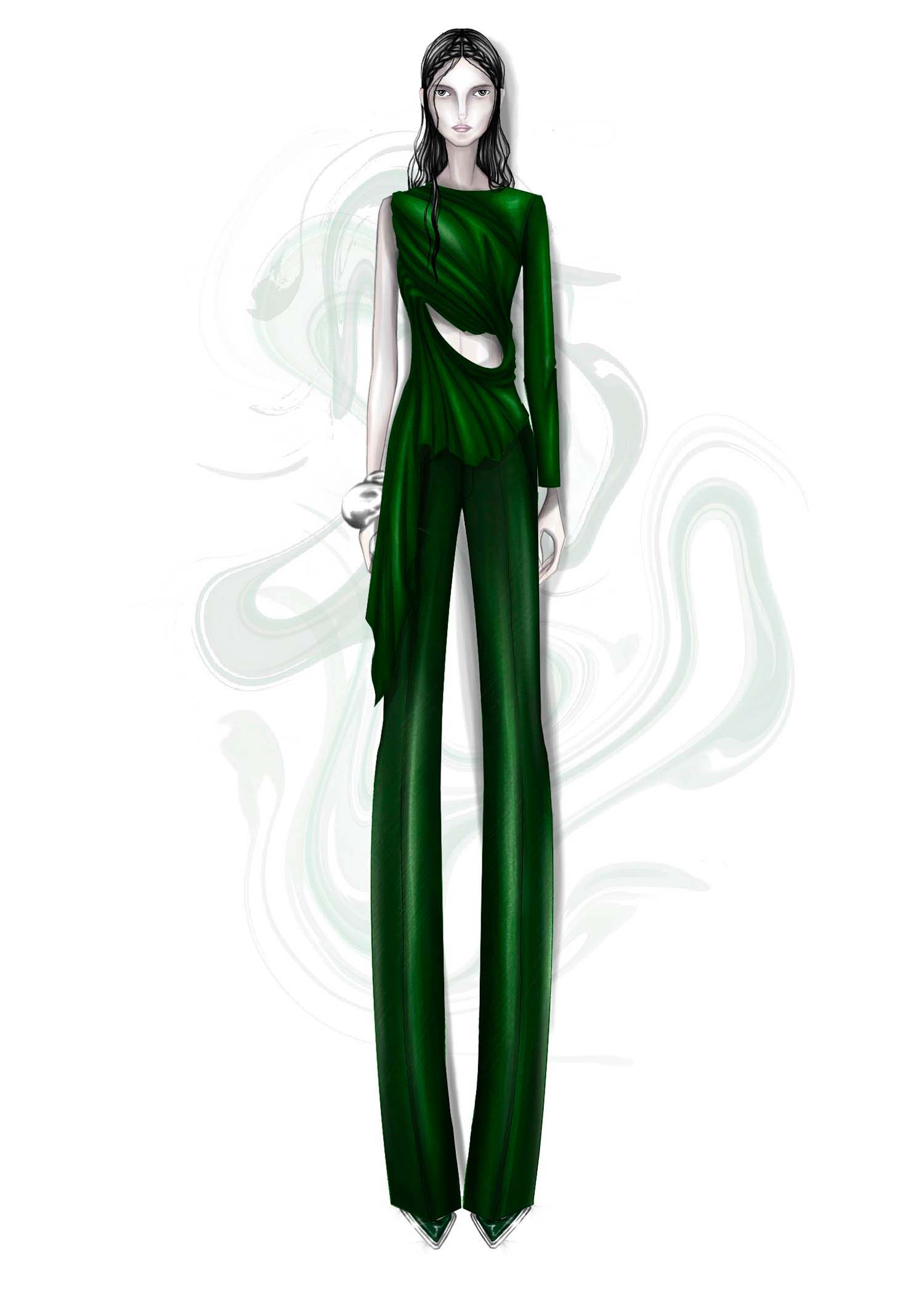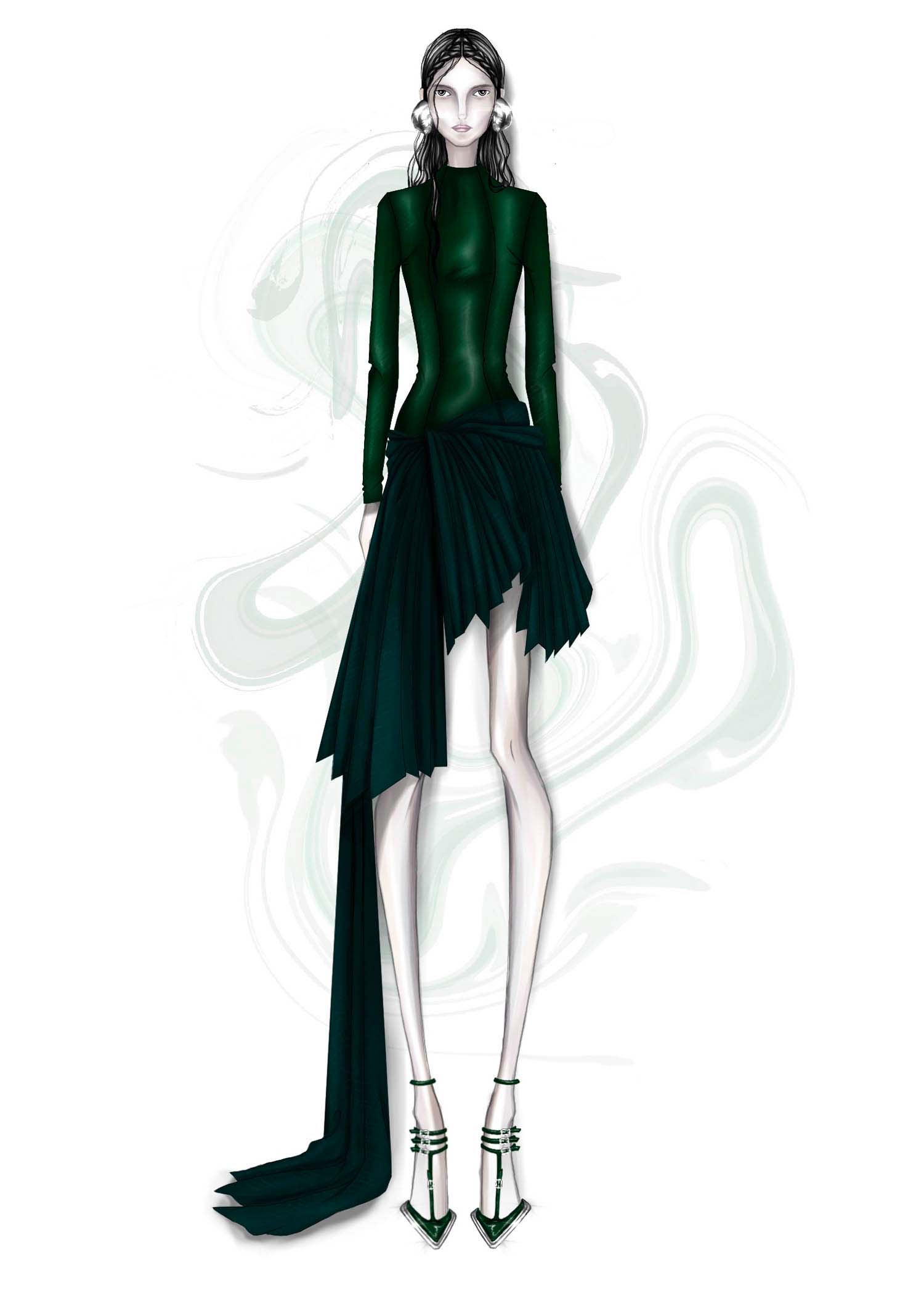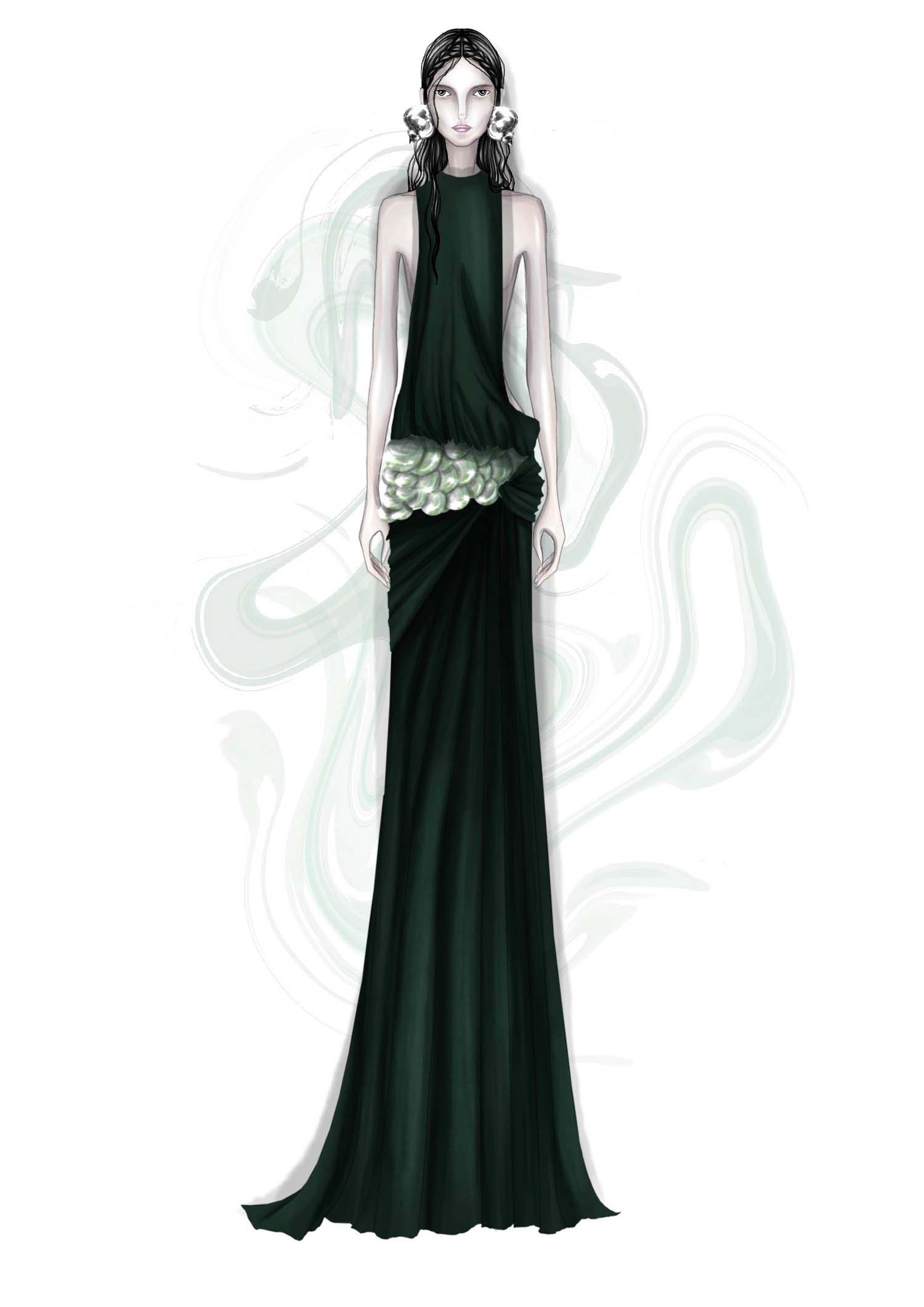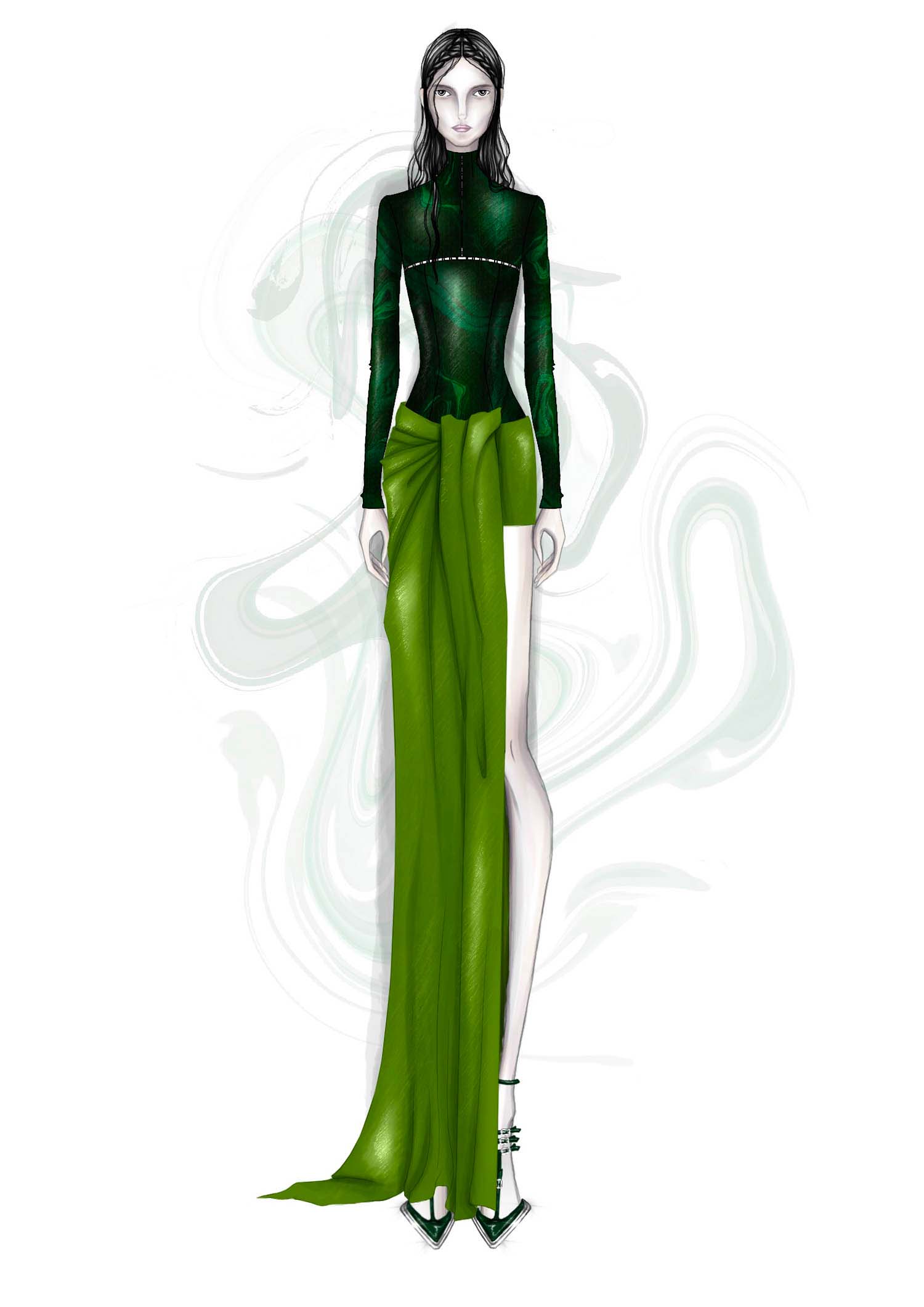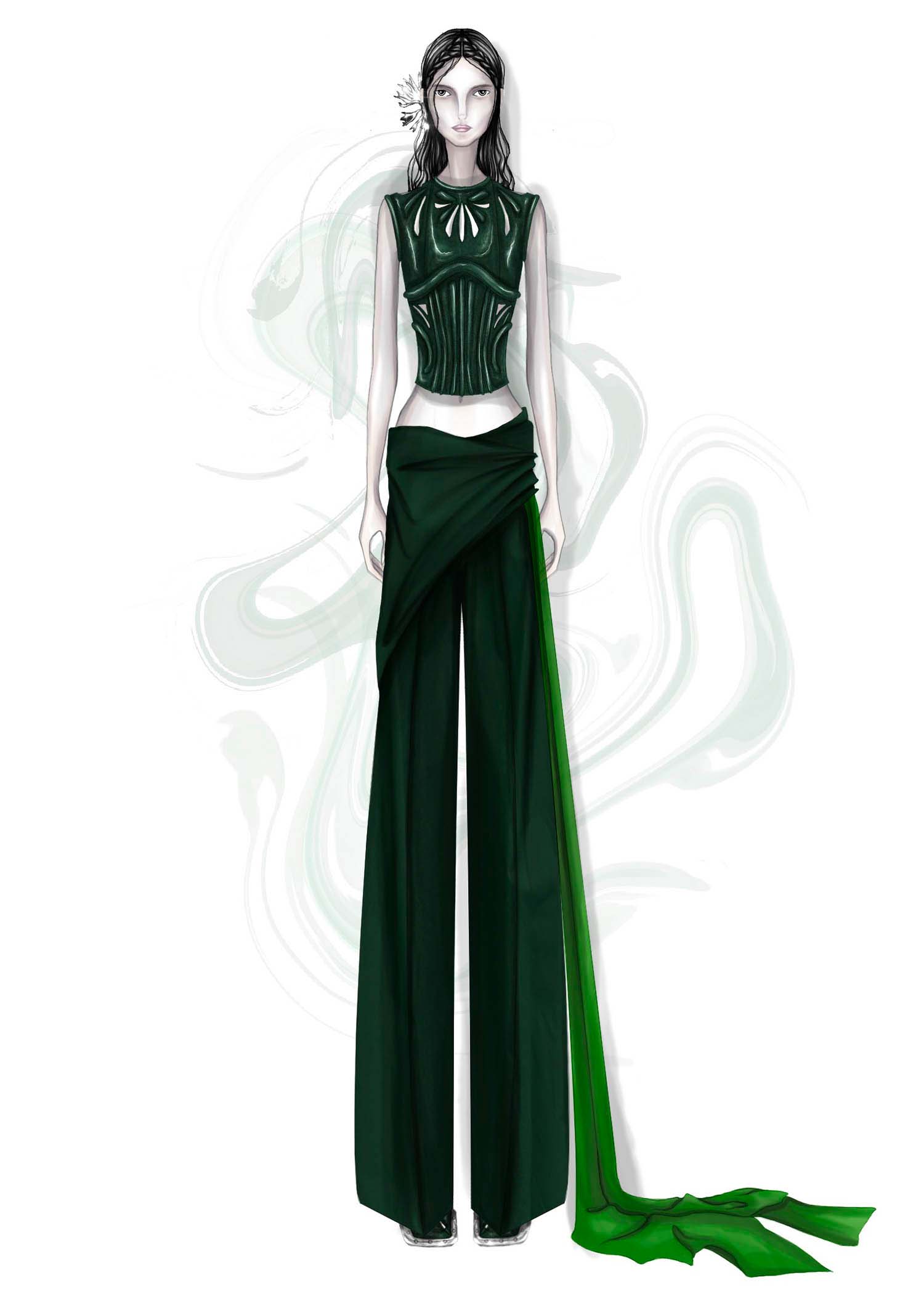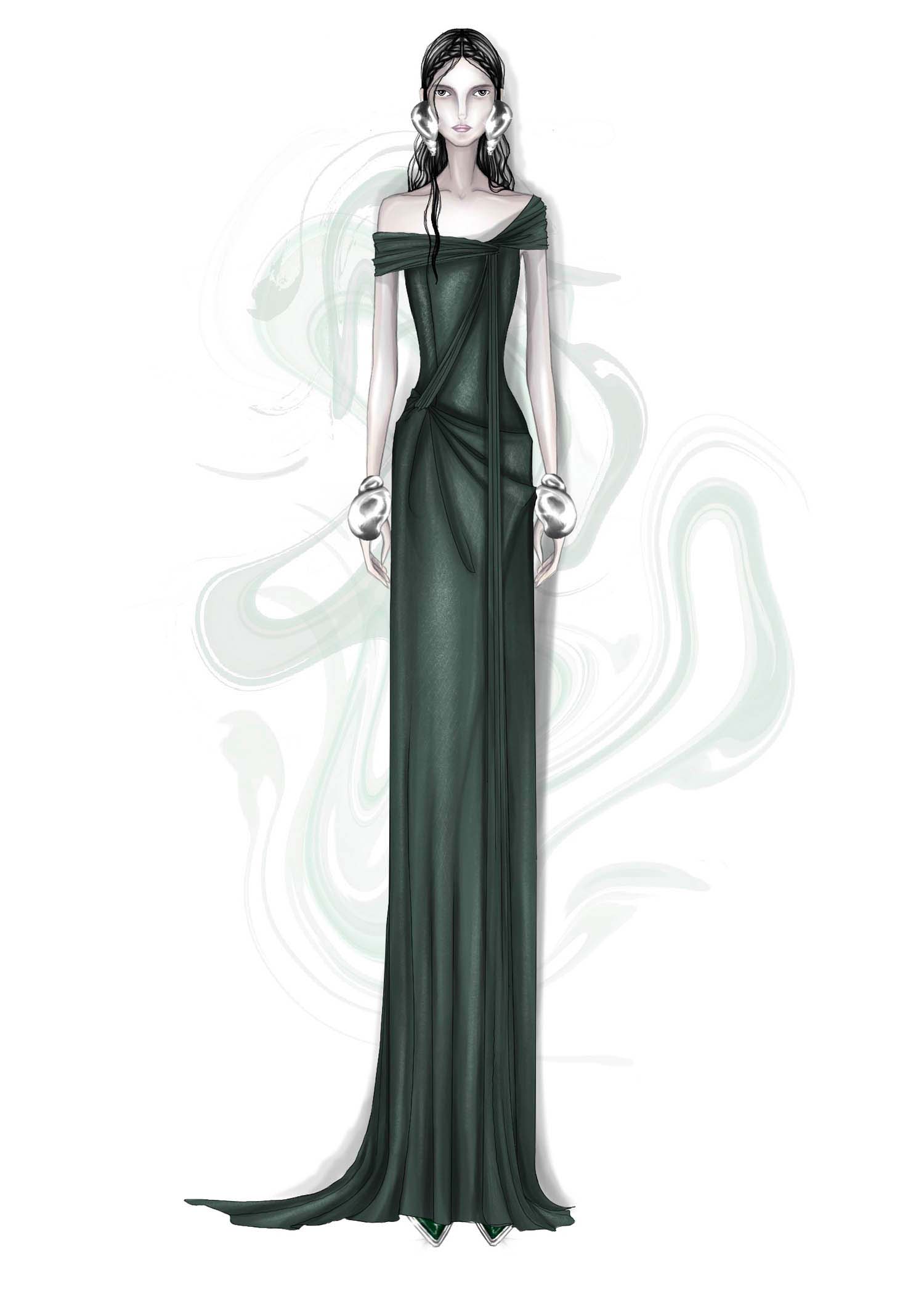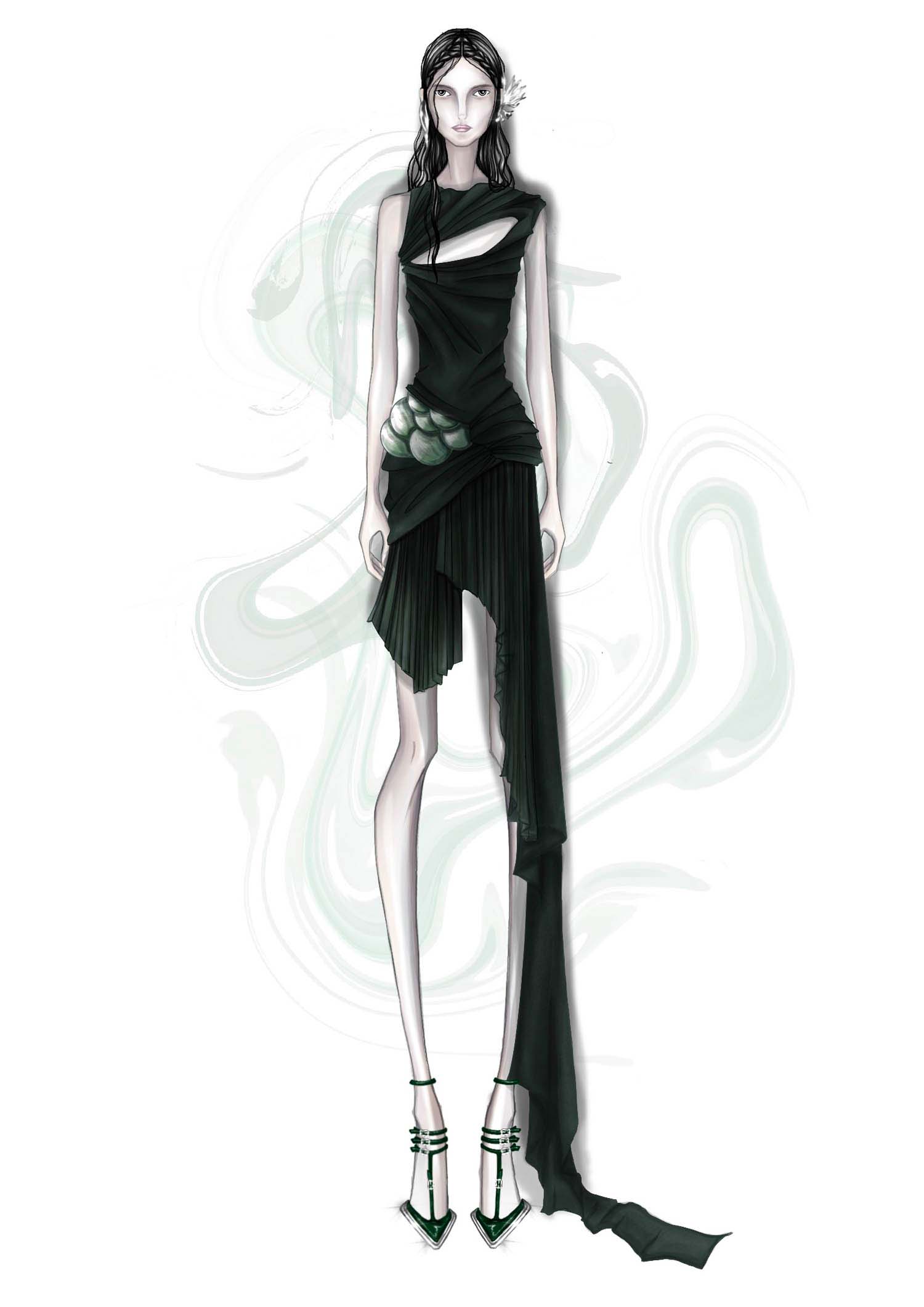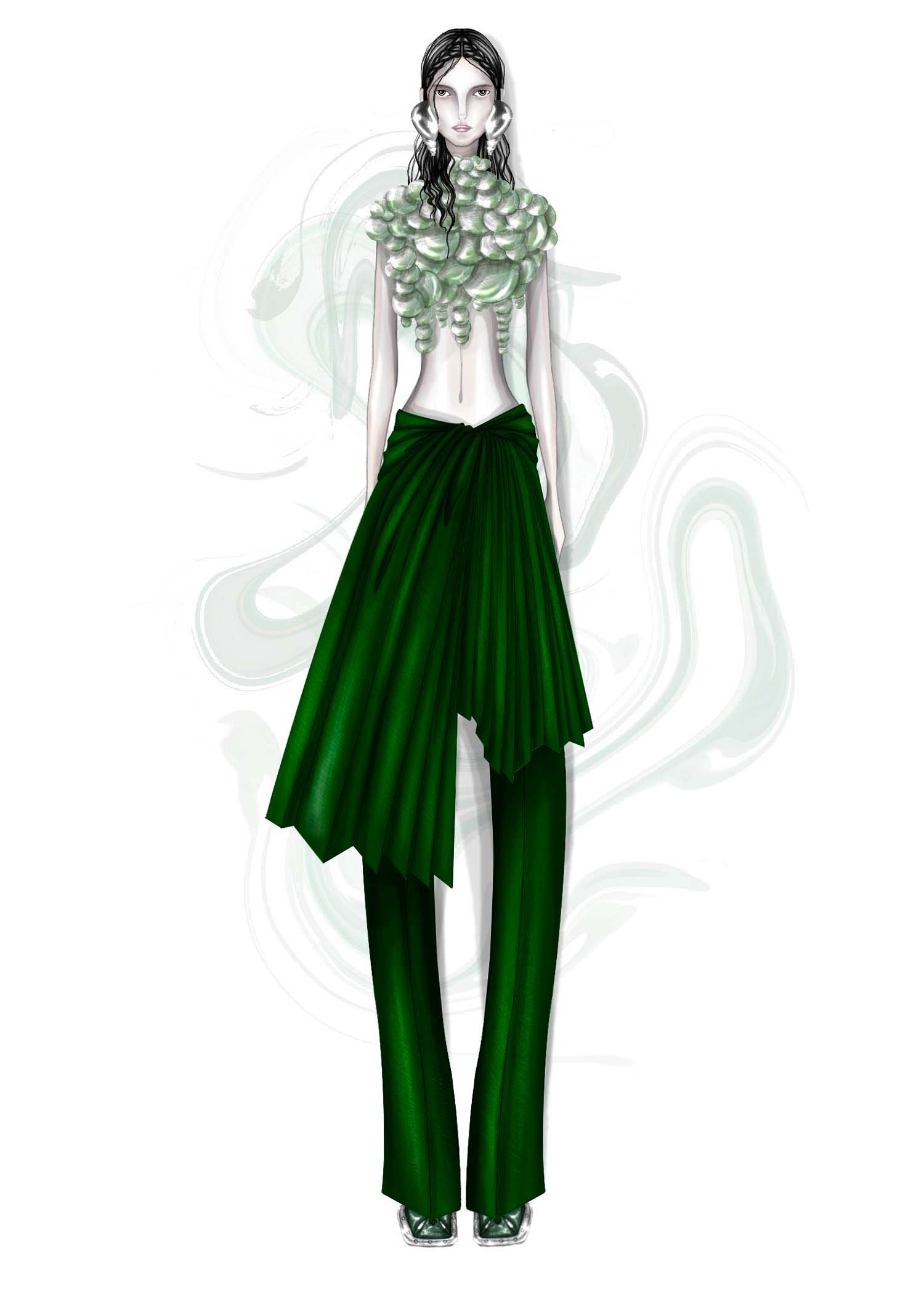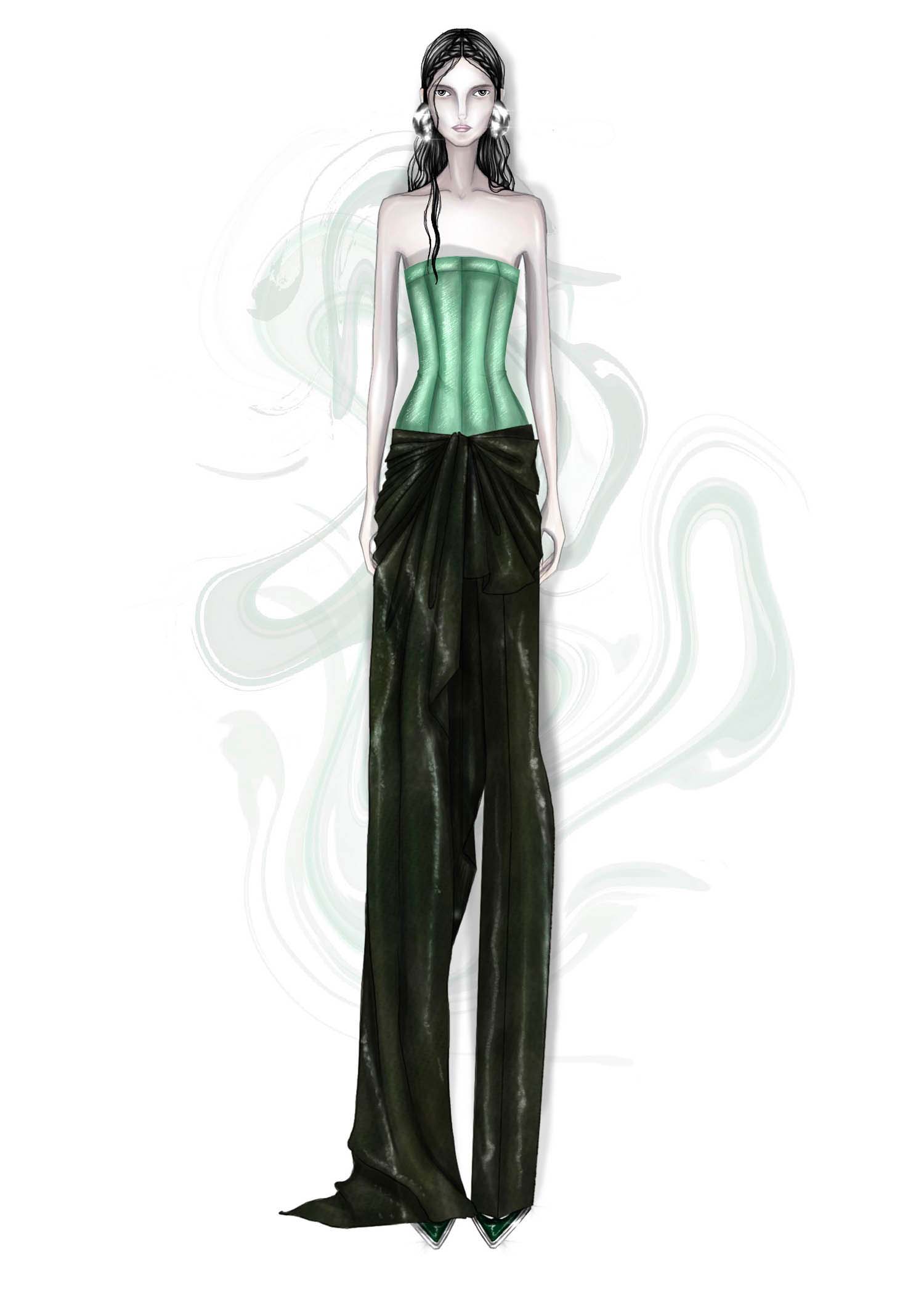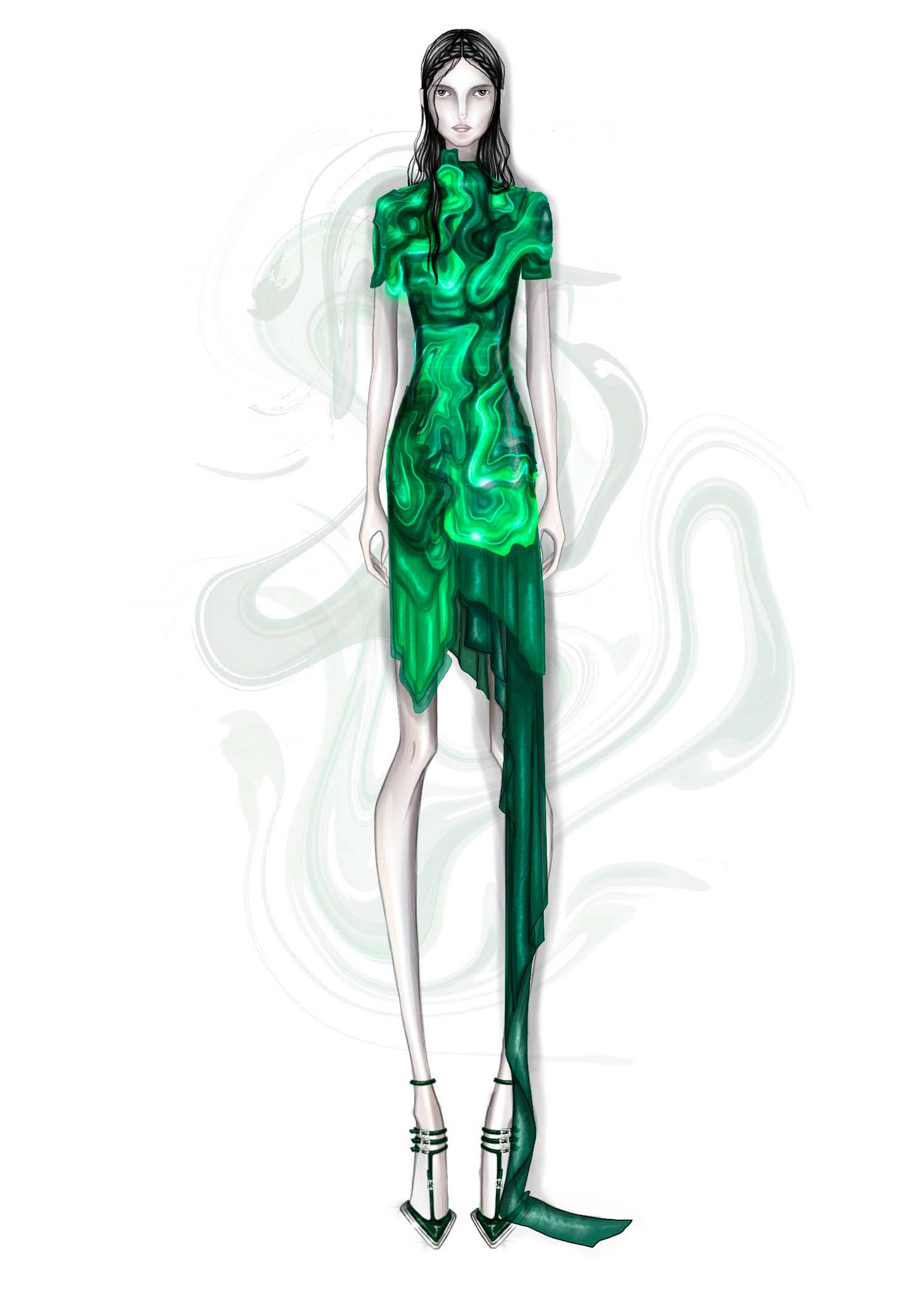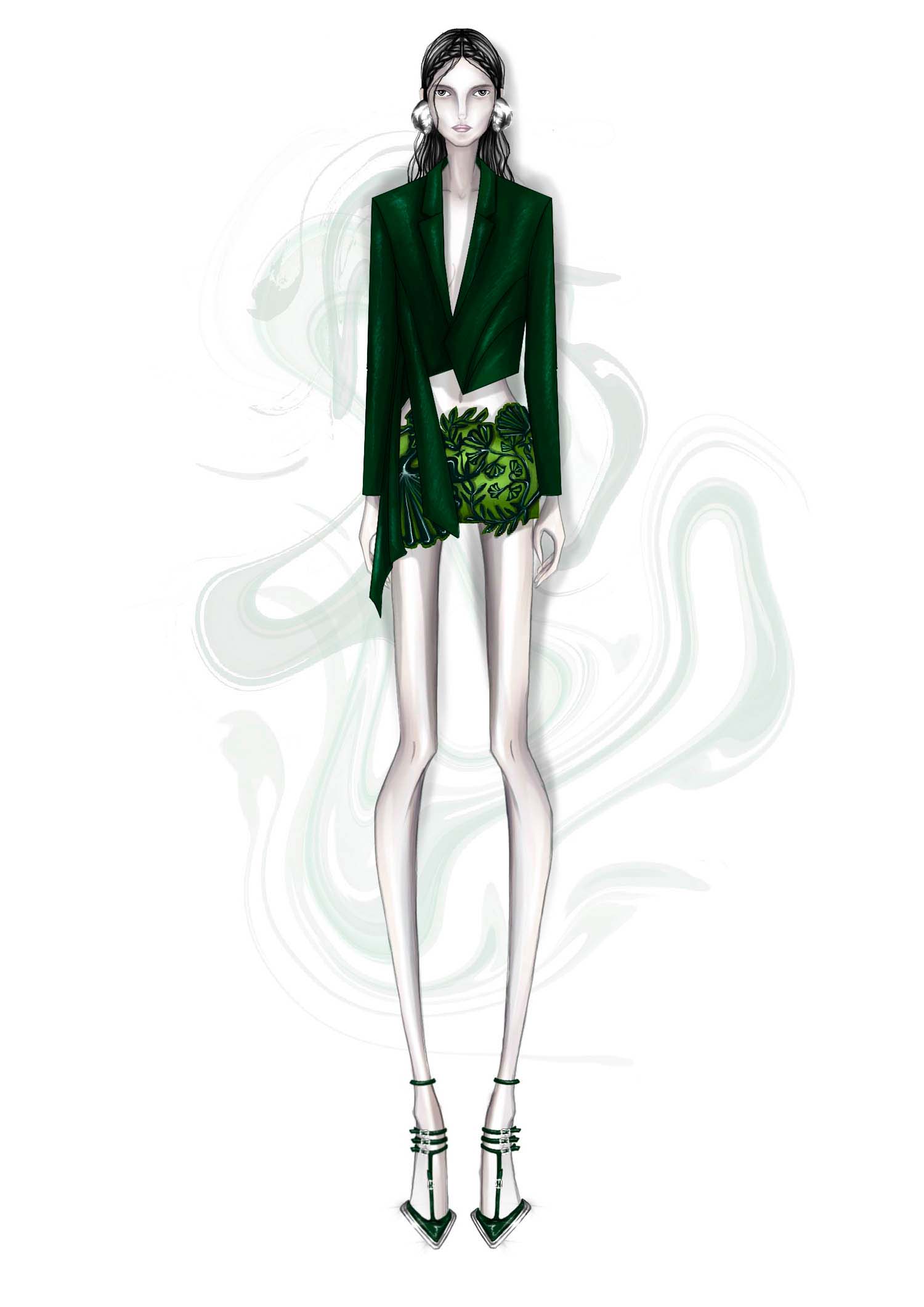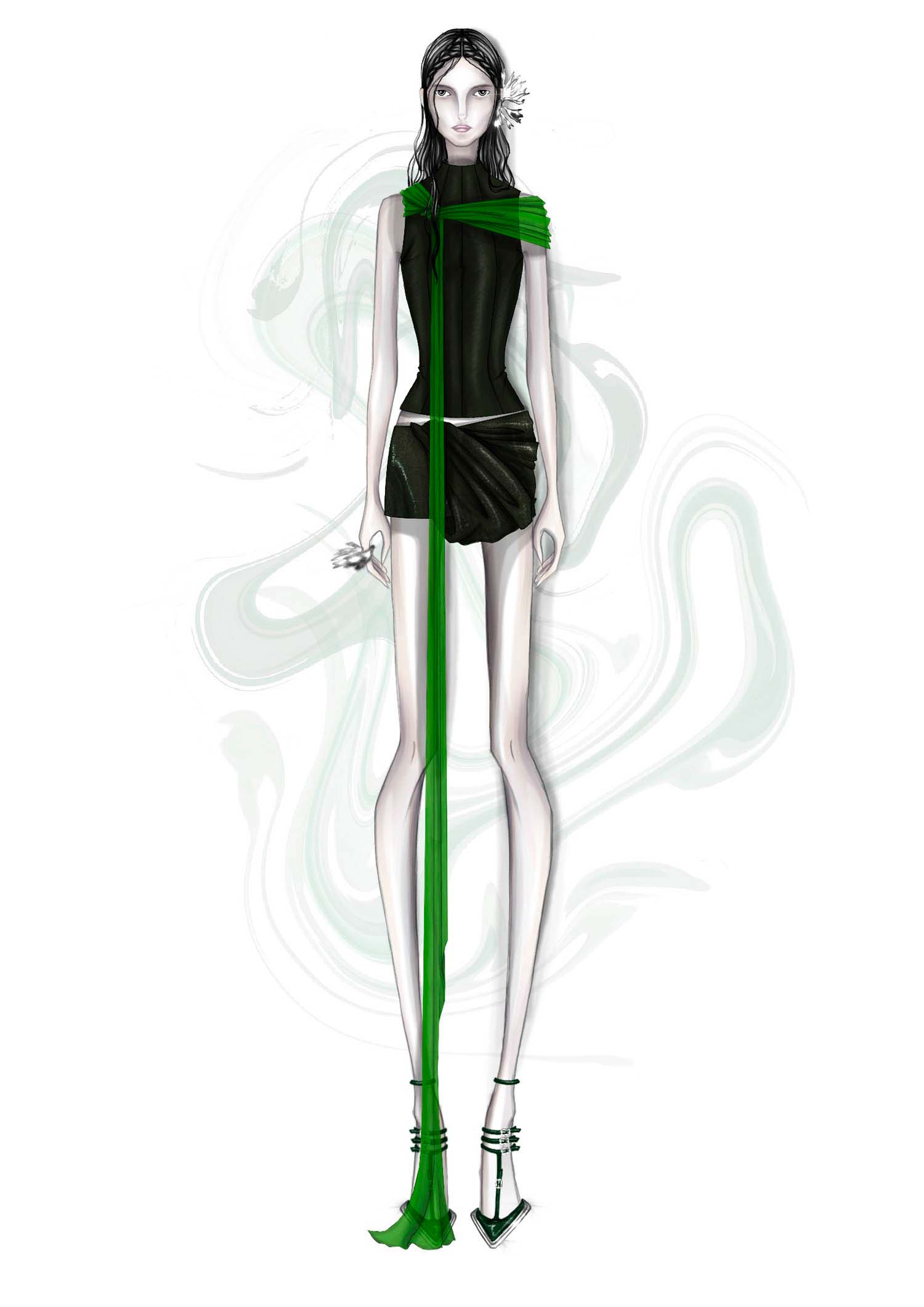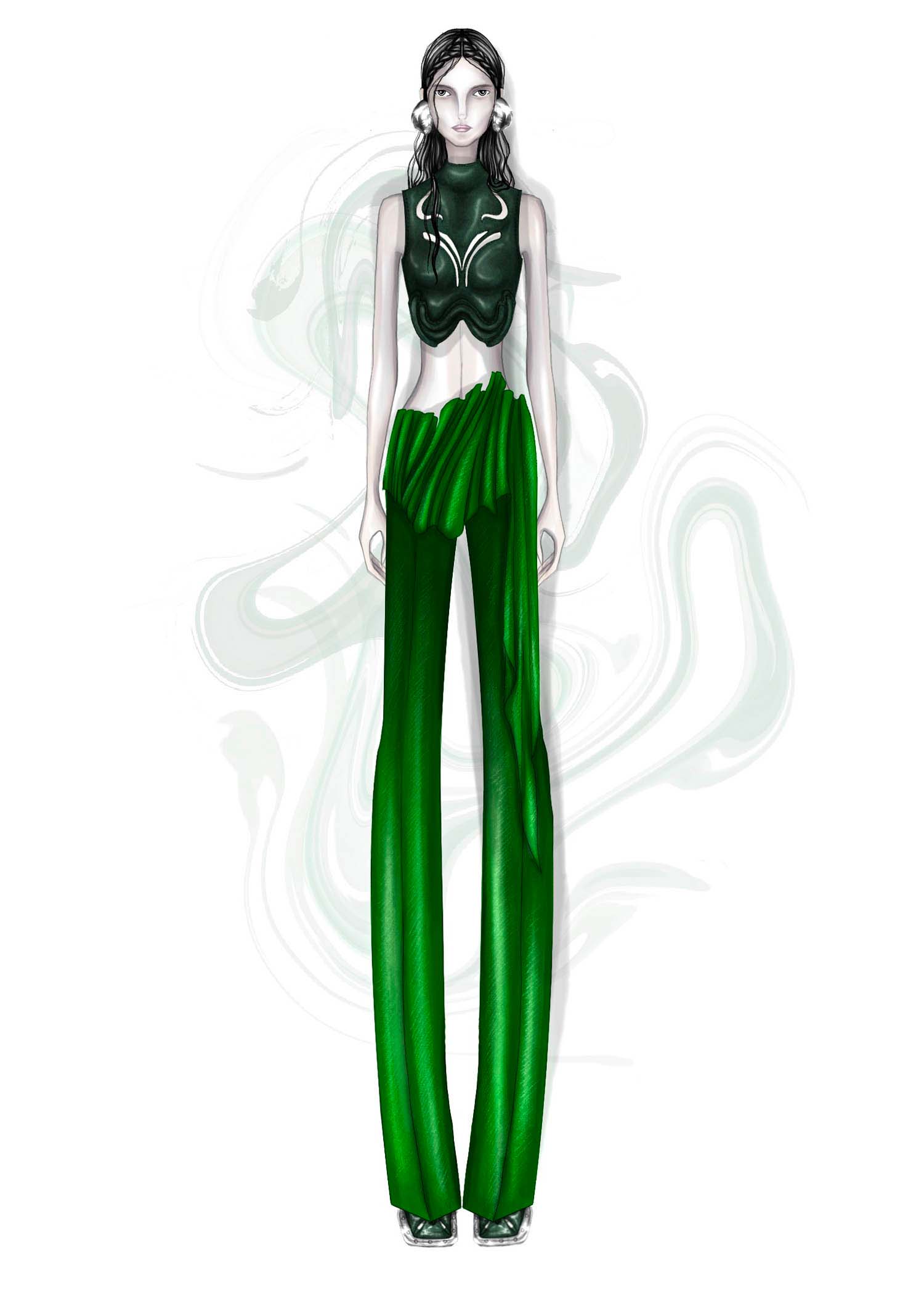
L’illustrazione di Trnka per la favola della Sirenetta è stata la matrice creativa che ha dato lo slancio per la realizzazione di questo progetto. La suggestione dell’immagine, dal colore al modo di rappresentare le due figure protagoniste, ha condotto a uno scenario parallelo a quello della fiaba di Andersen. L’immagine di un giardino di antichi manufatti persi o dimenticati che contaminati da piante subacquee diventano un tutt’uno con i fondali marini.
Dalla vegetazione che riveste la pietra al bronzo che nel colore viene alterato dall’usura della salsedine, dalle alghe animate dalla corrente alla luce del sole che arriva sul fondale filtrando attraverso l’acqua, lo scenario che si presenta è un incrocio tra un luogo di fantasia e un sito archeologico dove è predominante il colore verde in innumerevoli sfumature.
Il concetto di archeologia subacquea è inserito all’interno del progetto come mezzo per arrivare alla scoperta di questa ambientazione immaginaria, i reperti che decorano questo giardino sottomarino sono tesori non raccontati, nascosti negli abissi che aspettano di tornare in superficie. E così nella collezione compaiono riferimenti all’arte etrusca e non solo, attraverso oggetti risalenti a un tempo così lontano da sembrare quasi irreale.
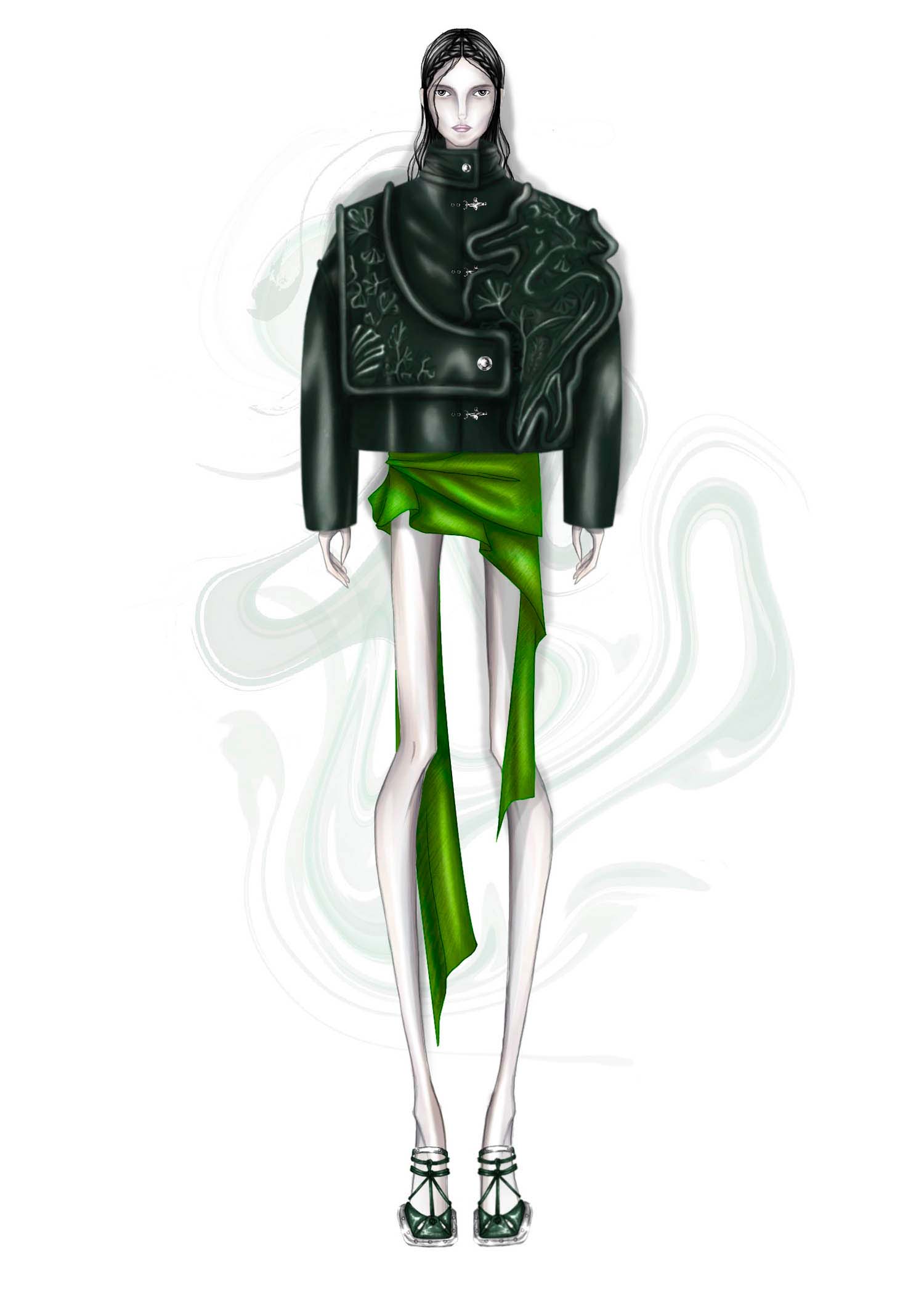
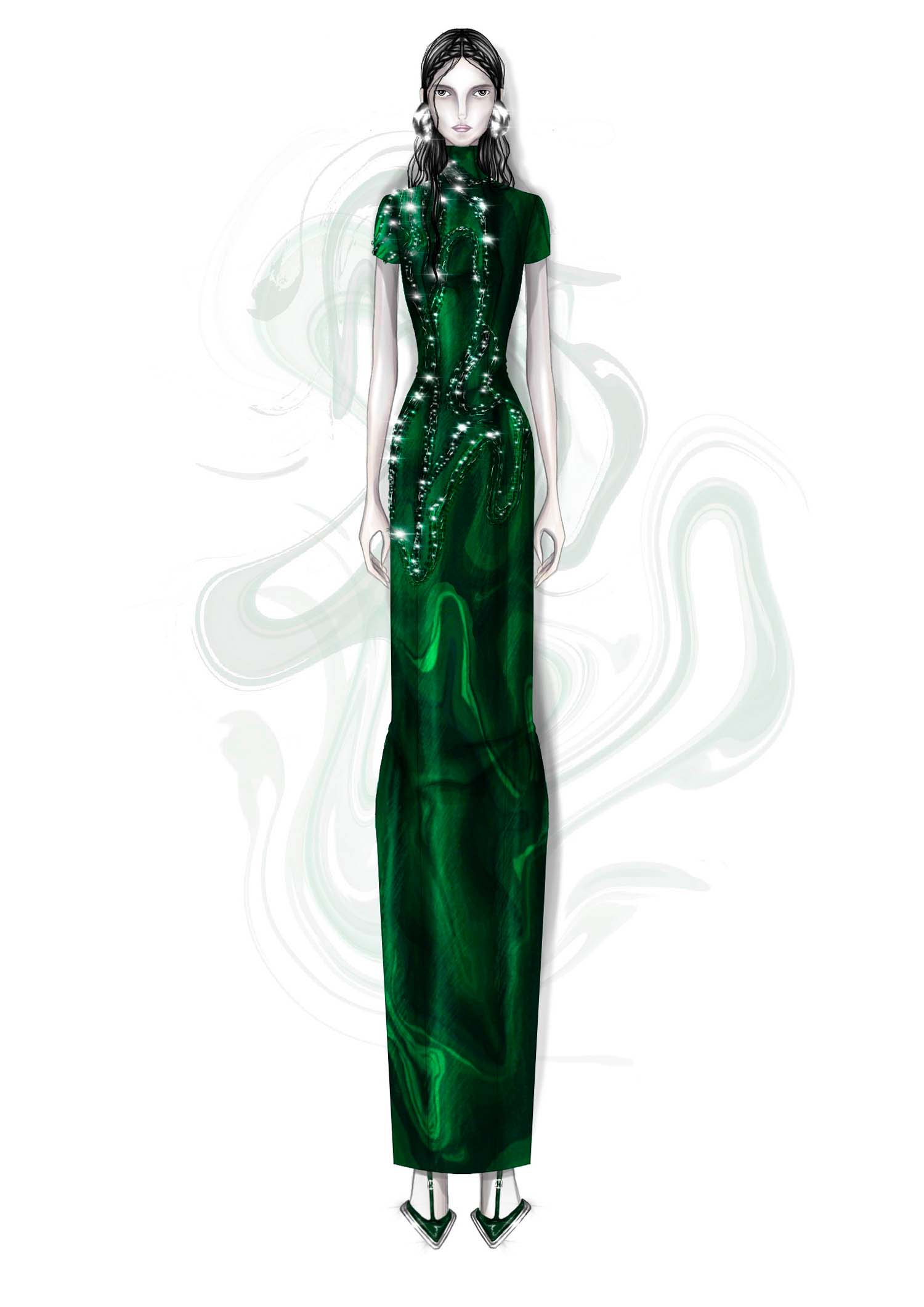
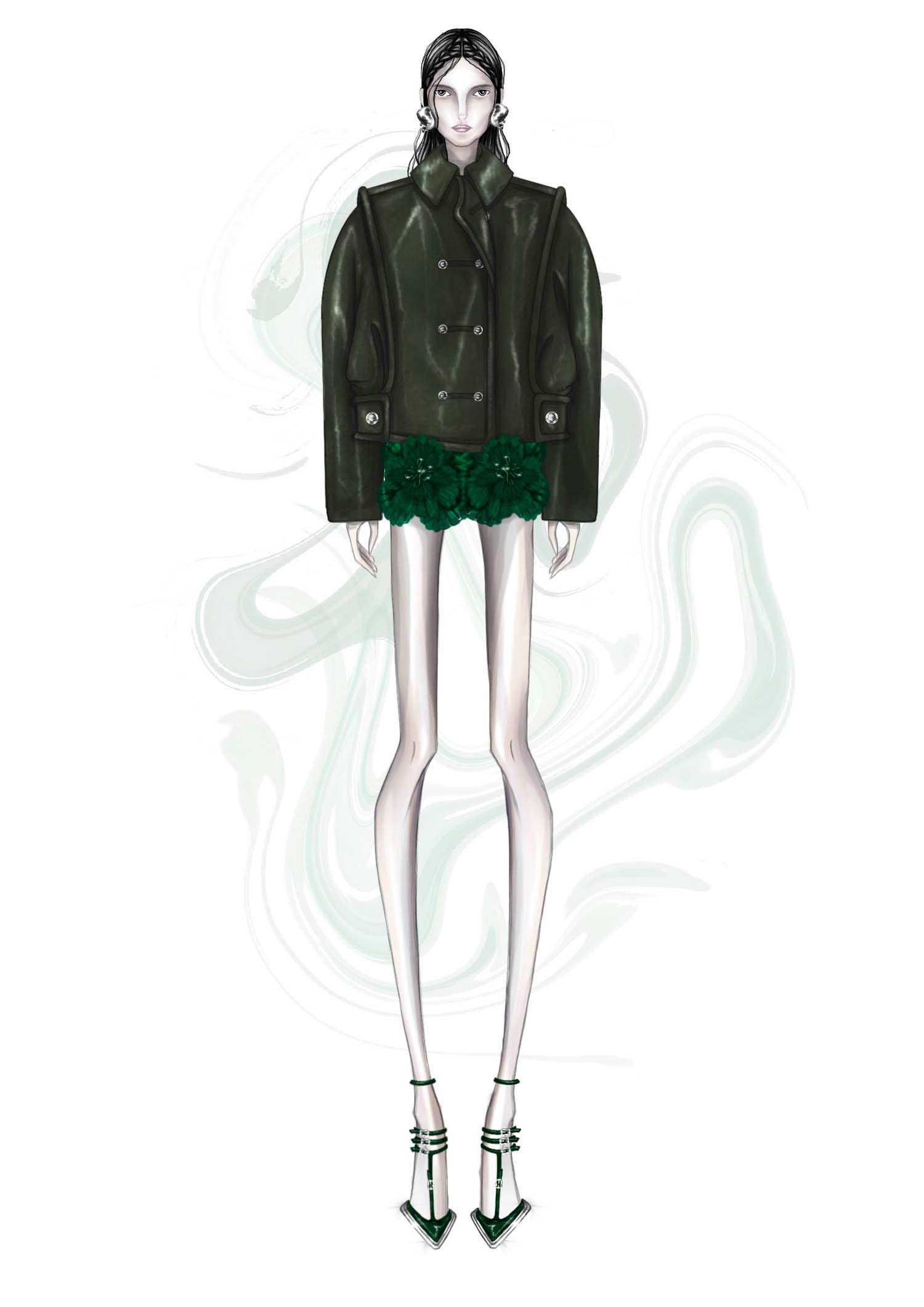
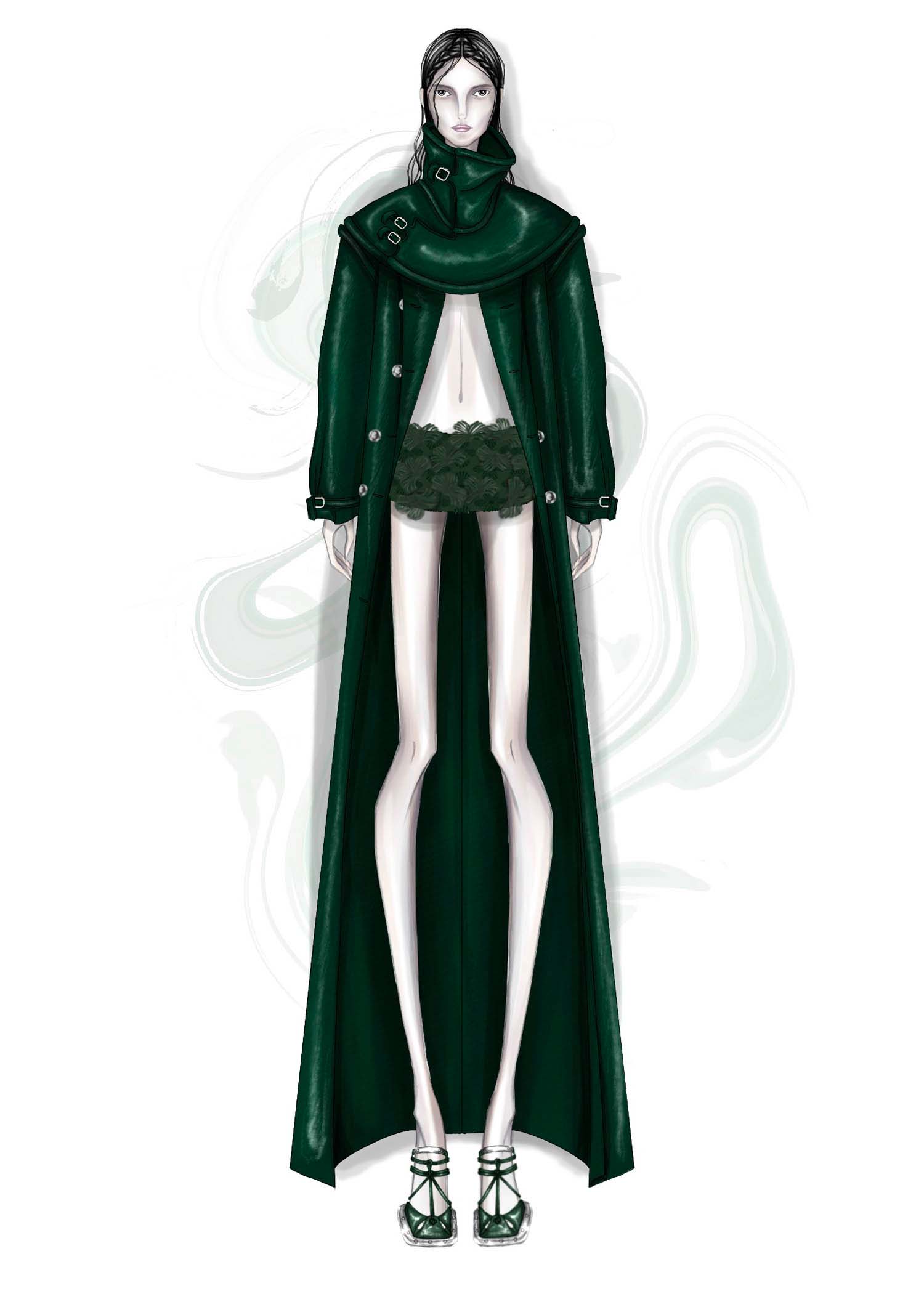
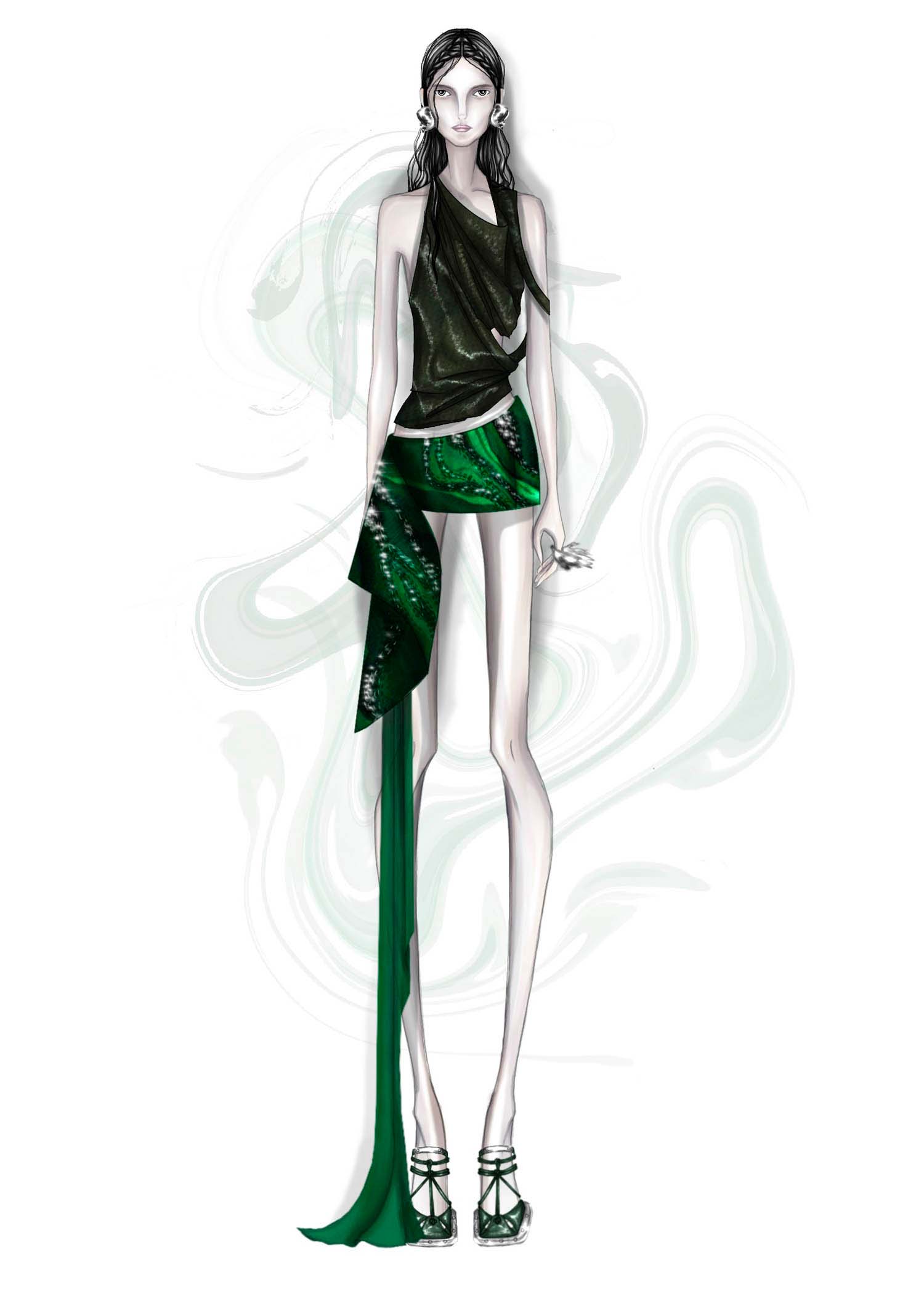
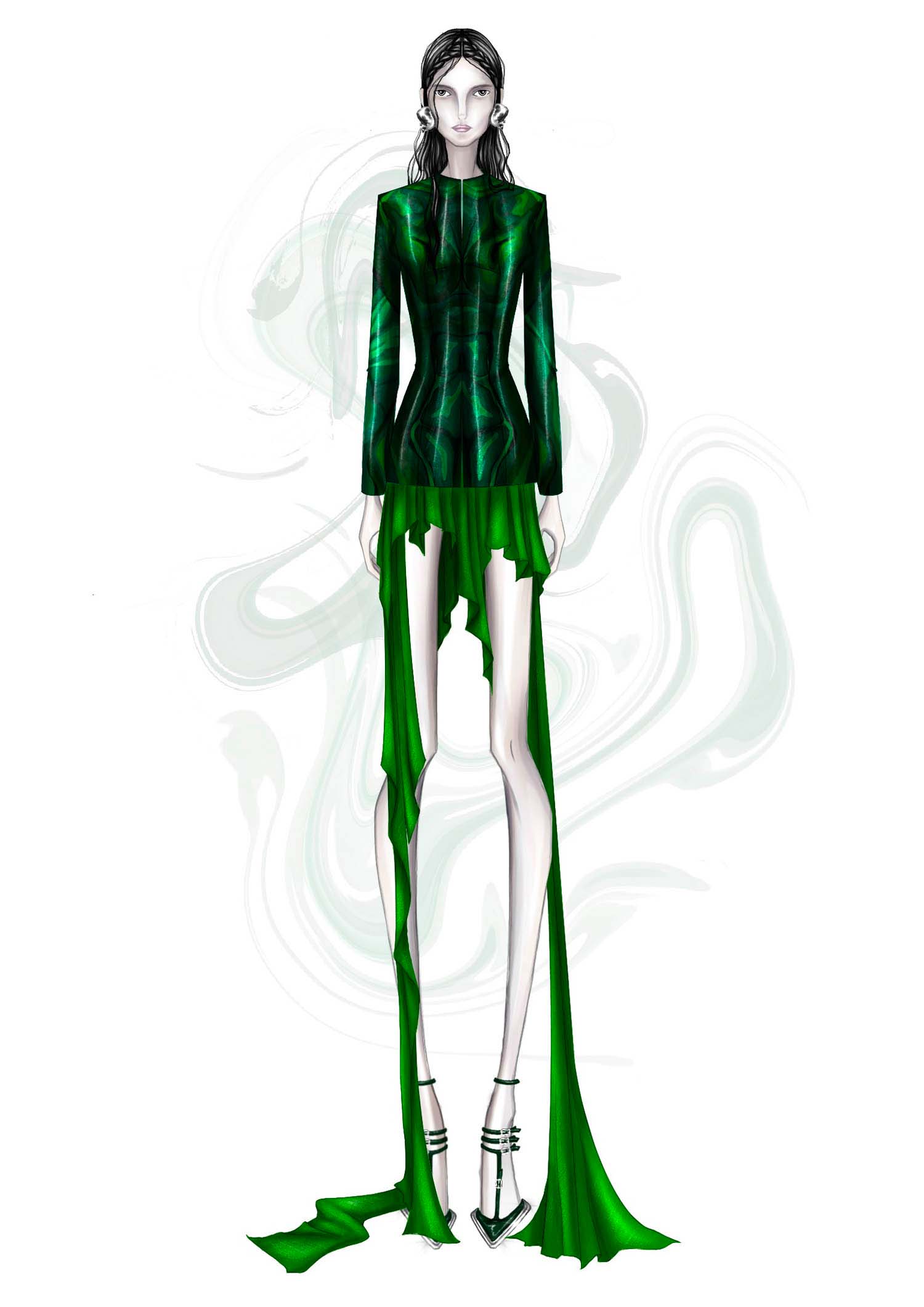
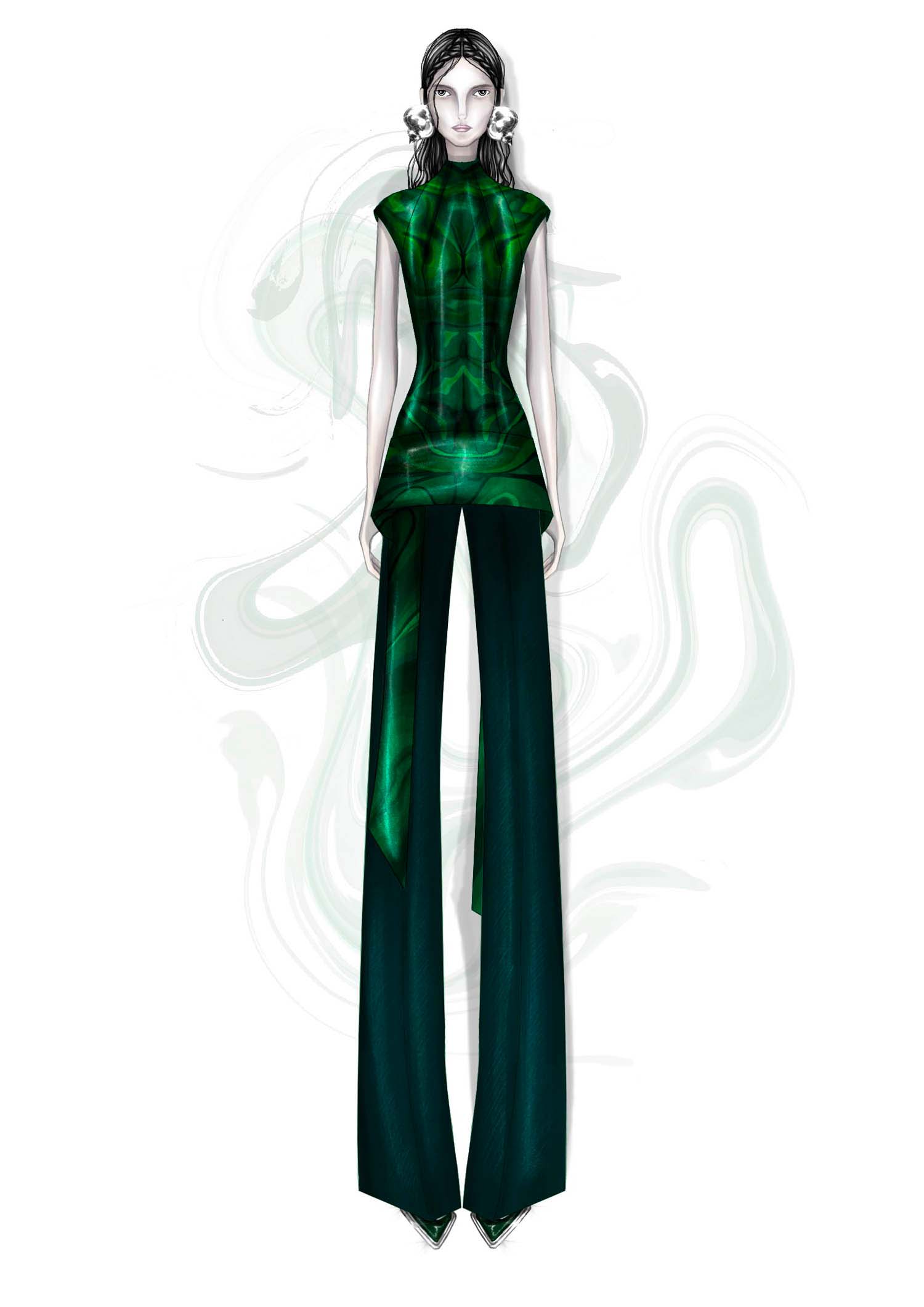
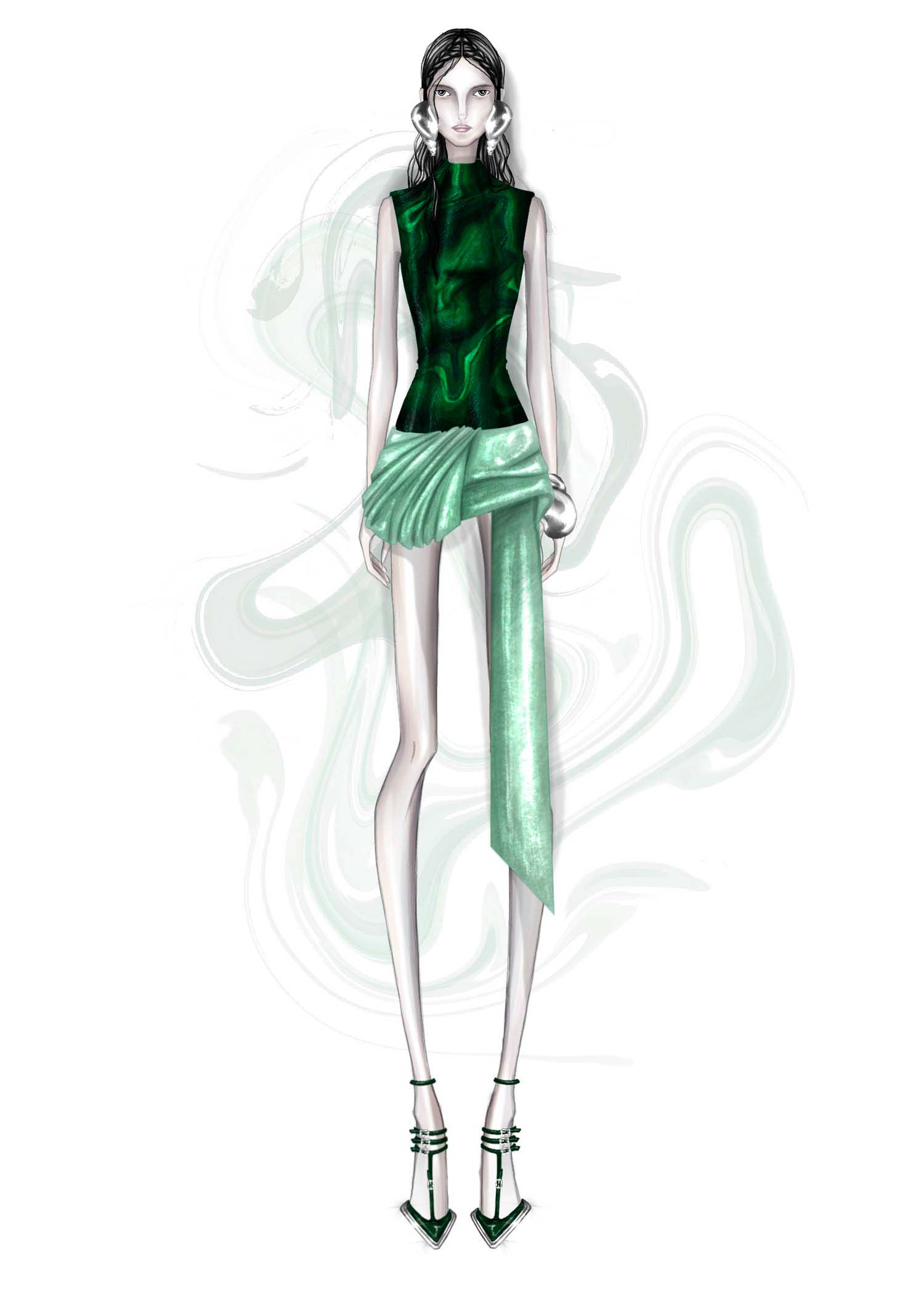
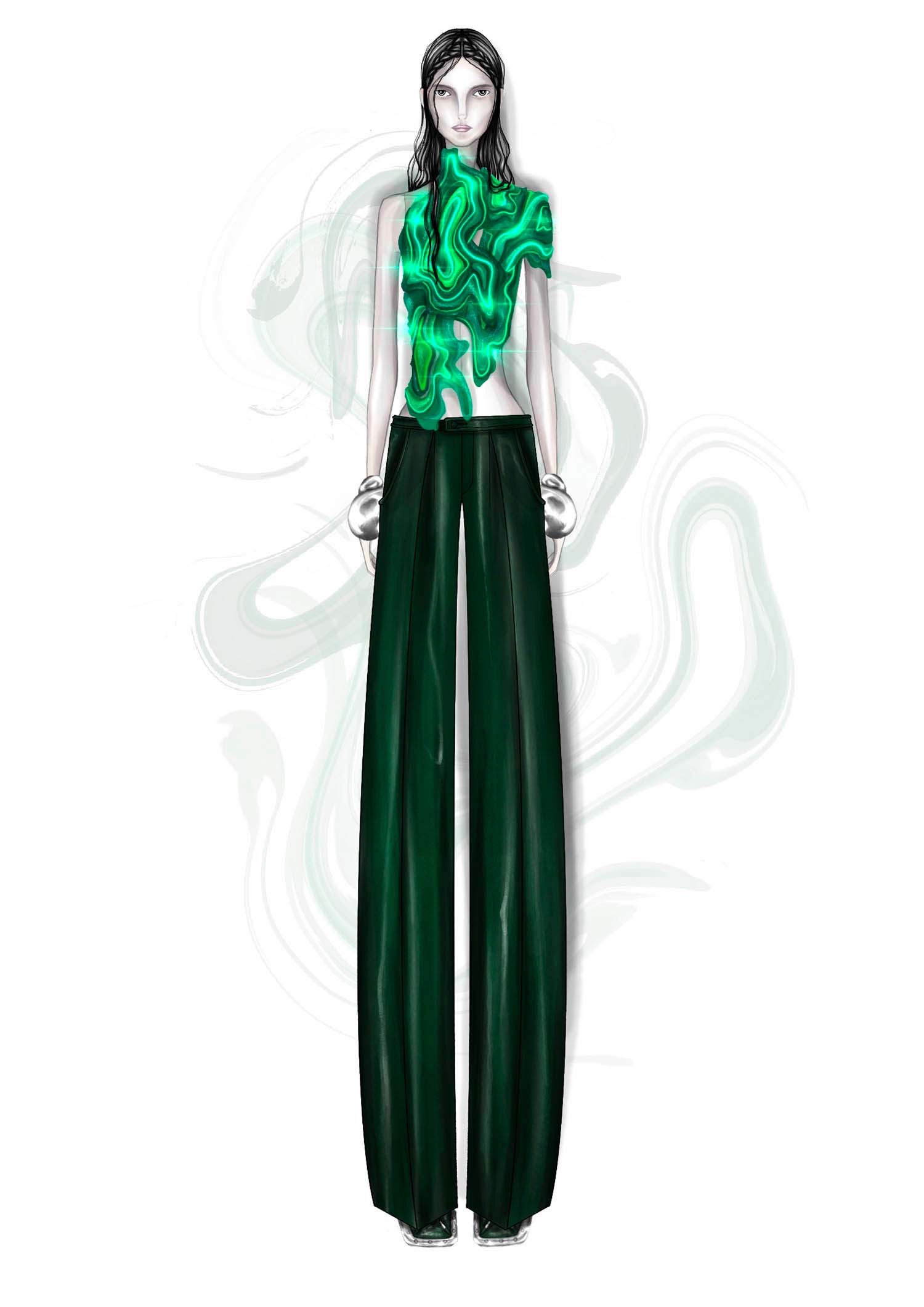
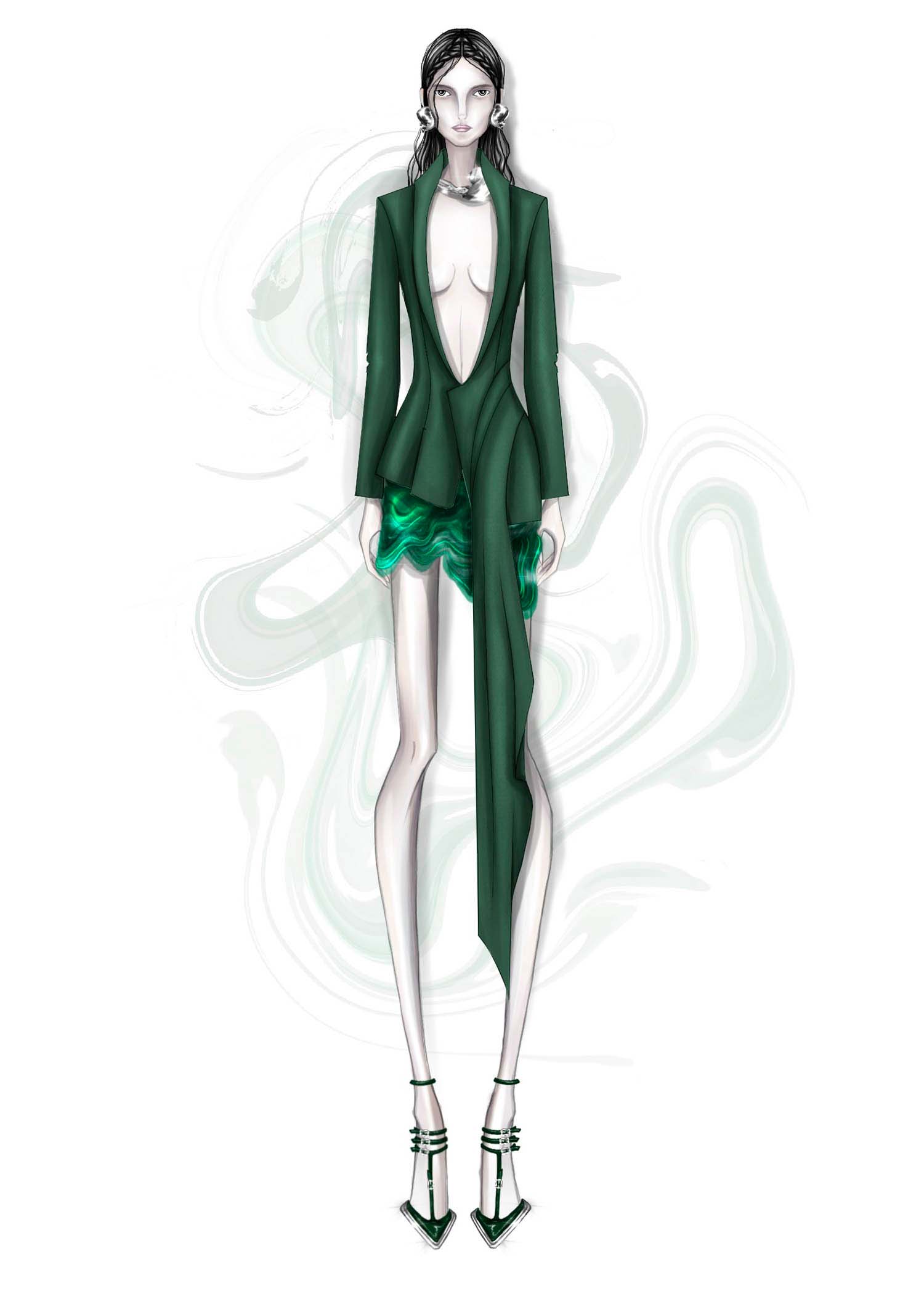
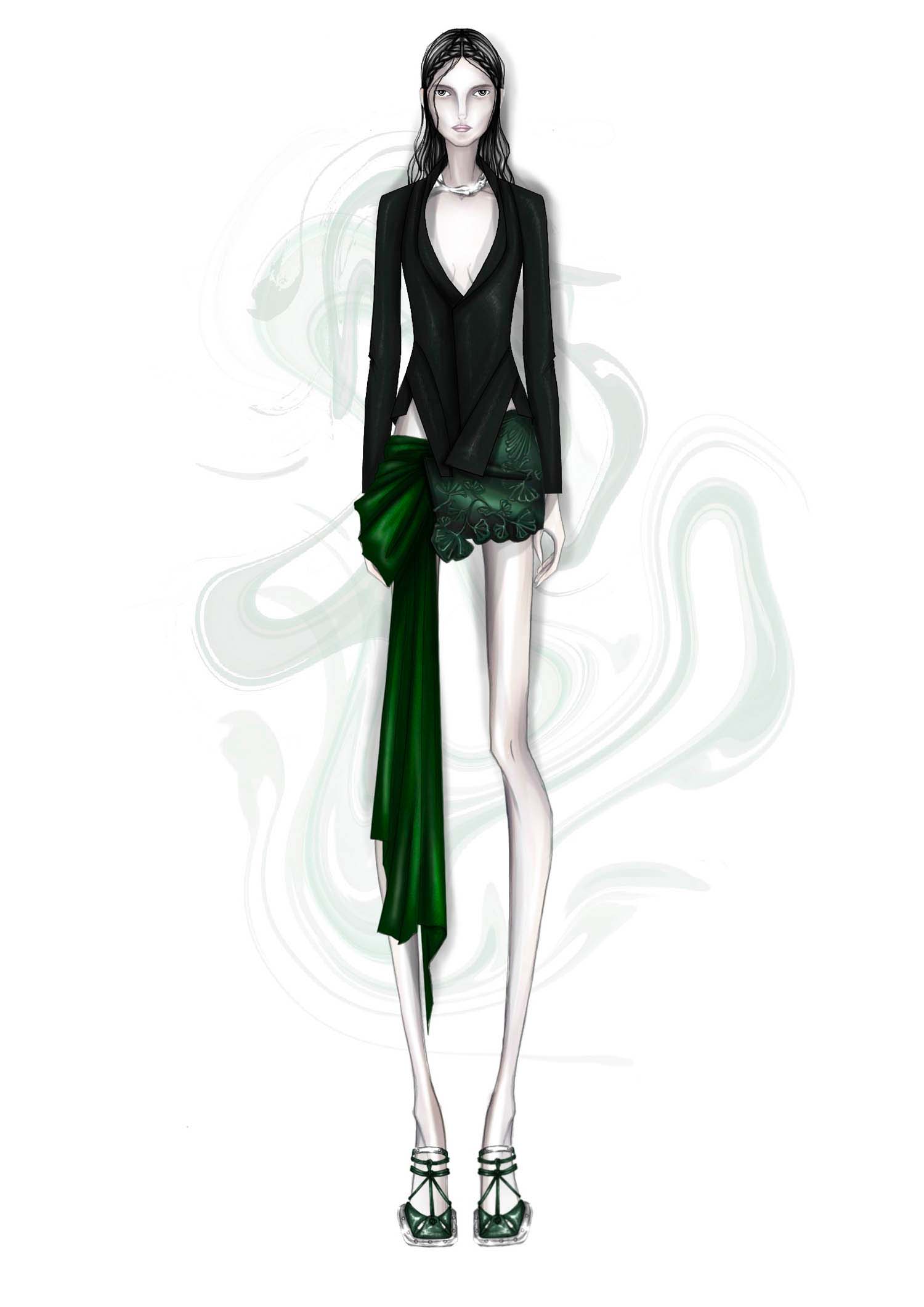
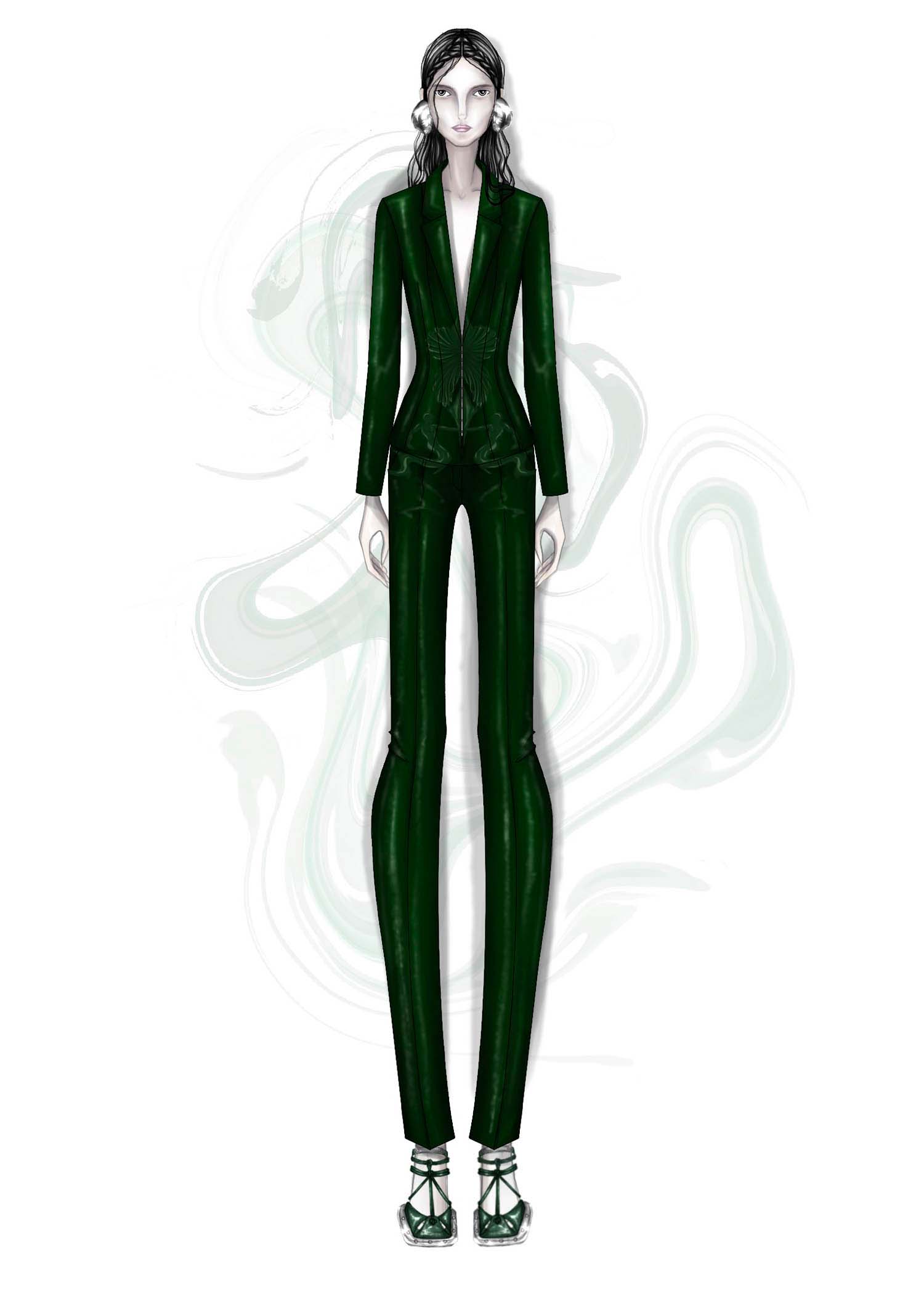
Antiche armature, statue e piccoli manufatti raffiguranti creature mitiche e antiche divinità, anfore dipinte con simboli e raffigurazioni che raccontano storie e scenari di vario genere, decorazioni parietali con motivi ricorrenti, vanno ad inquinare i capi che compongono la collezione apparendo sotto forma di motivi, applicazioni e drappeggi che suggeriscono un richiamo a quelle civiltà remote.
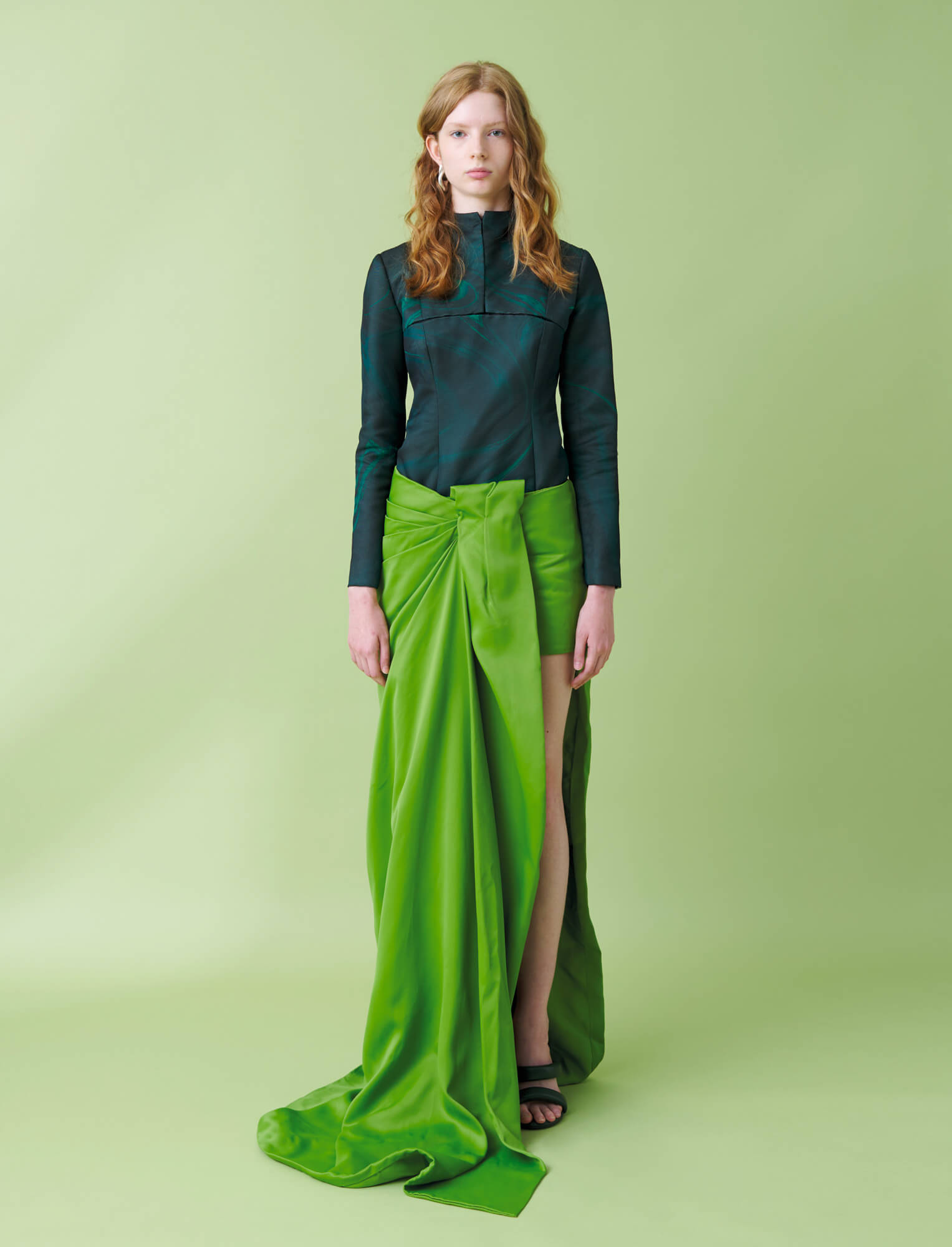
La figura che emerge da questa ambientazione è quella di una sirena che fa di questi oggetti che decorano il fondale degli indumenti. In questo progetto l’archetipo è la base del carattere che definisce il tipo di personalità che potrebbe indossare i capi della collezione, la cultura e l’immagine di femminilità urlata che contraddistingueva un determinato trend che trovò il suo massimo negli anni a cavallo tra le decadi 90′ e 2000, influisce sulla scelta di determinati modelli che vanno a esaltare ed esporre il corpo contribuendo a creare l’immagine di una figura mitologica emersa dal mare.
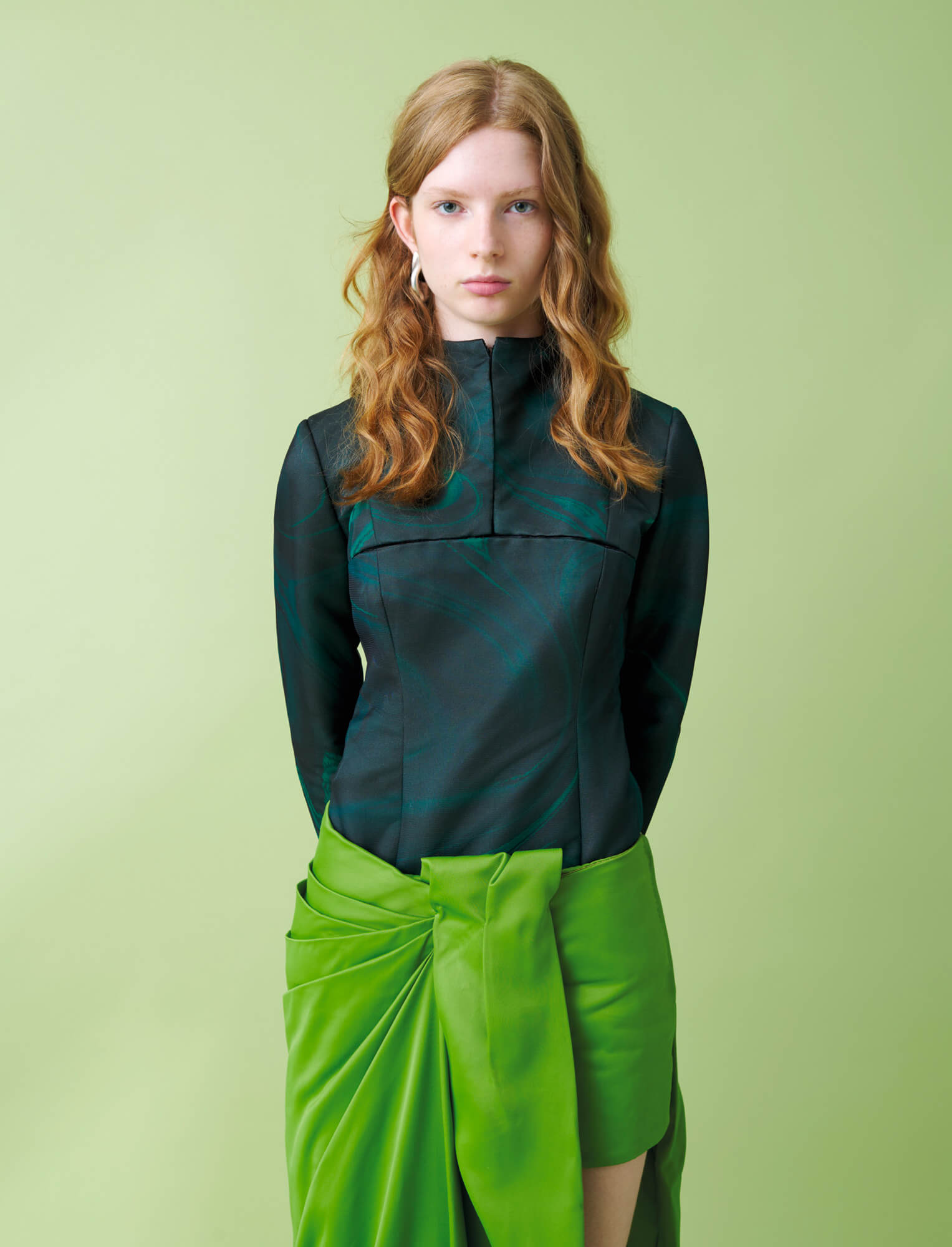
Le giacche dalle profonde scollature, le esagerate asimmetrie e i corpini aderenti che vanno a ricalcare la forma del busto quasi a simulare delle piccole corazze conferiscono e rimarcano un lato seduttivo messo in contrapposizione con la natura decisamente più romantica dei drappeggi e dei motivi raffiguranti grovigli di fiori, foglie e conchiglie tra cui si nascondono sagome di tritoni intrecciati ad essi. Anche i materiali coinvolti, per via del loro aspetto sono un richiamo alla seduzione, non a caso tutti questi riflettono la luce, dalla pelle ai diversi tessuti in seta tutti hanno lucentezze diverse. Questa determinata caratteristica secondo la psicologia è ritenuta biologicamente attraente per le persone.
L’assetto di tutti questi elementi punta a emulare quella stessa atmosfera che emerge dall’immagine presa a modello, cercando di trasmettere quelle sensazioni di desiderio romantico e sensuale che l’illustratore è riuscito a catturare.
Trnka’s illustration for the Little Mermaid fairy tale was the creative matrix that gave the impetus for the realization of this project. The suggestion of the image, from the color to the way of representing the two protagonist figures, led to a scenario parallel to that of the fairy tale Andersen. The image of a garden of ancient lost or forgotten artefacts which, contaminated by underwater plants, become one with the seabed.
From the vegetation that covers the stone to the bronze whose color is altered by the wear and tear of the salt, from the algae animated by the current to the sunlight that reaches the seabed filtering through the water, the scenario that presents itself is a cross between a place of fantasy and an archaeological site where the color green is predominant in countless shades.
in the project as a means to discover this imaginary setting, the finds that decorate this underwater garden are untold treasures, hidden in the depths waiting to return to the surface. And so references to Etruscan art and beyond appear in the collection, through objects dating back to a time so distant as to seem almost unreal.
Ancient armour, statues and small artefacts depicting mythical creatures and ancient divinities, amphorae painted with symbols and representations that tell stories and scenarios of various kinds, wall decorations with recurring motifs, pollute the garments that make-up the collection appearing in the form of motifs, applications and drapes that suggest a reference to those remote civilizations.
The figure that emerges from this setting is that of a mermaid who makes these objects decorate the backdrop of clothing. In this project the archetype is the basis of the character that defines the type of personality that could wear the garments of the collection, the culture and the image of shouted femininity that characterized a certain trend that found its maximum in the years between decades 90′ and 2000, influences the choice of certain models that enhance and expose the body, helping to create the image of a mythological figure emerging from the sea.
The jackets with deep necklines, the exaggerated asymmetries and the tight-fitting bodices that follow the shape of the bust almost simulating small armor give and underline a seductive side contrasted with the decidedly more romantic nature of the drapes and motifs depicting tangles of flowers , leaves and shells among which the silhouettes of newts intertwined with them are hidden. Even the materials involved, due to their appearance, are a reminder of seduction, it is no coincidence that all of these reflect light, from leather to the different silk fabrics all have different sheen. This certain characteristic according to psychology is considered biologically attractive to people.
The arrangement of all these elements aims to emulate the same atmosphere that emerges from the image taken as a model, trying to convey those sensations of romantic and sensual desire that the illustrator managed to capture.
Fabrics Alesilk


© 2023 ACCADEMIA di COSTUME e di MODA ENTE TERZO SETTORE | P.IVA: 01096241003
© 2023 ACCADEMIA di COSTUME e di MODA SRL | P.IVA: 12001361000
© 2023 ACCADEMIA di COSTUME e di MODA MILANO SRL | P.IVA: 10982820960