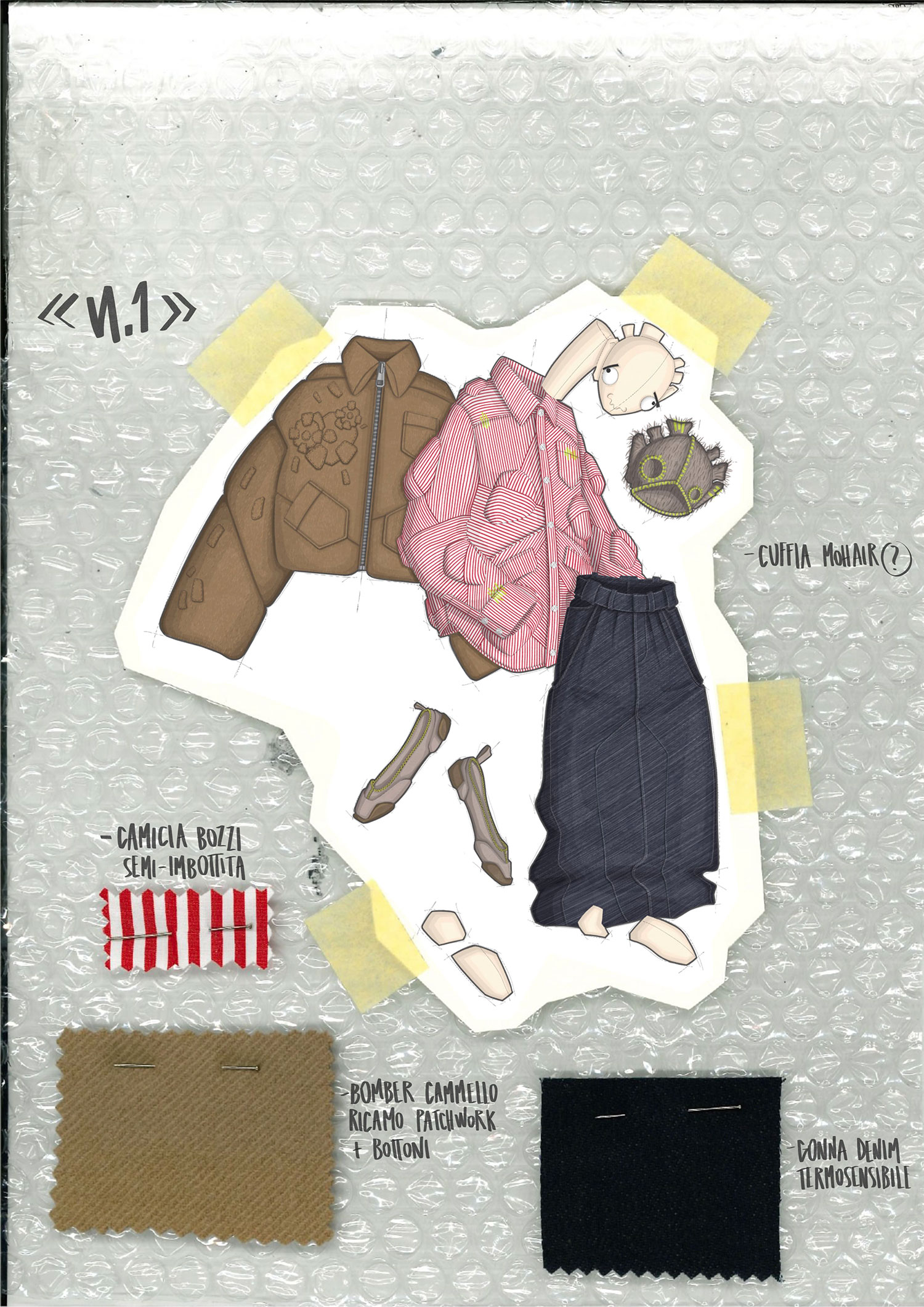
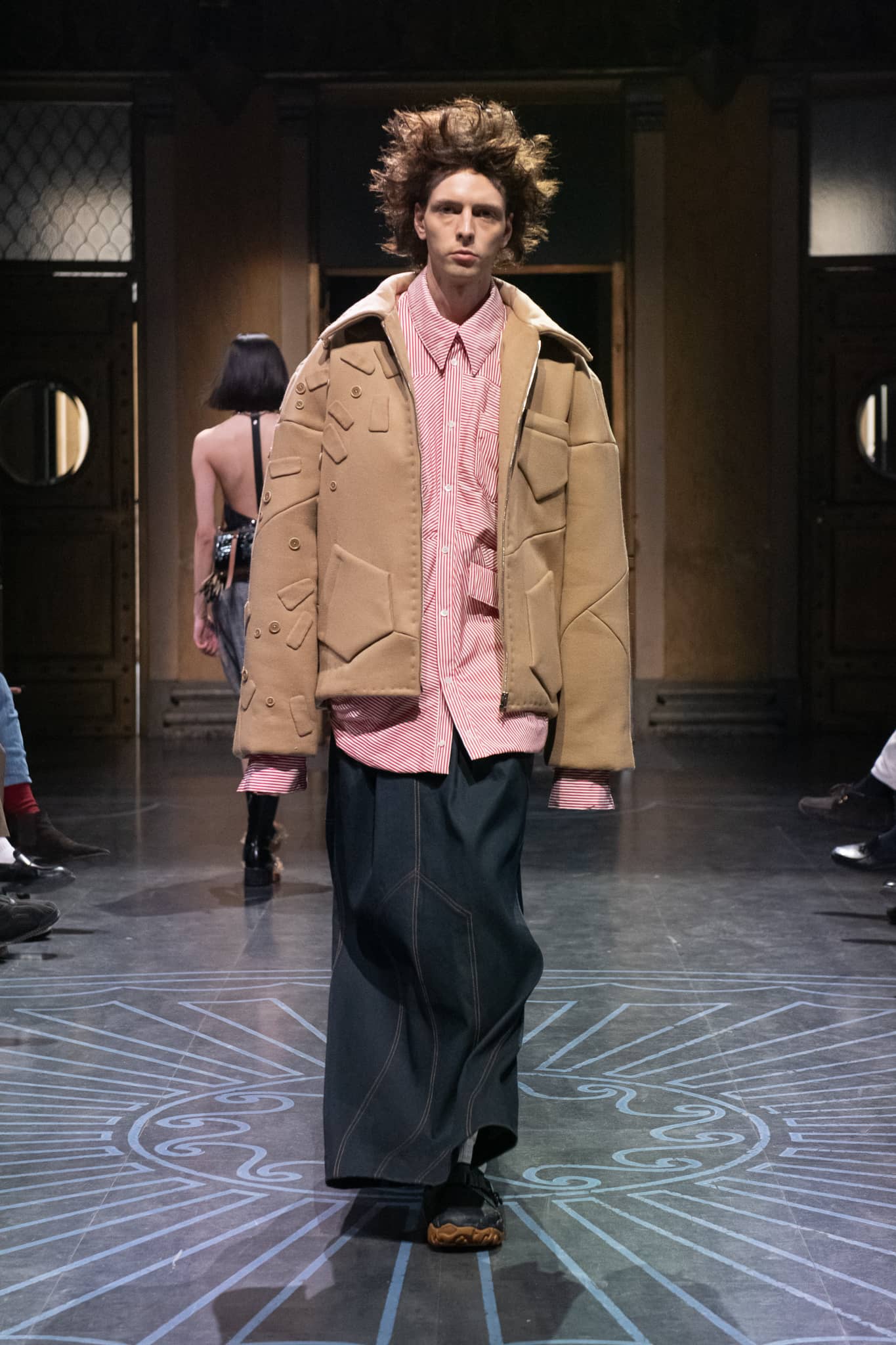
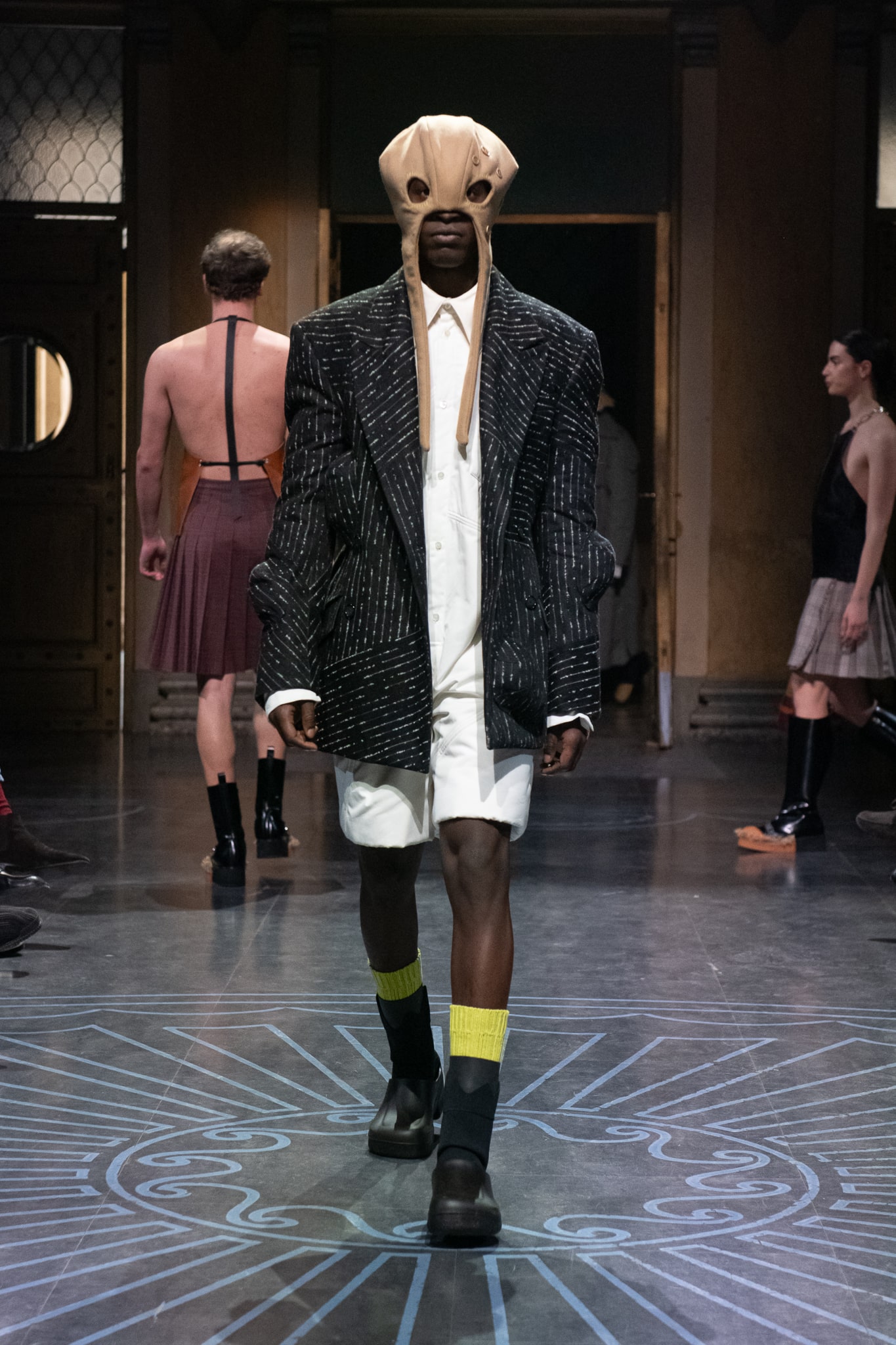
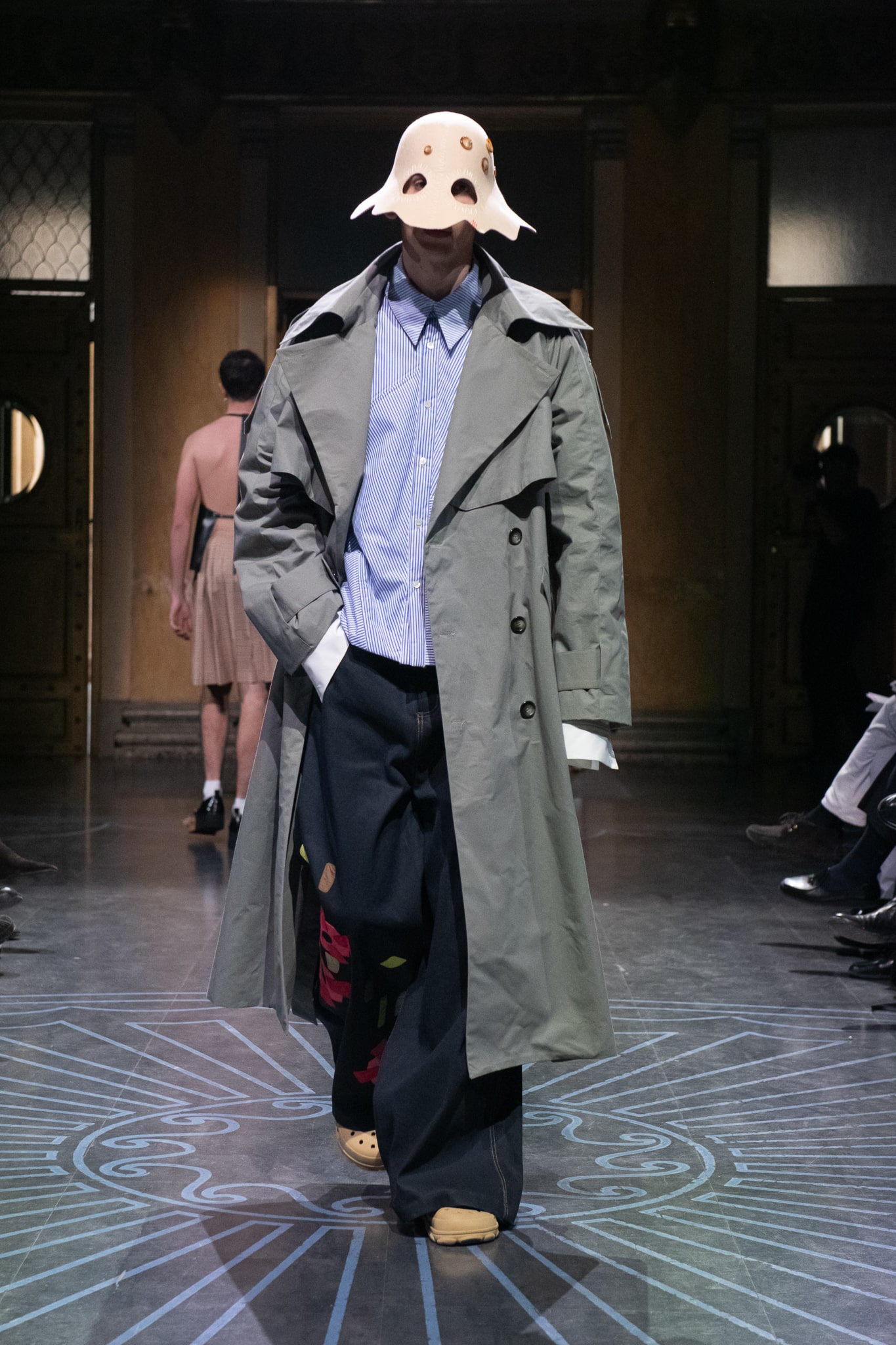
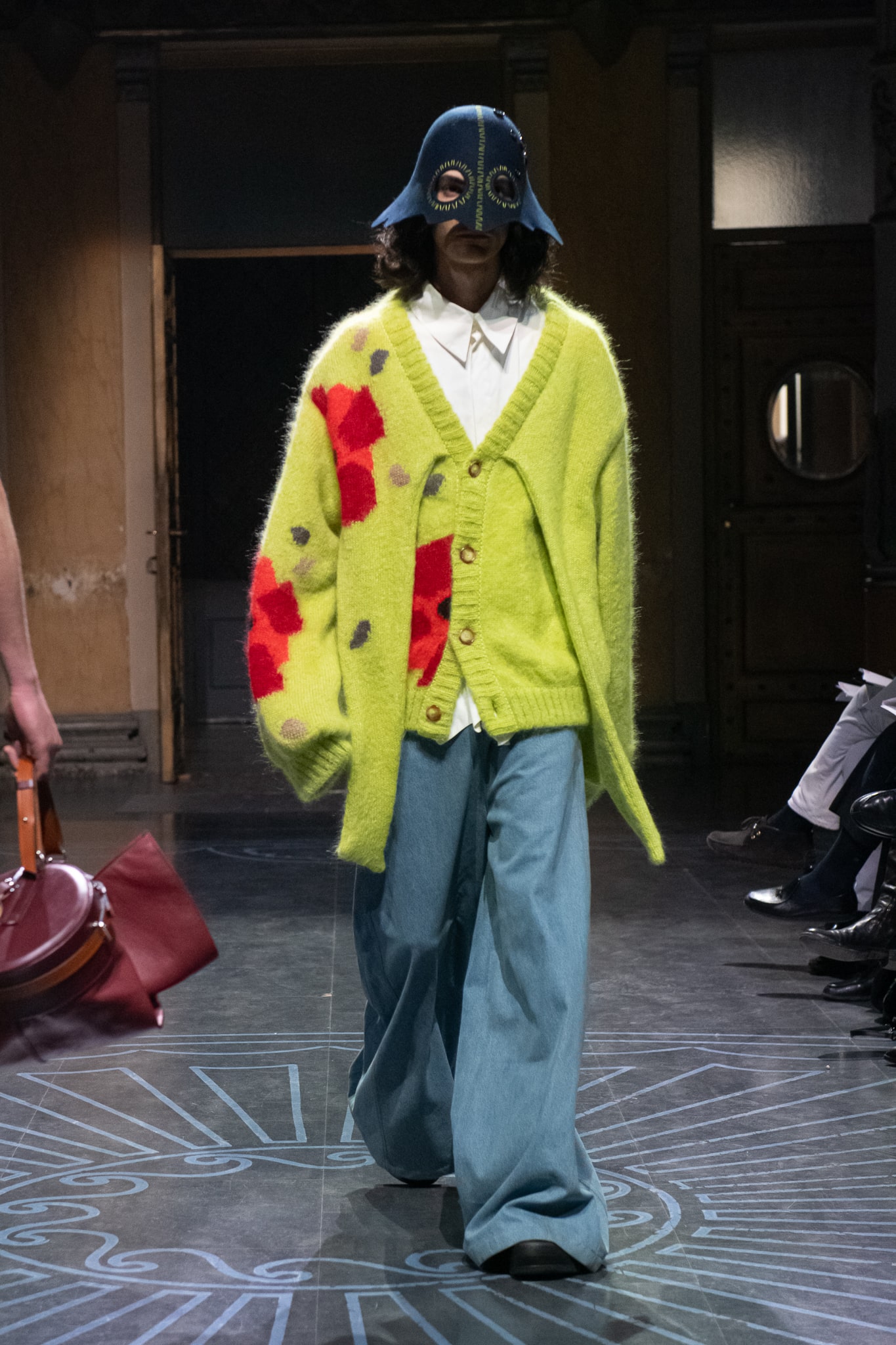
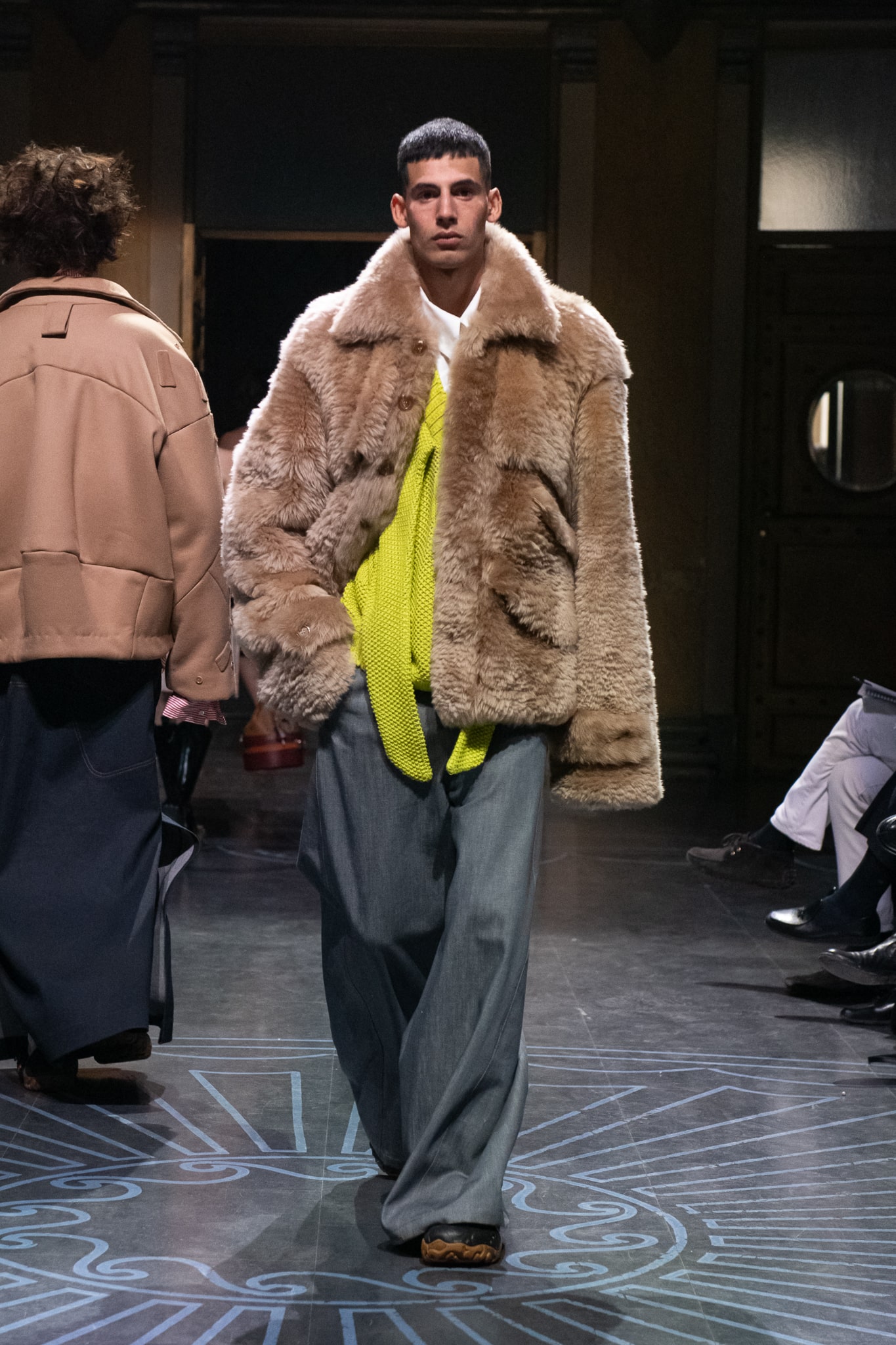
Gonne in tartan, tessuti plastici a richiamare le molteplici buste di plastica, coperte trapuntate, pantaloni stracciati e slavati, scarpe bucate…
Nel laboratorio creativo di Quelli che vanno, nulla di tutto questo si manifesta, al contrario, l’immaginario si snoda in un mondo divergente. La collezione non cerca di appropriarsi delle immagini, delle caratteristiche, dello stile e della cultura delle persone incontrate durante questo lungo percorso.
Desidera, invece, catturare e rappresentare lo stato d’animo intricato e complesso di questo viaggio.
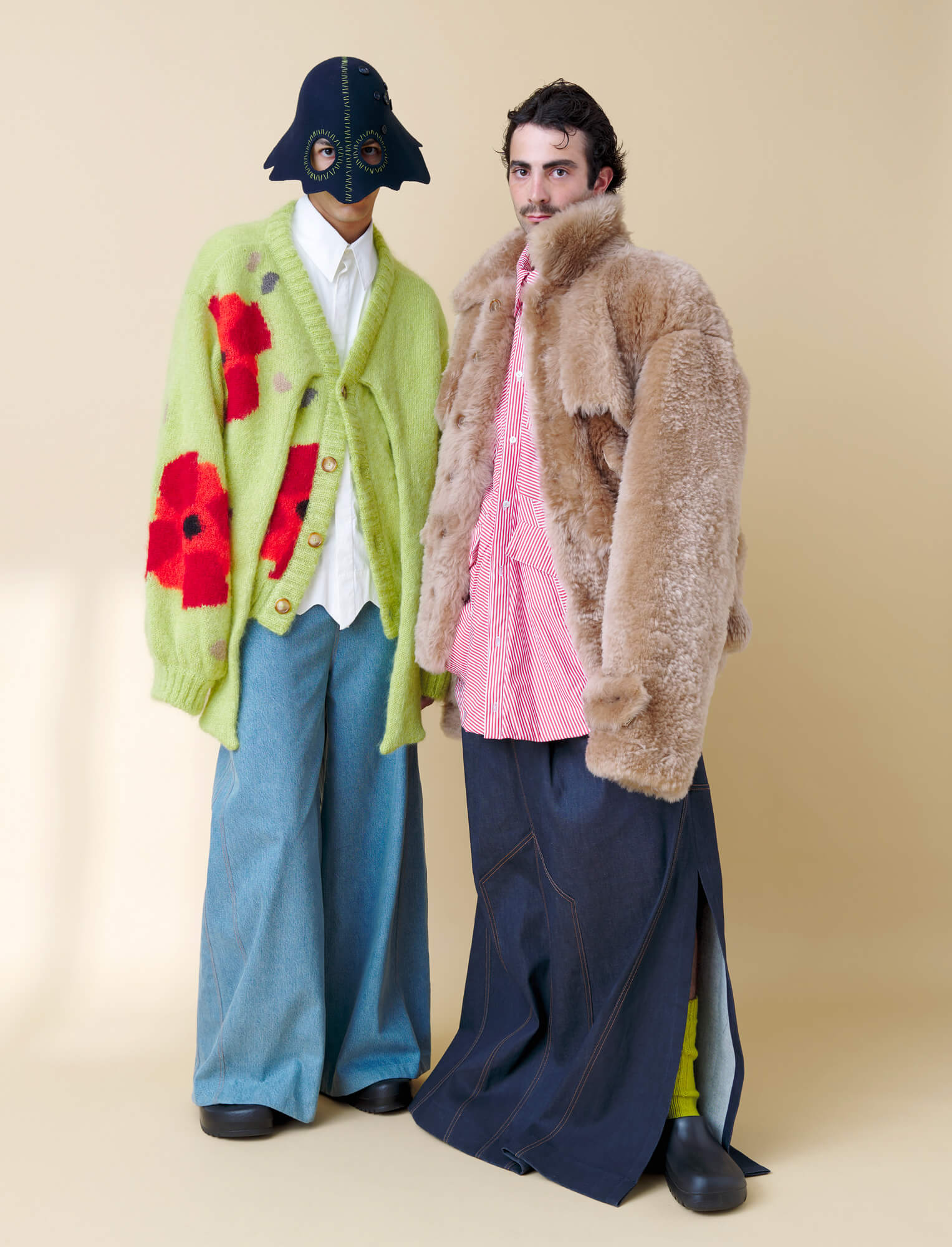
Ogni dettaglio visivo può essere interpretato soggettivamente da chi osserva, ma lo stato d’animo che emerge da certe forme è inequivocabile: le posture dei viventi, degli emarginati, di coloro che restano, di chi china la testa sull’asfalto, di chi si piega sotto il peso del lavoro, di chi è chiuso, sono elementi rappresentati in questa collezione attraverso forme universali, che narrano un intreccio di emozioni, sensazioni e storie umane.
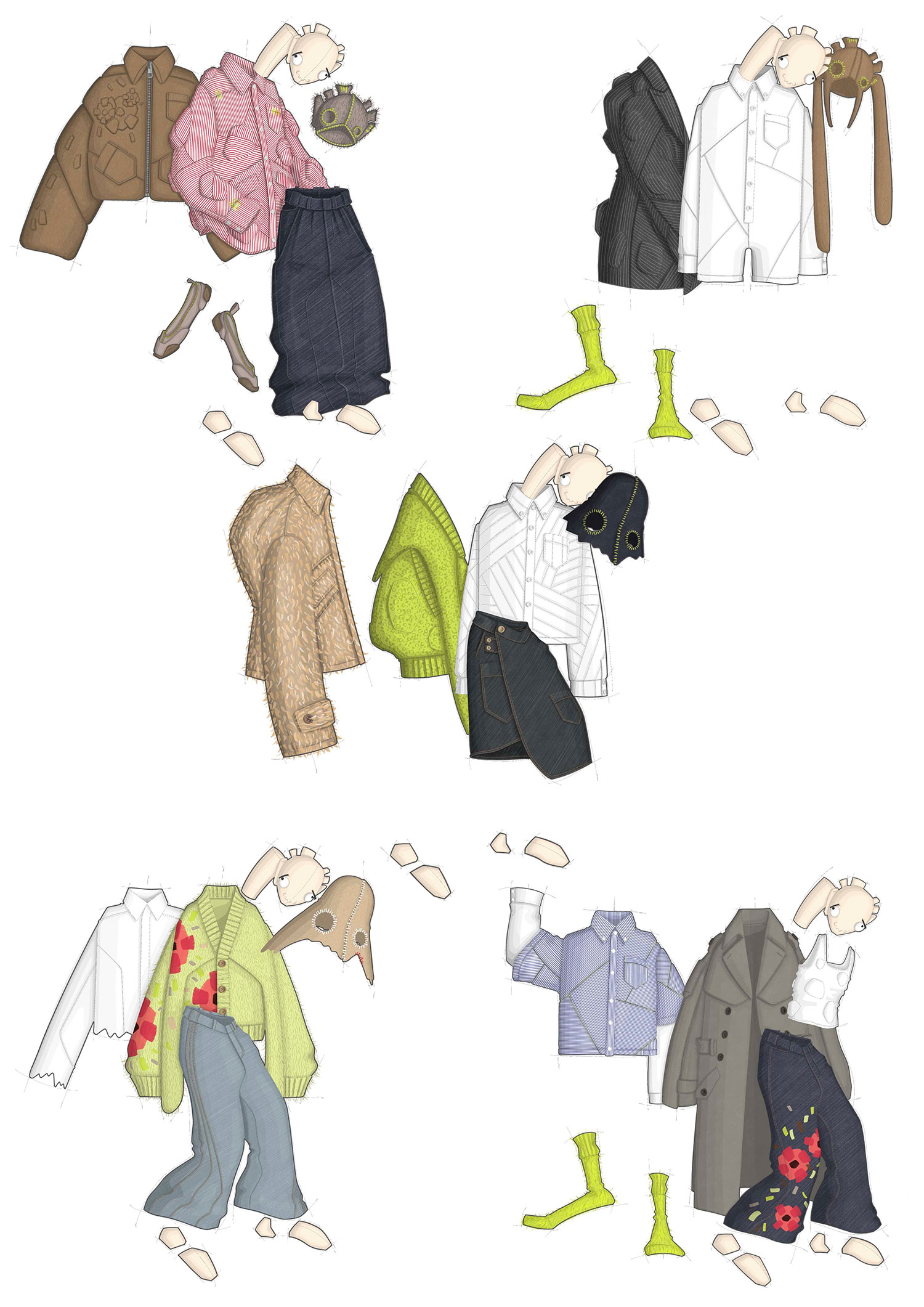
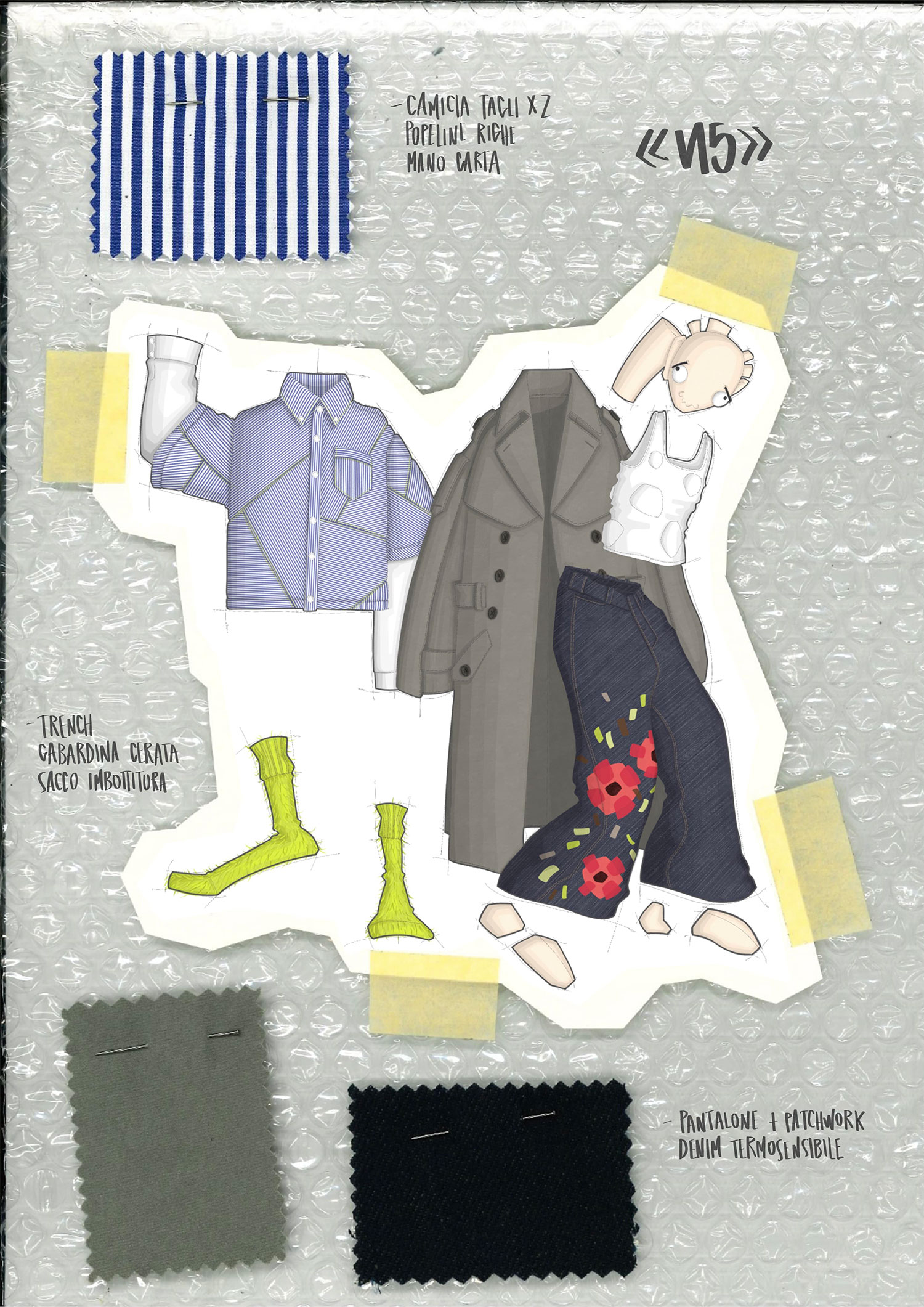
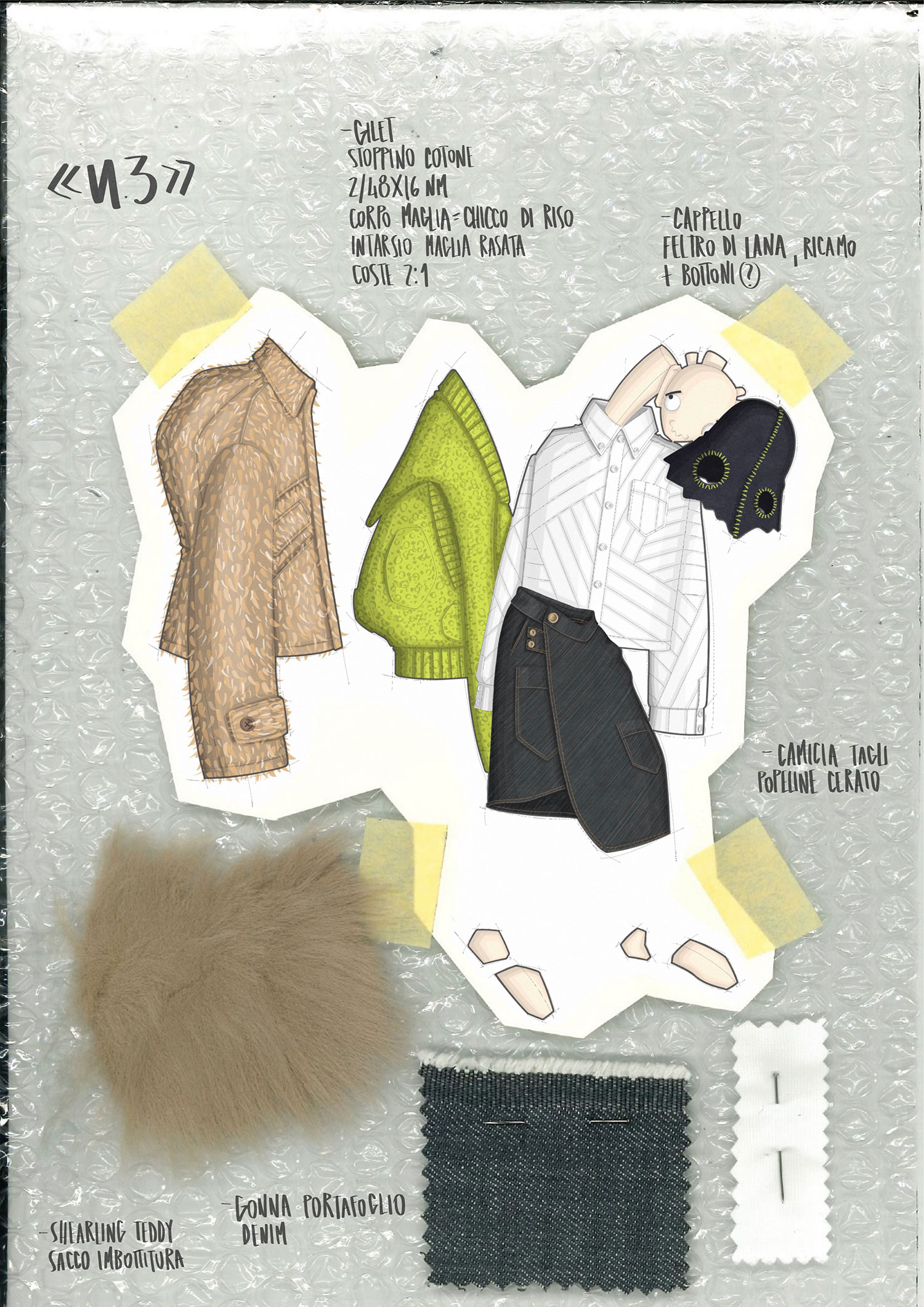
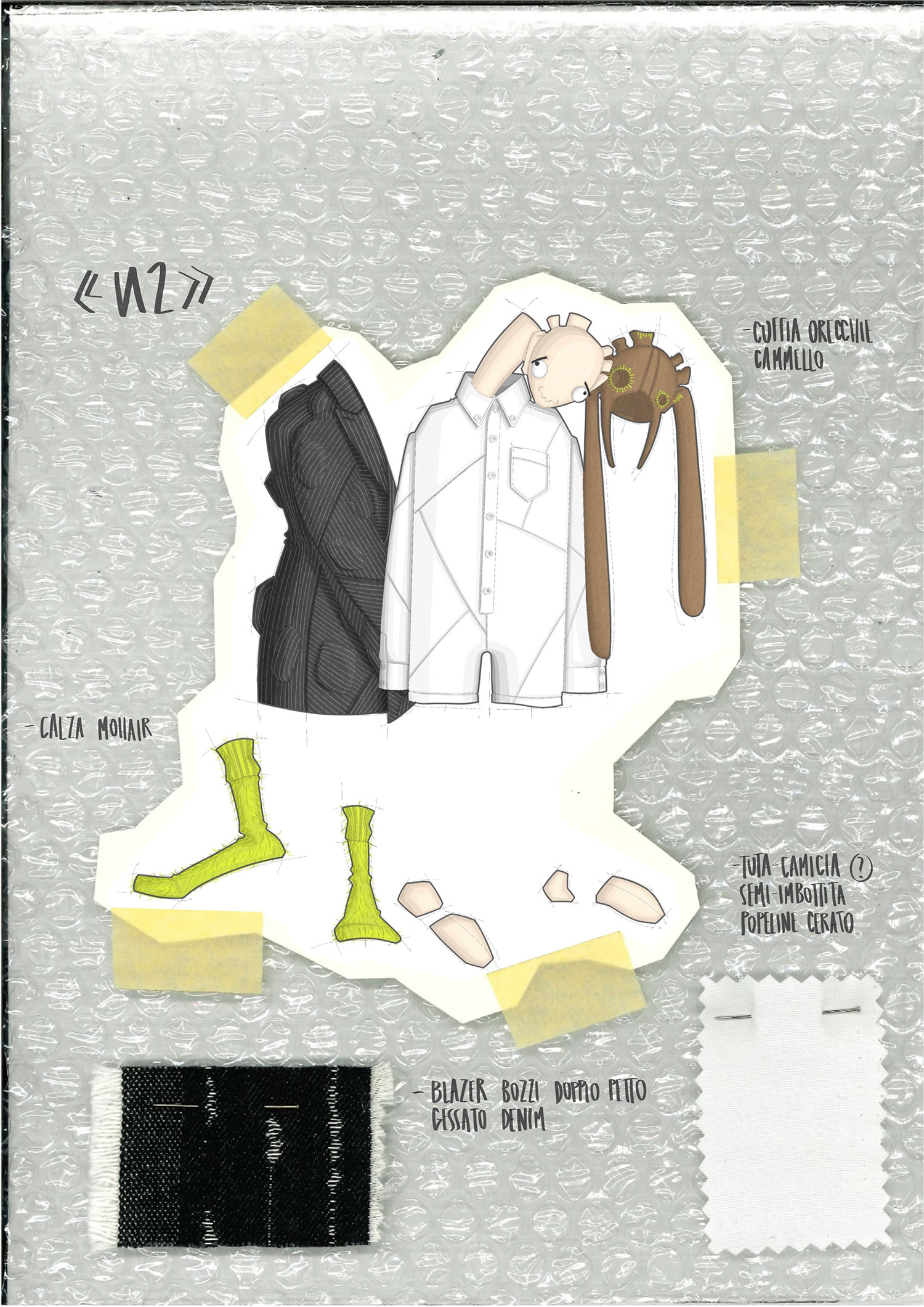
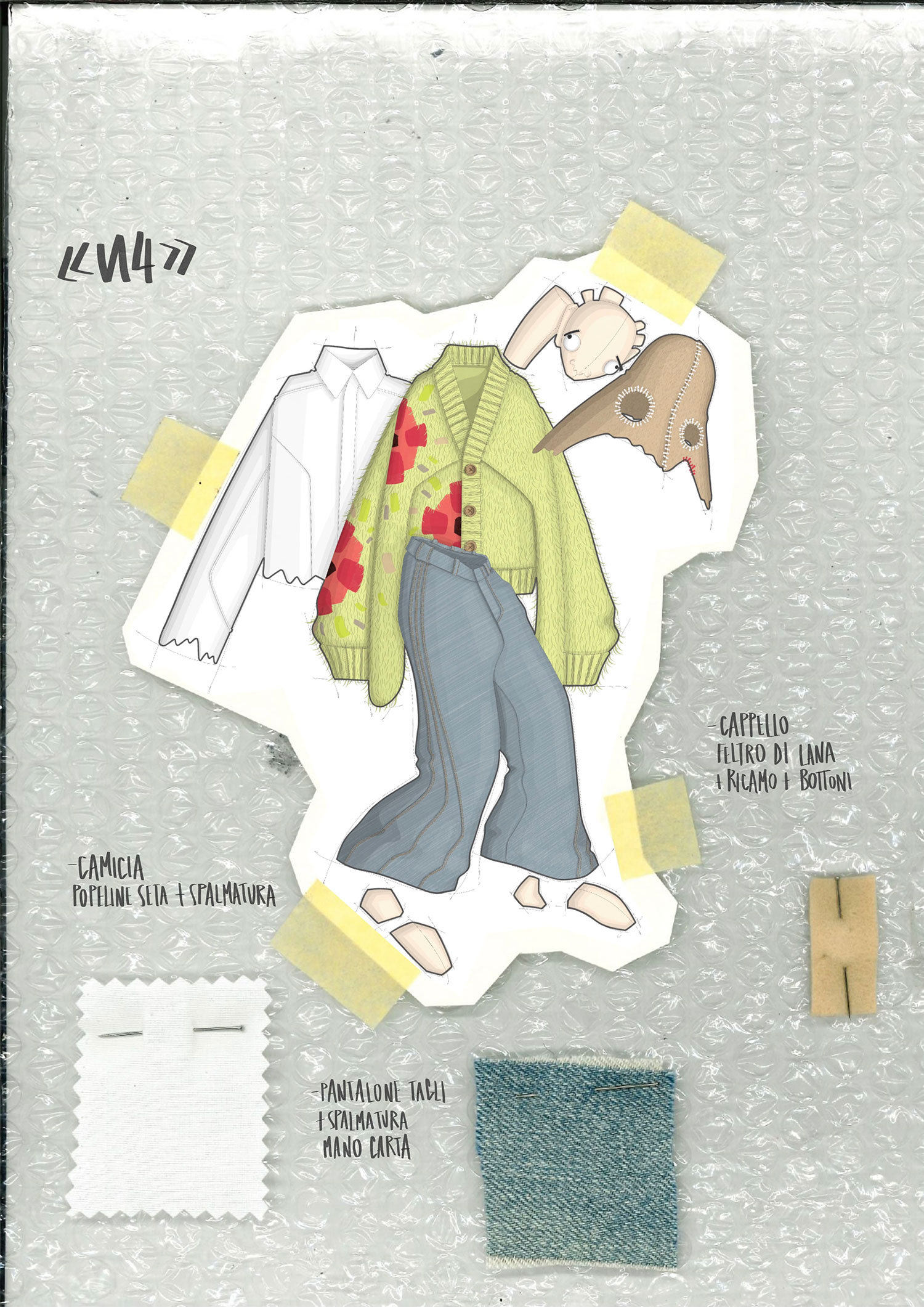
Sensazioni differenti che si mescolano, richiamando la sosta in una stazione, tradotte tagliando tessuti a righe, cambiando il loro schema, linee che scontrandosi rendono disturbante l’osservazione.
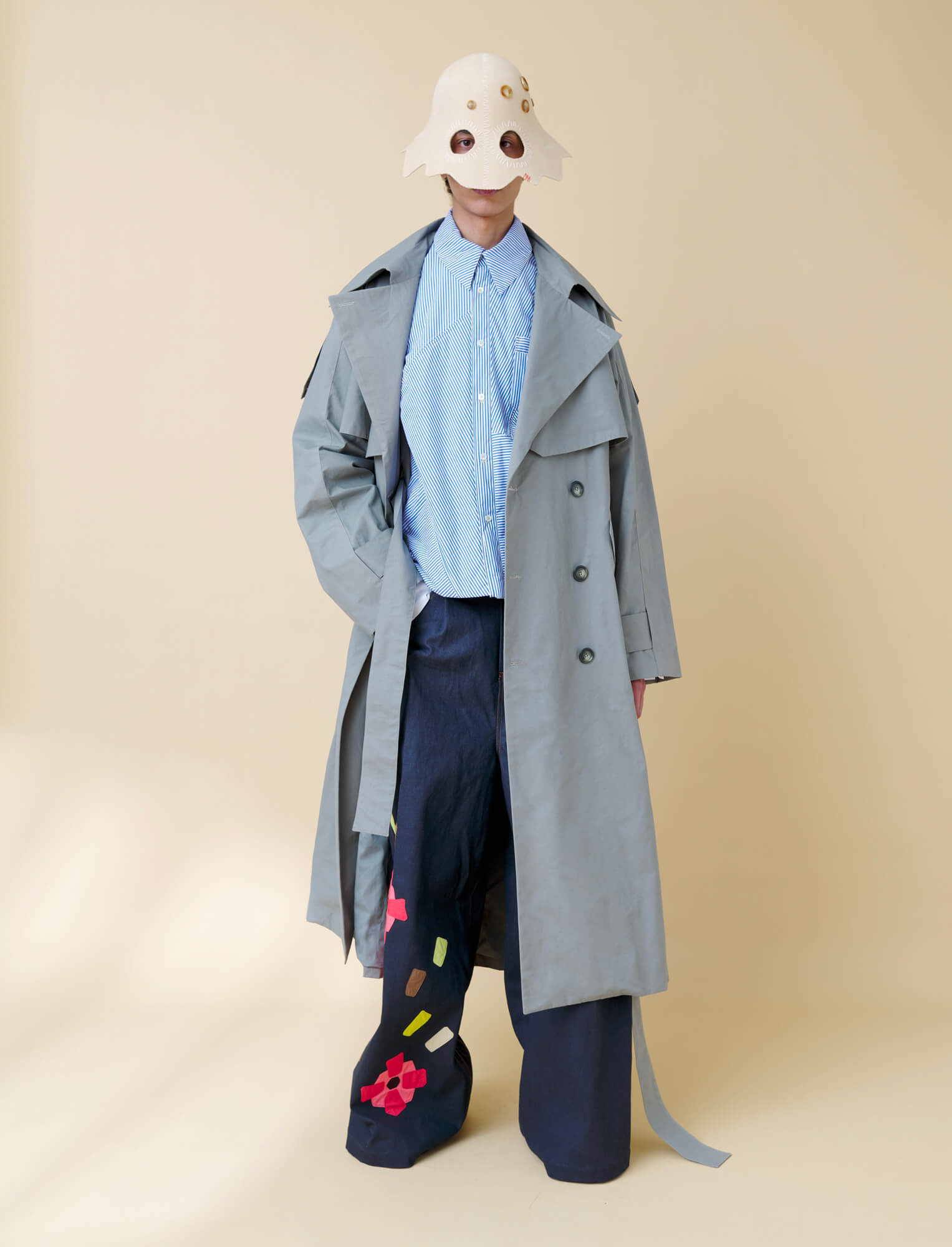
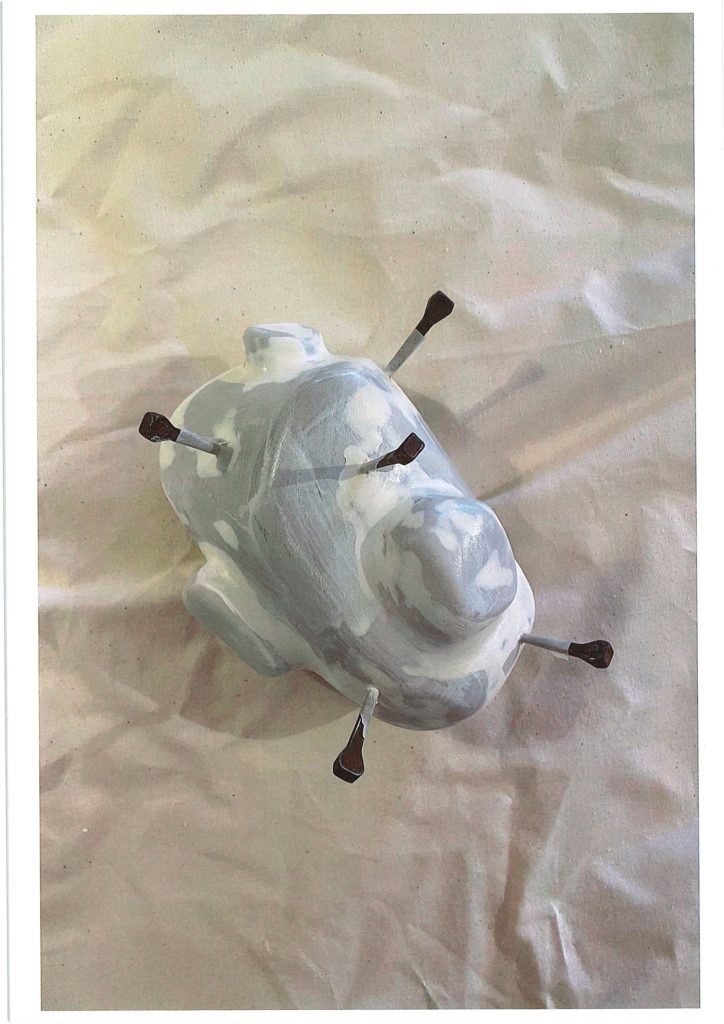
Forme rigide, deformate e prorompenti richiamano una chiusura, uno scudo, un guscio.
La palette cromatica di Quelli che vanno, ispirata alle notti in una stazione, mescola colori tenui e pastello con accenti di rossi e verdi acidi.
Gli accordi cromatici sono stati provati ripetutamente, le composizioni di colore
riflettono la sensibilità soggettiva di ciascuno, sottolineando la natura soggettiva dei colori in tale contesto.
In pittura possiamo osservare molti capolavori di natura strettamente personale, non composti secondo il principio di armonia cromatica che di solito viene ribadito in molti testi sulle teorie del colore, ma risultano eccitanti e sconvolgenti a causa dell’accentuazione di una particolare gamma cromatica e del suo carattere espressivo.
La collezione invita lo spettatore ad andare avanti, superando chiusure, fatica, monotonia ed immobilismo, basandosi su una cultura positivista. I petali, le foglie e i papaveri ricamati emanano speranza, come un treno che corre velocissimo, che come un’ape porta con se la terra, il seme, sapendo che poi, su quei binari spogli e senza anima, un giorno, in primavera, i fiori cresceranno ancora.

Tartan skirts, plastic fabrics to recall the multiple plastic bags, quilted blankets, torn and washed-out trousers, pierced shoes…
In the creative laboratory of Quelli che vanno, none of this manifests itself, on the contrary, the imaginary unfolds in a divergent world. The collection does not seek to appropriate the images, characteristics, style and culture of the people encountered during this long journey.
Instead, he wishes to capture and represent the intricate and complex mood of this journey.
Every visual detail can be interpreted subjectively by the observer, but the mood that emerges from certain forms is unequivocal: the postures of the living, of the marginalized, of those who remain, of those who bow their heads on the asphalt, of those who bend under the weight of work, of those who are closed, are elements represented in this collection through universal forms, which tell a plot of emotions, sensations and human stories.
Different sensations that mix, recalling the stop in a train station, translated by cutting fabrics in rows, changing their pattern, lines that clash making the observation disturbing.
Rigid, deformed and bulging shapes recall a closure, a shield, a shell.
The colour palette of Quelli che vanno, inspired by the nights in the train station, mixes soft and pastel colours with acid red and green accents.
Chromatic matches were tried repeatedly, color compositions
reflect the subjective sensitivity of each, emphasizing the subjective nature of colors in this context.
In artworks we can observe many masterpieces of a strictly personal nature, not composed according to the principle of chromatic harmony that is usually reiterated in many texts on the theories of color, but they are exciting and upsetting due to the accentuation of a particular chromatic range and its expressive character.
The collection invites the viewer to move forward, overcoming closures, fatigue, monotony and immobilism, based on a positivist culture. The petals, the leaves and the embroidered poppies emit hope, like a train that runs very fast, that like a bee carries with it the earth, the seed, knowing that then, on those bare tracks and without soul, one day, in spring, the flowers will grow again.
Fabrics Borghi 1819, Lanificio F.lli Cerruti dal 1881, Majotech, Piacenza Cashmere, Project Officina Creativa | Finishing Apparecchiatura di Cernobbio | Knitwear Mely’s | Sherling La Doma, Myskin | Yarns Iafil, Ilaria Filati | Zip YKK


© 2023 ACCADEMIA di COSTUME e di MODA ENTE TERZO SETTORE | P.IVA: 01096241003
© 2023 ACCADEMIA di COSTUME e di MODA SRL | P.IVA: 12001361000
© 2023 ACCADEMIA di COSTUME e di MODA MILANO SRL | P.IVA: 10982820960