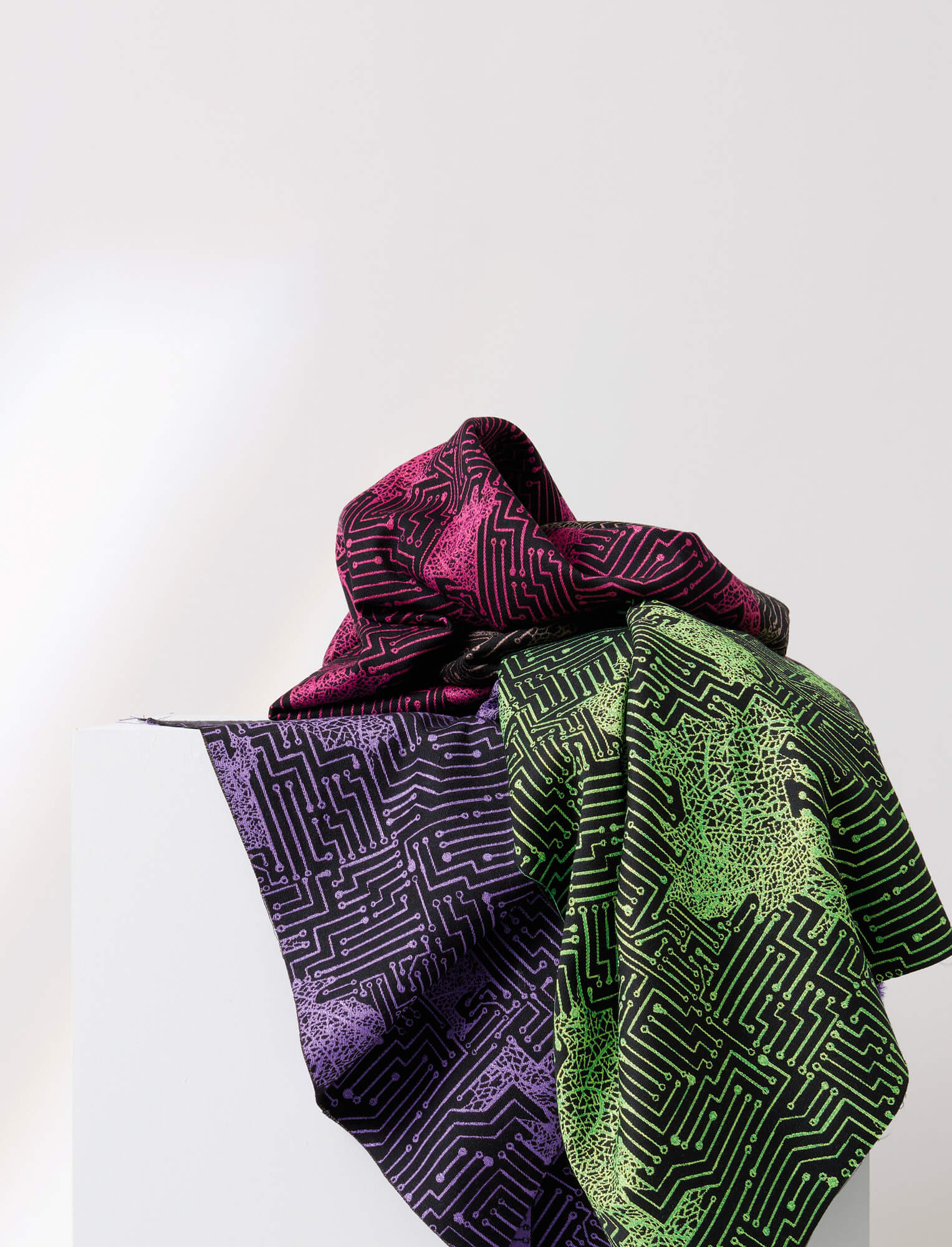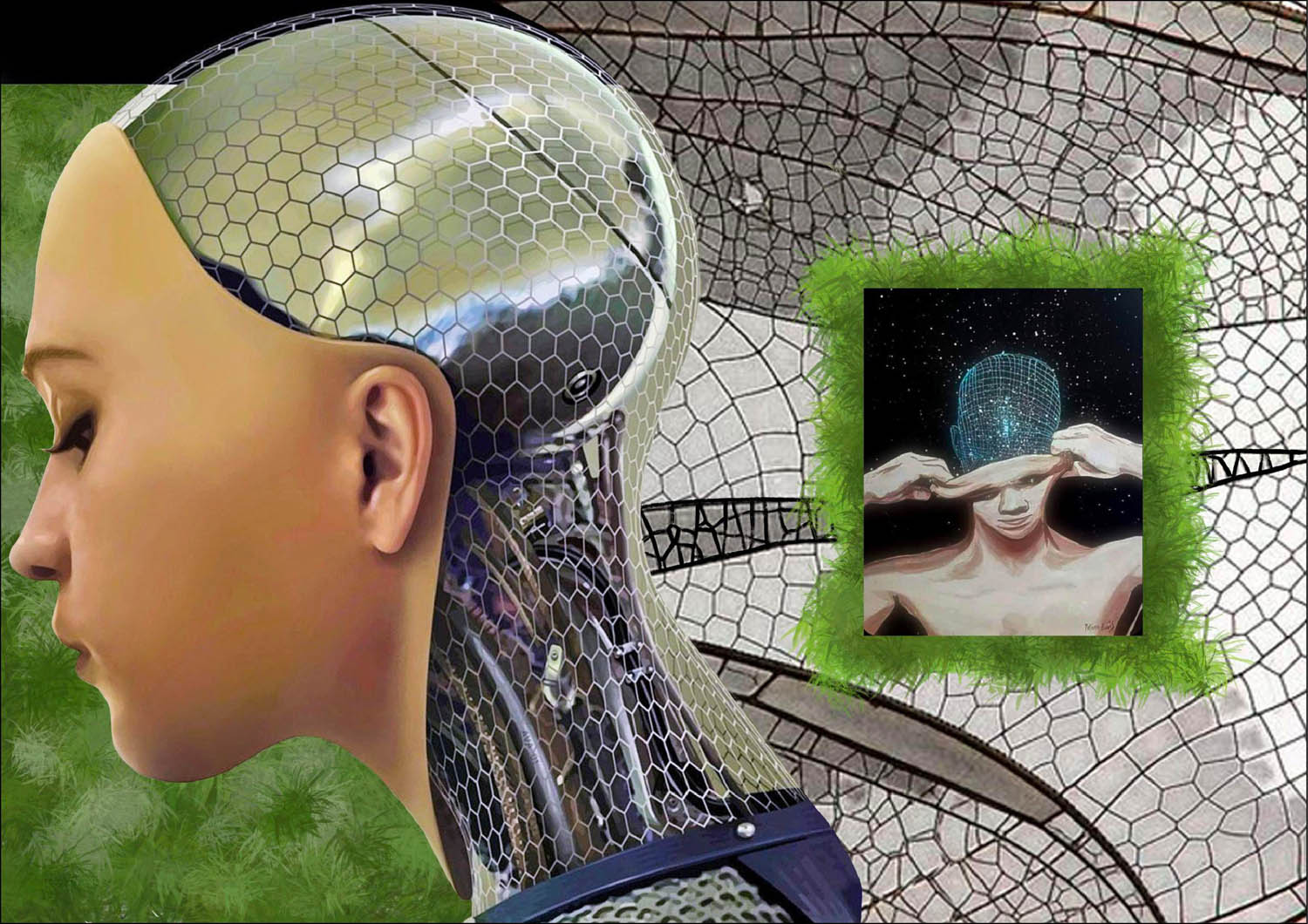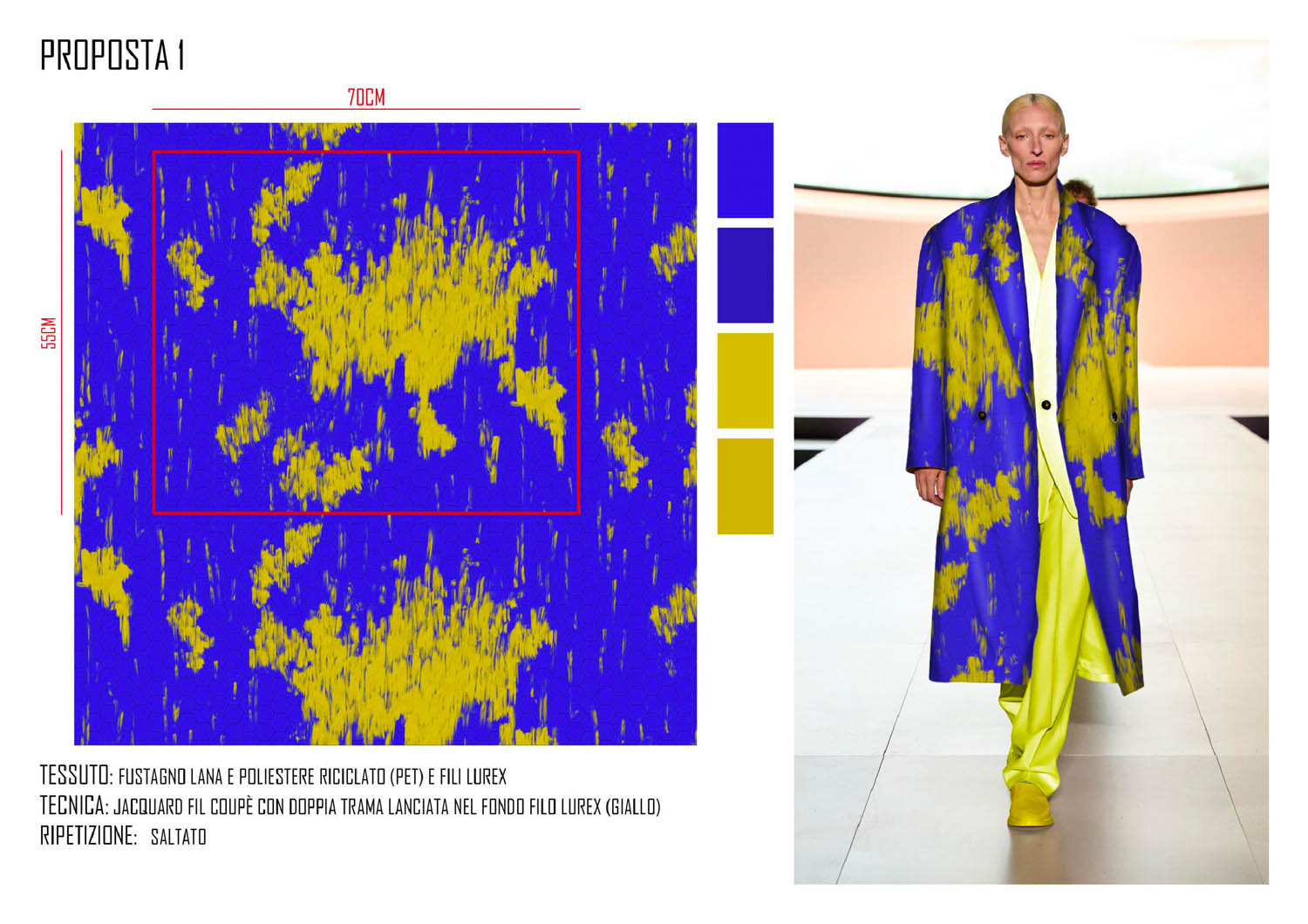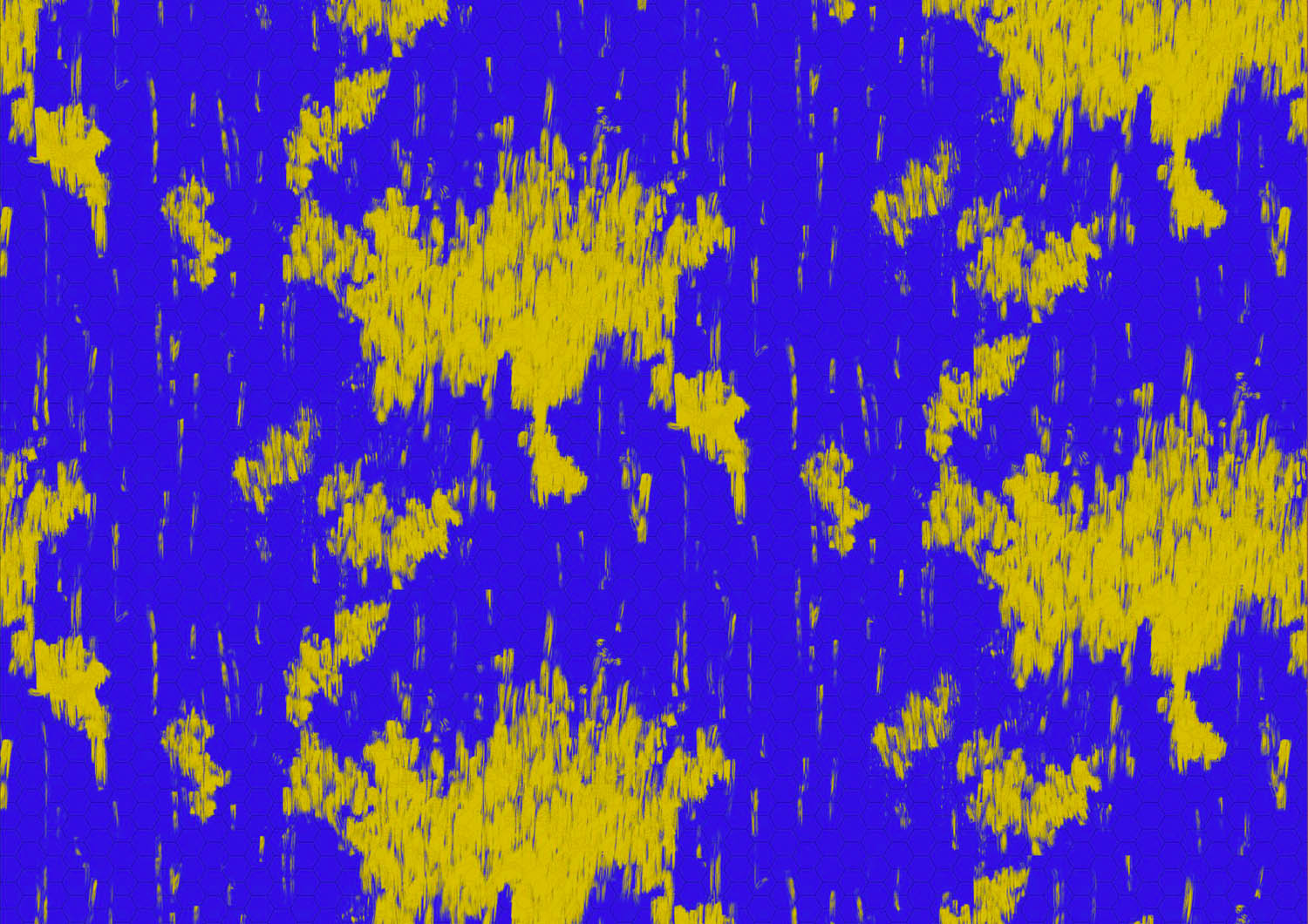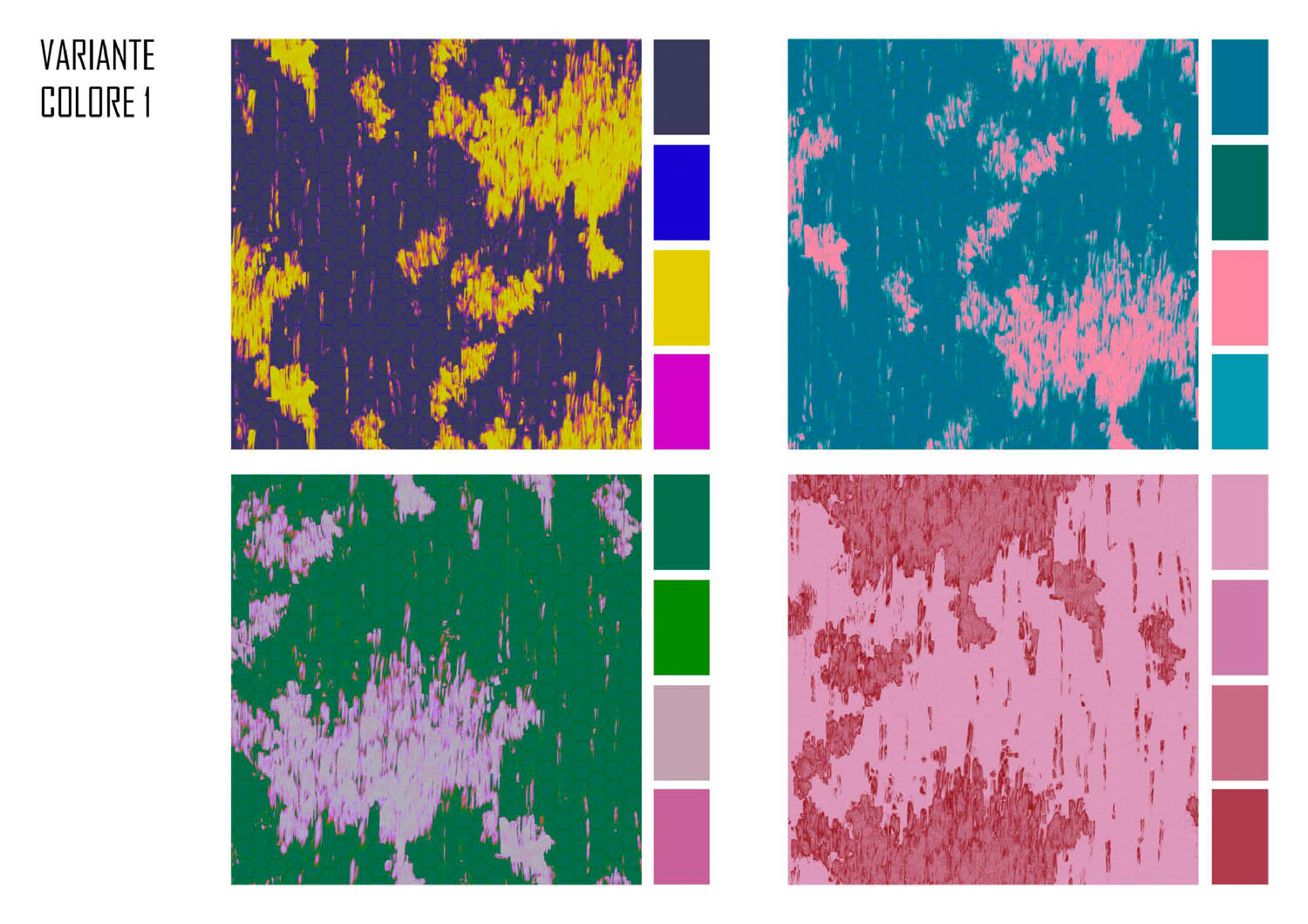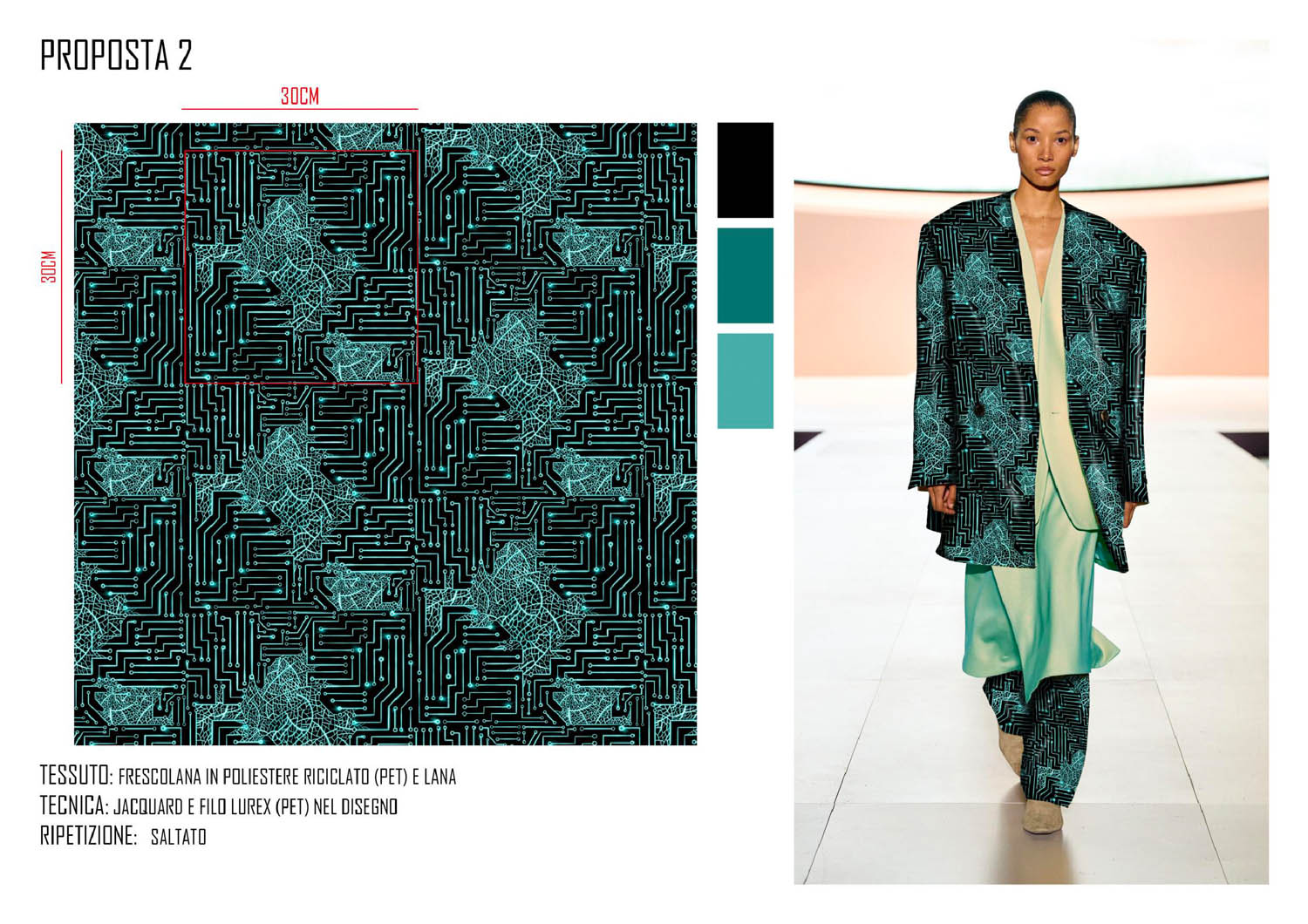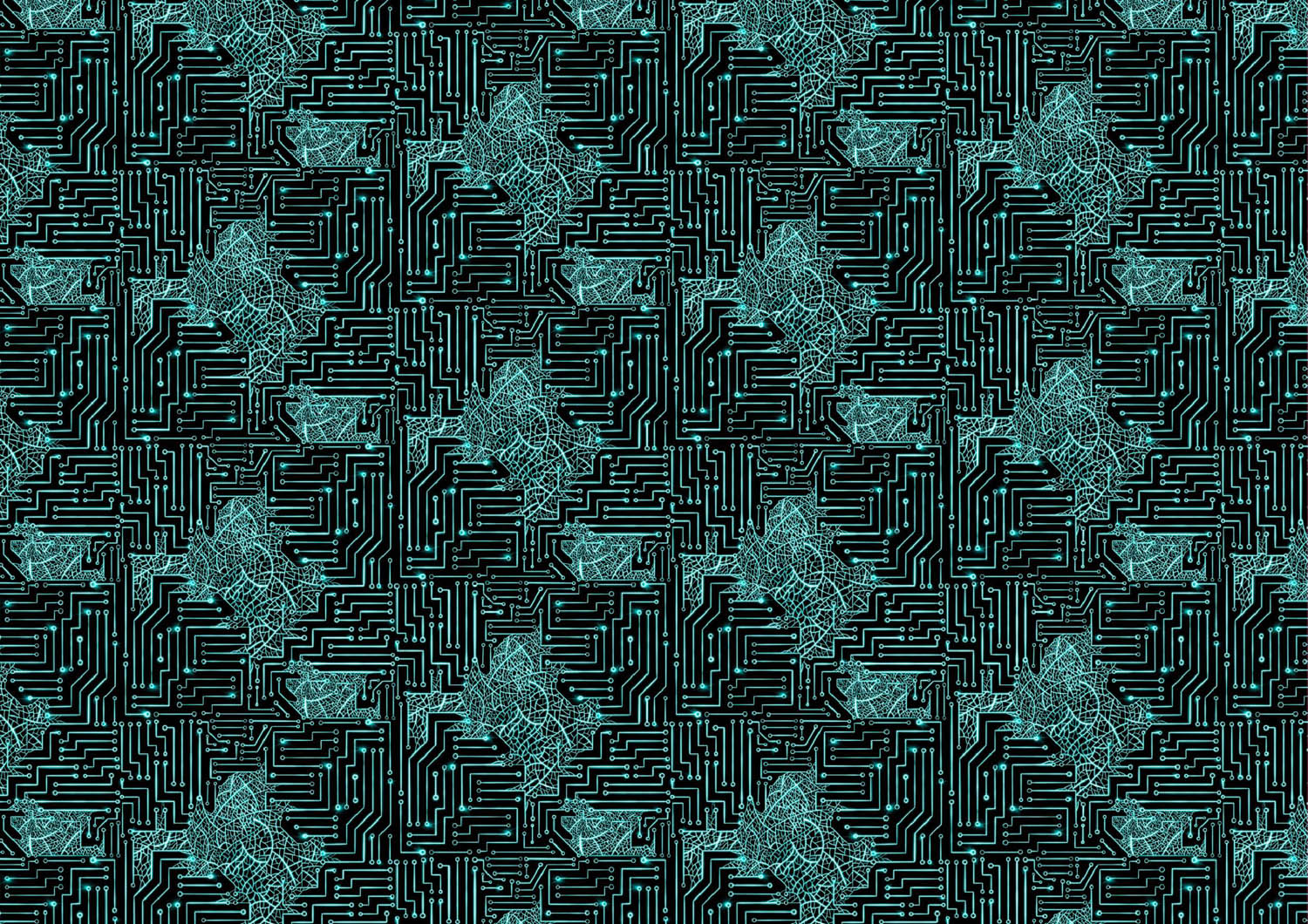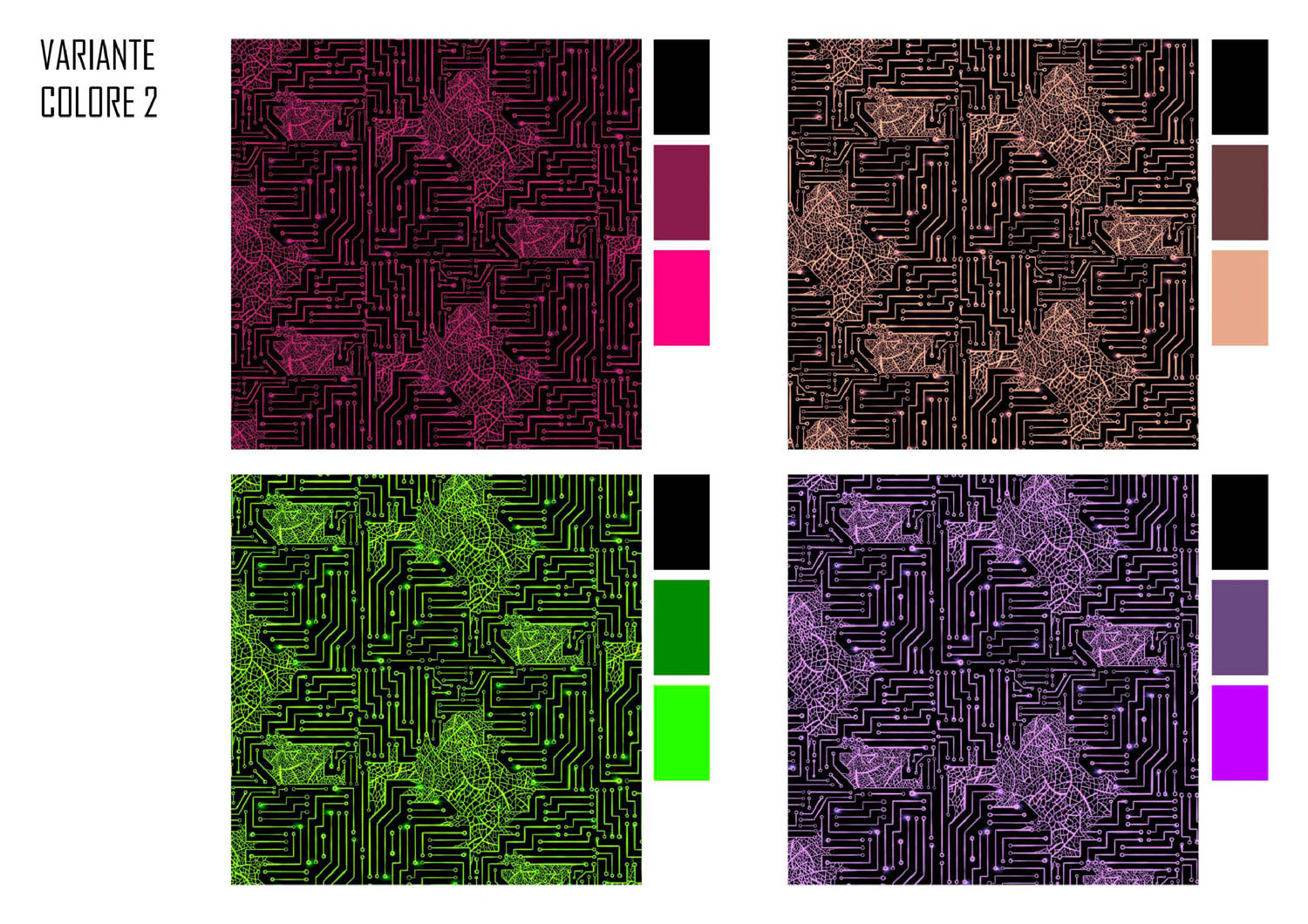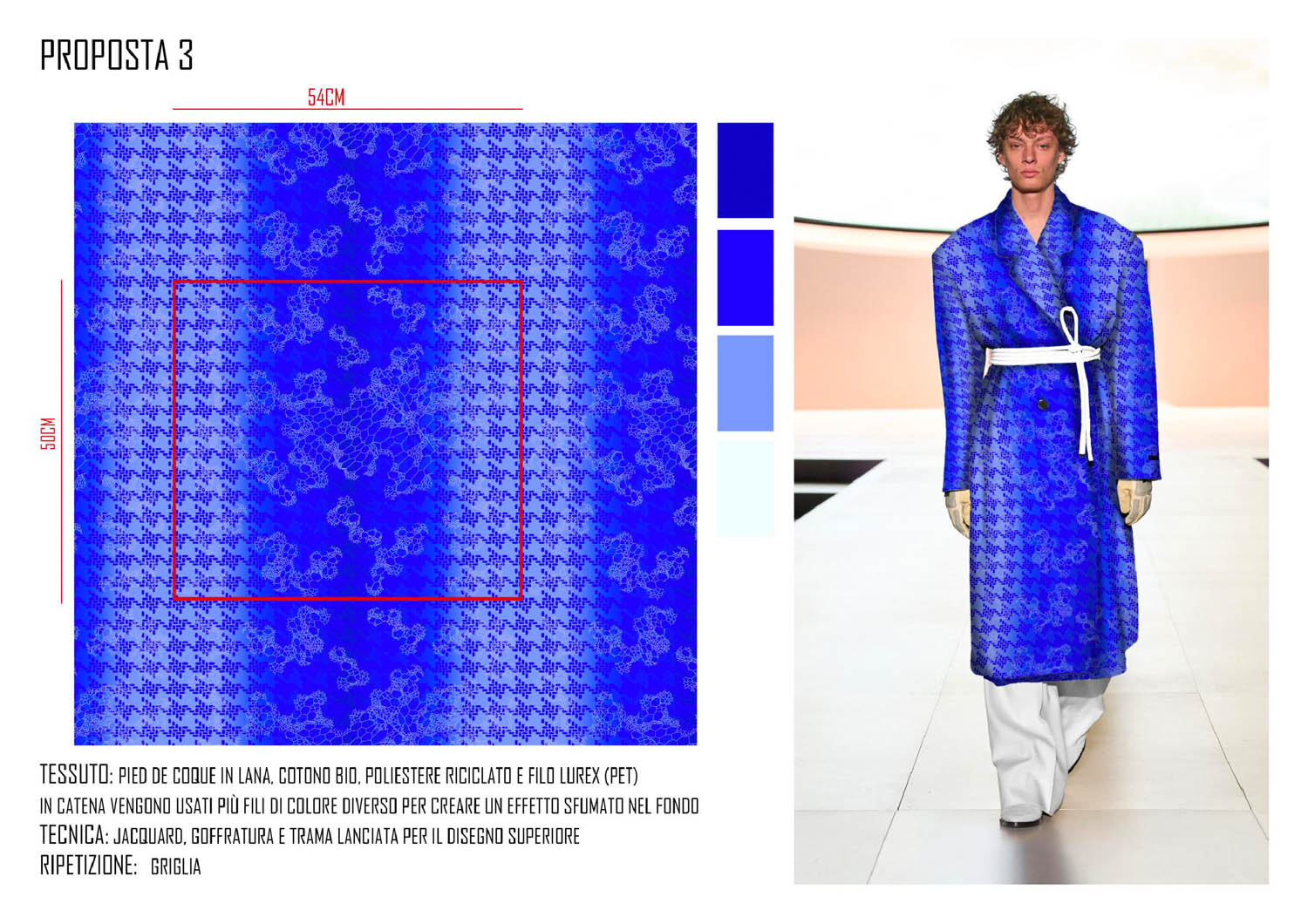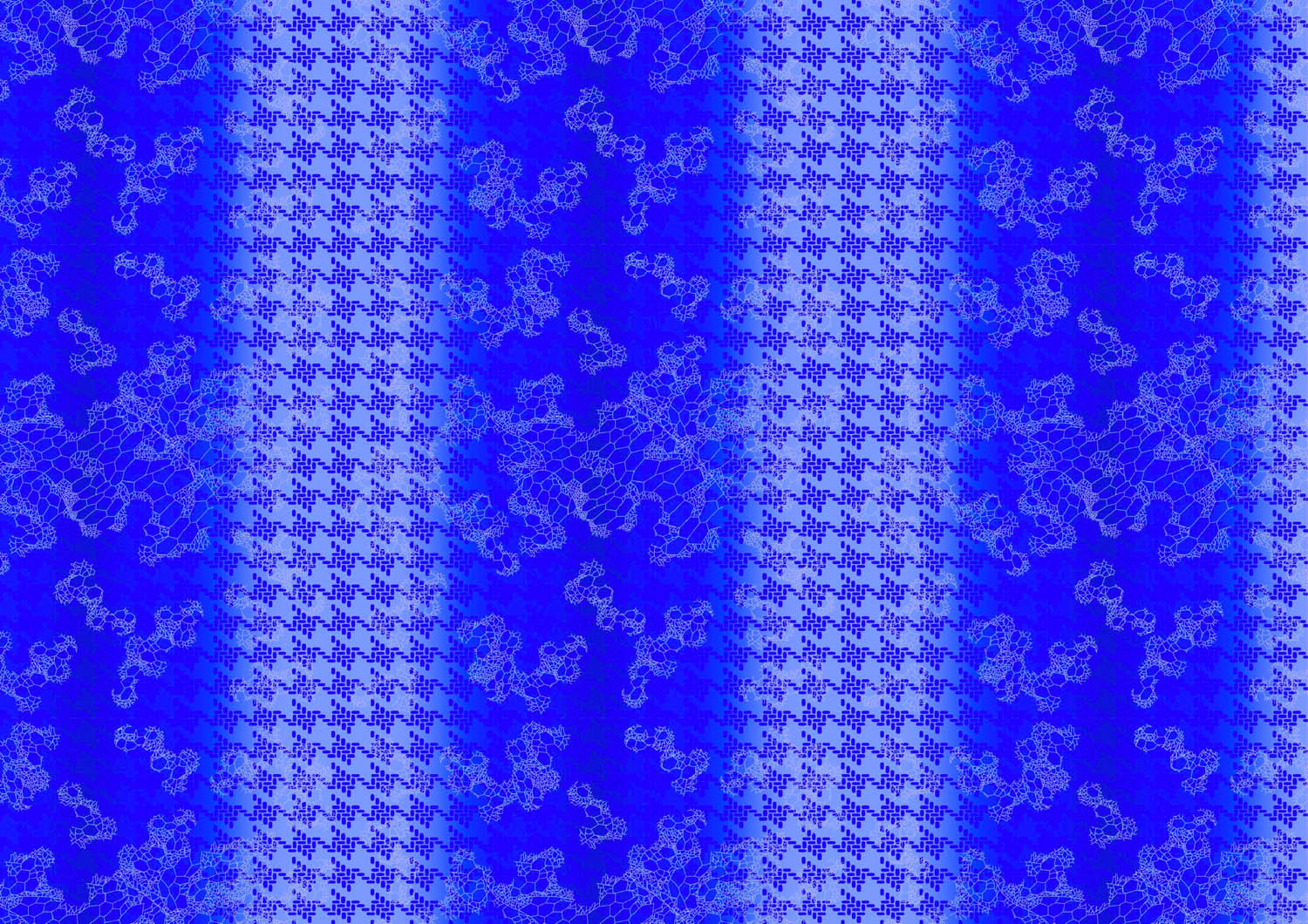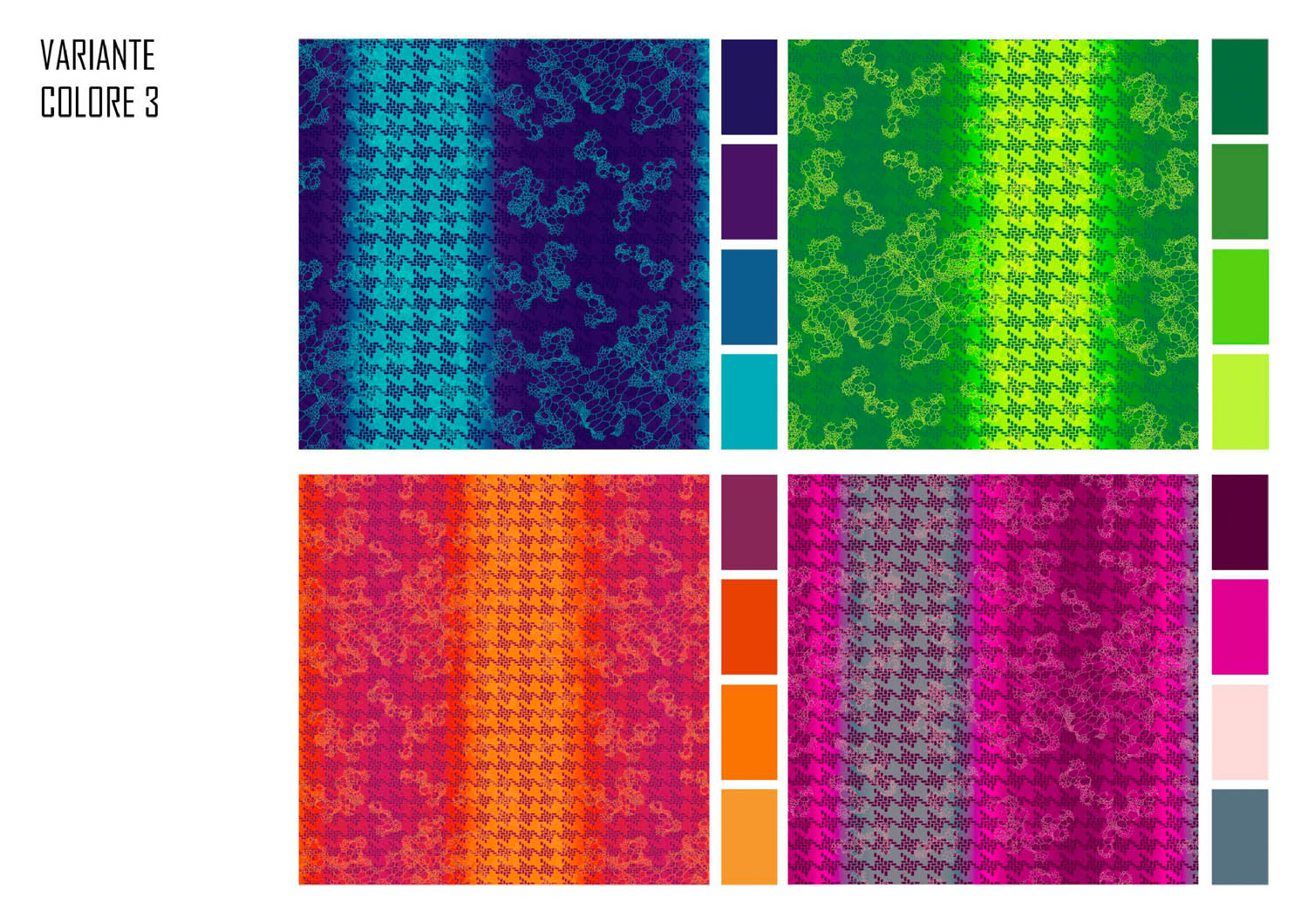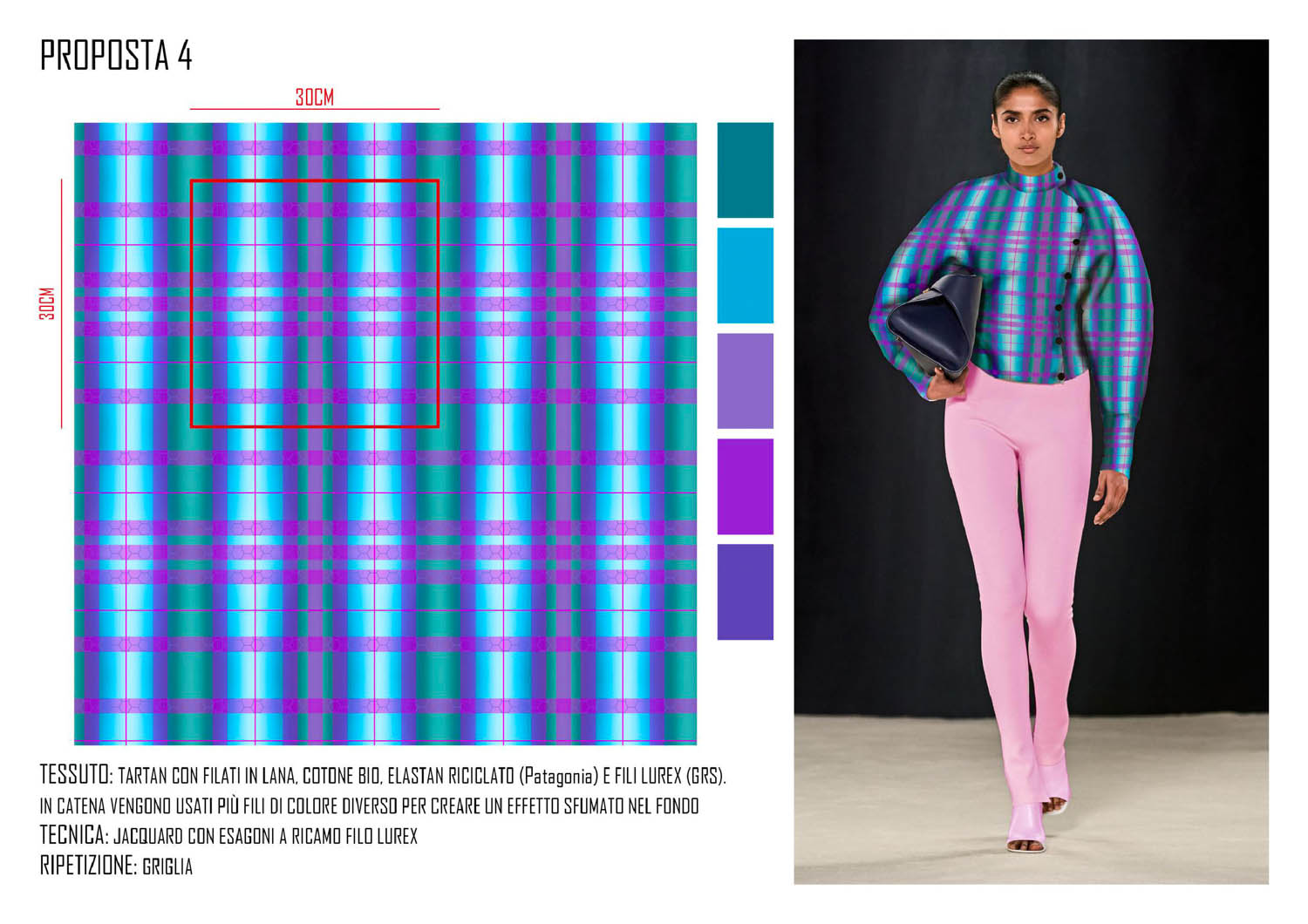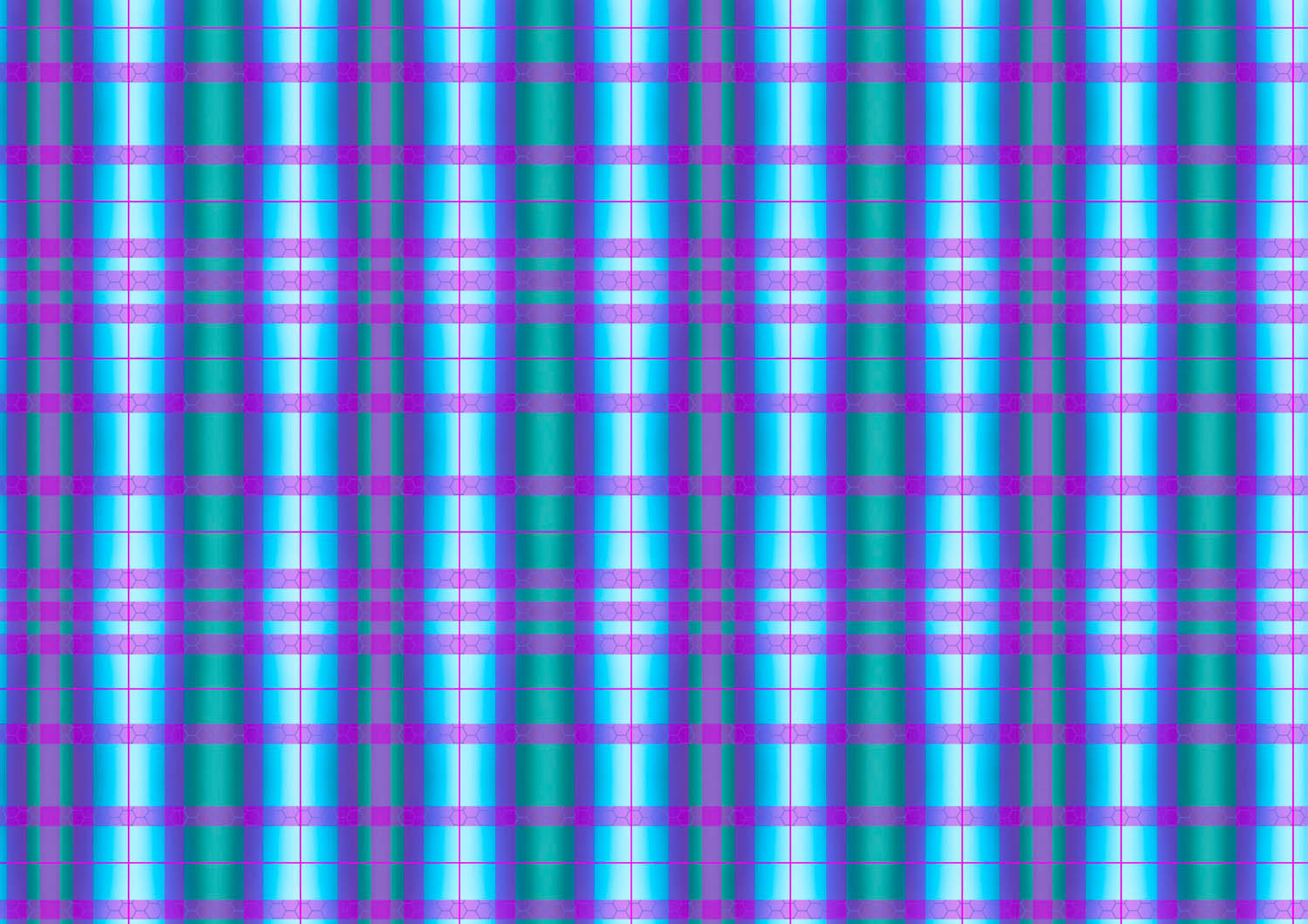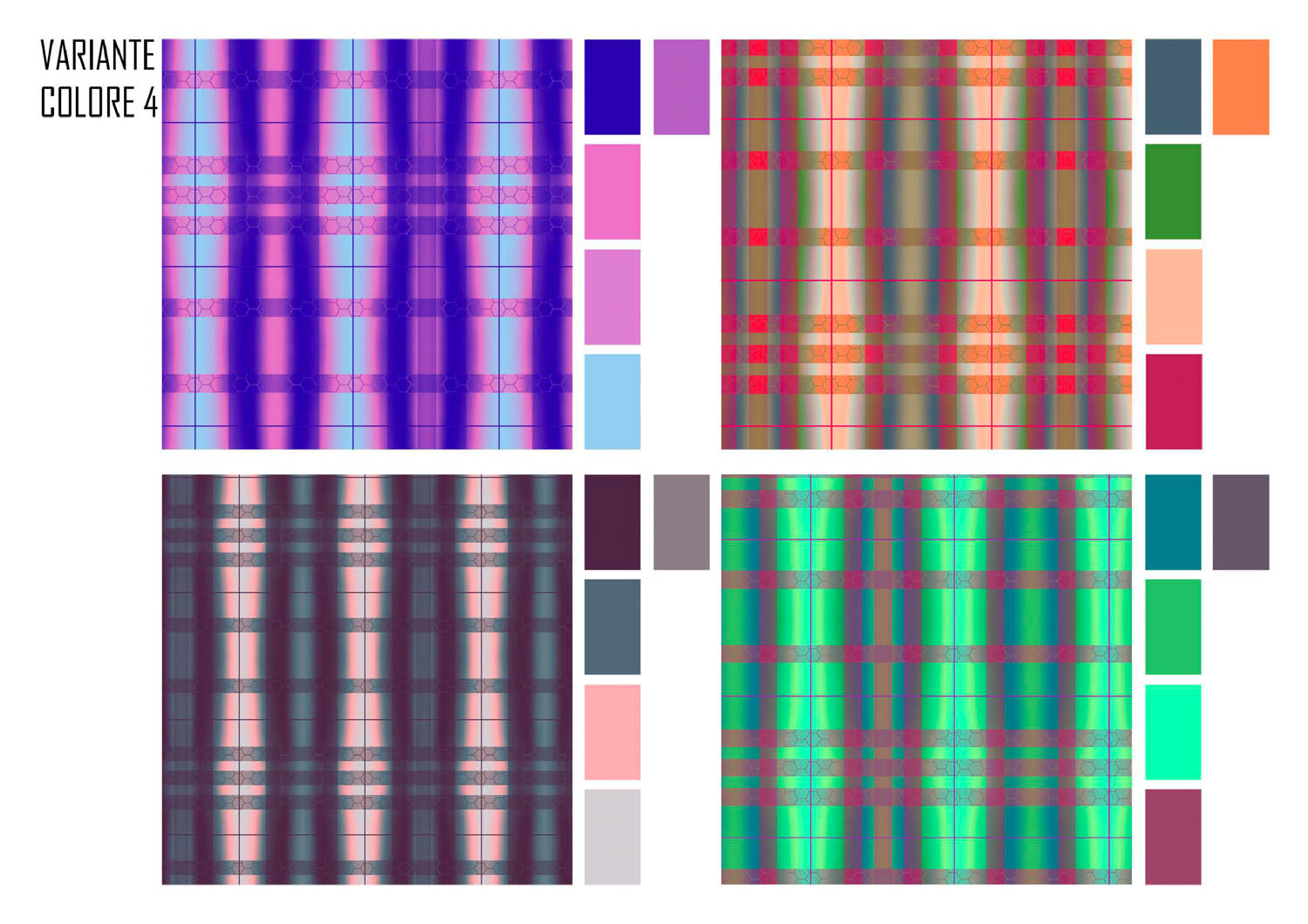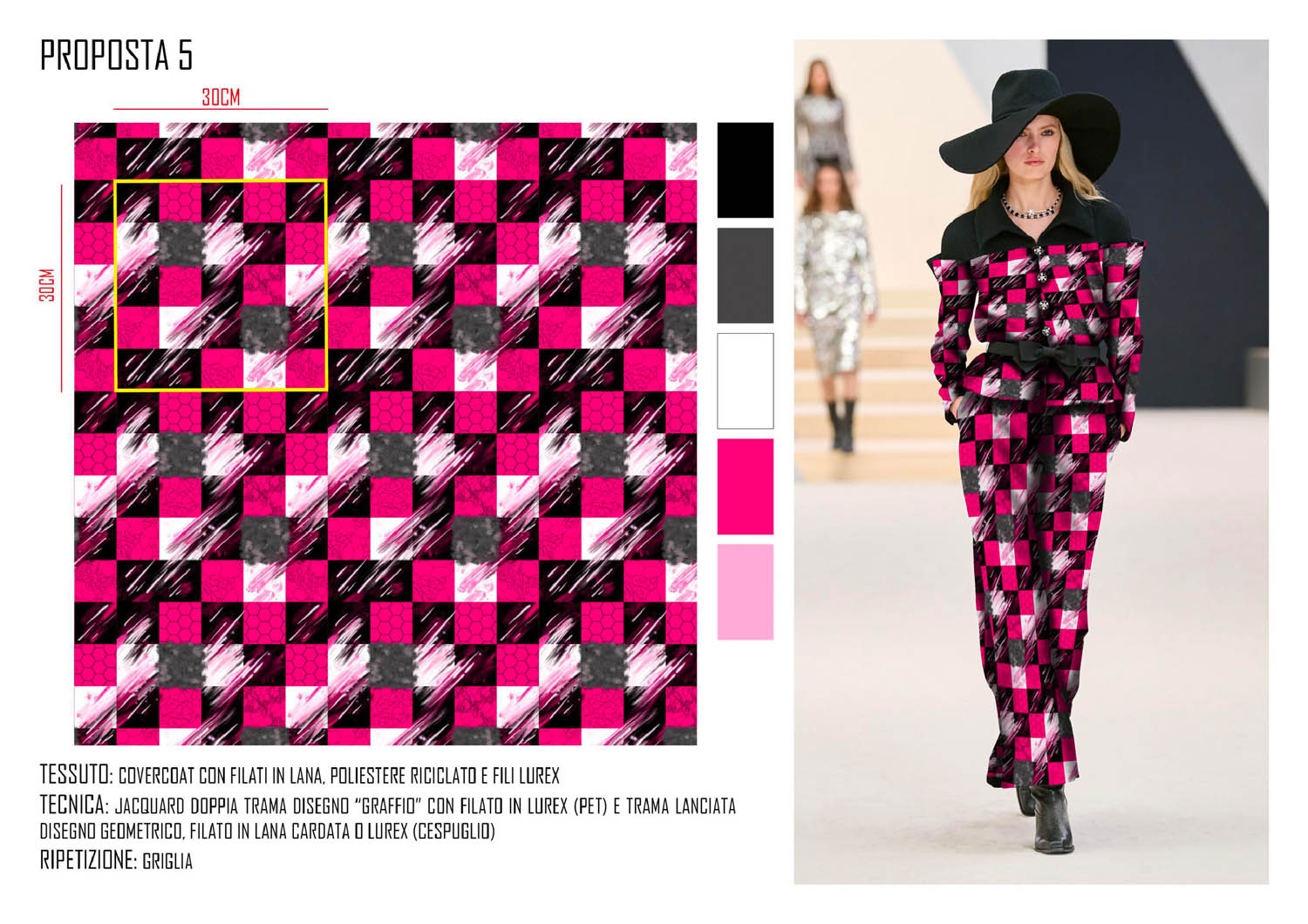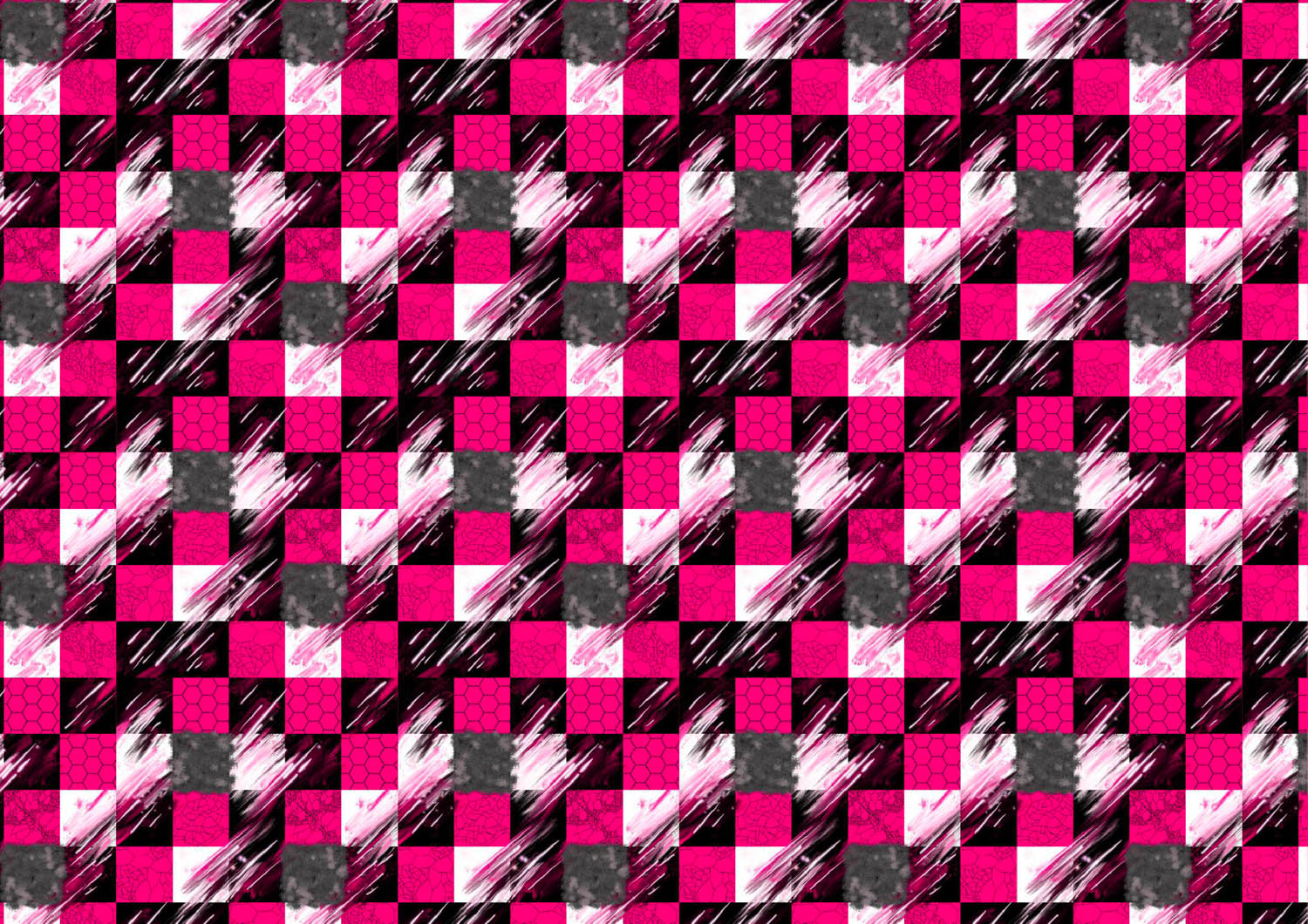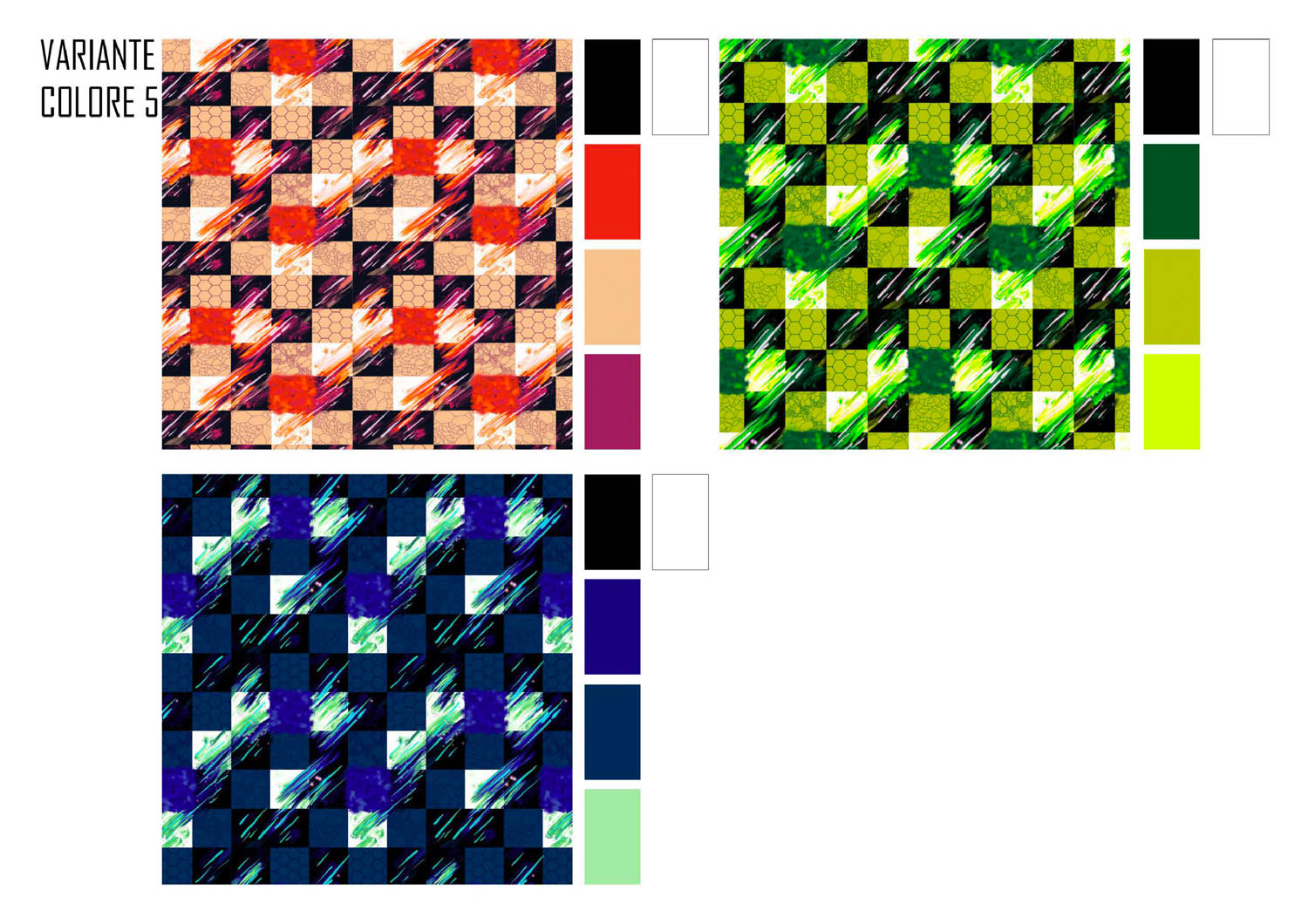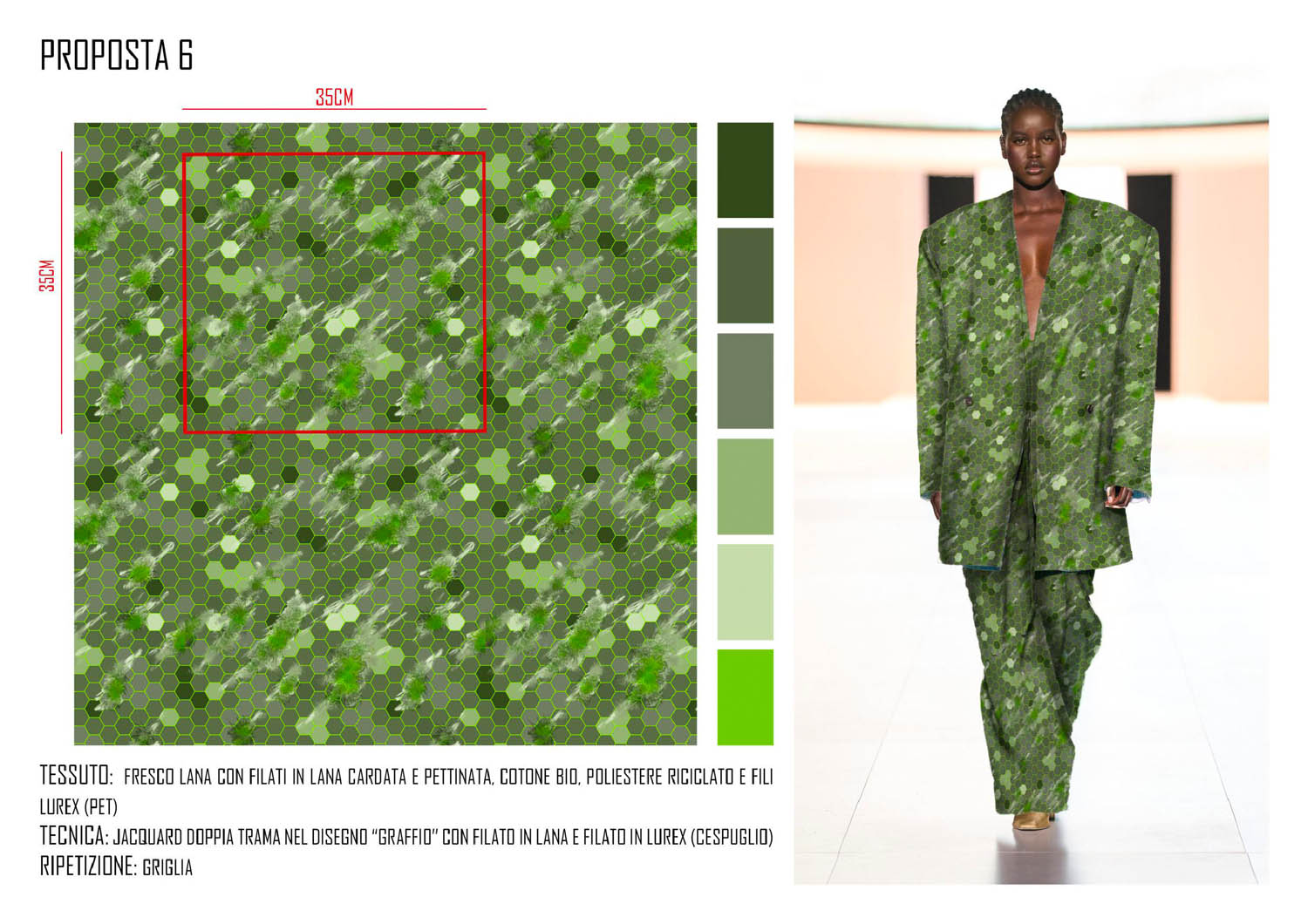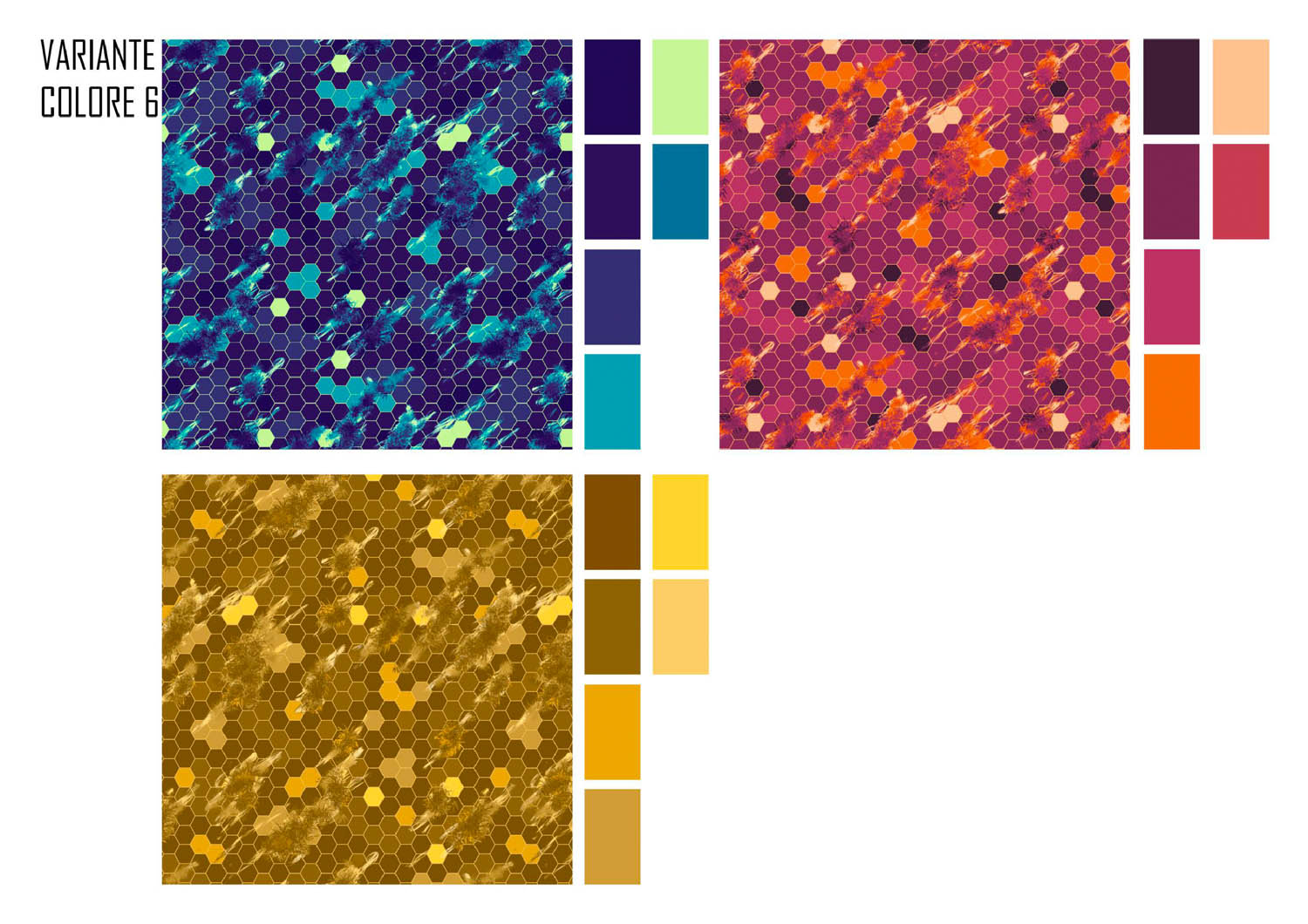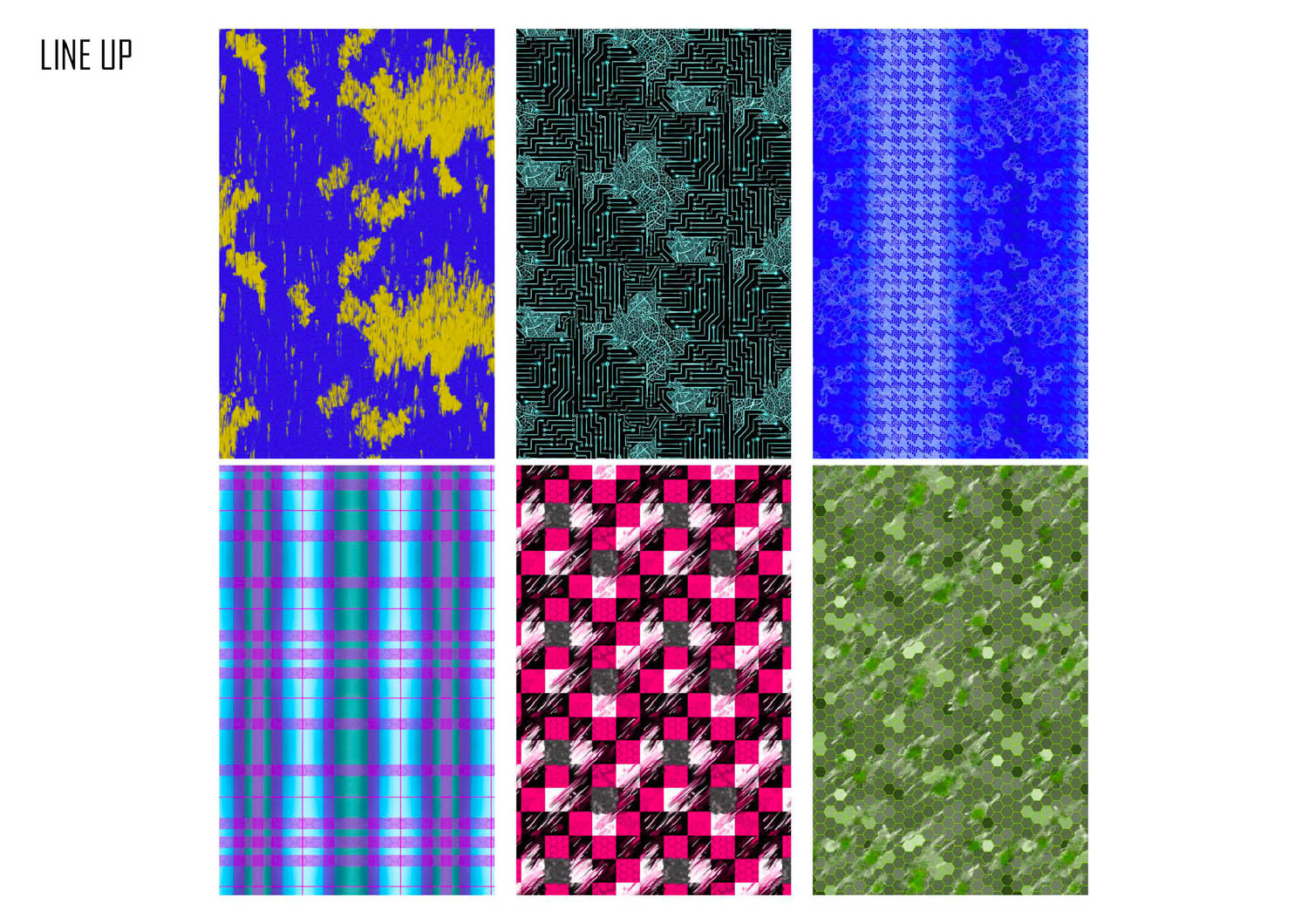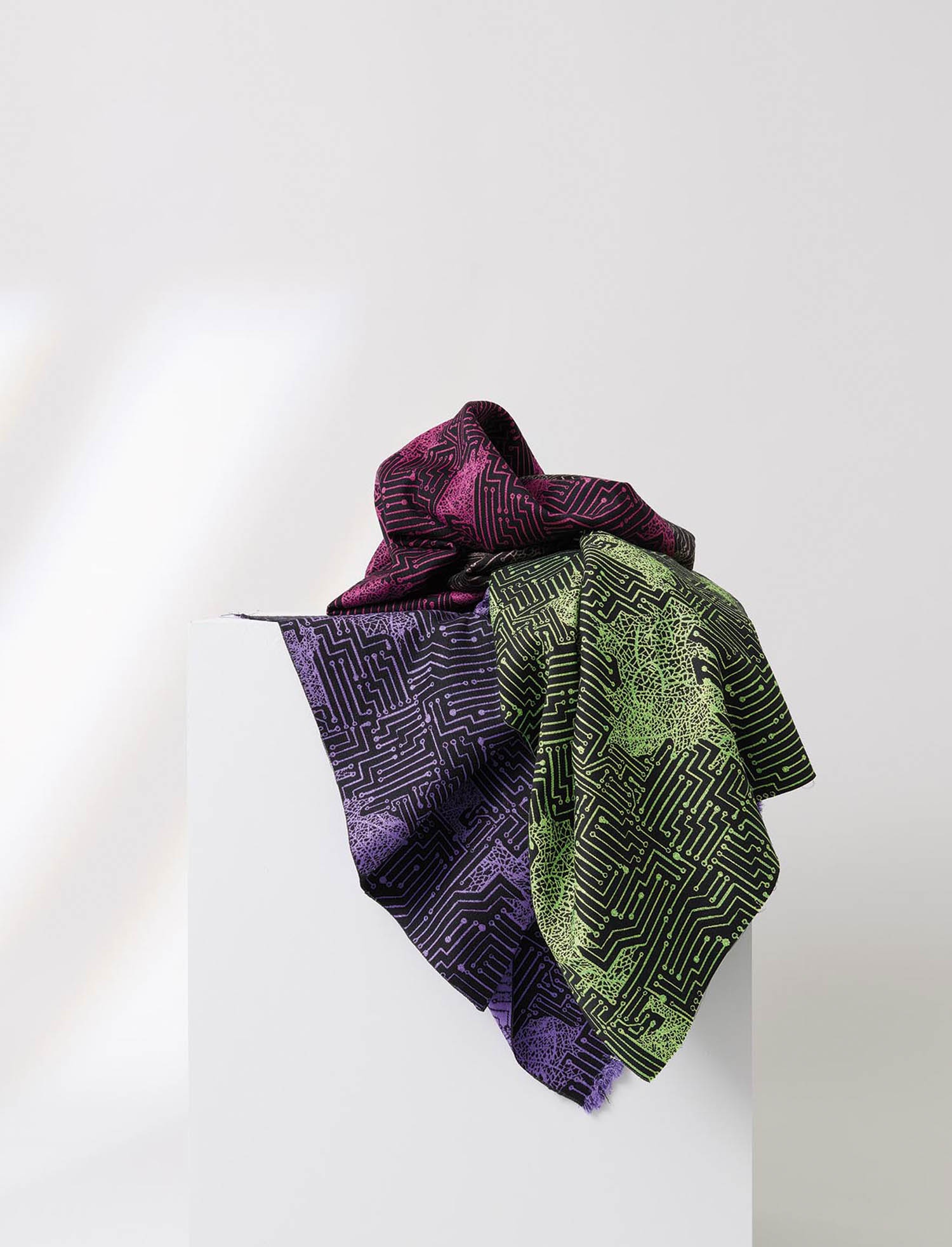
Il brief richiede di interpretare la corrente espressionista attraverso il pensiero trasposto nel presente e non attraverso opere e architetture. La collezione di tessuti prende ispirazione dalla poetica espressionista nella quale l’arte doveva venire fuori dall’interno e con lo scopo di trasmettere lo stato emotivo dell’artista che reagiva alle ansie del mondo moderno. Nel progetto ha voluto mettere in contrapposizione il continua espandersi dell’intelligenza artificiale e quello di un natura sempre più precaria ma in un atto di ribellione. L’Intelligenza Artificiale consente alle macchine di imparare dall’esperienza, di adeguarsi a nuove informazioni ricevute e svolgere compiti simili a quelli dell’uomo. La maggior parte degli esempi di Al di cui sentiamo parlare oggi si basano principalmente sul deep learning e sul natural language processing. Utilizzando queste tecnologie. i computer possono imparare a svolgere compiti specifici elaborando grandi quantità di dati e riconoscendo i modelli. Nella collezione vengono ripresi graficamente i circuiti, forme geometriche nonchè immagini inerenti all’argomento e tutta quello che ci fa pensare all’intelligenza artificiale, che è in continuo sviluppo ed è entrata a far parte della nostre vite da molto tempo e sta invadendo qualsiasi settore. In conflitto alla tecnologia entra in campo la natura, questo contrasto nasce dalla visione di molte immagini inerenti al mondo digitale che mi hanno portato a pensare ad un assonanza di forme tra Al e natura. Questa similitudine è proprio la forma geometrica perfetta a contrasto con quella creata della natura più morbida e reale, come l’interno delle ali delle libellule e della loro trasparenza e leggerezza. le venature delle foglie stesse o la terra secca e arida per via del cambiamento climatico che si spacca e creare un reticolo. Nel progetto ho preso in considerazione l’artista Henrique Oliveira, nelle cui opere e nel pensiero la natura invade la spazio con prepotenza sinuosa aggredendo le superfici come metastasi vegetali, enormi radici e grovigli legnosi che irrompono e sostengono il mondo che le circonda. La natura tenta di uscire, di liberarsi dalle costrizioni urbane. penetrando e lacerando edifici e strade, una natura spietata e famelica. L’artista usa nelle opere vecchio legno riciclato da cassonetti e discariche, l’uso di legno di recupero evidenzia metaforicamente il decadimento fisico e sociale di gran parte del tessuto urbano. Il pensiero dell’artista si ricollega a cib che ho valuto rappresentare nei tessuti, cioè la natura brutale e in questo caso il reticolo creato dal pattern delle ali della libellula che non utilizza solo per valare ma anche per uccidere i batteri che l’attaccano e metaforicamente a liberarsi con violenza dall’oppressione dell’intelligenza artificiale. Ma anche all’assiduo uso della tecnologia e alla distruzione del pianeta, attraverso il continuo spreco e consumismo dell’uomo non interessato alla quantità di rifiuti prodotti e immessi nell’ambiente e non riciclati correttamente di cui la moda è la maggiore produttrice. Nasce da qui l’esigenza di creare dei tessuti con filati naturali e con materiali già esistenti ma riciclati, ricreando gli stessi filati presenti in commercio ma in modo sostenibile con un consumo minore di energie e togliendo dal pianeta plastiche e rifiuti inquinanti. E l’esigenza anche di realizzare tessuti con pesi diversi così da poter ovviare al problema climatico da uno spostamento all’altro del pianeta e per poter soddisfare la richiesta di inter-stagionalità data dalla clientela. Forte è la tradizionalità dei tessuti presenti nel progetto, che si ricollegano alla natura e al voler tornare alle “origini”, data attraverso l’uso di tessuti classici come Tartan e Pied de Poule, creati attraverso filati naturali ed ecosostenibili o di riciclo, per far si che l’heritage e l’innovazione si fondino insieme. I tessuti sono accomunati dal forte uso del colore nei Filati per esprimere l’esigenza attraverso l’arte figurativa, come nell’Espressionismo, stati d’animo o fenomeni della visione, incoraggiando l’uso di colori forti per trasmettere una varietà di ansie e desideri. In conclusione il progetto vuole rappresentare la ribellione della natura nei confronti dell’uomo.
The brief calls for interpreting the expressionist current through thought transposed into the present and not through works and architecture. The fabric collection takes inspiration from expressionist poetics in which art was to come out from within and with the purpose of conveying the emotional state of the artist reacting to the anxieties of the modern world. In the project he wanted to contrast the continuous expansion of artificial intelligence and that of an increasingly precarious nature but in an act of rebellion. Artificial Intelligence allows machines to learn from experience, adapt to new information received and perform human-like tasks. Most of the examples of AI we hear about today are based primarily on deep learning and natural language processing. Using these technologies. computers can learn to perform specific tasks by processing large amounts of data and recognizing patterns. The collection graphically captures circuits, geometric shapes as well as images pertaining to the topic and everything that makes us think about artificial intelligence, which has been developing and becoming part of our lives for a long time and is invading every field. In conflict to technology comes nature, this contrast comes from seeing many images inherent in the digital world that led me to think of a similarity of forms between Al and nature. This similarity is precisely the perfect geometric form contrasted with the created form of the softer and more real nature, such as the inside of the wings of dragonflies and their transparency and lightness. the veins of the leaves themselves or the dry and barren earth due to climate change that splits and creates a lattice. In the project I considered the artist Henrique Oliveira, in whose works and thinking nature invades space with sinuous overbearingness attacking surfaces like plant metastases, huge roots and woody tangles bursting through and supporting the world around them. Nature attempts to break out, to free itself from urban constraints. penetrating and tearing through buildings and streets, a ruthless and ravenous nature. The artist uses old recycled wood from dumpsters and landfills in the works; the use of reclaimed wood metaphorically highlights the physical and social decay of much of the urban fabric. The artist’s thinking relates back to what I have valued representing in textiles, namely brutal nature and in this case the latticework created by the pattern of the dragonfly’s wings that it uses not only to valar but also to kill the bacteria that attack it and metaphorically to violently free itself from the oppression of artificial intelligence. But also to the assiduous use of technology and the destruction of the planet through man’s continuous waste and consumerism unconcerned with the amount of waste produced and put into the environment and not properly recycled of which fashion is the biggest producer. Hence the need to create fabrics with natural yarns and existing but recycled materials, recreating the same yarns found on the market but in a sustainable way with less energy consumption and removing polluting plastics and waste from the planet. And the need also to make fabrics with different weights so as to be able to obviate the climatic problem from one shift of the planet to another and to be able to meet the demand for inter-seasonality given by customers. Strong is the traditionality of the fabrics in the project, which are connected to nature and the desire to go back to the “origins,” given through the use of classic fabrics such as Tartan and Pied de Poule, created through natural and eco-sustainable or recycled yarns, so that heritage and innovation come together. The fabrics are united by the strong use of color in the Yarns to express the need through figurative art, as in Expressio-nism, states of mind or phenomena of vision, encouraging the use of strong colors to convey a variety of anxieties and desires. In conclusion, the project aims to represent the rebellion of nature against man.


© 2023 ACCADEMIA di COSTUME e di MODA ENTE TERZO SETTORE | P.IVA: 01096241003
© 2023 ACCADEMIA di COSTUME e di MODA SRL | P.IVA: 12001361000
© 2023 ACCADEMIA di COSTUME e di MODA MILANO SRL | P.IVA: 10982820960