Fly me to the Moon
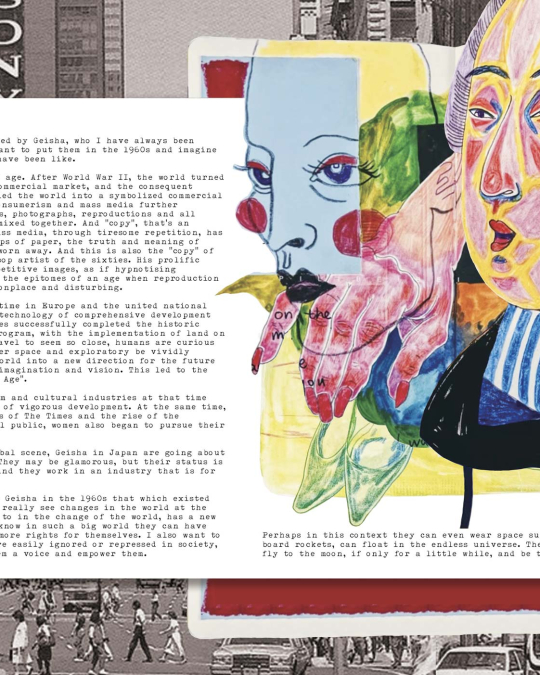
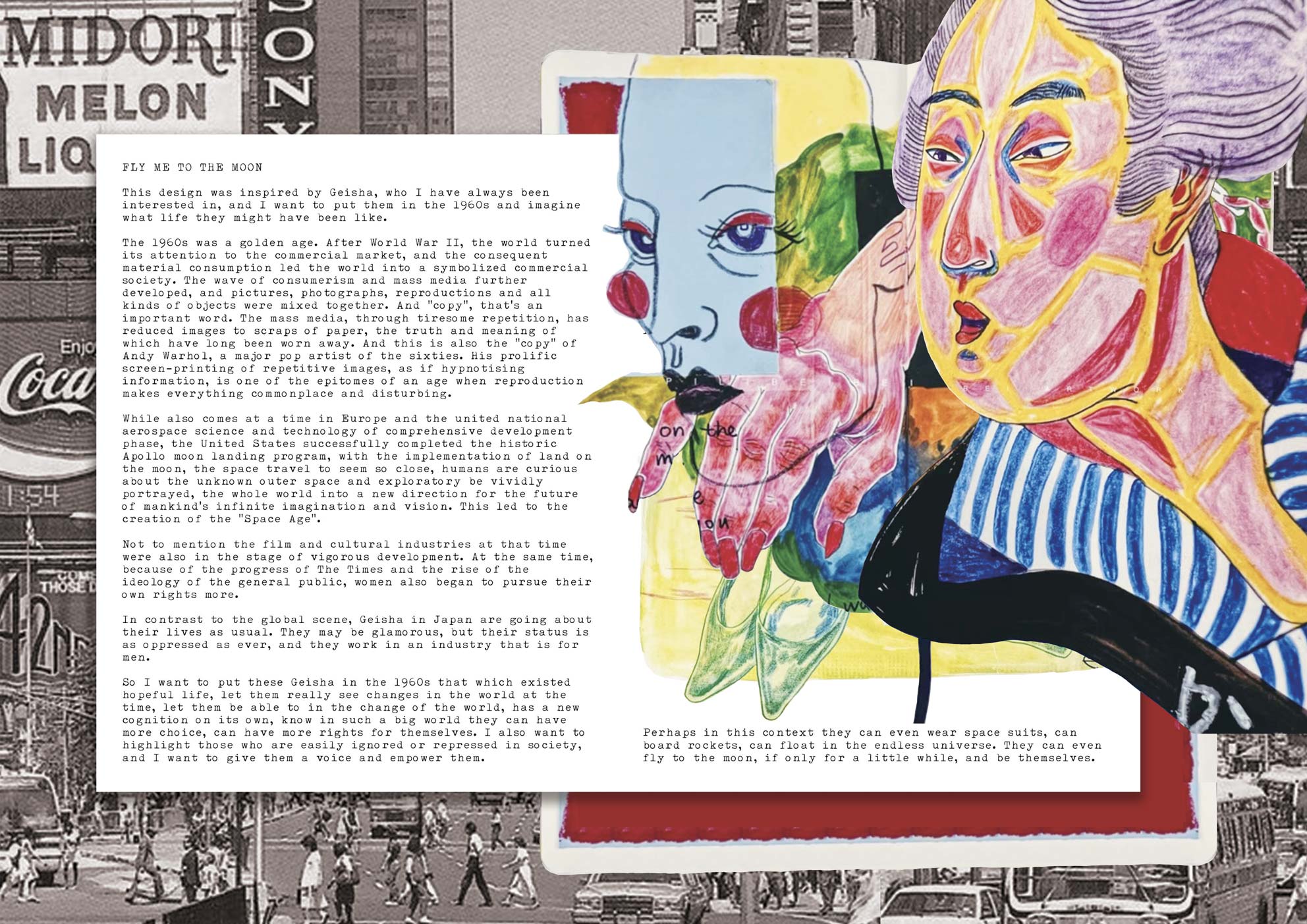
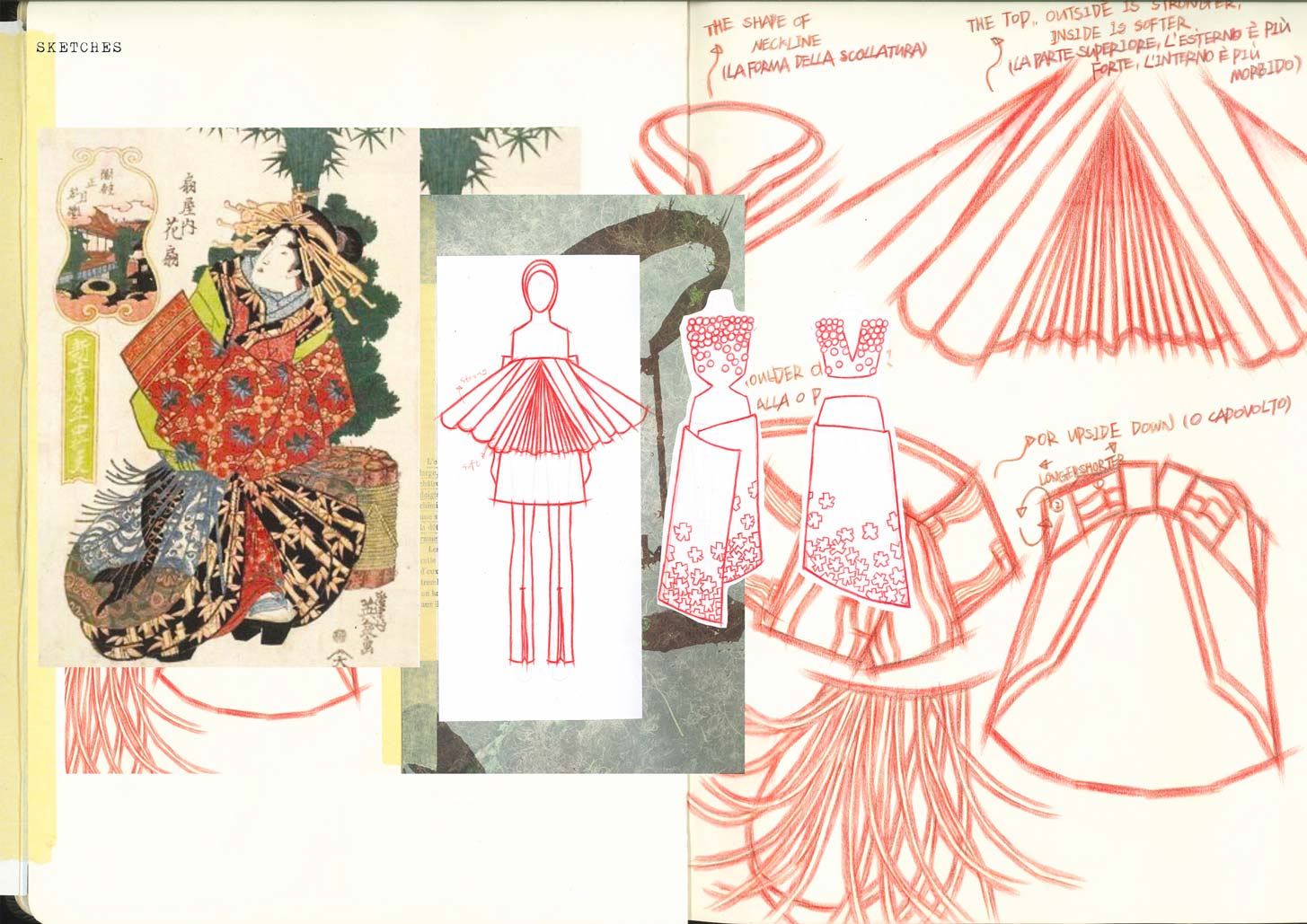
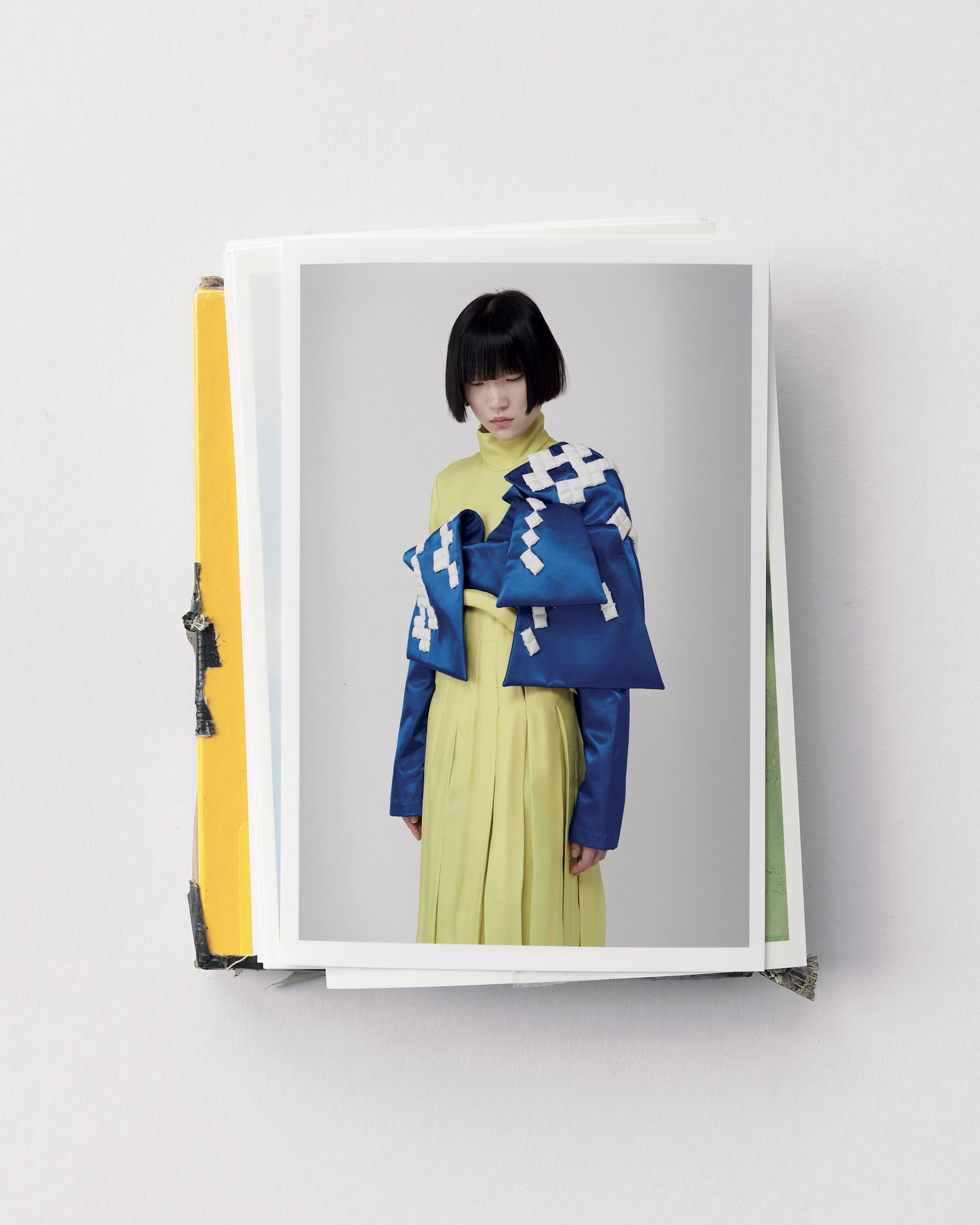
Questo design è stato ispirato da Geisha, a cui sono sempre stata interessata, e voglio metterlo negli anni ’60 e immaginare come sarebbe stata la vita.
Gli anni ’60 erano un’era d’oro. Dopo la seconda guerra mondiale, il mondo rivolse la sua attenzione al mercato commerciale, e il conseguente consumo di materiali portò il mondo in una società commerciale simbolizzata. L’ondata del consumismo e dei mass media si è ulteriormente sviluppata, e immagini, fotografie, riproduzioni e ogni tipo di oggetto sono stati mescolati. E “copiare” è una parola importante. I mezzi di comunicazione di massa, attraverso una ripetizione noiosa, hanno ridotto le immagini a pezzi di carta, la cui verità e il cui significato sono stati a lungo dimenticati. E questa è anche la “copia” di Andy Warhol, un grande artista pop degli anni ’60. Il suo prolifico screen-printing di immagini ripetitive, come se si trattasse di informazioni ipnotorizzanti, è uno dei simboli di un’era in cui la riproduzione rende tutto banalizzato e inquietante.
Anche se giunge in un momento in cui l’europa e la tecnologia aerospaziale nazionale unita sono in una fase di sviluppo globale, gli stati uniti hanno completato con successo lo storico programma di atterraggio Apollo moon, con la realizzazione di terra sulla luna, il viaggio spaziale per sembrare così vicino, gli umani sono curiosi di conoscere lo spazio esterno sconosciuto e la fase esplorativa viene presentata vividamente, il mondo intero in una nuova direzione per il futuro dell’infinita immaginazione e visione dell’umanità. Ciò ha portato alla creazione dell’ “era dello spazio “.
Per non parlare poi delle industrie cinematografiche e culturali che si trovavano allora in una fase di forte sviluppo. Allo stesso tempo, a causa del progresso dei tempi e dell’ascesa dell’ideologia del grande pubblico, anche le donne hanno iniziato a perseguire maggiormente i propri diritti.
A differenza della scena globale, Geisha In giappone vive come al solito. Possono essere glamour, ma il loro status è oppresso come sempre, e lavorano in un’industria che è per gli uomini.
Quindi voglio mettere queste Geisha negli anni ’60 che esisteva nella vita della speranza, lasciarle vedere davvero I cambiamenti nel mondo di allora, lasciarle essere in grado di cambiare il mondo, avere una nuova cognizione da sola, sapere in un mondo così grande che possono avere più scelta, possono avere più diritti per se stessi. Voglio anche sottolineare coloro che sono facilmente ignorati o repressi nella società, e voglio dare loro voce e potere.
Forse in questo contesto, possono anche indossare abiti spaziali, possono andare a bordo di razzi, possono fluttuare nell’universo infinito. Possono anche volare sulla luna, anche solo per un po’, ed essere se stessi.
This design was inspired by Geisha, who I have always been interested in, and I
want to put them in the 1960s and imagine what life they might have been like.
The 1960s was a golden age. After World War II, the world turned its attention to
the commercial market, and the consequent material consumption led the world
into a symbolized commercial society. The wave of consumerism and mass media
further developed, and pictures, photographs, reproductions and all kinds of
objects were mixed together. And "copy", that's an important word. The mass
media, through tiresome repetition, has reduced images to scraps of paper, the
truth and meaning of which have long been worn away. And this is also the
"copy" of Andy Warhol, a major pop artist of the sixties. His prolific screen-
printing of repetitive images, as if hypnotising information, is one of the epitomes
of an age when reproduction makes everything commonplace and disturbing.
While also comes at a time in Europe and the united national aerospace science
and technology of comprehensive development phase, the United States
successfully completed the historic Apollo moon landing program, with the
implementation of land on the moon, the space travel to seem so close, humans
are curious about the unknown outer space and exploratory be vividly portrayed,
the whole world into a new direction for the future of mankind's infinite
imagination and vision. This led to the creation of the "Space Age".
Not to mention the film and cultural industries at that time were also in the stage
of vigorous development. At the same time, because of the progress of The Times
and the rise of the ideology of the general public, women also began to pursue
their own rights more.
In contrast to the global scene, Geisha in Japan are going about their lives as
usual. They may be glamorous, but their status is as oppressed as ever, and they
work in an industry that is for men.
So I want to put these Geisha in the 1960s that which existed hopeful life, let
them really see changes in the world at the time, let them be able to in the
change of the world, has a new cognition on its own, know in such a big world
they can have more choice, can have more rights for themselves. I also want to
highlight those who are easily ignored or repressed in society, and I want to give
them a voice and empower them.
Perhaps in this context, they can even wear space suits, can board rockets, can
float in the endless universe. They can even fly to the moon, if only for a little
while, and be themselves.
Partners:
Fabrics by: Clerici Tessuto

- Moodboard
- Sketches
- Line up
- Catwalk