De(increase)
Come possiamo costruire un rapporto più sostenibile con i nostri vestiti? Come possiamo rendere l’abbigliamento piú significativo per noi? Il capo più sostenibile non è quello che giá possediamo?
Questa domanda mi ha fatto riflettere sul concetto di valore. Come possiamo rendere gli oggetti più preziosi e come possiamo trasformare i materiali che sono privi di valore in qualcosa che abbia valore?
Il titolo (de)increase si riferisce sia all’acquistare che al perdere di valore, ma allo stesso tempo anche alla tecnica di maglieria in cui diminuzioni e aumenti giocano un ruolo importante nel plasmare texture e capi.
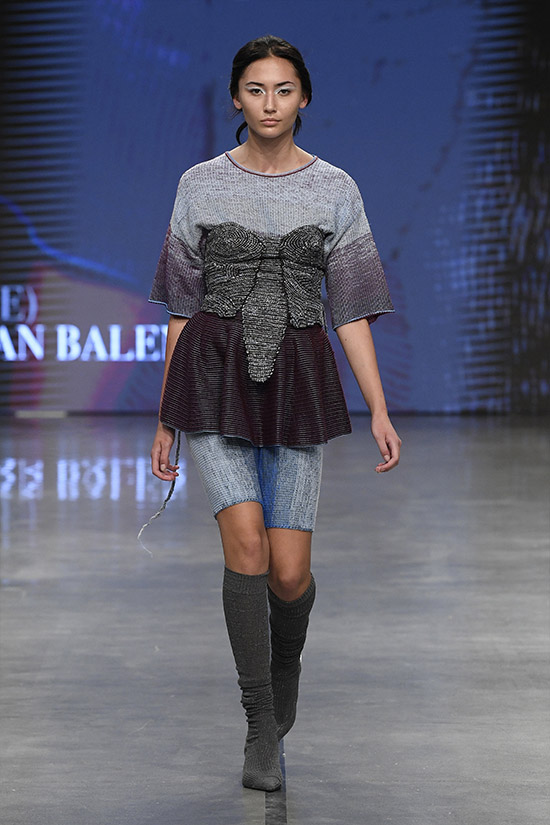
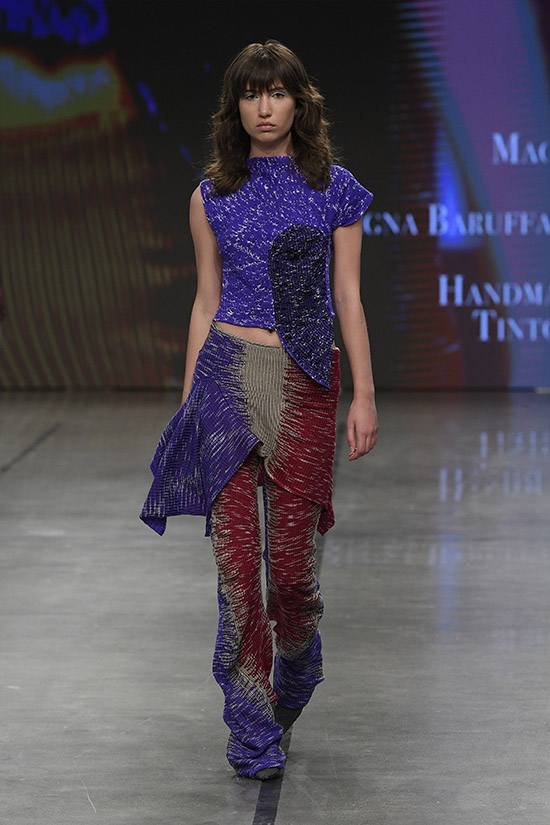
Questa collezione di maglieria valorizza sia i materiali che le emozioni. I filati di stock e materiali altrimenti scartati sono stati riutilizzati manualmente, cosí da valorizzarne la materia di scarto; le informazioni sono state “tessute” nella maglia, in modo che il tessuto diventi un vettore di ricordi.
La mia riflessione sul valore dei vestiti è stata accompagnata dalla lettura del libro di Sadie Plant “Zeros & Ones”. In uno dei capitoli, si parla delle donne che lavorano a maglia e di come, grazie al loro lavoro, abbiano creato le basi della tecnologia maglieristica moderna. Mi ha molto colpito il confronto tra i primi telai e le cifre dei sistemi informatici moderni (zero e uno) e mi ha fatto pensare a come la maglia sia allo stesso tempo tecnologica e manuale.
Partendo da queste riflessioni, ho iniziato a fare ricerca su questa dualità tra il fatto a mano e la tecnologia. Ho esplorato questo aspetto sia nelle tecniche di maglieria che nell’estetica visiva. Dal punto di vista tecnologico ho scelto di utilizzare solo punti realizzabili sulle macchine manuali; ogni filo di tessitura deve essere inserito a mano. Utilizzando diversi tipi di filati, ho cercato di ottenere look che abbiano un aspetto tecnologico, rispettando l’artigianalitá del fatto a mano.
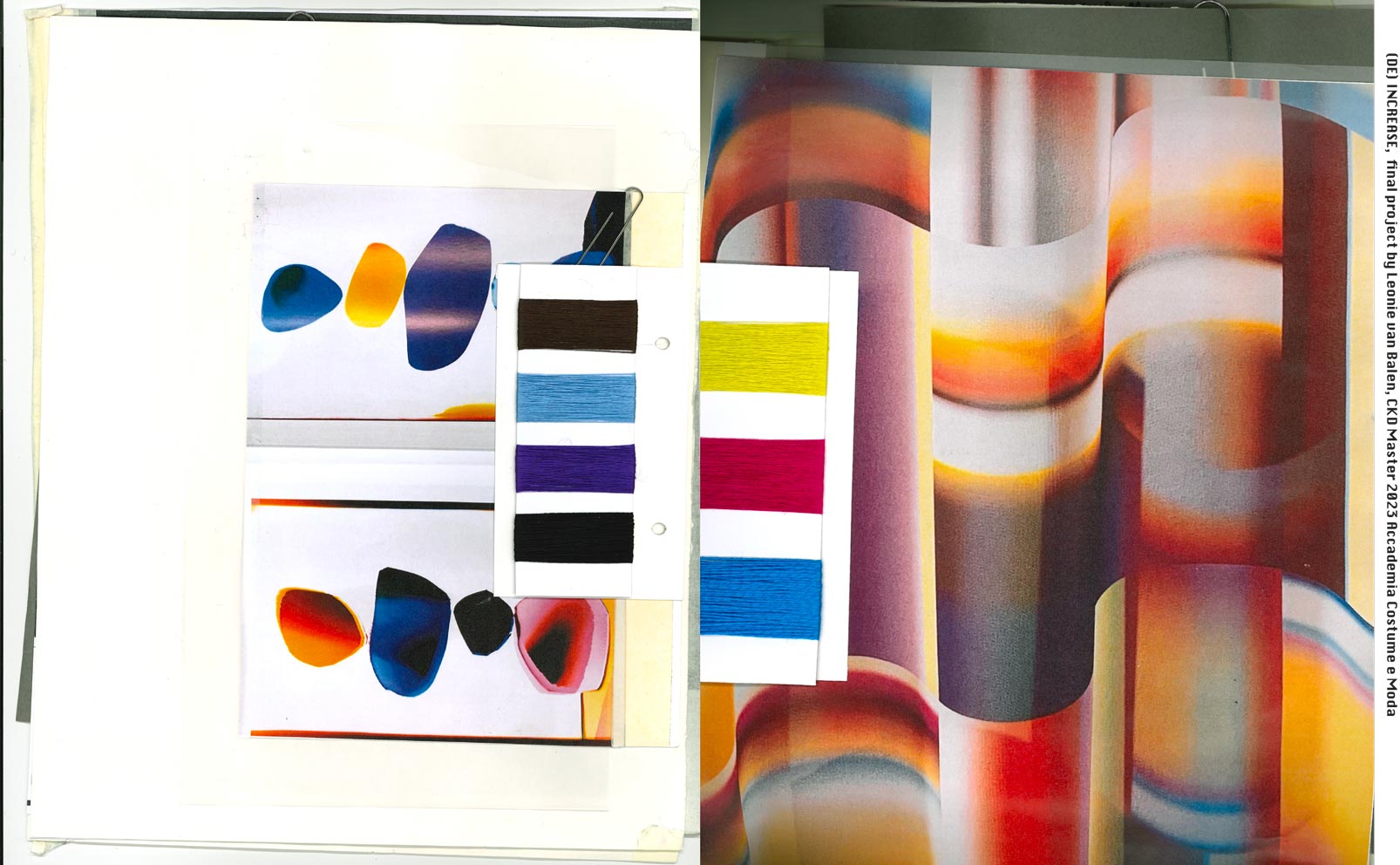
Per la collezione ho scelto colori che hanno per me connotazioni sia tecnologiche che manuali. L’obiettivo era creare un look “techno-etnico”. Pertanto, ho usato i colori primari cyan, magenta e giallo che vengono utilizzati nei codici CMYK per la stampa.
Accanto a questi colori, ho scelto le loro controparti più naturali come l’indaco e i colori naturali della lana: bianco sporco e marrone. Utilizzando questi colori in gradienti, sia artificiali che artigianali, si ottengono speciali connotazioni che hanno riferimenti etnico – tecnologici.
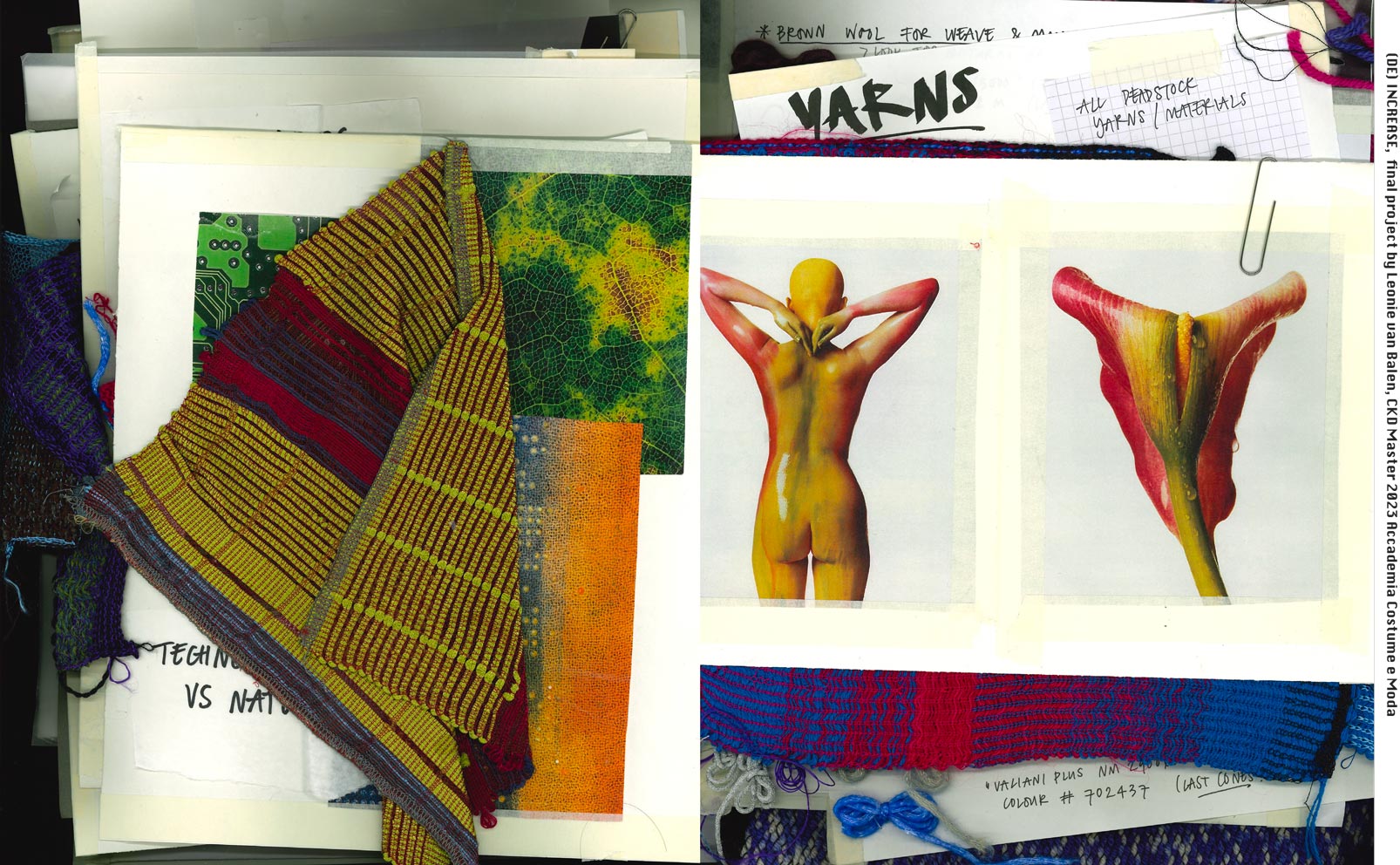
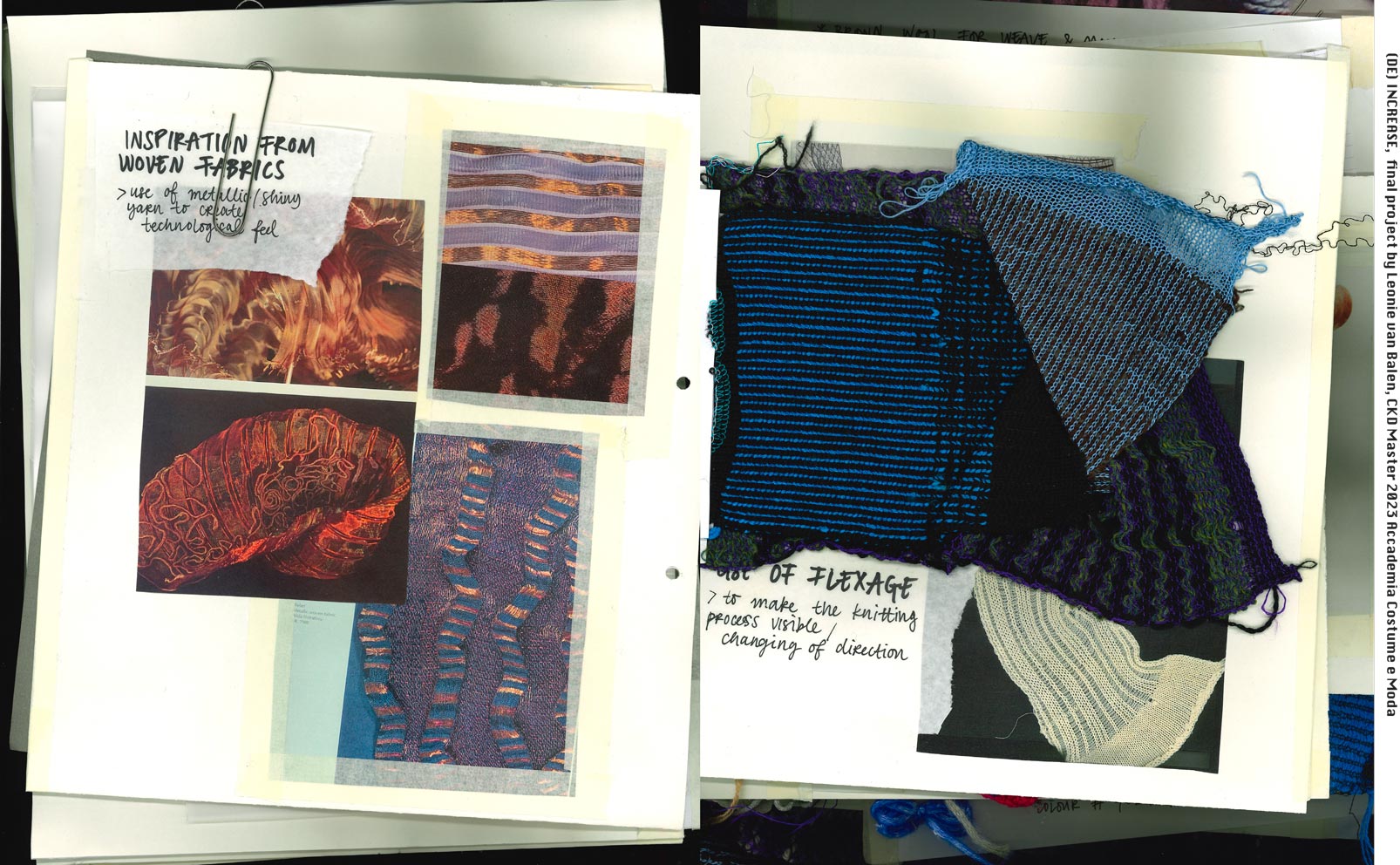
Ho iniziato a fare ricerca visiva su ciò che il concetto di tecno-etica poteva significare per me. Mi sono ispirata alle tecniche tessili esistenti, come l’ikat e l’uso di filati lucidi e metallici per dare ai tessuti un aspetto tecnologico. Accanto a questo, ho guardato le fotografie di Cho Gi-Seok, che ritrae il corpo femminile e fiori. Mettendo insieme tutte queste immagini nasce una conversazione tra il naturale e il tecnologico, metafora di tutto il mio lavoro di ricerca.
La ricerca del progetto è stata estremamente pratica: provare diversi materiali, sfumature e colori sulla macchina da maglieria. Per questa ricerca, ho utilizzato solo la macchina Brother e il punto tramato. Ogni passaggio viene quindi fatto a mano e ogni filo di tessitura viene inserito manualmente.
Grazie al supporto del Maglificio Innocenti, la maggior parte dei punti è stata tradotta in punti industrializzabili, tranne che per due capi dove ho deciso di lasciare il punto fatto a mano. Questi due capi sono stati realizzati interamente da me: non c’erano altri modi di adattare il punto senza perderne la sua essenza.
Insieme alla sperimentazione sulla macchina, ho affiancato anche quella sui materiali. Tutti i materiali che vengono utilizzati per questo progetto sono filati dead-stock o materiali altrimenti scartati.
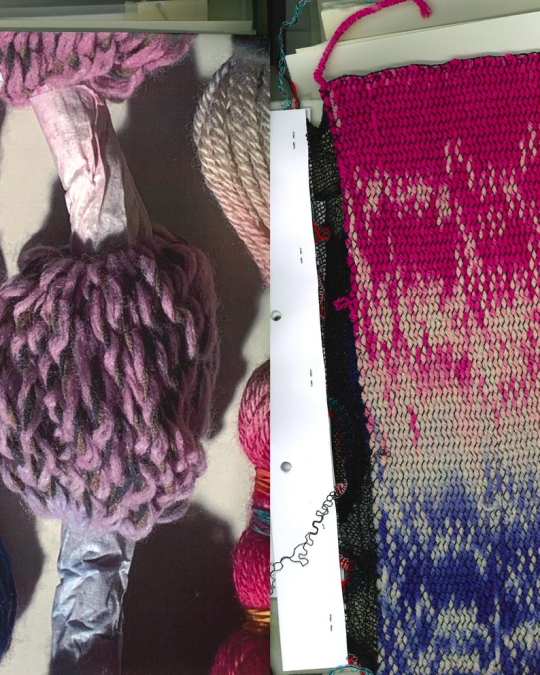
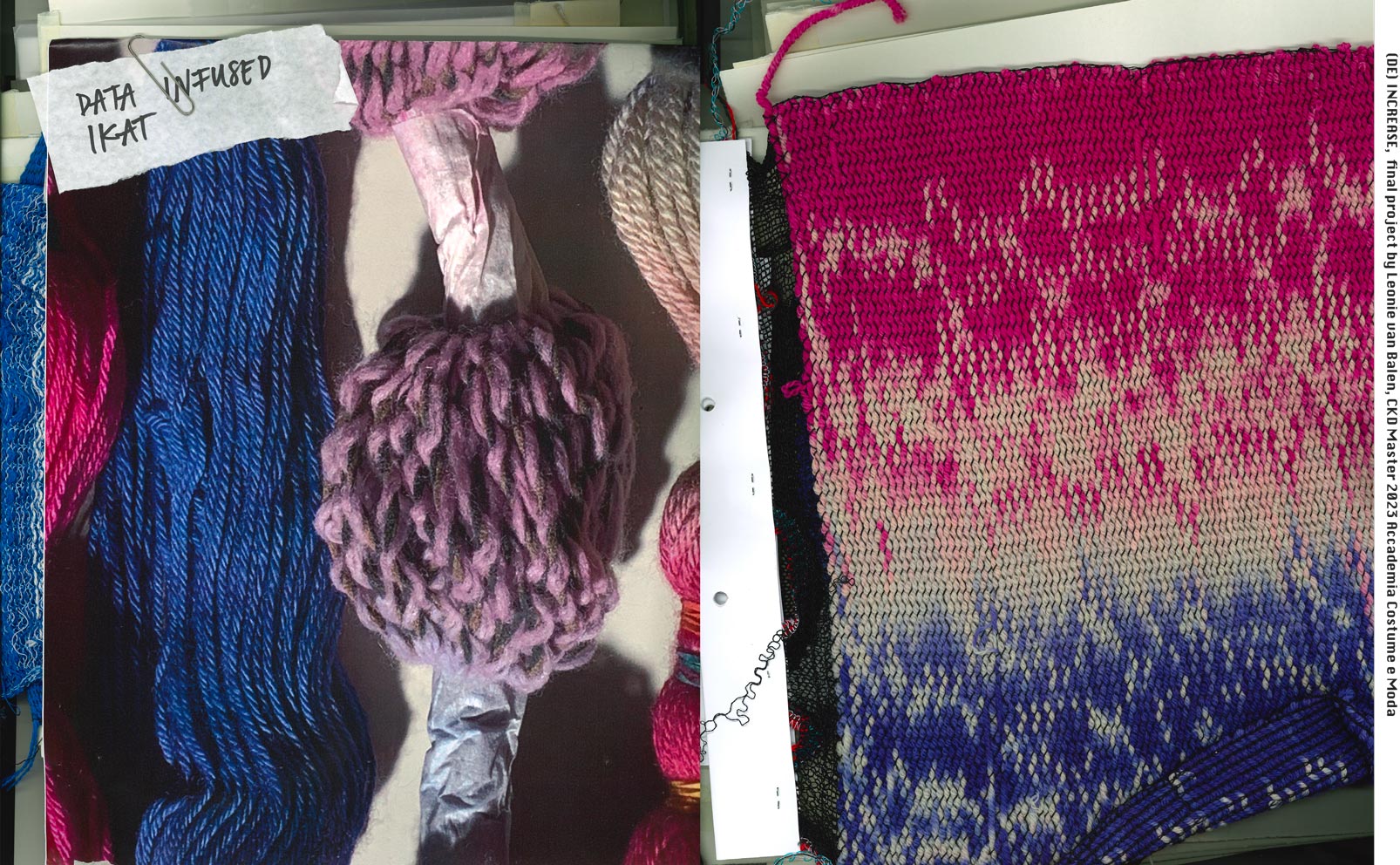
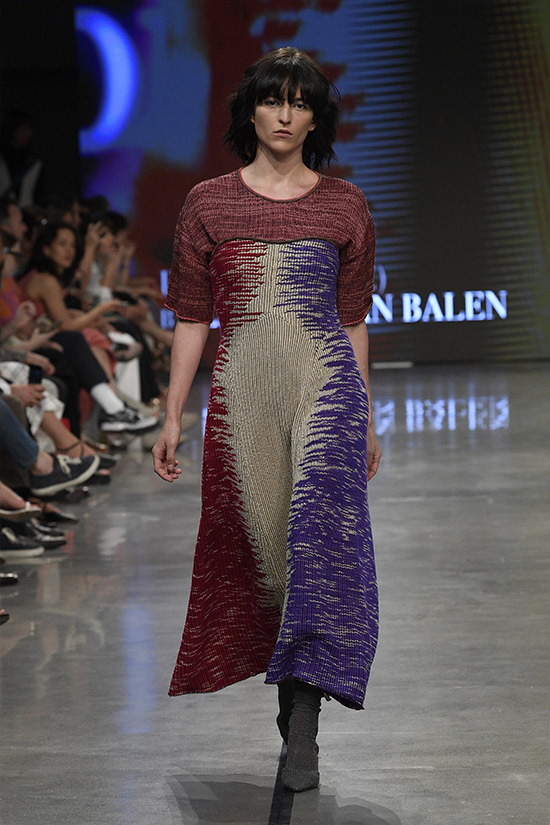
Il filato di lana bianca è stato tinto con la tecnica ikat, il che significa che i filati sono stati legati e tinti prima del processo di tessitura. Per la tintura a mano, le matasse sono state legate attraverso legature che simboleggiano date diverse significative per me o per il processo di tintura avvenuto.
Ciò ha portato ad avere maglie che portano una memoria, quindi un significato. Il valore del capo è stato aumentato sia nel valore materiale che nel suo valore emotivo.
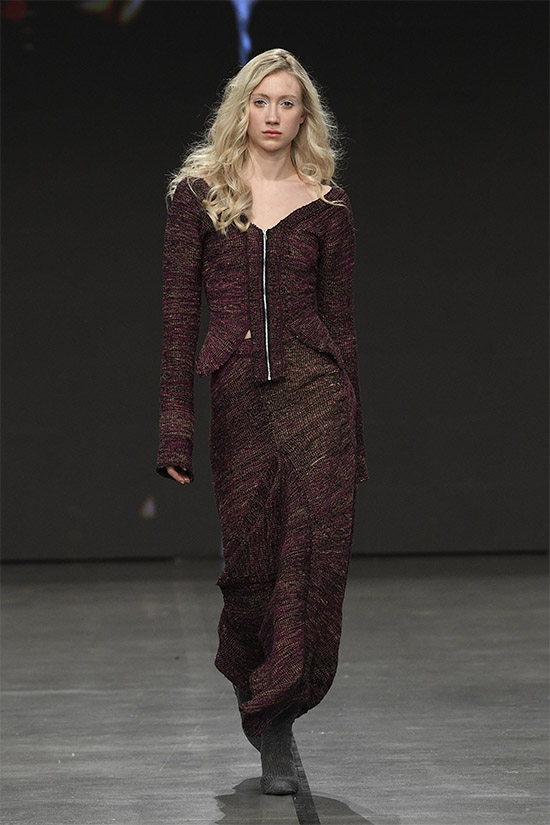
Un altro modo per aumentare il valore della collezione è stato quello di creare il mio stesso filato. Per questo, ho usato una lana marrone di scarto, danneggiata nel cono. Inserendo il filo in una macchina taglia e cuci, ho collegato le estremità sciolte e ho creato un nuovo filato che può essere quindi nuovamente lavorato a maglia.
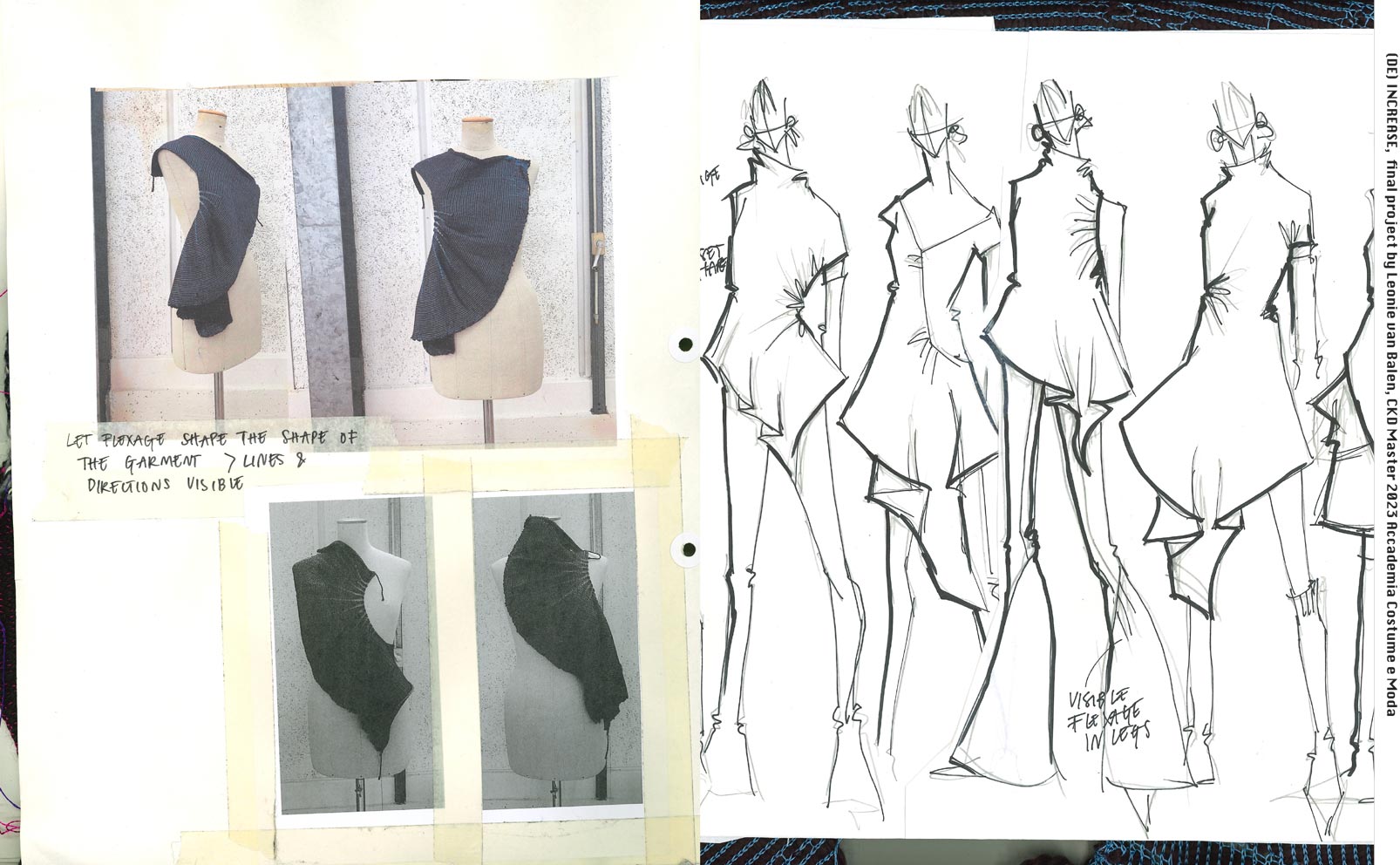
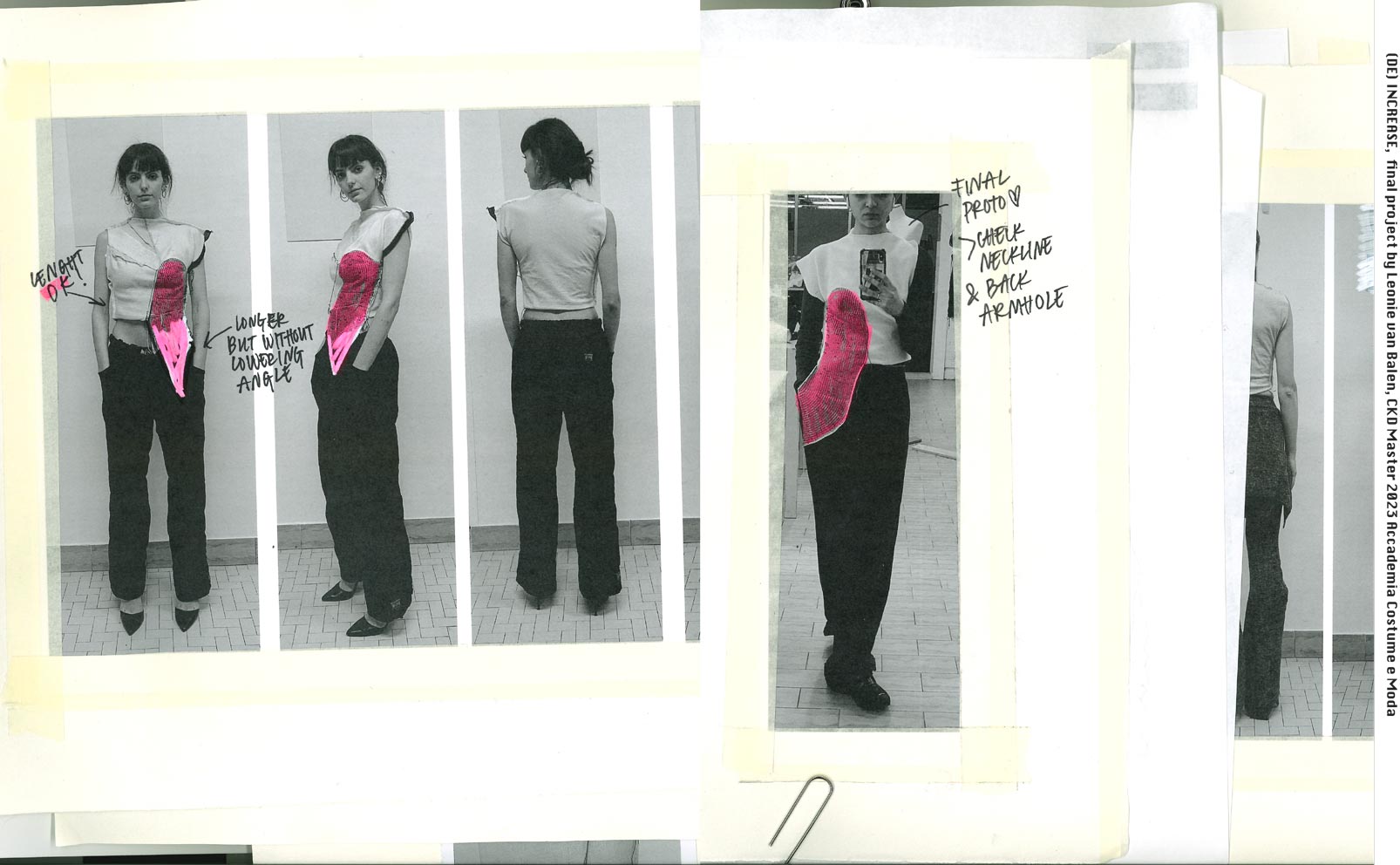
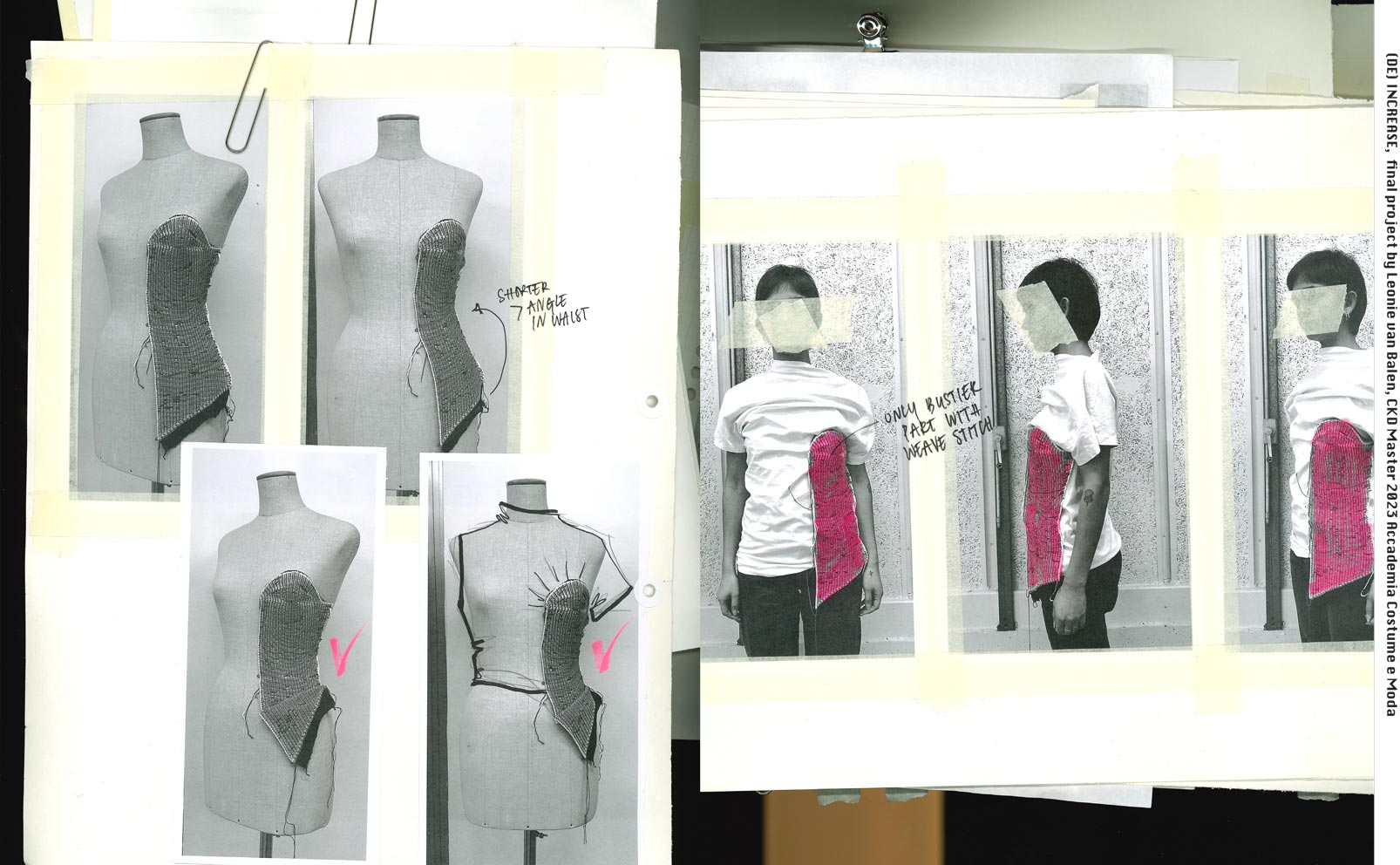
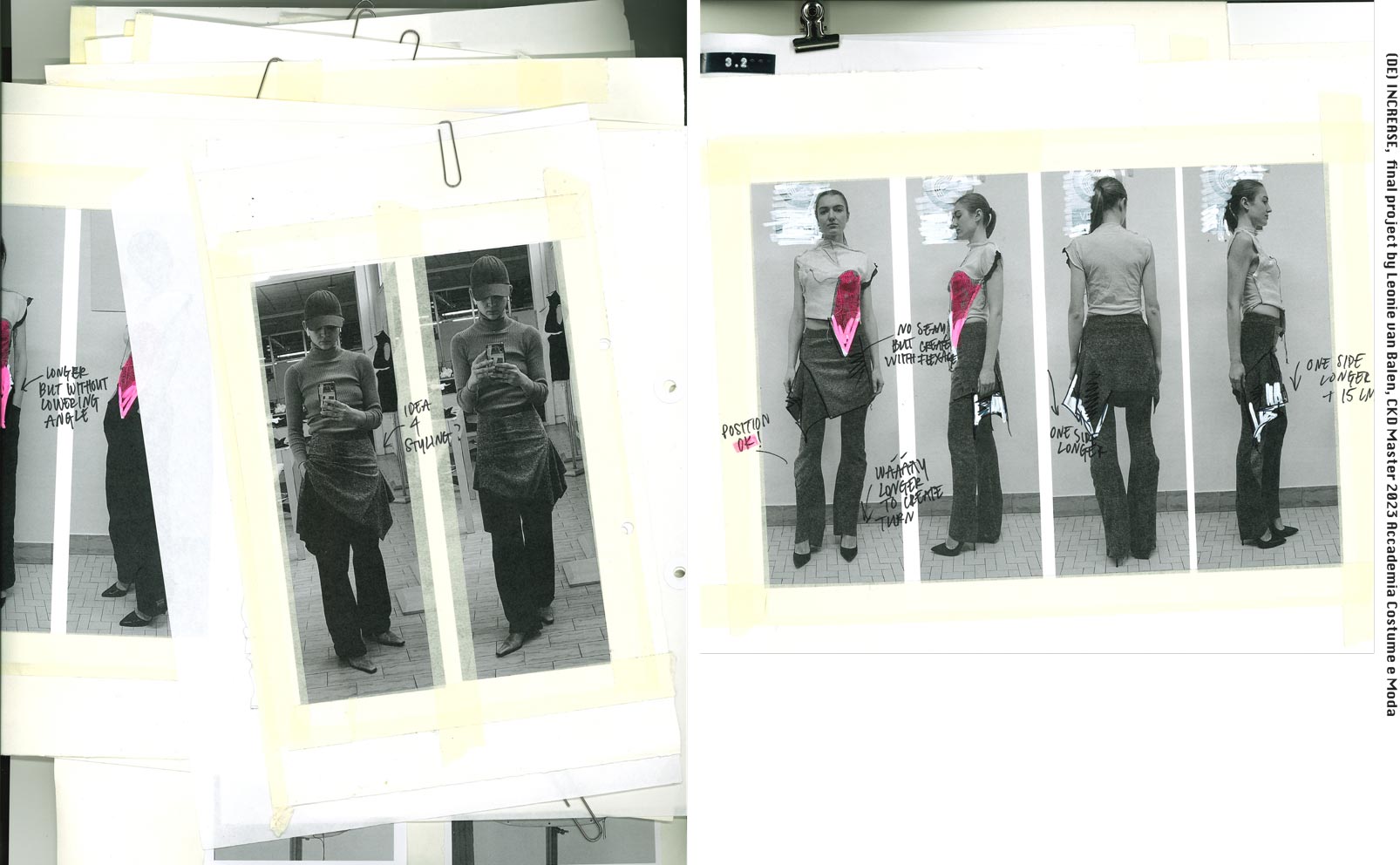
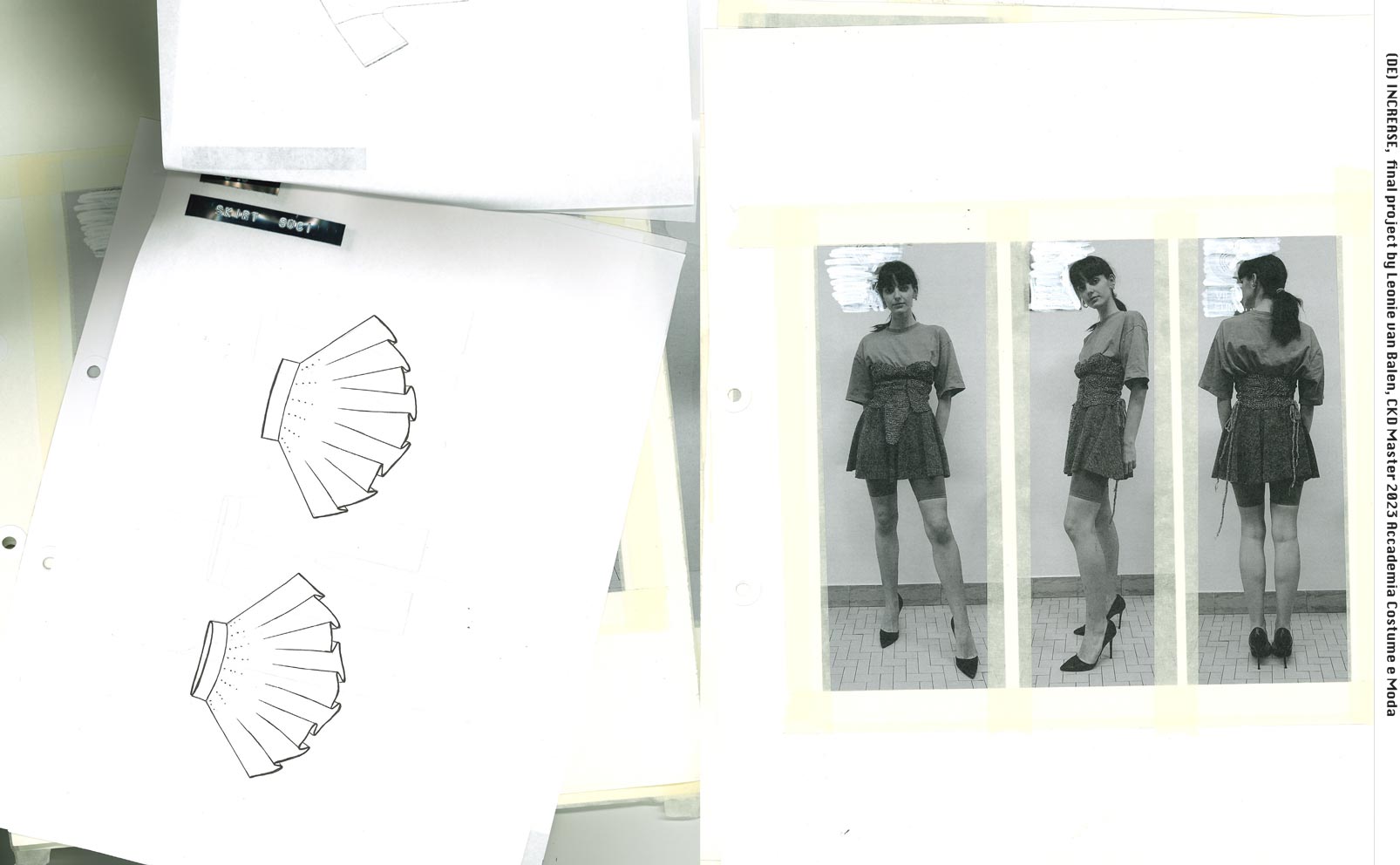
Mi hanno sempre affascinato le infinite possibilitá di plasmare con la maglieria. Ho cercato di enfatizzare la versatilitá del filato e delle sue molteplici applicazioni in un punto di maglieria. Per questo motivo ho scelto di rendere visibili i movimenti della maglia utilizzando parti di maglie accostate al punto tramato. Ho fatto inoltre riferimento ad una delle piú complesse costruzioni fatte su misura: il corsetto bustier. La forma del seno è esaltata dalla lavorazione a maglia della forma e dalla funzione di questi capi.
L’obiettivo era quello di creare una collezione femminile nelle forme, con un focus sul movimento e la costruzione della maglieria, senza cadere in cliché.
How can we build a more sustainable relationship to our clothes? How can we make clothing so meaningful to us, that we don’t need and want to dispose of it? Isn’t the most sustainable garment the one that we already have?
This made me think about the concept of value. How can we make items more valuable and how can we turn materials that are valueless, valuable again.
The title (de)increase refers to both the de- and increase of value, but also to the knitting technique in which decreases and increases play big parts in shaping textures and garments.
The collection combines knitwear with the ideas of material and emotional value; dead stock yarns and otherwise discarded materials have been manually manipulated, so that their value increases; data have been “woven” into the knit, so that the textile becomes a carrier of memories.
While I was thinking about what value, and especially the value garment, mean to me, I was reading Sadie Plant’s book “Zeros & Ones”. In one of the chapters, she speaks of female weavers and how they have set grounds for a lot of modern technology. A comparison between the first weaving looms and the digits in computer systems (the zeros and the ones) interested me and made me think of how knitting is both technological and manual at the same time. Keeping this in mind, I started doing research on this duality between the handmade and technology. I have explored this in both knitting techniques and visual aesthetics. Technique-wise I chose to use only the weaving stitch on the domestic machine; every weaving thread needs to be inserted by hand. By using different types of yarns, I tried to achieve a technological look and feel but respecting the artisanal aspect of manually manipulating them.
For the collection I chose to use colours that for me have both technological and manual connotations. The aim was to create a “techno-ethnic” look.
Therefore, I have used the primary colours cyaan, magenta and yellow that are used in CMYK codes for printing. Next to these colors, I have chosen their more natural counterparts like indigo and the natural colors of wool: dirty white and brown. By using these colours in gradients, in both artificial and manual ways, both technological and ethnic connotations of the textiles are achieved.
I started doing visual research on what the concept of techno-ethic would mean to me. I took inspiration from existing textile techniques, such as ikat and the use of shiny and metallic yarns to give textiles a technological look and feel. Next to this, I looked at the photographs of Cho Gi-Seok, who portrays the female body and flowers. By putting images of the two together a conversation starts between the natural and the technological, which for me felt like a metaphor between the manual and the technological that I have been exploring.
The research of the project has been very practical: trying out different materials, gradients and colours on the knitting machine. For this research, I only used the domestic brother machine and the weaving stitch. This has been deliberately chosen to use, because only on these machines it is possible to create stitches that are only possible to achieve by hand. Every manipulation needs to be done by hand and every weaving thread is inserted by hand. Together with Maglificio Innocenti, most of the stitches were able to be translated into industrialized stitches, but for two garments I chose not to translate the stitch. These two garments are made my hand, because there were no other ways to change the stitch without losing its essence.
Next to the experimentation on the machine, I experimented with materials as well. All material that are used for this collection are dead stock yarns or otherwise discarded materials.
Off white woolen yarn have been dyed using the ikat technique, meaning that the yarns have been tied and dyed before the knitting process. The placements of the ties symbolize different dates that are meaningful to me or the dying process. This resulted in textiles that carry a memory, thus a meaning. The value of the material has been increased in both material and emotional value.
Another way of increasing the material’s value was to “spin” yarn myself. For this, I have used a brown wool that was damaged on the cone. By putting the thread into an overlock machine, I connected the loose ends and created a new yarn that afterwards can be knitted again.
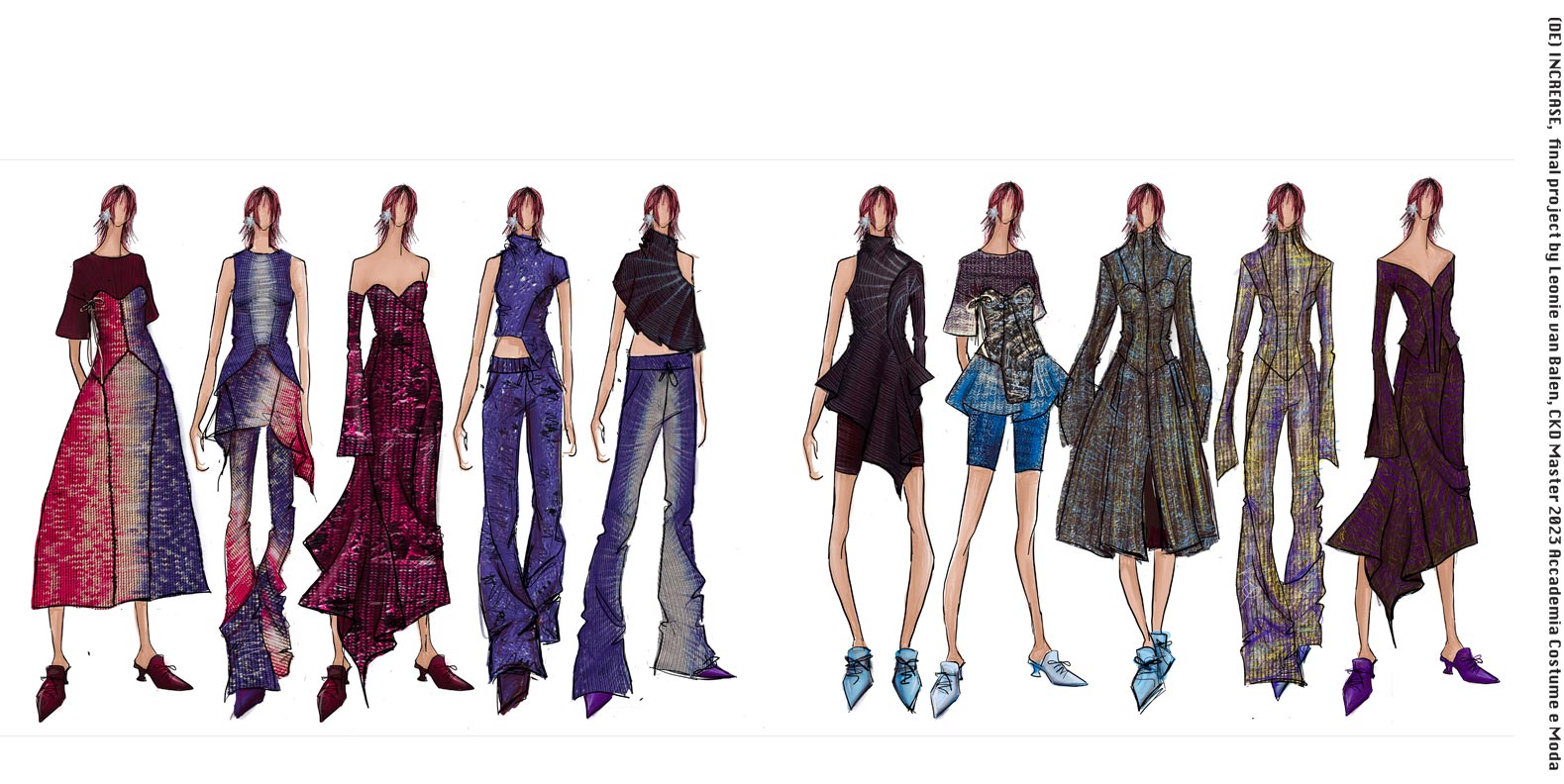
The possibilities to shape with knitwear have always fascinated me. The fact that by adding and removing stitches, a single yarn can create a shape was something I wanted to keep in mind and make visible. For this reason I chose to make the movements of the knit visible by using partial knits in combination with the weaving stitch. I also took reference from one of the most tailored constructions: the corset/bustier. The shape of the breast is enhanced by knitting the shape and infusing these in the garments.
The aim was to create a feminine collection in terms of shape, with a focus on the movement and construction of the knit and without falling into cliches.
Partners:
Designed by Leonie Van Balen
Produced by Maglificio Innocenti
Yarns by Zegna Baruffa Lane Borgosesia and handmade yarns
Handmade yarns dyed by Tintoria Rosta Nuova

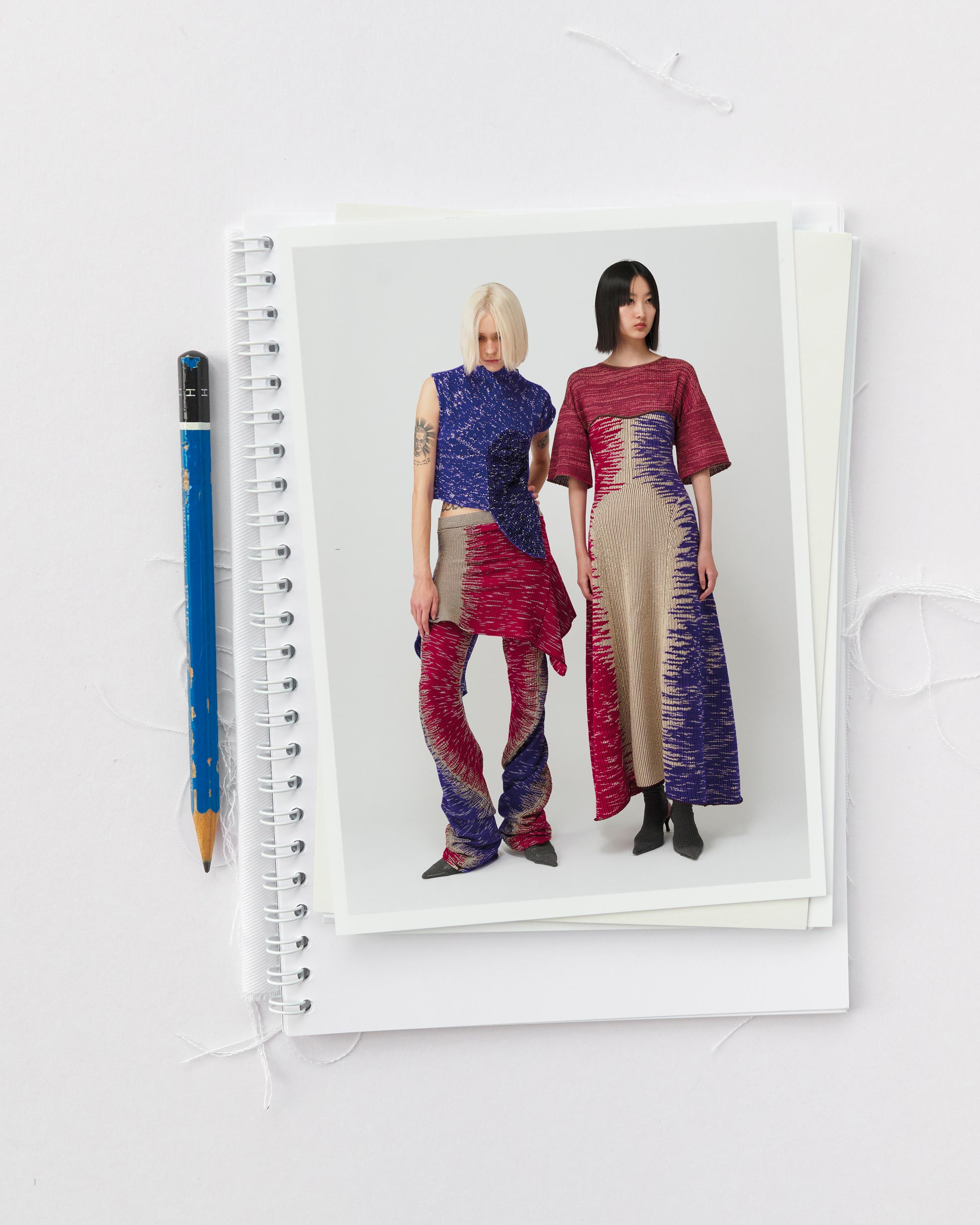

- Moodboard
- Sketches
- Line up
- Catwalk