Carved by the light and crossed by the shadows
Una collezione è una forma di esposizione e rivelazione di sé, simile all’etica plotiniana di “non smettere mai di scolpire la propria statua”, il processo di costruzione e perfezionamento della propria essenza. Nel corso degli anni ho coltivato il desiderio di creare bellezza, e l’ossessione, potrei anche aggiungere, forse è questo che mi ha attratto dalla moda in primo luogo, e ancor più dal mondo della Couture, un desiderio di perseguire le molte forme in cui la bellezza si presenta. Trovo che la bellezza sia una consolazione e la creatività una spalla su cui piangere.
“L’arte dell’estetica, per il suo scopo più elevato, è di piacere all’occhio, senza dover servire ad alcuna forma di utilità che non sia la sua stessa esistenza” (Jovic, 2020).
L’interazione tra arte e moda, attraverso collaborazioni tra artisti e designer, è una notizia di ieri. Possiamo pensare che i percorsi incrociati risalgano alle collaborazioni di Schiaperelli con l’artista Salvador Dalí (Gibson, 2013). Questa collezione è un riferimento alla mia passione per il mondo dell’arte, a quello che è diventato il mio hobby, una collaborazione tra il mondo dell’arte, della storia e della moda, guidata da un’impollinazione incrociata di campi.
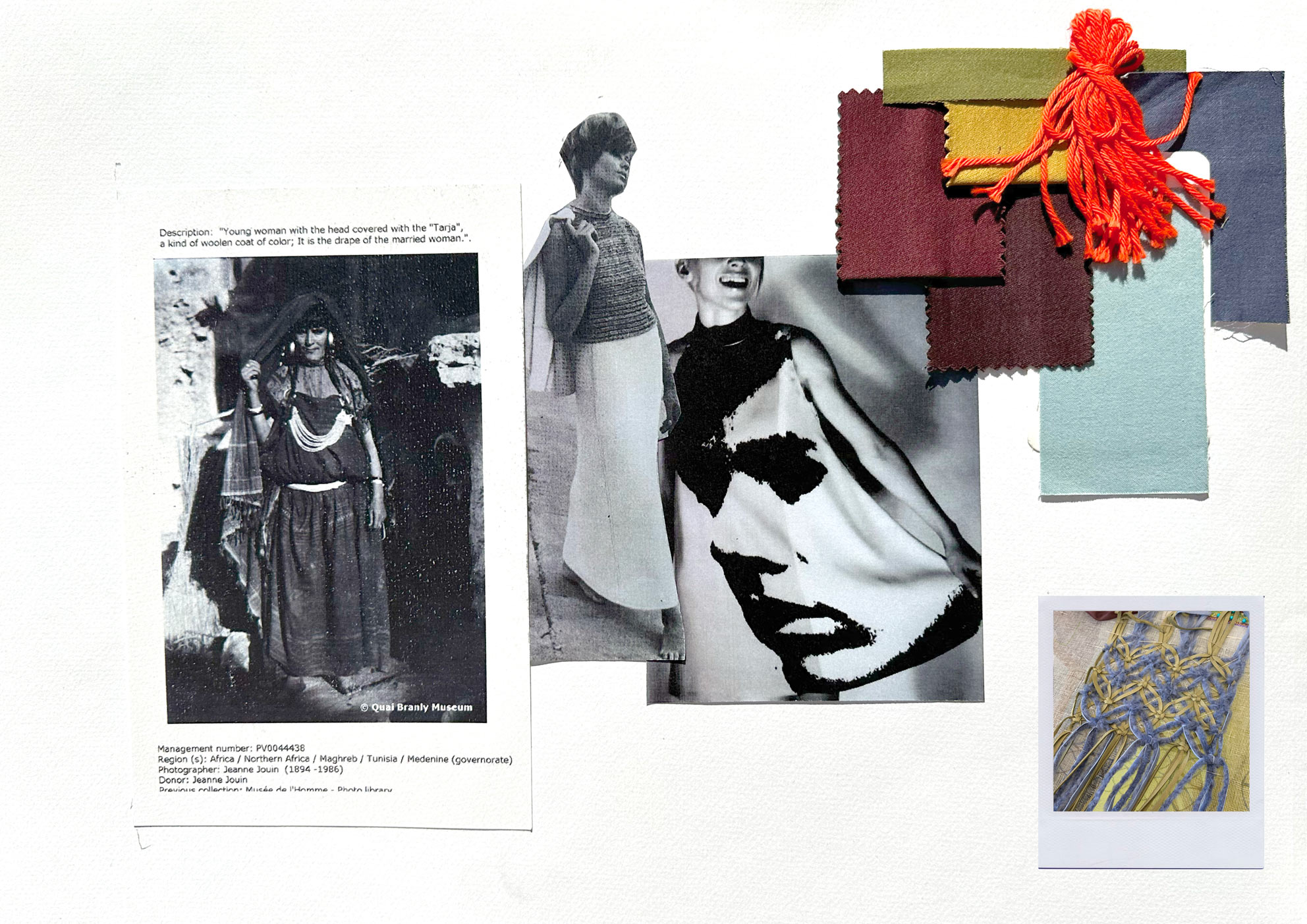
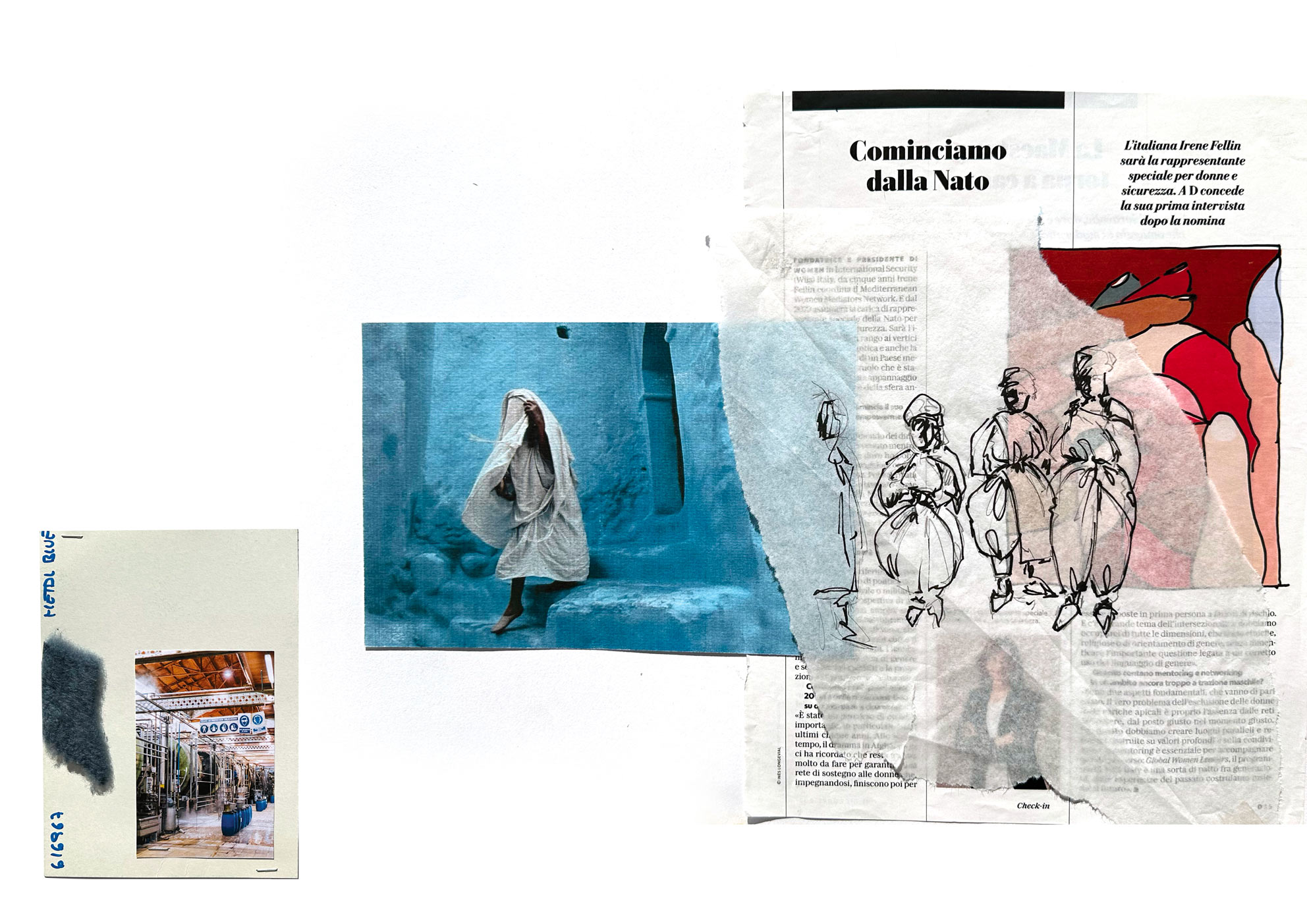
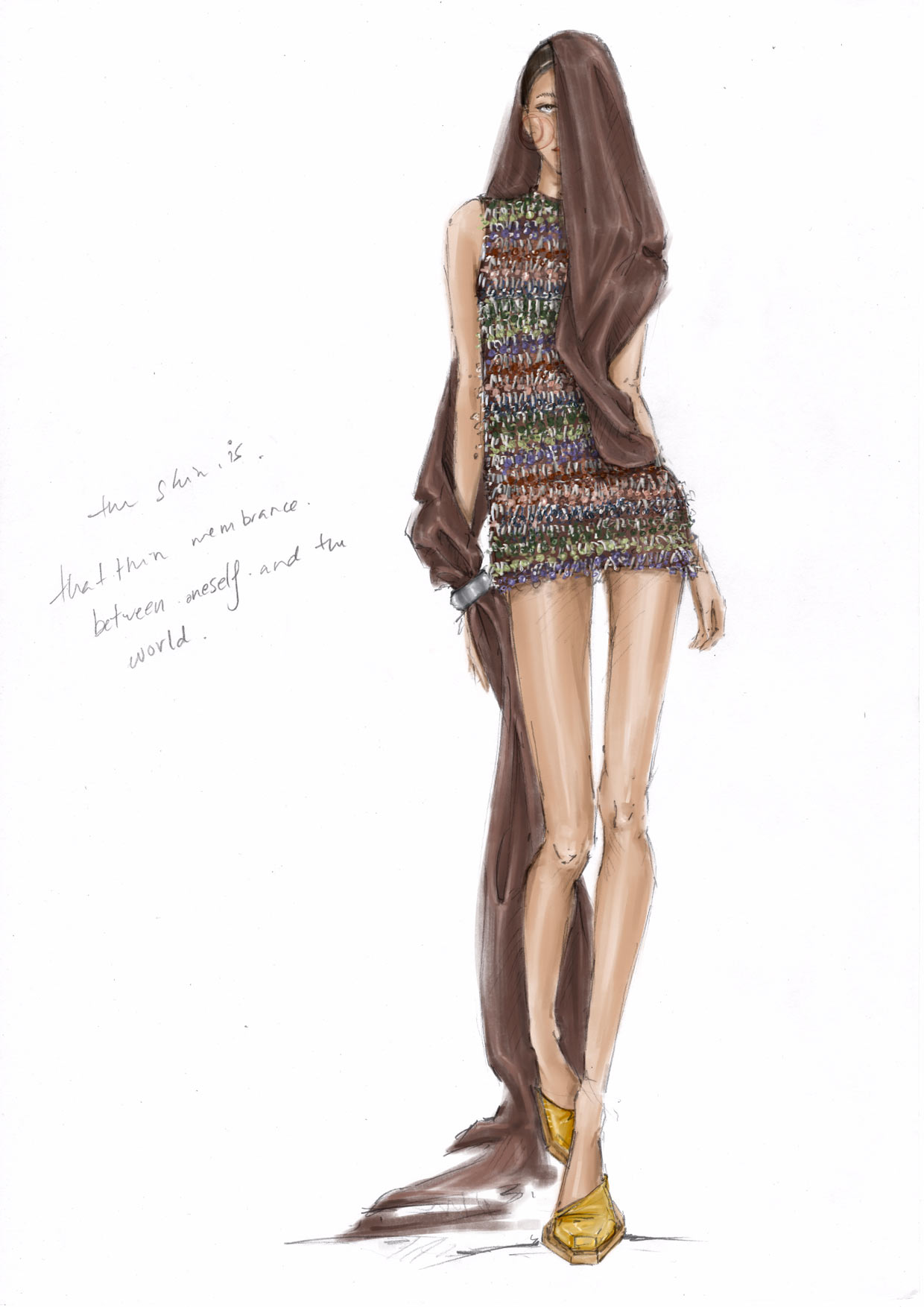
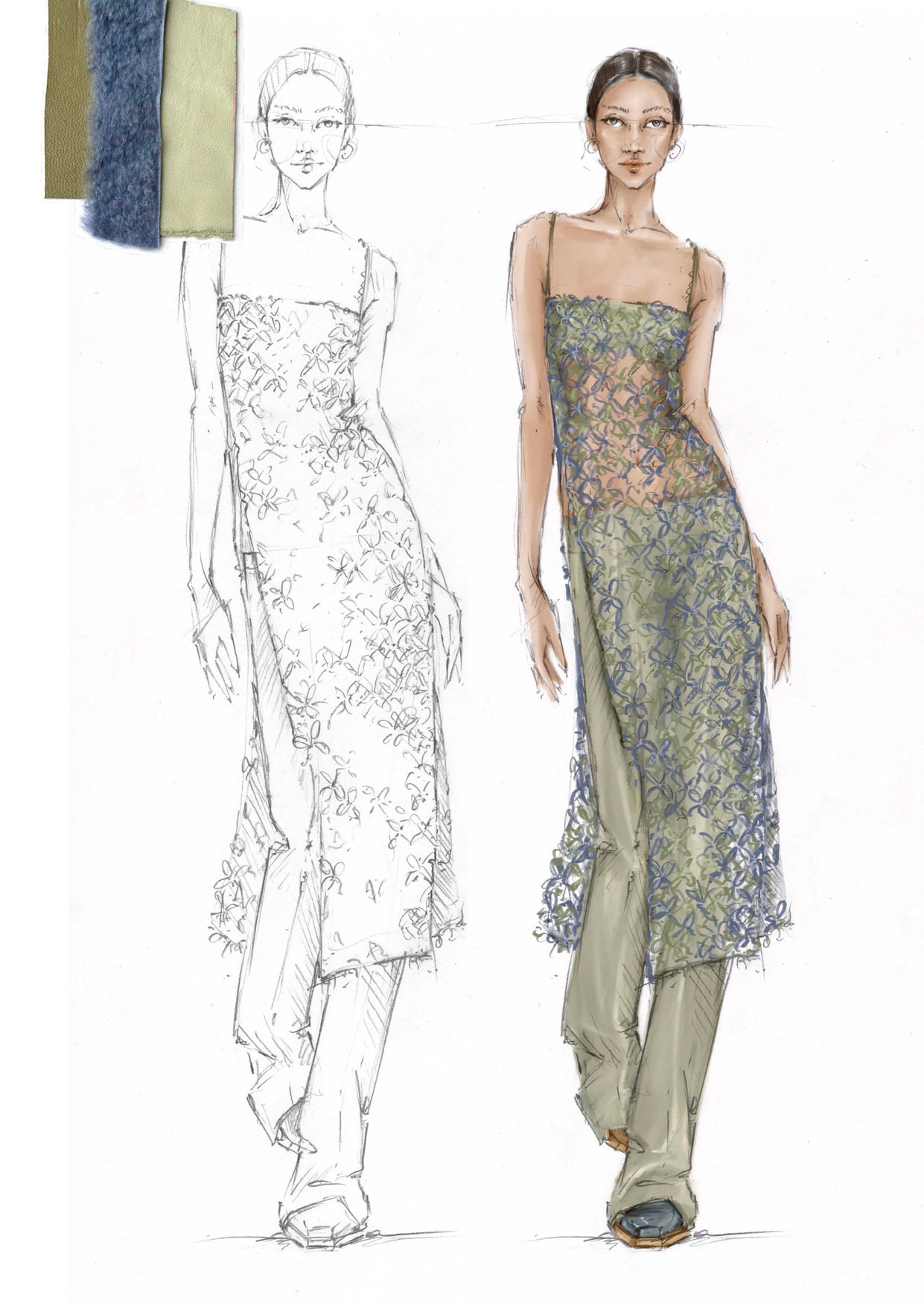
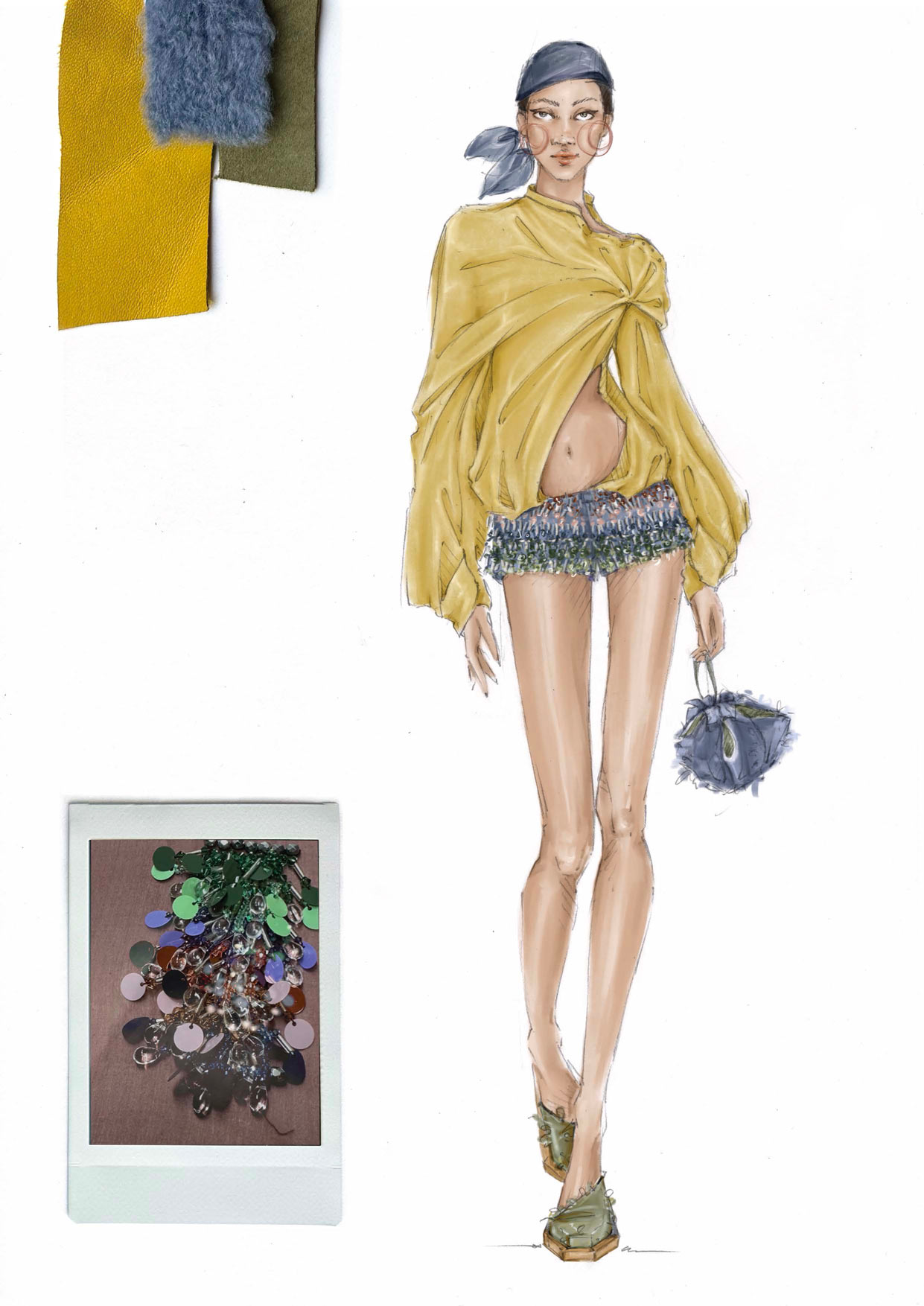
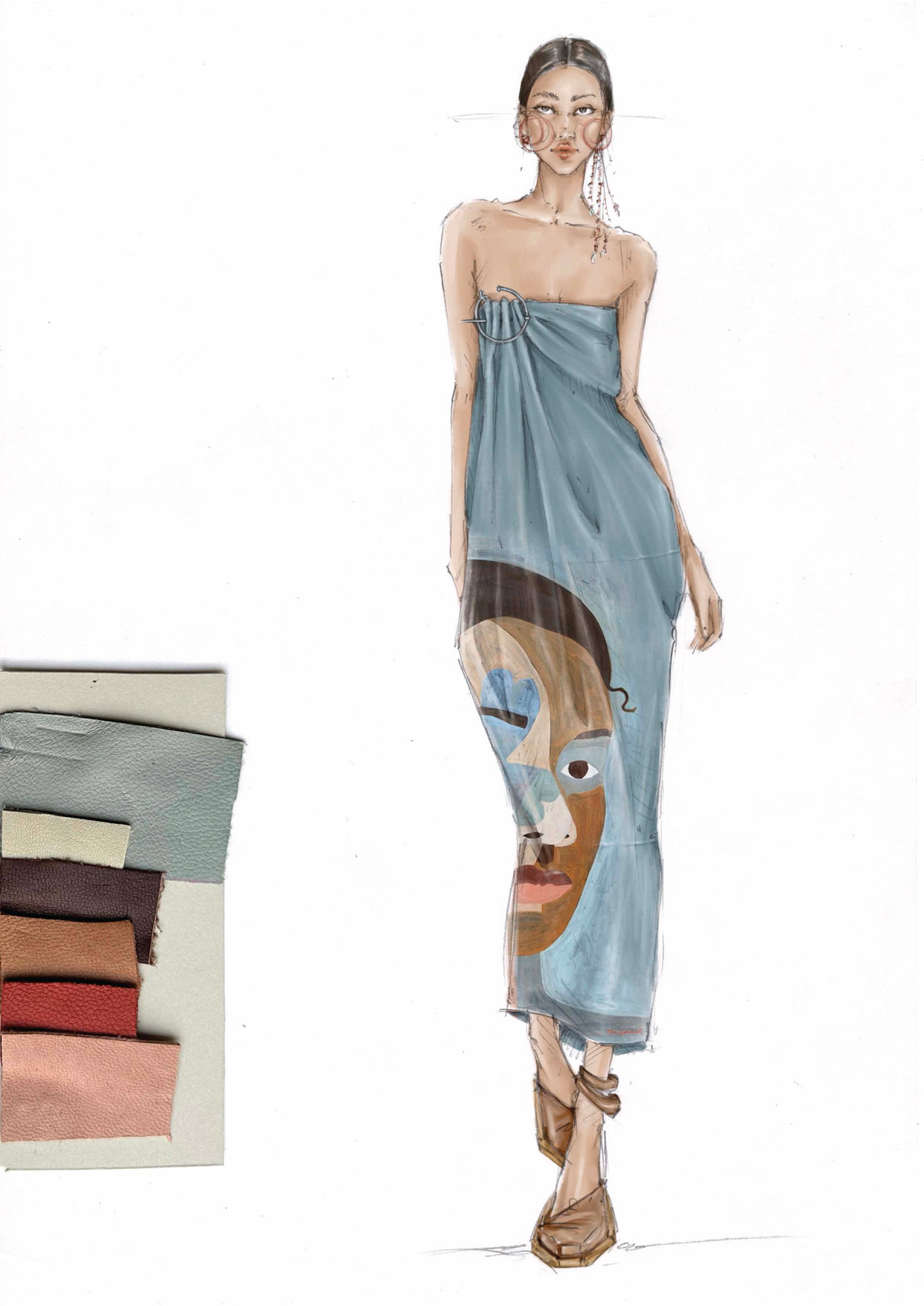
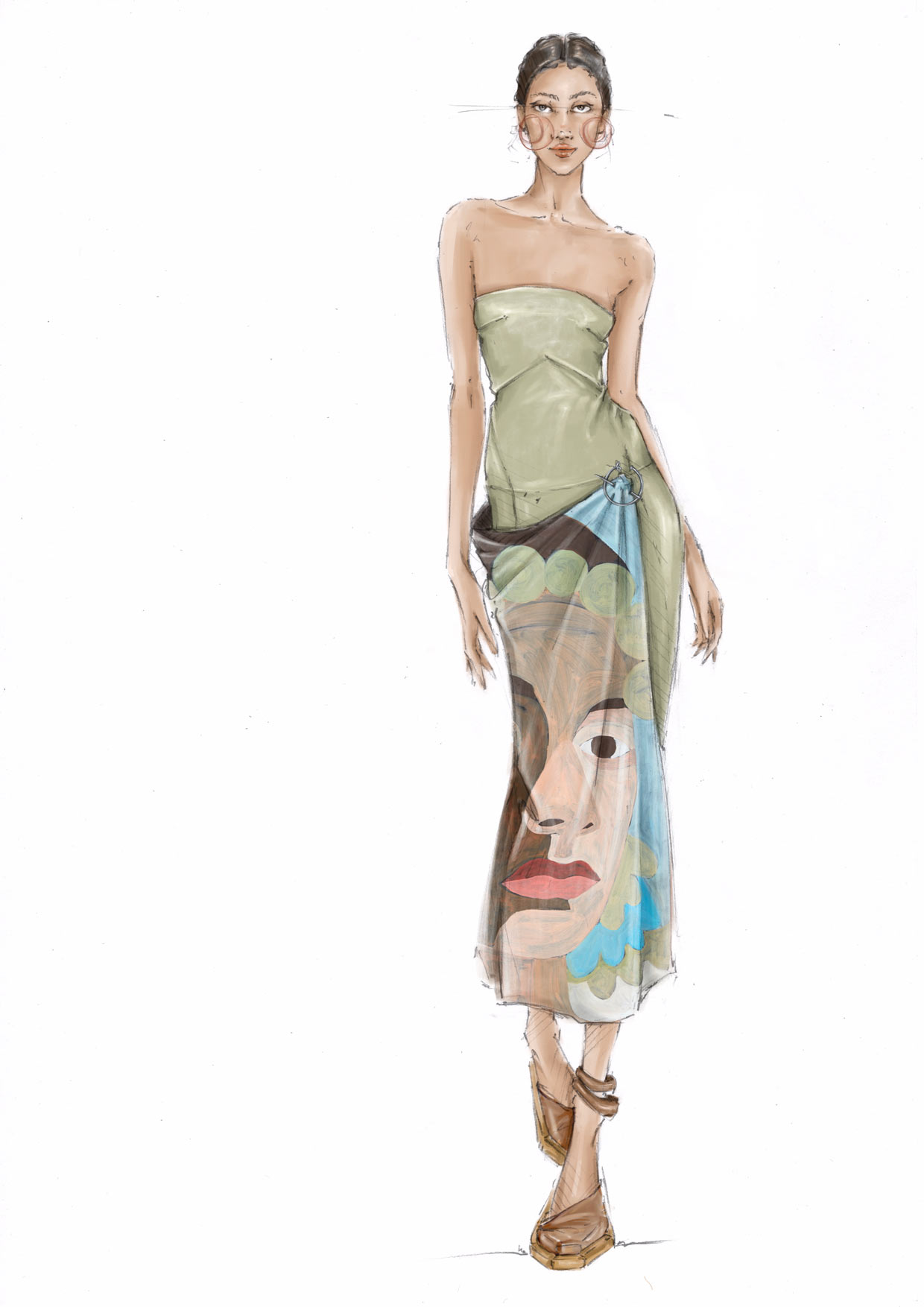
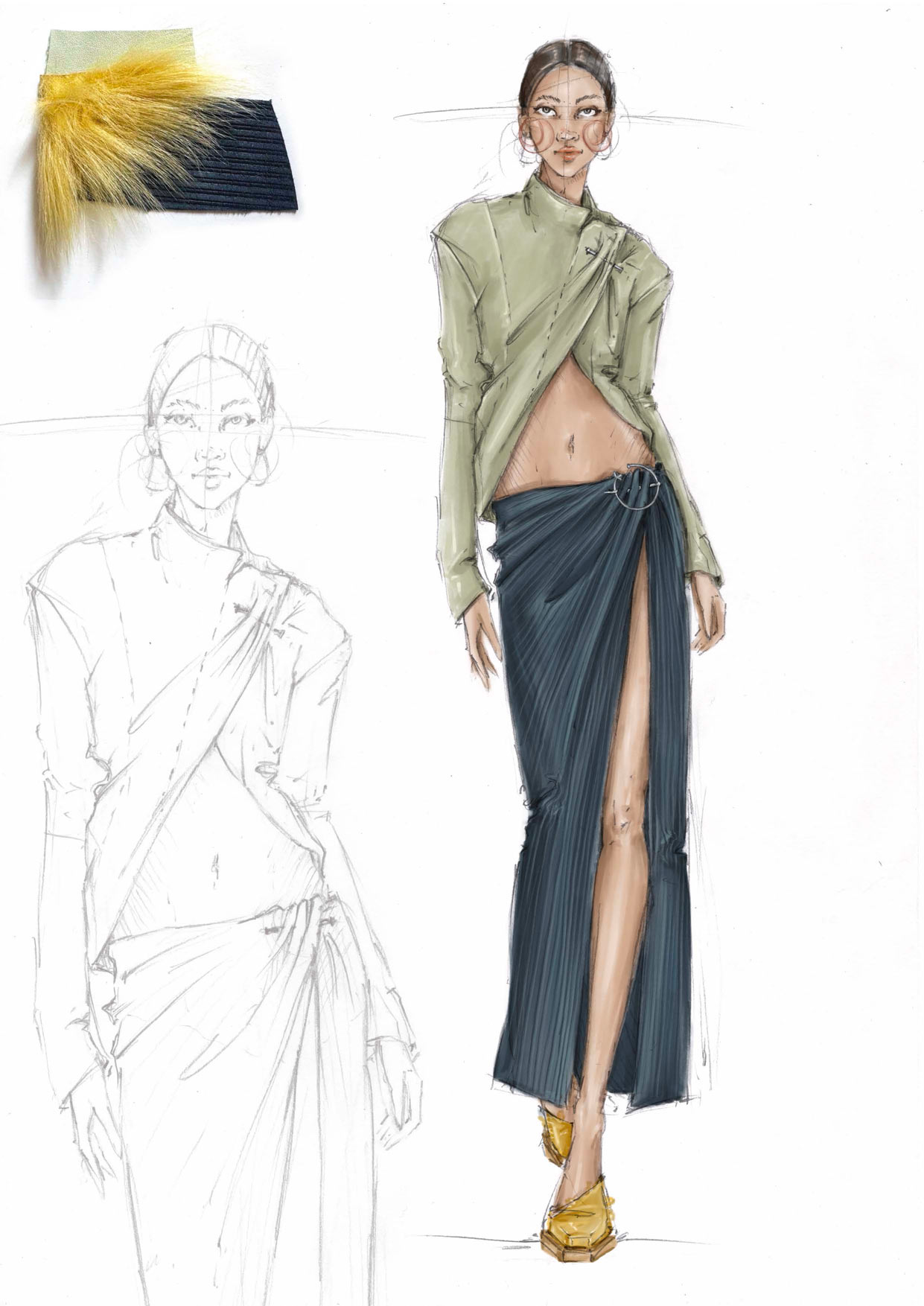
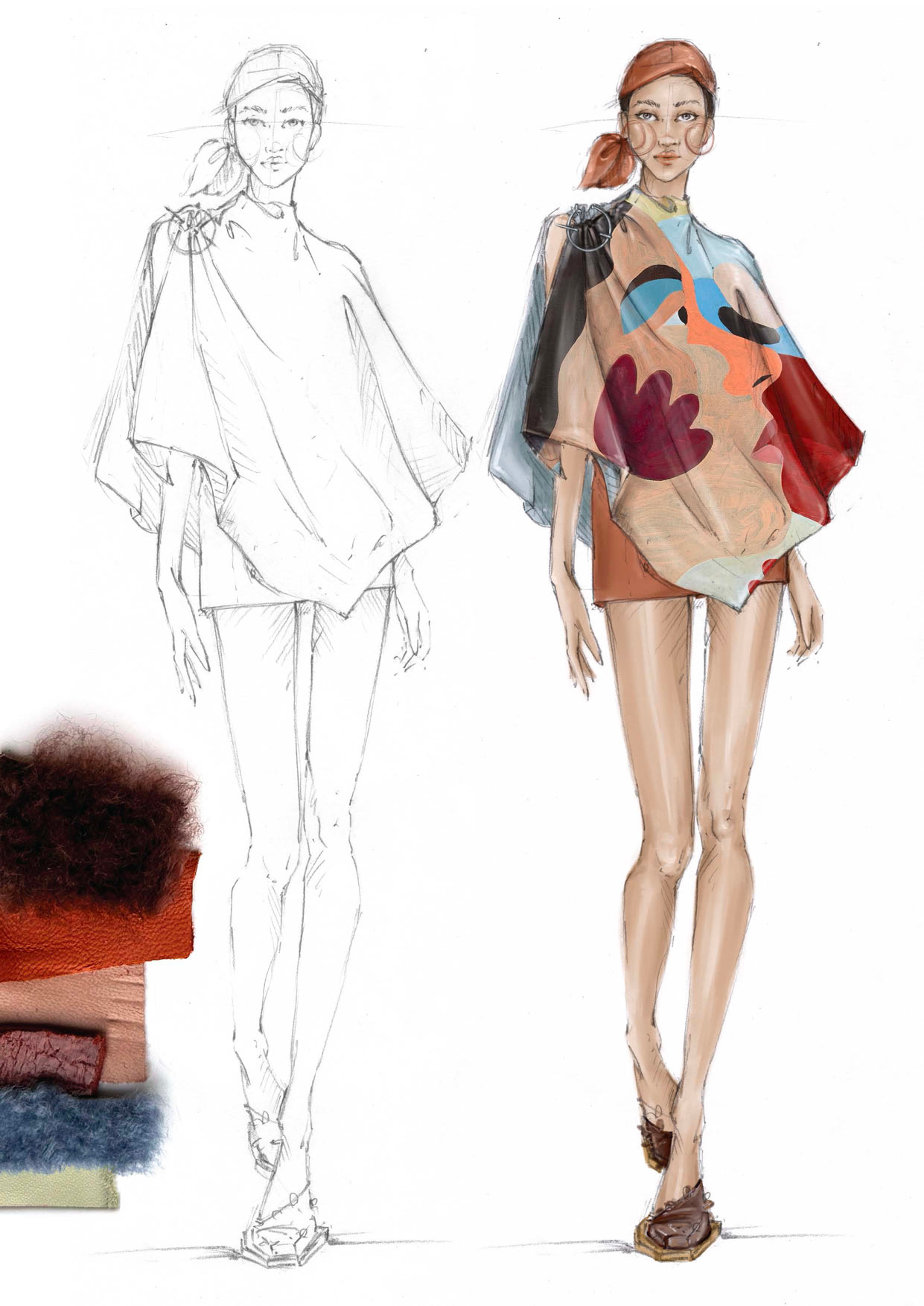
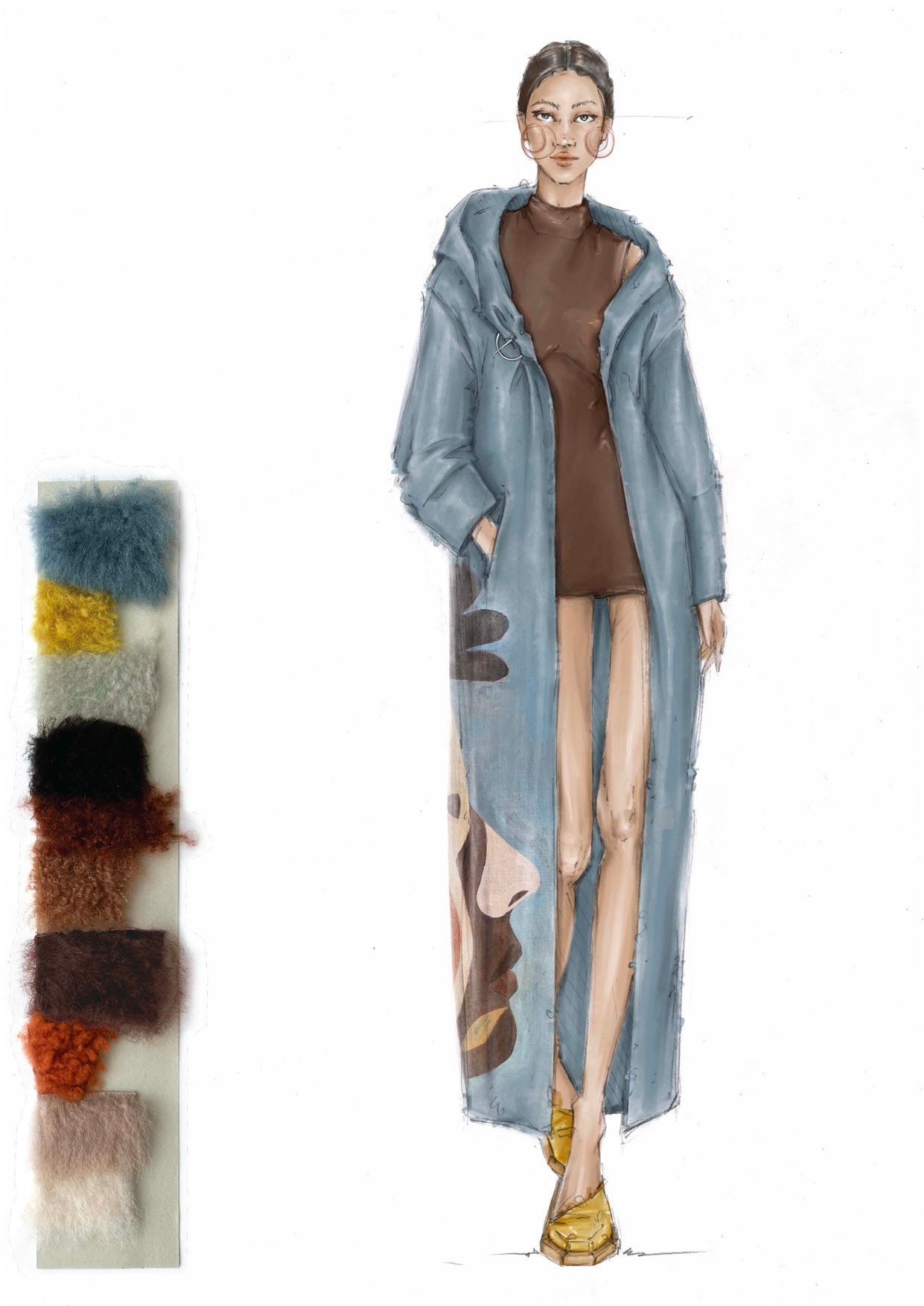
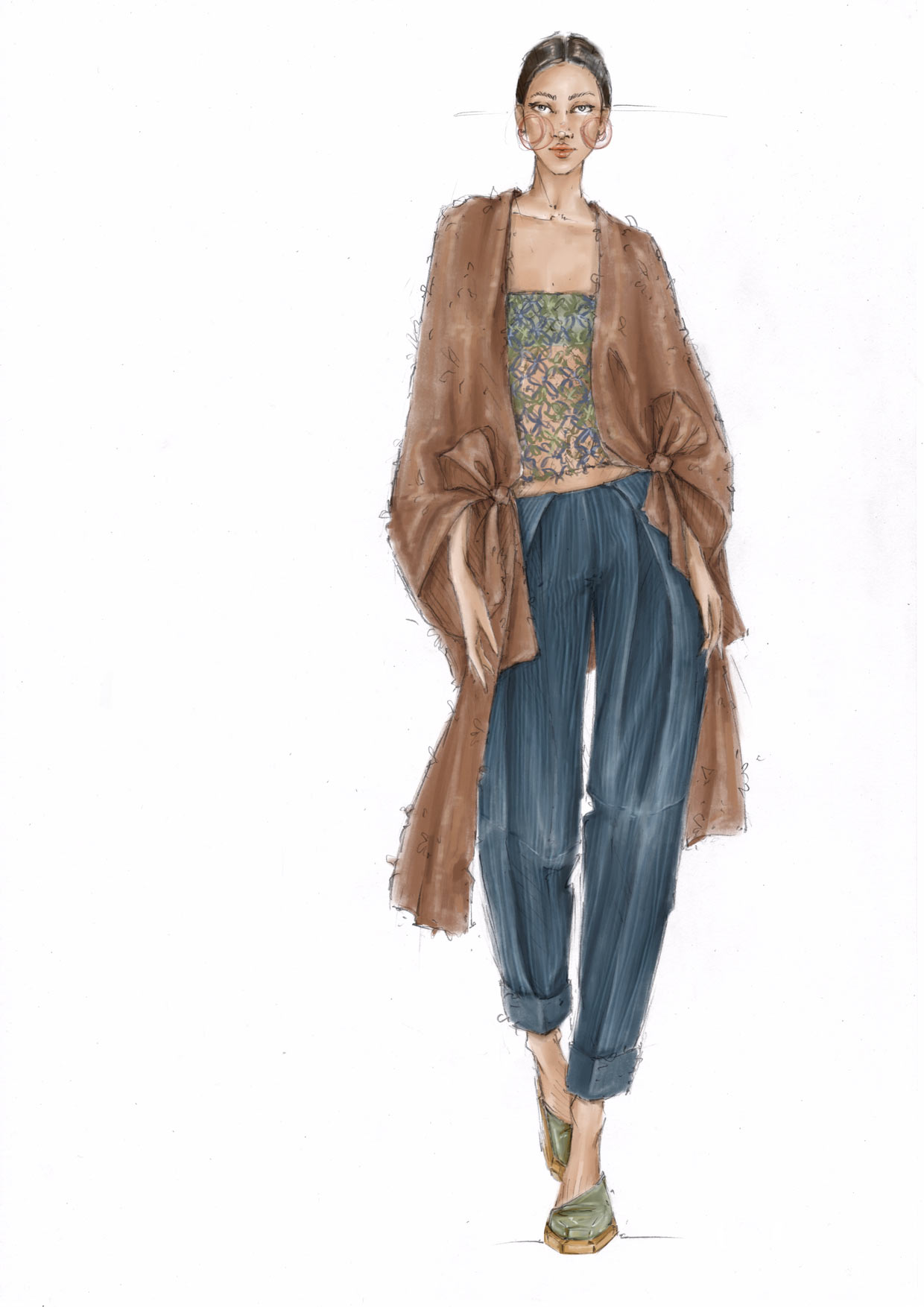
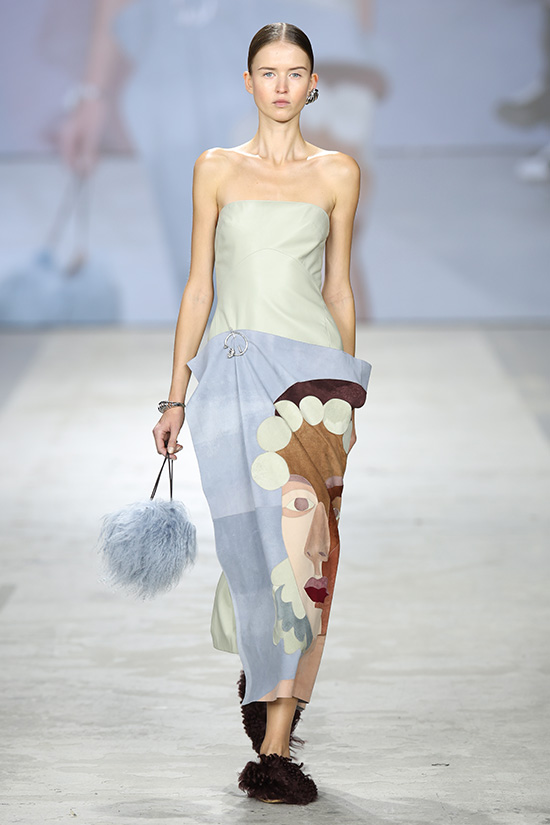
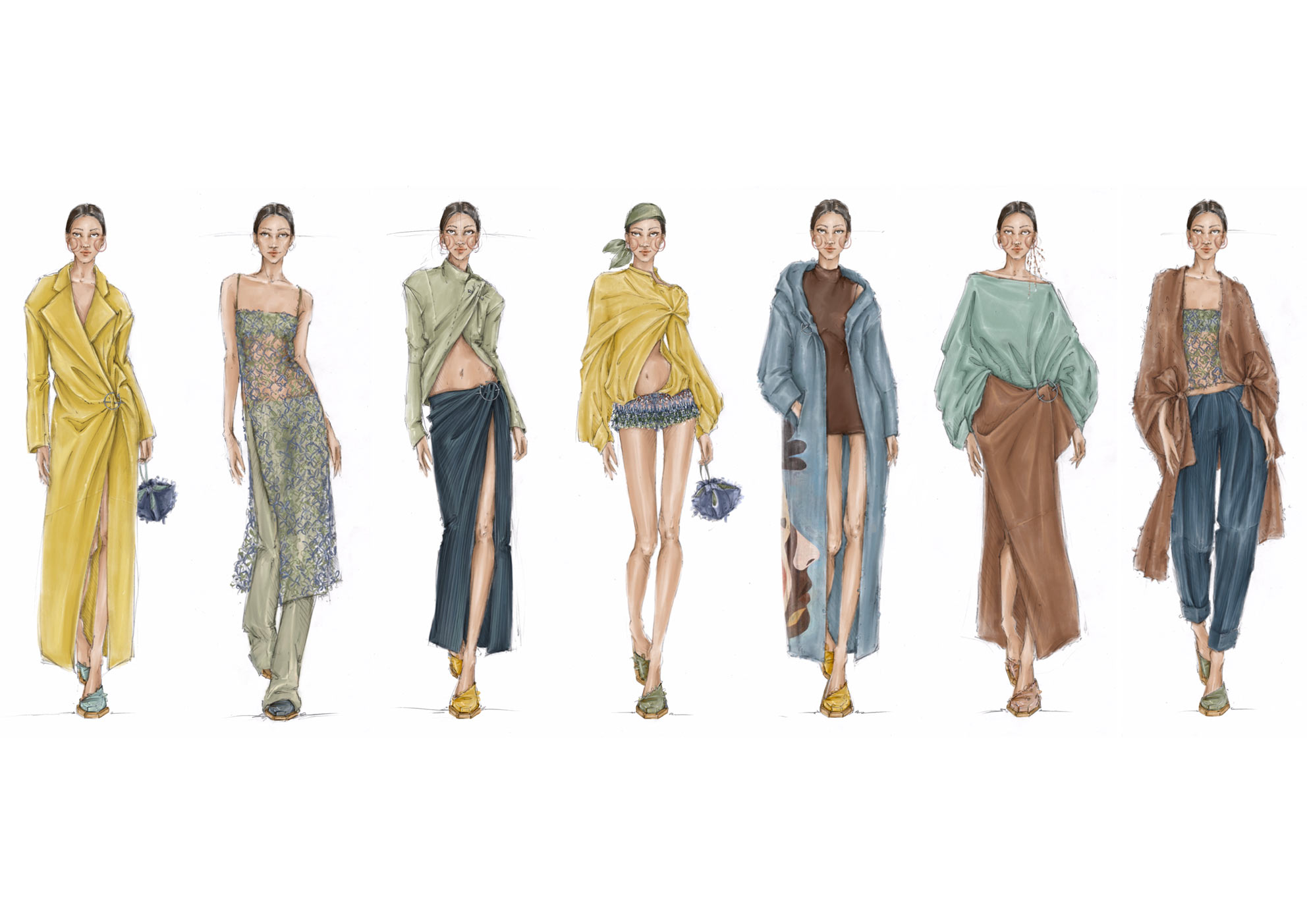
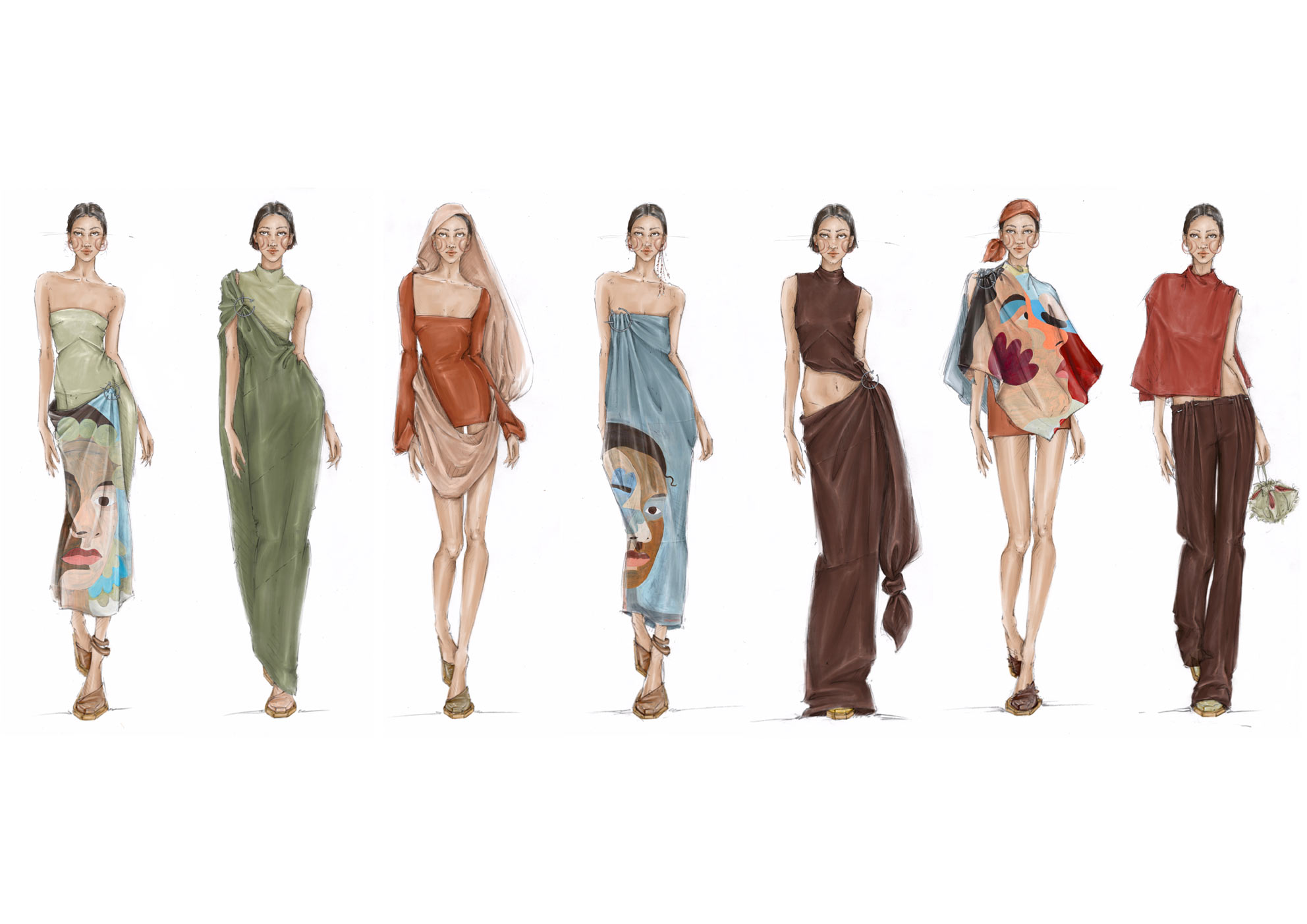
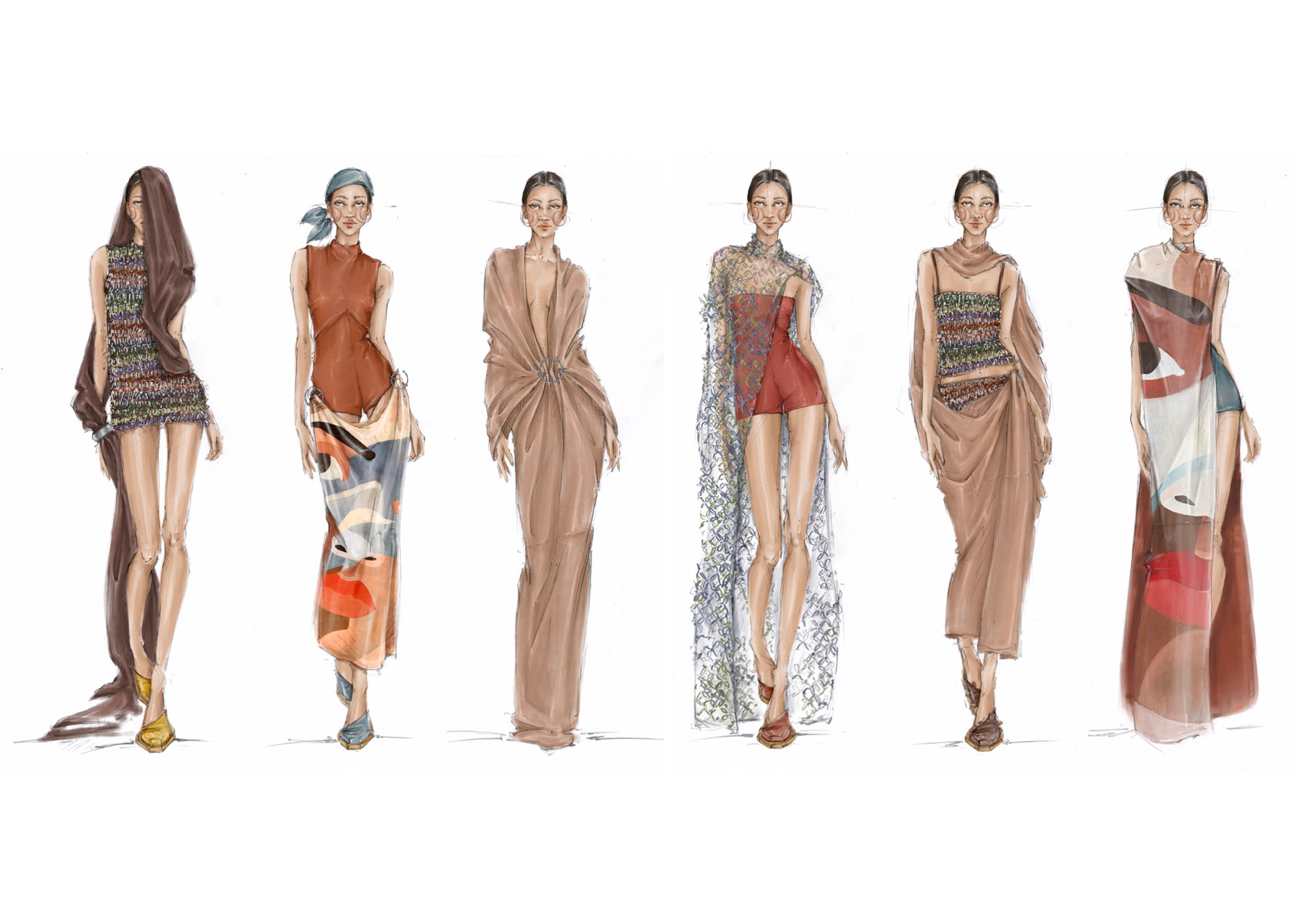
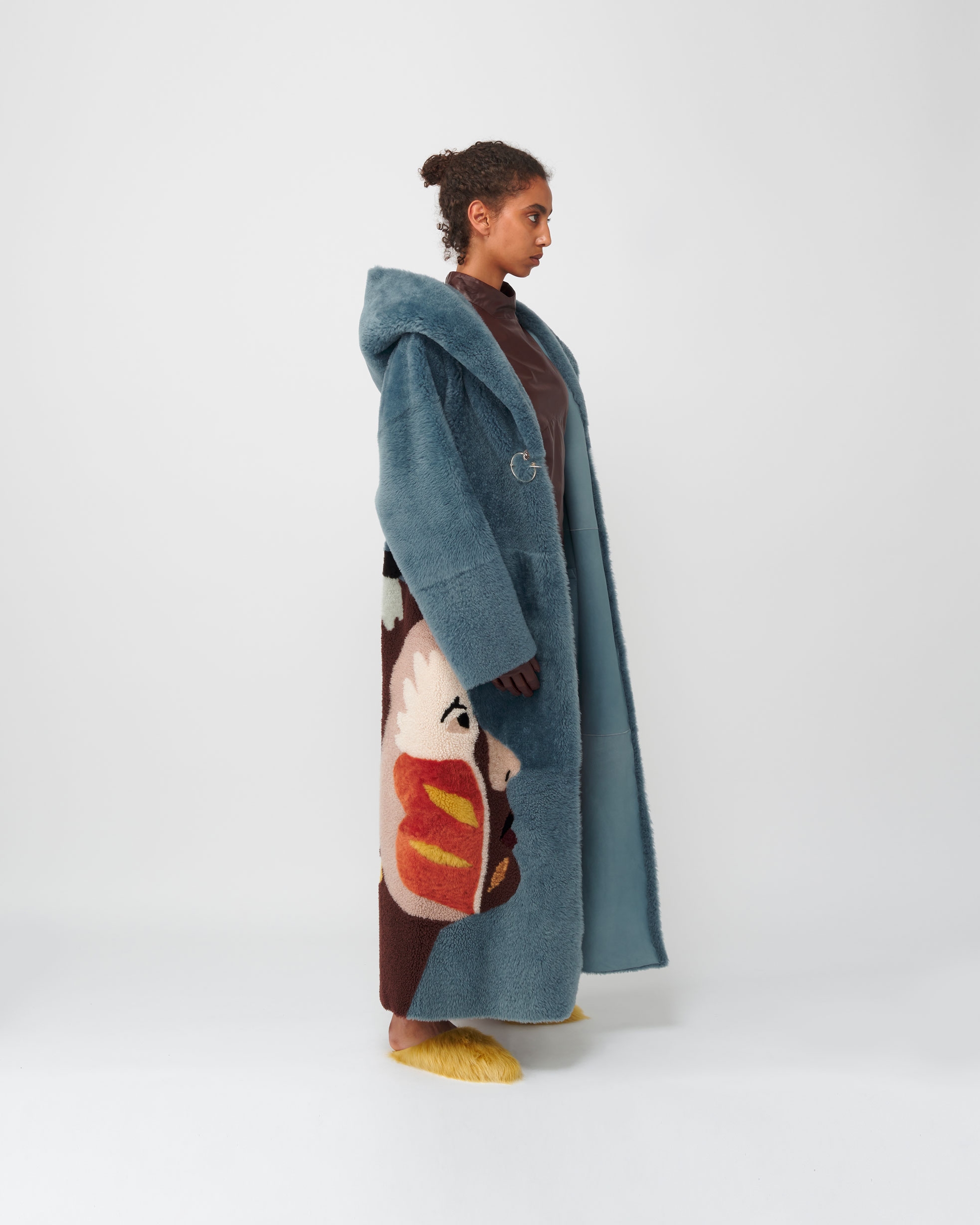
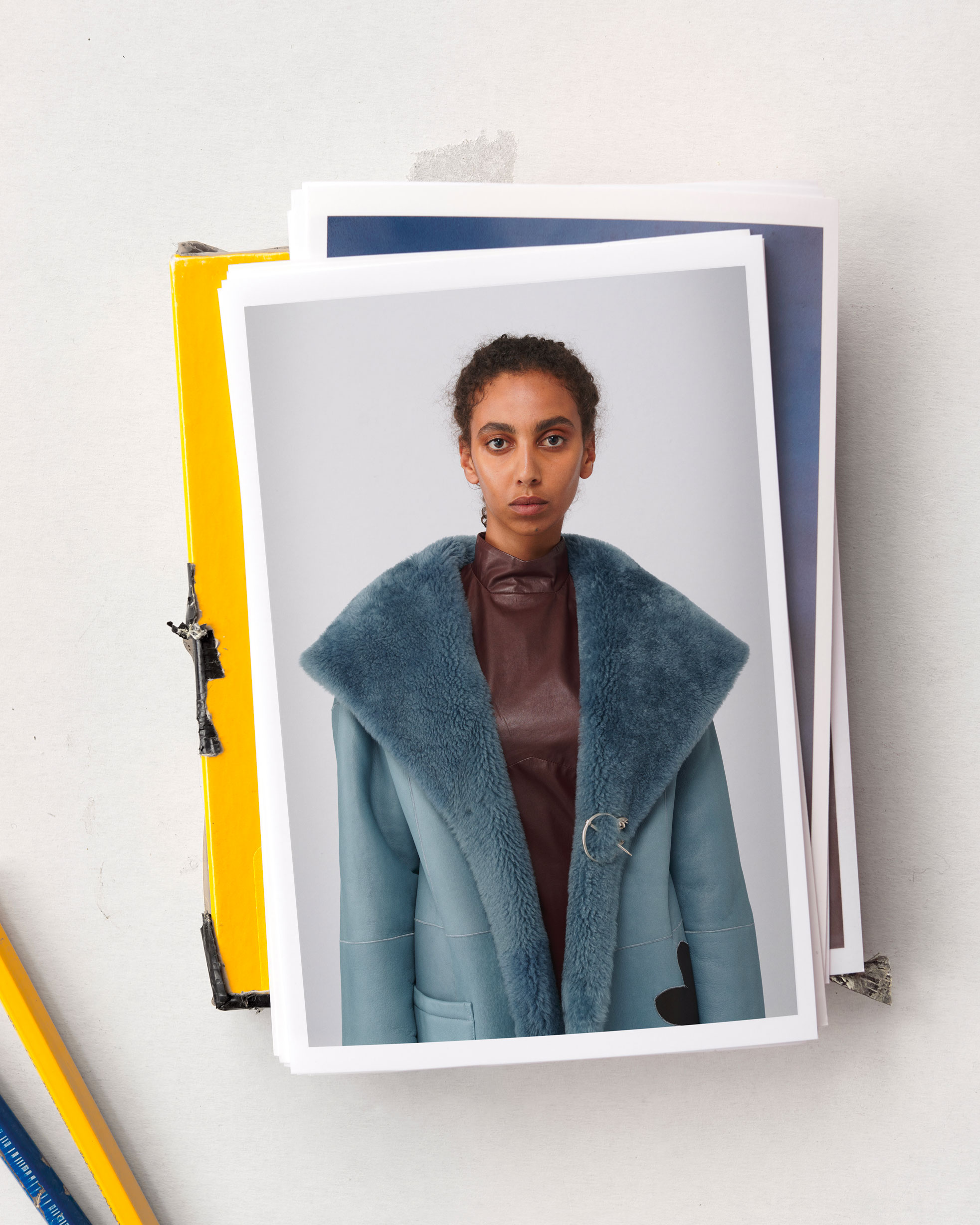
Per questo ho preso in considerazione il lavoro di Inès Longevial, una giovane artista francese, il cui lavoro mi ha influenzato per molti anni. La maestria di Inès nel colore e nella forma fa parlare i suoi ritratti (Longevial 2022), trasformando il corpo in paesaggio, colline e valli scolpite dalla luce e attraversate dalle ombre. La sensibilità di Longevial trova la sua espressione più delicata letteralmente sulla superficie della pelle, quella sottile membrana tra sé e il mondo, che risuona di informazioni atmosferiche. Le sue tavolozze punteggiate da tinte incandescenti evocano il ciclo diurno della luce dall’alba al tramonto, i rosa caldi, i malva e i gialli. Dopo aver assistito alla sua mostra personale L’Heure Magique ad Àgen, nel sud della Francia, paese di origine dell’artista, ho scelto di concentrarmi sui suoi dipinti, dove l’artista gioca con l’uso di motivi floreali intorno ai volti, scomponendoli in piccoli pezzi per creare patchwork che formano un abito. Un dettaglio che mi ha affascinato è stata la sua rappresentazione di piccoli fiori attorcigliati intorno alle dita, che ha finito per essere incorporata nella mia ricerca come forma di chiusura per gli indumenti, facendo riferimento anche all’esclusiva cultura Amazigh.
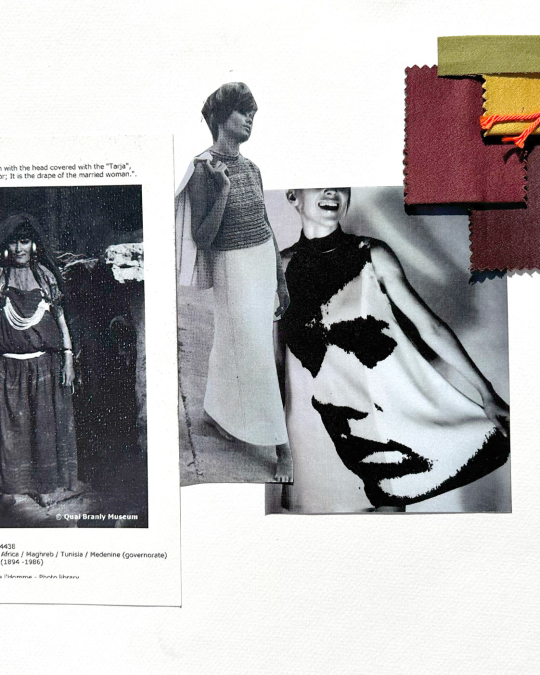
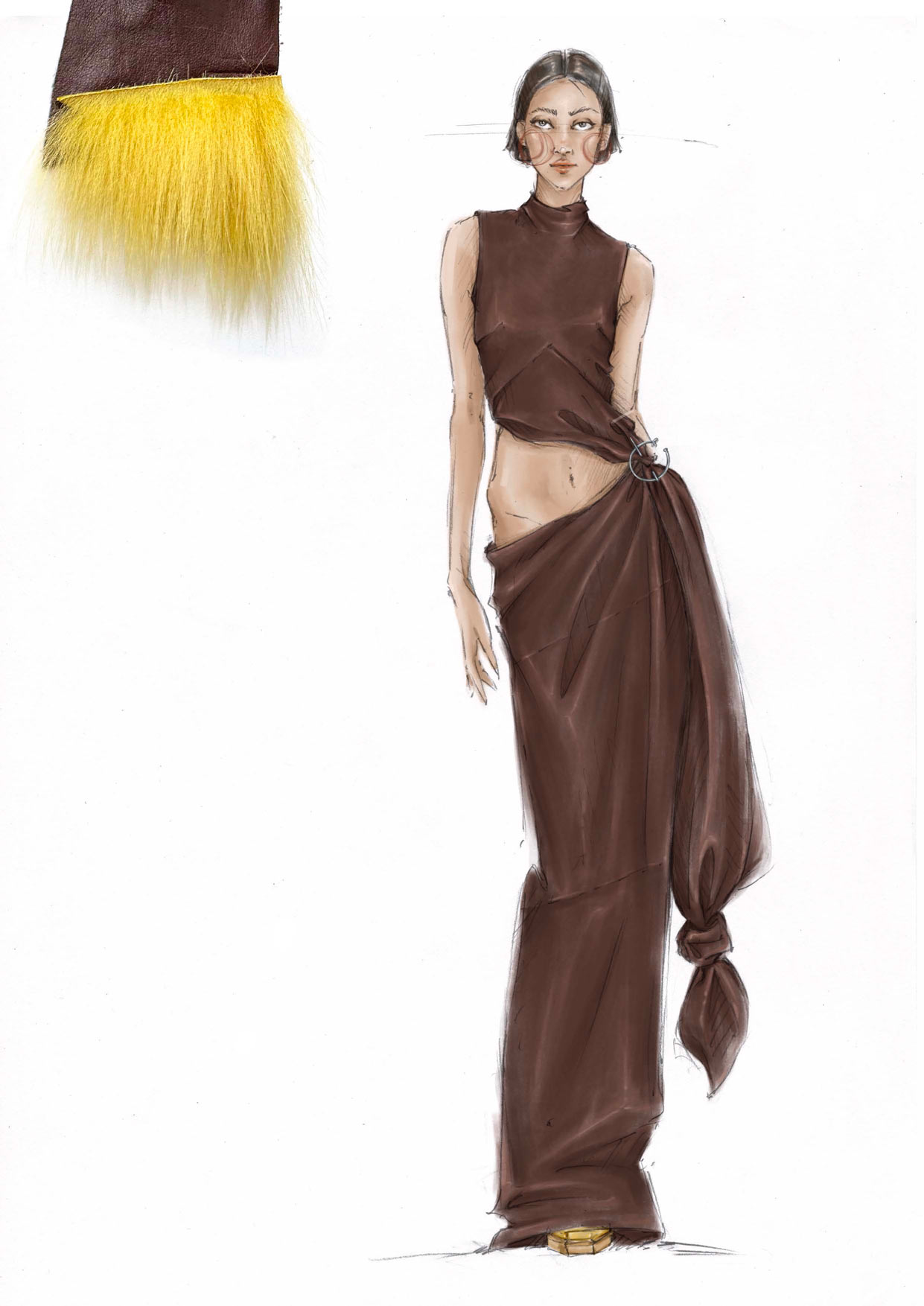
Durante i miei studi a bordo, un nuovo sistema educativo rispetto a quello appreso durante la mia infanzia, mi ha fatto capire che nessuna laurea, nessuno studio, è completo senza la sua storia, perché per creare e innovare dobbiamo conoscere ciò che è già stato fatto prima. L’interesse per la storia si è sempre acceso in me, ma una nuova profonda curiosità è diventata molto più rilevante in me stesso, e per questo in ogni lavoro che produco. Per questa raccolta ho guardato a una civiltà a cui mi trovo molto vicino quotidianamente, dato che lavoro con molti dei suoi abitanti, gli Amazigh. Una cultura che, più mi documentavo, più mi affascinava. Conosciute per la loro competenza nella tessitura dei tessuti e per il loro modo unico di drappeggiarli intorno al corpo, con il solo uso di due aghi. Ma oltre alla loro indubbia bellezza, gli abiti hanno la praticità di adattarsi al clima del deserto, perché gli Amazighs provengono da una delle più antiche civiltà nomadi del mondo, la cui esistenza risale a più di 20.000 anni fa. Nel corso di questa tesi, ho maturato un immenso rispetto per il loro popolo e la loro storia, e continuerò a farlo.
Infine, vorrei menzionare le donne che indossano questa collezione, che vedo come un punto di riferimento per la propria emancipazione, che le permette di reclamare il potere del proprio corpo, della propria femminilità e di abbracciare la propria singolarità.
A collection is a form of self-display and self-disclosure, of similar nature to the Plotinian ethic to “never stop sculpting your own statue”, the process of building and refining one’s essence. Over the years I have cultivated a desire to create beauty, and obsession I might even add, perhaps that is what attracted me to fashion in the first place, and even more to the world of Couture, a desire to prosecute the many forms beauty comes in. I find beauty is one’s consolation and creativity a shoulder to cry on.
“The art of aesthetics, for its higher purpose is to please the eye, without having to serve any form of utility other than its own existence” (Jovic, 2020)
The interplay of art and fashion, through collaborations between artists and designers, is yesterday’s news. We can think of crossed paths further back to Schiaperelli’s collaborations with artist Salvador Dalí (Gibson, 2013). This collection is a self-reference to my passion for the art world, what really has become my hobby, a collaboration between the world of art and fashion, led by a cross-pollination of both fields.
For that I looked into the work of Inès Longevial, a French young women artist, whose work has influenced me for many years. Inès’ mastery of colour and form make her portraits speak (Longevial 2022), transforming the body to landscape, hills and valleys carved by the light and crossed by the shadows. Longevial’s sensitivity finds its most delicate expression literally on the surface of the skin, that thin membrane between oneself and the world, which resonates with atmospheric information. Her palettes punctuated by incandescent hues evoke the diurnal cycle of light from sunrise to sunset, warm pinks, mauves and yellows. After attending her solo exhibition L’Heure Magique in Àgen, south of France, where she is from, I chose to focus on her paintings were she plays with the use of floral motives around faces, decomposed them in to small pieces to create patchworks that form a garment. One detail that captivated me was her depictions of little flowers twisted around fingers, ended up being incorporated in my research as a closure form for the garments, referencing as well the unique Amazigh culture.
During my studies aboard, a new education system then the own learned during my childhood, thought me that no degree, no study, is completed without it’s history, for in order to create and innovate we must know what has already been done before. An interest in history has always sparked on me, but a new profound curiosity became much more relevant in myself, and for that in any work I produced. For this collection I looked at a civilisation I find myself very close to daily, as I work with many of their people, Amazigh. A culture the more I read on, the more fascinated I found. Known for their expertise on the weaving of fabrics, and their unique way of draping such around the body, with the single use of two needles. But alike their indubitable beauty, comes the garments practicality to accommodate the wearer to the climate of the desert, for Amazighs come from one of the oldest nomad civilisation of the world whose existence dates back more than 20,000 years. During this my tesis, I have grown an immense respect for their people and their history, and will continue to do so.
Lastly I want to mention the women wearing this collection, whom I invision with a standing ground to her own emancipation, allowing her to reclaim the power of her own body, her feminity and to embrace her singularity.
Partners:
Leathers by: La Doma, Sominemi
- Moodboard
- Sketches
- Line up
- Catwalk